Brookshire Suite: 3rd B-flat Clarinet Sheet Music Preview

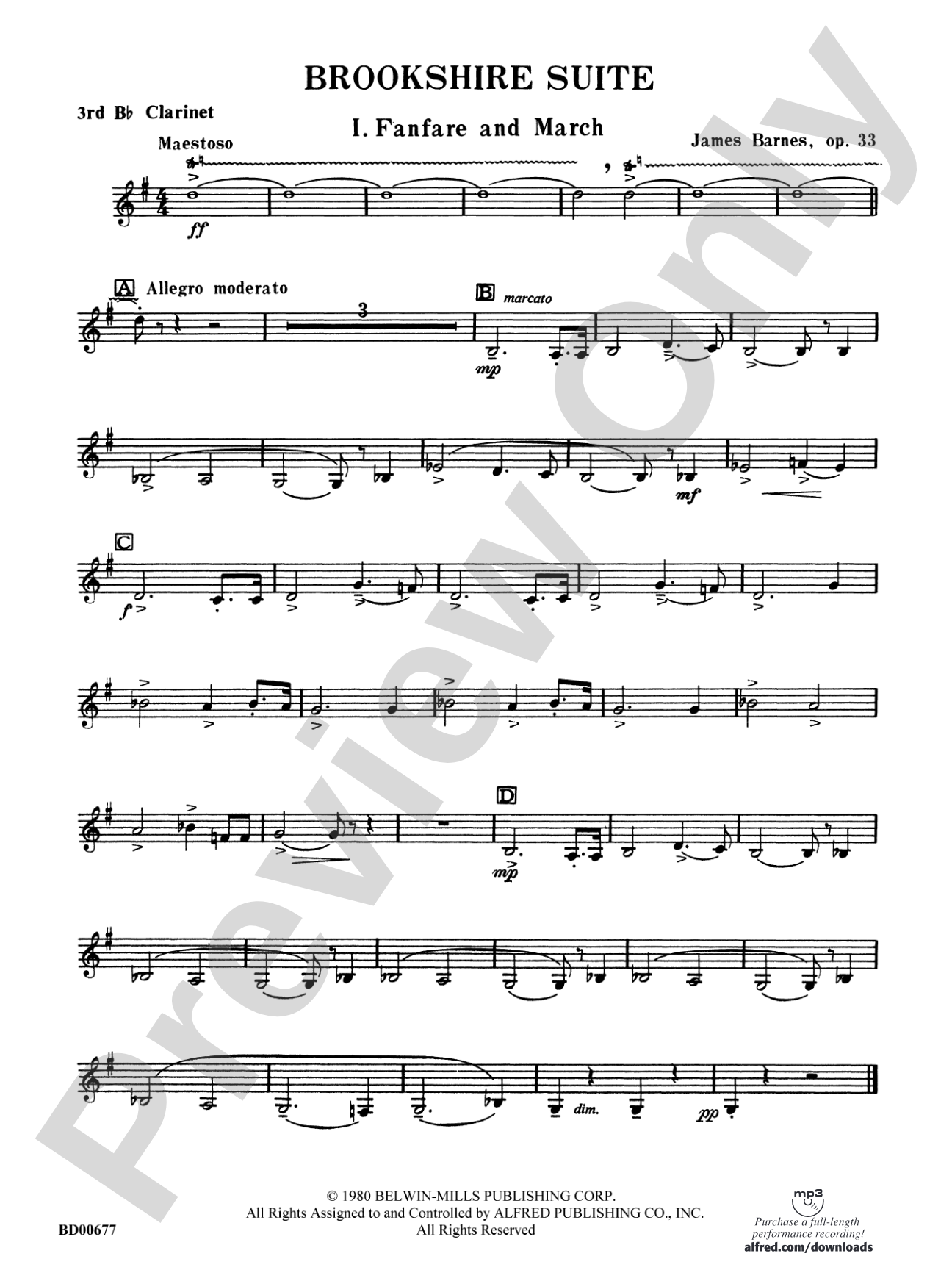
Brookshire Suite: 3rd B-flat Clarinet

By James Barnes

Grade: 4 (Medium)

Item: 00-PC-0001970_C3

Digital Download
$3.00
Description
Composed of three movements, BROOKSHIRE SUITE begins with a "Fanfare and March." The unique second movement is entitled "Little Jazz Song" and features lush contemporary textures. The "Fugue" is introduced by the cornets intertwines the remainder of the ensemble building to a grandiose conclusion. This work is essential program repertoire for every fine concert band.

Don't just read it, hear it, play along with it, and watch your students grow with it. In MakeMusic Cloud, Brookshire Suite: 3rd B-flat Clarinet comes alive with professional accompaniment, adjustable tempo, and built-in practice tools that turn solo practice into real progress.

Sample Audio
0:00
0:00
Sample Video
Additional Details
Series: Belwin Symphonic Band
Publisher: Alfred Music
Page Count: 294
SKU: 00-PC-0001970_C3

More about this title

About the Composer: James Barnes

James Barnes is a prolific composer whose band works have become staples of the concert band repertoire. His compositions span multiple genres and difficulty levels, from educational pieces to advanced concert works, and his facility with orchestration and form has made him one of the most frequently programmed composers in American bands.

Why we love this

The Brookshire Suite delivers exactly what a Grade 4 band needs: three distinct movements that showcase different compositional techniques and ensemble capabilities without overwhelming developing musicians. The shift from ceremonial march writing to contemporary jazz textures to baroque counterpoint gives your band authentic stylistic range within a single, cohesive program piece.

What to expect

The Brookshire Suite moves through three distinct emotional landscapes: ceremonial pageantry opens the work with bright confidence, a smoky, reflective jazz movement offers textural intrigue and harmonic sophistication, and a tightly woven fugue builds to triumphant closure. Together, these movements create a complete concert experience that feels both substantial and accessible.

Who it's for

This suite serves Grade 4 concert bands ready to tackle stylistic variety and intermediate contrapuntal writing. Directors programming festivals, adjudicated contests, or end-of-year concerts will find a work that demonstrates ensemble maturity across multiple musical contexts without overextending inexperienced players.

How to get the most out of it

  • Balance the fanfare's brass proclamations against the underlying march pulse; resist letting the trumpets and cornets overwhelm the harmonic foundation in the lower voices.
  • Approach the 'Little Jazz Song' with a chamber ensemble sensitivity despite the full band scoring. The contemporary textures demand precision and restraint so that individual colors register clearly.
  • Shape the fugue's entries deliberately. Each voice enters as a distinct statement, so articulation consistency across sections (especially between woodwinds and brass) is essential for clarity.
  • Build the final section with graduated dynamics. The grandiose conclusion requires layered intensity that peaks at the end, not halfway through the accelerating passages.

How to use it

Program this as a centerpiece to a concert featuring contrasting styles, pairing it with traditional march repertoire before and a lighter novelty piece after to let its substantial middle section shine. The three movements also work well as markers throughout a longer program, with the opening fanfare as a first-half closer and the fugue finale providing climactic impact near the end of your concert.

Skills your students will build

  • Reading extended concert band scoring with independent voice leading across instrument families
  • Executing rhythmic clarity in processional march style with layered ensemble parts
  • Balancing dynamic contrast in contemporary harmonic writing with dissonance and block chords
  • Maintaining accuracy while reading fugal subject entries and stretto passages
  • Sustaining ensemble intonation and blend through tonal color shifts across three distinct movements

You May Also Like