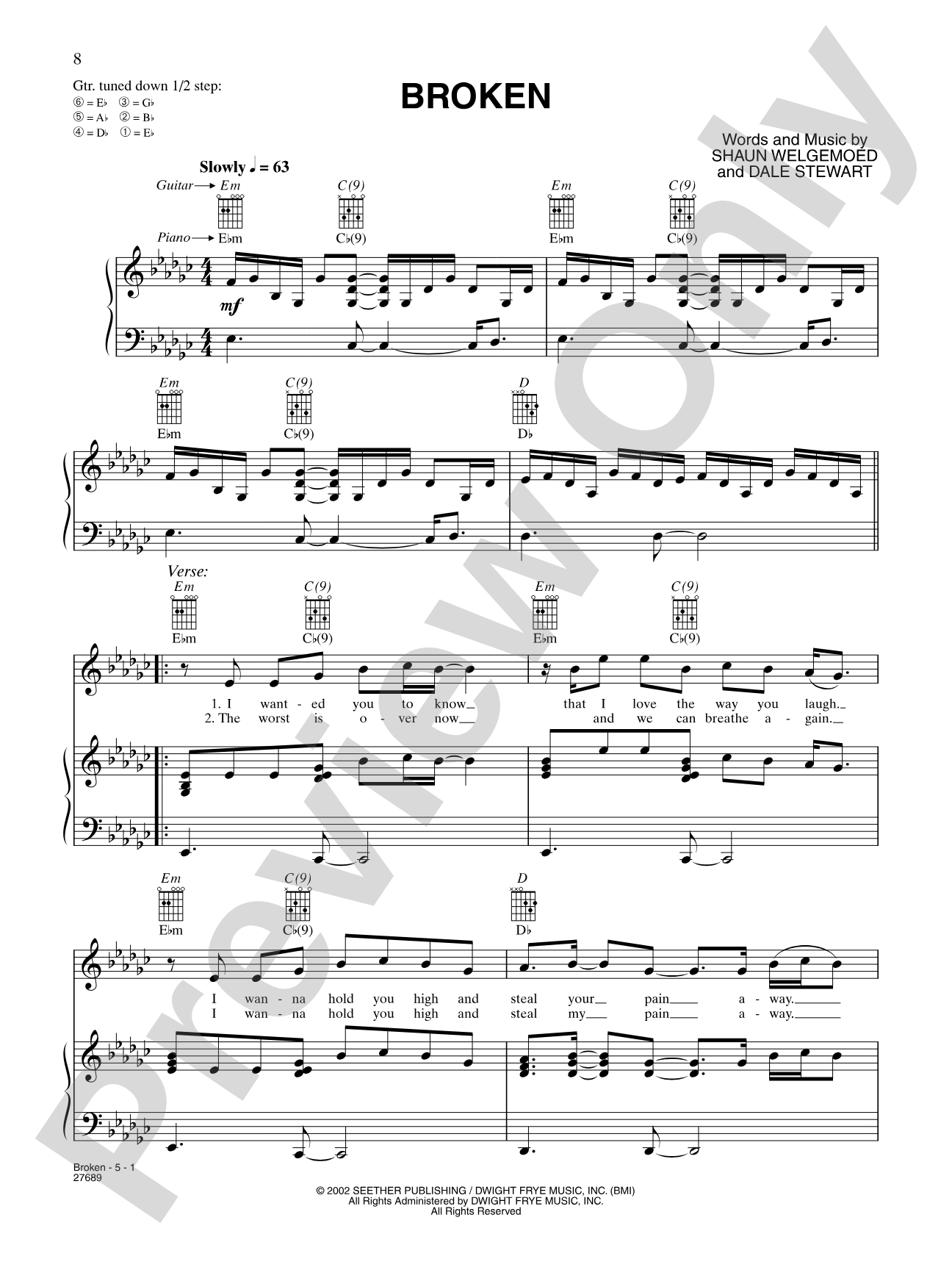
Broken Sheet Music Preview

Broken: Piano/Vocal/Chords

Item: 00-PSP-000218

Digital Download
$3.99
Description
Forty top rock hits of the last decade, in styles ranging from punk and alternative to arena rock. Titles: 15 Step (Radiohead) * American Idiot (Green Day) * A-Punk (Vampire Weekend) * Bring Me to Life (Evanescence) * Decode (Paramore) * If Today Was Your Last Day (Nickelback) * It's Been Awhile (Staind) * Second Chance (Shinedown) * Sorry (Buckcherry) * Uprising (Muse) * You and Me (Lifehouse) * and many more.

Broken: Piano/Vocal/Chords isn't in MakeMusic Cloud just yet...but it could be. Let us know you'd like to see it, and you'll help shape what comes next. In the meantime, start a free trial and dive into thousands of interactive titles your students can play along with today.

Sample Audio
No sample audio found.
Sample Video
Additional Details
Series: 2000–2009 Best
Publisher: Alfred Music
Page Count: 256
SKU: 00-PSP-000218

More about this title

Why we love this

Rock pianists and keyboardists rarely get collections this substantial and current. These forty songs span genuine stylistic range (from Radiohead's experimental approach to Green Day's punk urgency to Muse's arena grandeur), so students encounter real variety within a single, cohesive resource. The chord symbols and vocal line make this work equally well for singers building interpretation skills or guitarists learning to comp over keyboard-driven arrangements.

What to expect

Energetic and emotionally direct. These songs were written to connect immediately with listeners, and the arrangements honor that accessibility while offering enough harmonic and textural complexity to keep experienced musicians engaged. You'll encounter everything from intimate, introspective moments (Staind's vulnerability) to explosive, anthemic climaxes (Green Day, Muse), often within the same song.

Who it's for

Pianists and keyboardists who want to build repertoire in contemporary rock styles without leaving the acoustic piano behind. Singers preparing auditions or performance sets will find studio-ready arrangements with full chord symbols for collaboration with guitarists or other accompanists. Students in pop, rock, and contemporary music programs benefit from having reliable, recognizable material at hand.

How to get the most out of it

  • Study the original recordings alongside the sheet music to catch the production details that define each song (synth textures, vocal effects, rhythmic nuances). The arrangements here are faithful enough that reference tracks become essential learning tools.
  • Pay attention to dynamics and articulation markings, which often carry the emotional weight in rock ballads like 'It's Been Awhile' and 'Second Chance.' These details separate a competent reading from a compelling performance.
  • If you're accompanying a singer, establish the tempo and feel during an intro run-through. Rock vocals rely heavily on pocket and groove, so your rhythmic stability matters more than strict metronomic precision.
  • Balance the keyboard texture with the vocal line so singers can hear themselves without drowning in accompaniment. Rock songs often sit lower in the mix than pop ballads, requiring intentional restraint in the left hand.

How to use it

Build a contemporary rock concert or recital that showcases stylistic range without relying on novelty or parody. Use selections as supplementary material for singers and keyboardists who need grounded, player-friendly versions of hits their audiences actually recognize and love. The breadth makes it easy to curate thematically (by mood, era within the decade, or lyrical content) for mixed-level recitals.

Skills your students will build

  • Reading keyboard voicings with mixed root positions and inversions
  • Maintaining rhythmic pocket in syncopated, non-classical meters
  • Accompanying vocalists across a wide range of emotional dynamics
  • Interpreting chord symbols flexibly for different arrangements (piano, guitar, keyboard texture)
  • Understanding modern rock song structure and production conventions
  • Balancing melody, harmony, and accompaniment in pop-rock contexts

You May Also Like