

Brio: String Orchestra Conductor Score & Parts
By Doug Spata
Grade: 1.5
Item: 00-PK-0008224

$50.00
Pickup currently not available
Buy Extra Parts (Digital PDF Download)
| Product | Price | Quantity |
|---|---|---|
| Brio: Score | $9.00 | |
| Brio: 1st Violin | $3.00 | |
| Brio: 2nd Violin | $3.00 | |
| Brio: Viola | $3.00 | |
| Brio: Cello | $3.00 | |
| Brio: String Bass | $3.00 |
Parts Added to Cart!
Description
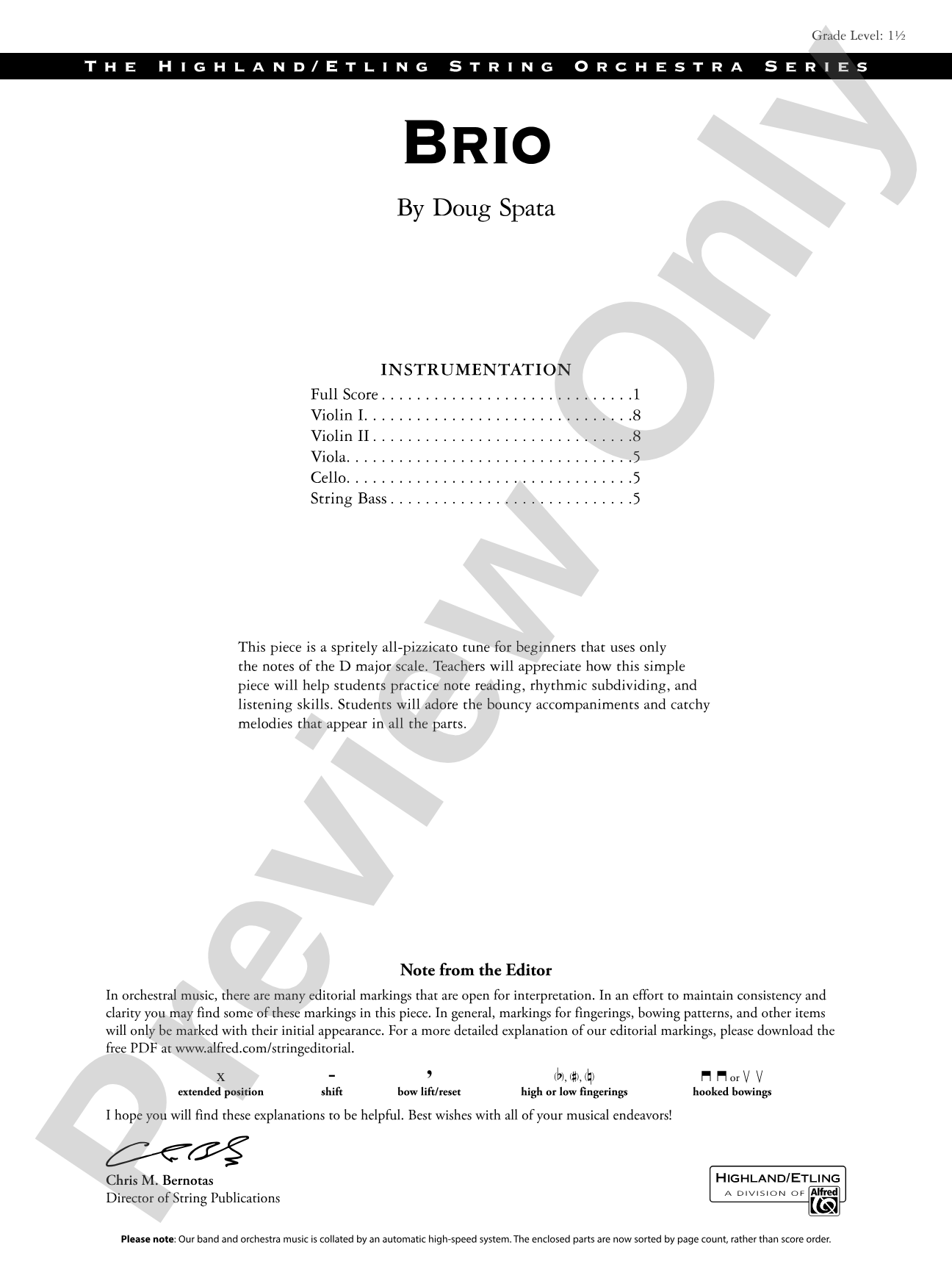
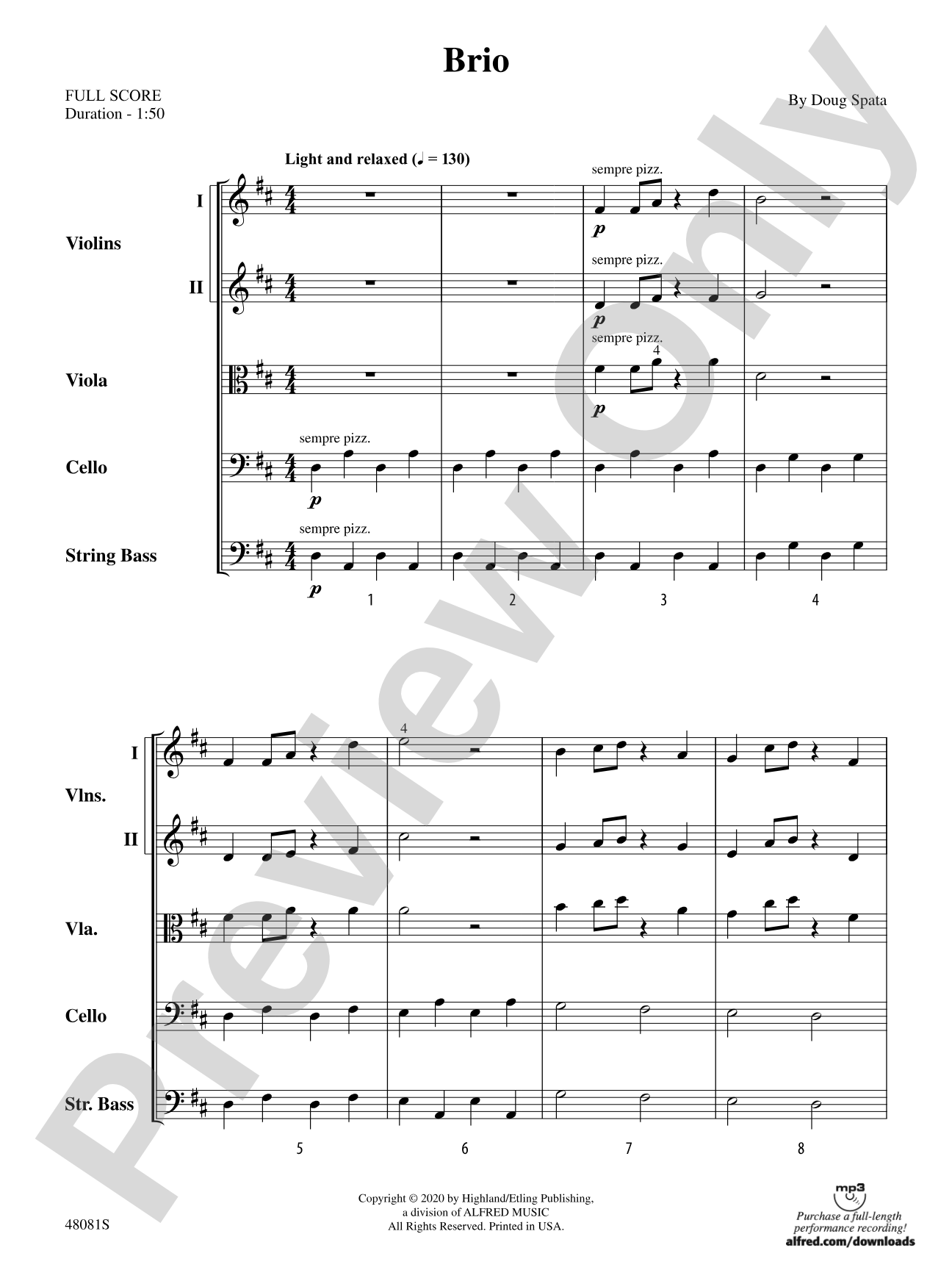
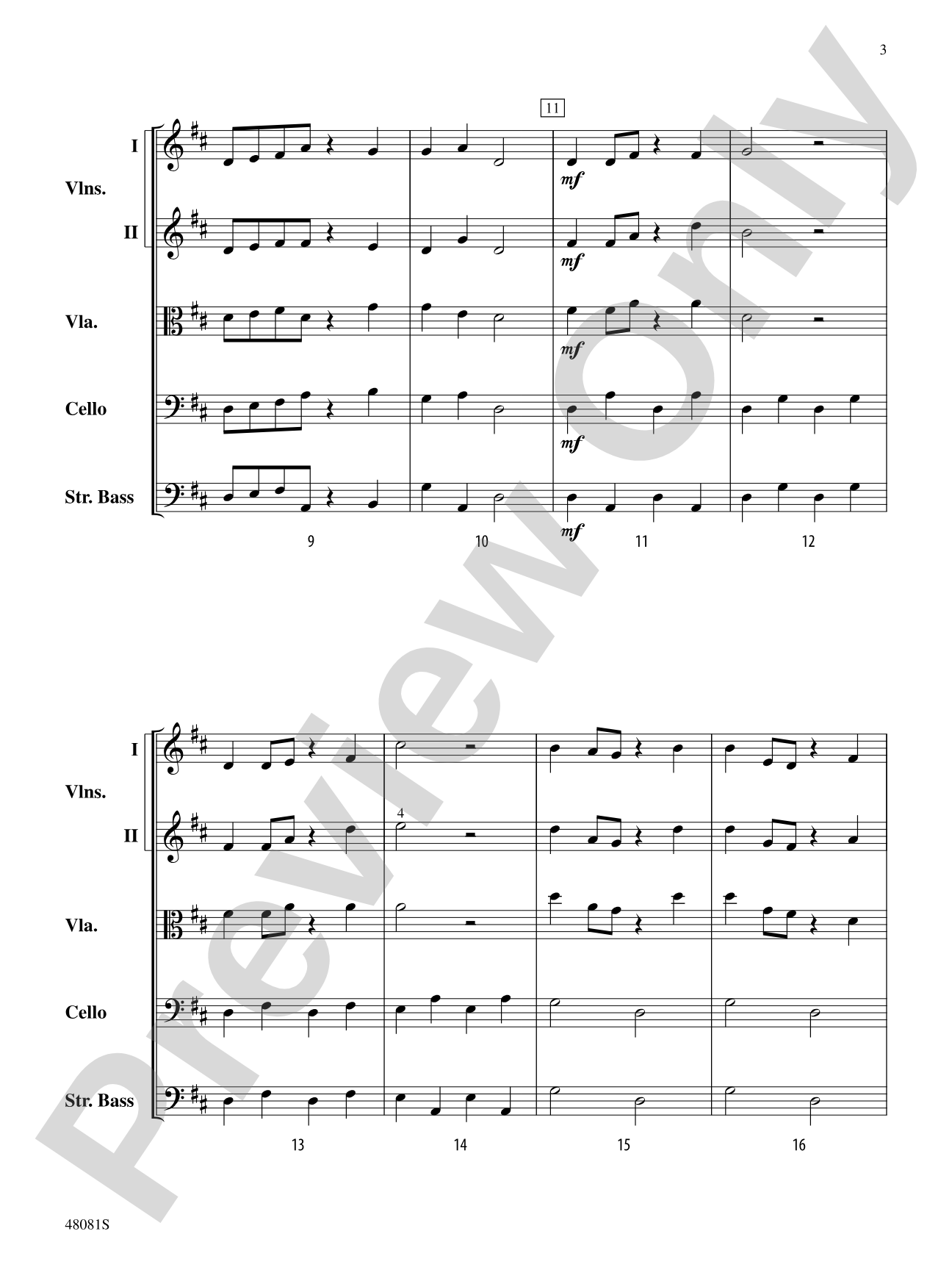
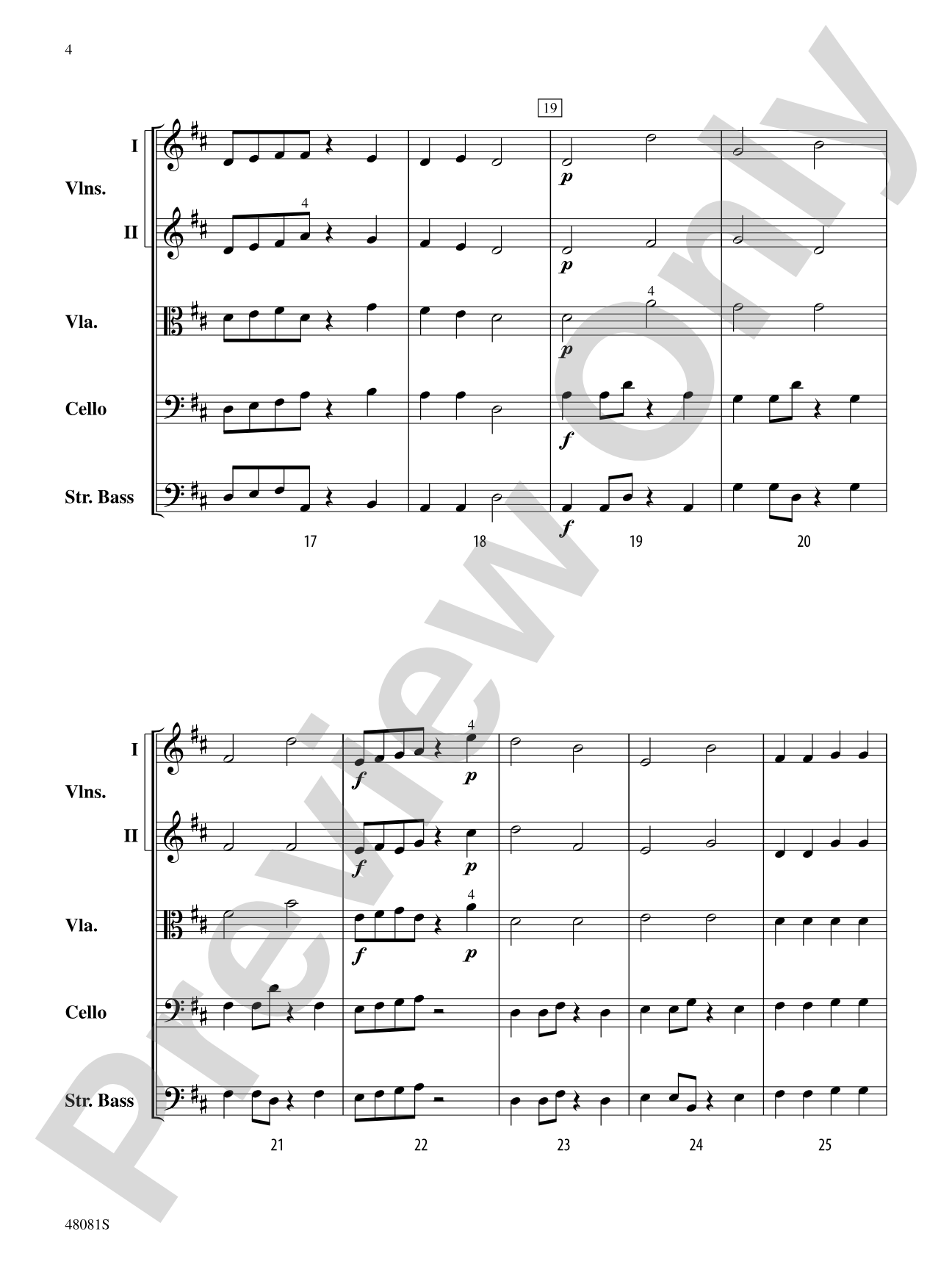
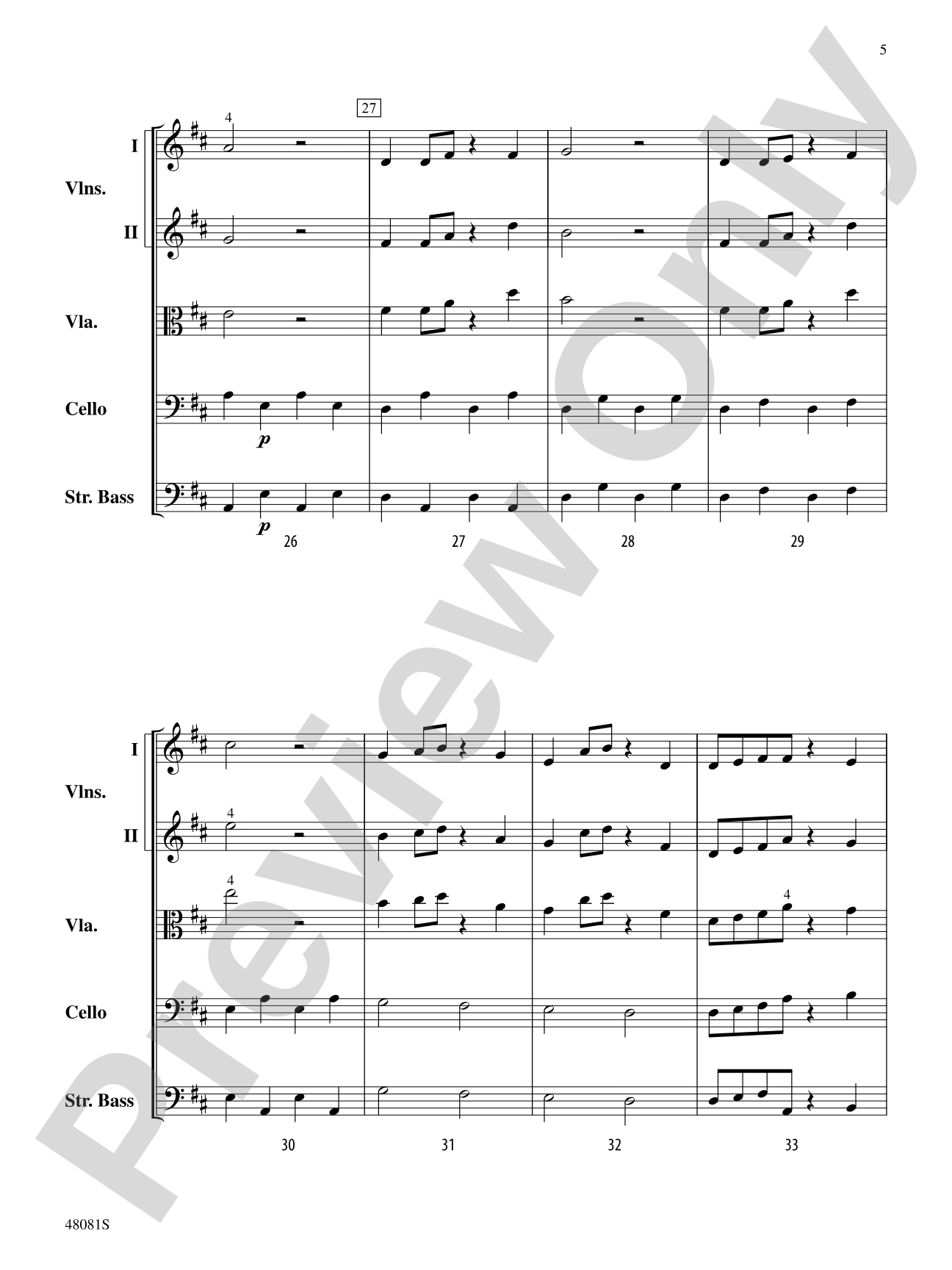
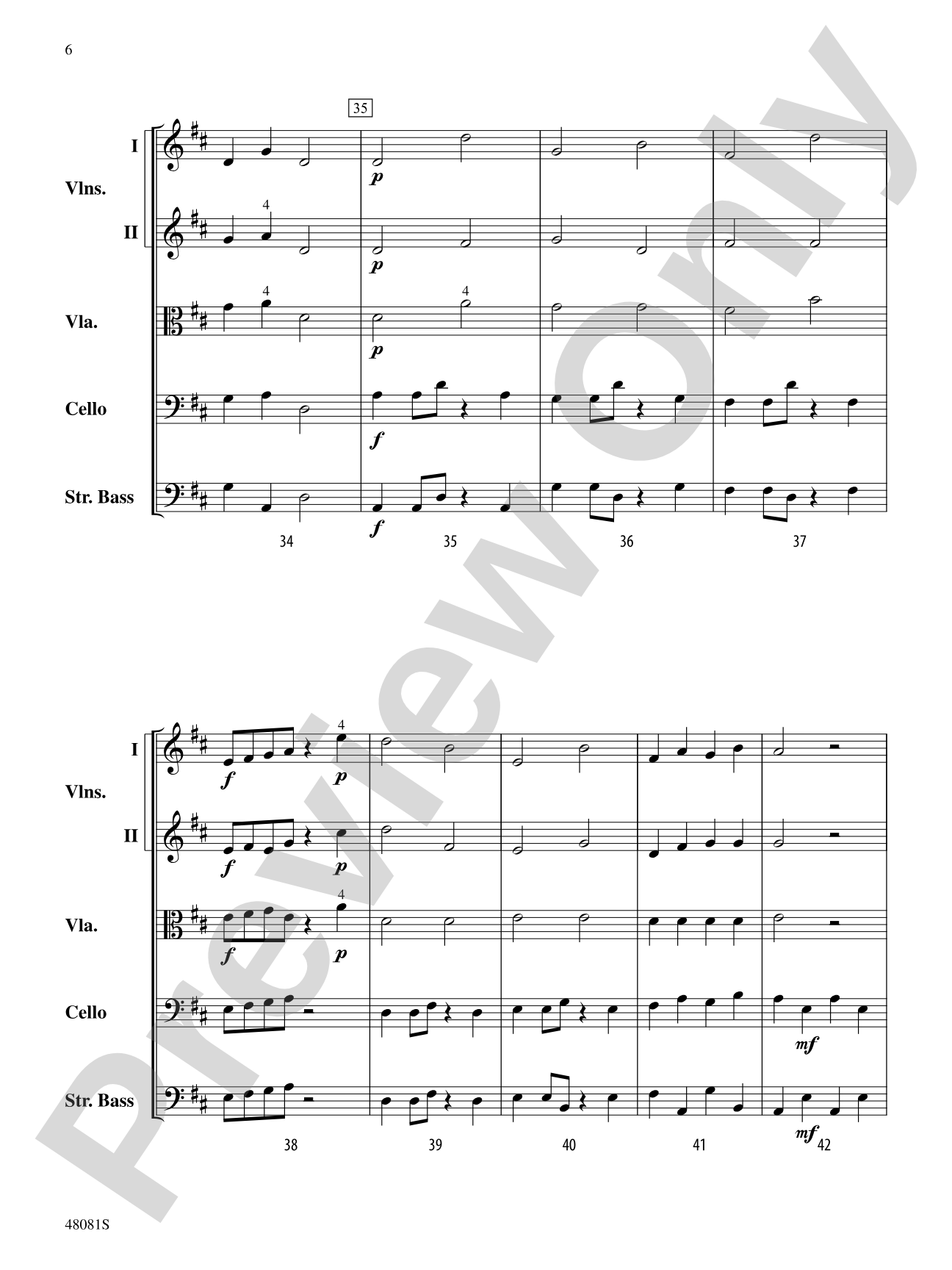
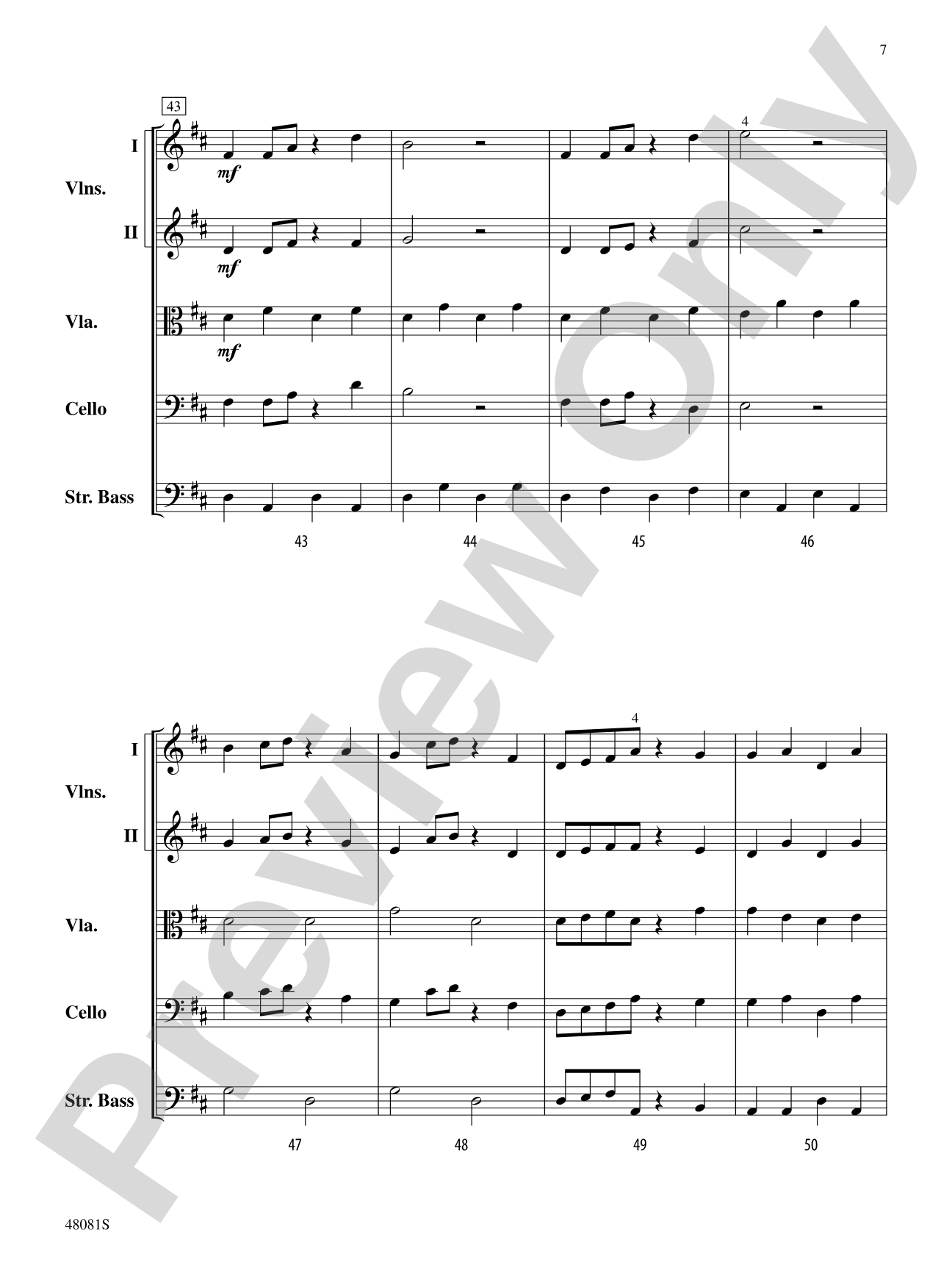
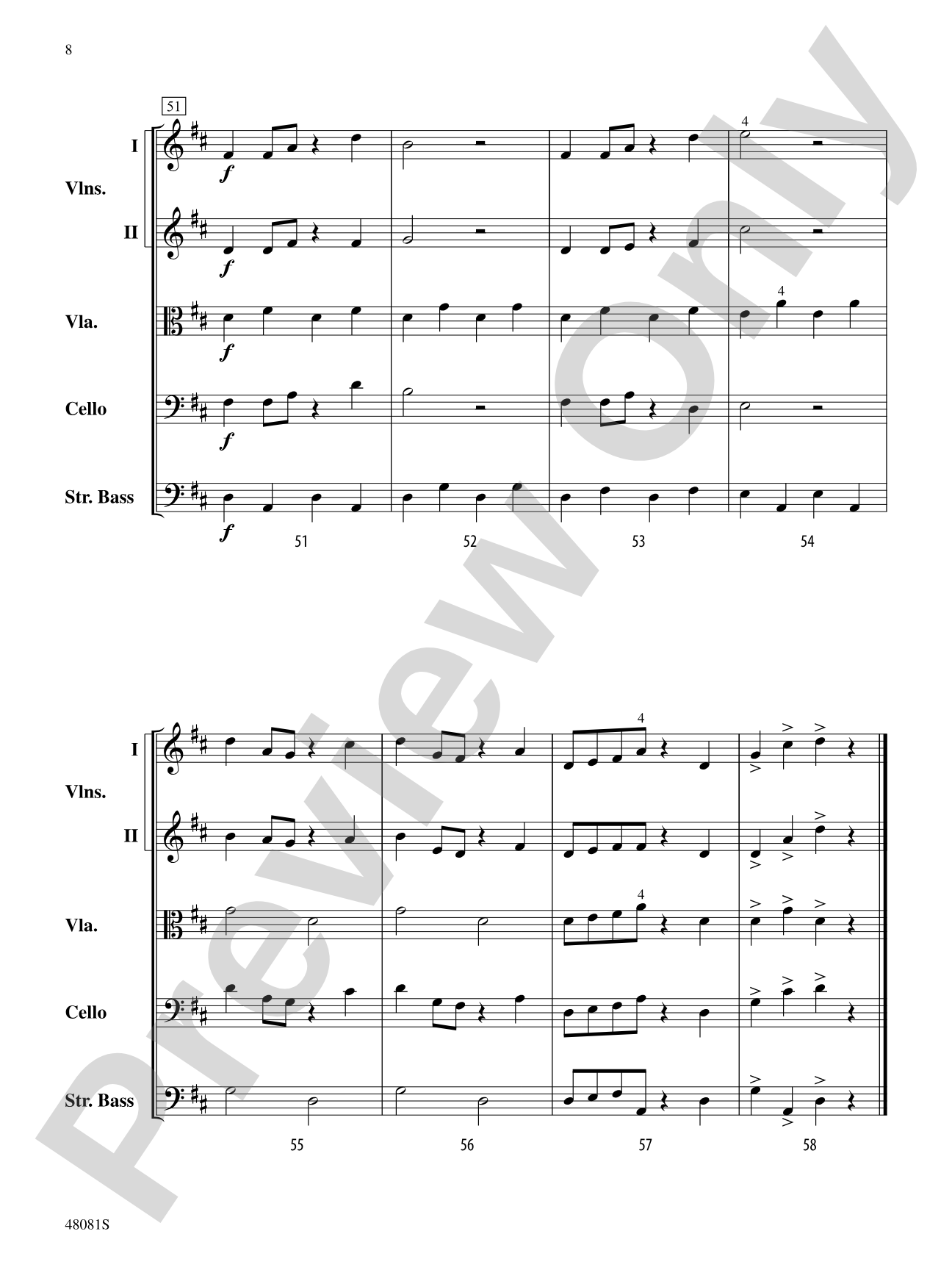
Brio by Doug Spata, is a sprightly, all-pizzicato tune for beginners that uses only the notes of the D major scale. Teachers will appreciate how this simple song will help students practice note reading, rhythmic subdividing, and listening skills. Students will adore the bouncy accompaniments and catchy melodies that appear in all the parts. (1:48) This title is available in MakeMusic Cloud.


Don't just read it, hear it, play along with it, and watch your students grow with it. In MakeMusic Cloud, Brio: String Orchestra Conductor Score & Parts comes alive with professional accompaniment, adjustable tempo, and built-in practice tools that turn solo practice into real progress.
Open in the Player
Jump straight in and assign it today.
Start Your Free Trial
Open this title and explore the full library in minutes.
Sample Audio
1
Audio File
--:--
0:00
0:00
Sample Video
Additional Details
Series:
Highland/Etling String Orchestra
Publisher:
Alfred Music
Page Count:
62
SKU:
00-PK-0008224
More about this title
About the Composer: Doug Spata

Doug Spata began his musical life as a clarinetist but found his true voice in composition through his work directing orchestras. His intimate knowledge of how student musicians learn has shaped a catalog defined by accessibility without sacrifice; his pieces consistently resonate with both young players discovering their instruments and the teachers guiding them. Beyond the concert hall, Spata has expanded his reach into opera, ballet, and symphonic works, earning recognition across regional and international stages.
Why we love this
Spata understood exactly what Grade 1 and 2 orchestras need: a piece that sounds finished and fun while asking only for what students can deliver. The all-pizzicato texture means no bow coordination to manage, yet the bouncy rhythmic accompaniments and bright D major melody make every part feel essential and satisfying to play.
What to expect
Infectious and unpretentious. The D major pizzicato texture sparkles with clarity, and the interaction between melody and accompaniment creates a playful conversation that invites the audience to smile. There's honest joy in every measure.
Who it's for
Beginning string orchestras in Grades 1 and 2, whether in full ensemble or smaller sectionals. Teachers looking for accessible repertoire that builds foundational reading and listening skills while keeping student morale high will find this especially valuable.
How to get the most out of it
- Lock the rhythmic groove before worrying about pitch precision. Use a metronome and count subdivisions aloud during early rehearsals so players feel the bounce in their bodies, not just their fingers.
- Balance the melody against the accompaniment parts by having accompaniment players pluck slightly softer than the leads. This keeps the tune audible without asking young players to restrain their natural enthusiasm.
- Mark bowings and fingerings in pencil before the first full run-through. Consistency here pays immediate dividends with intonation and ensemble sound.
How to use it
This works beautifully as an opener on any concert, setting a bright tone and settling young nerves before more demanding repertoire. It also functions well mid-program as a palate cleanser between weightier works, or as a standalone piece for festival competitions where approachability and ensemble precision matter equally.
Skills your students will build
- Reading notes exclusively within the D major scale (F#, C#)
- Rhythmic subdividing in straightforward meters
- Pizzicato technique and consistency across the ensemble
- Listening and balance awareness through interdependent melodic and accompaniment lines
- Intonation awareness in a diatonic harmonic context