
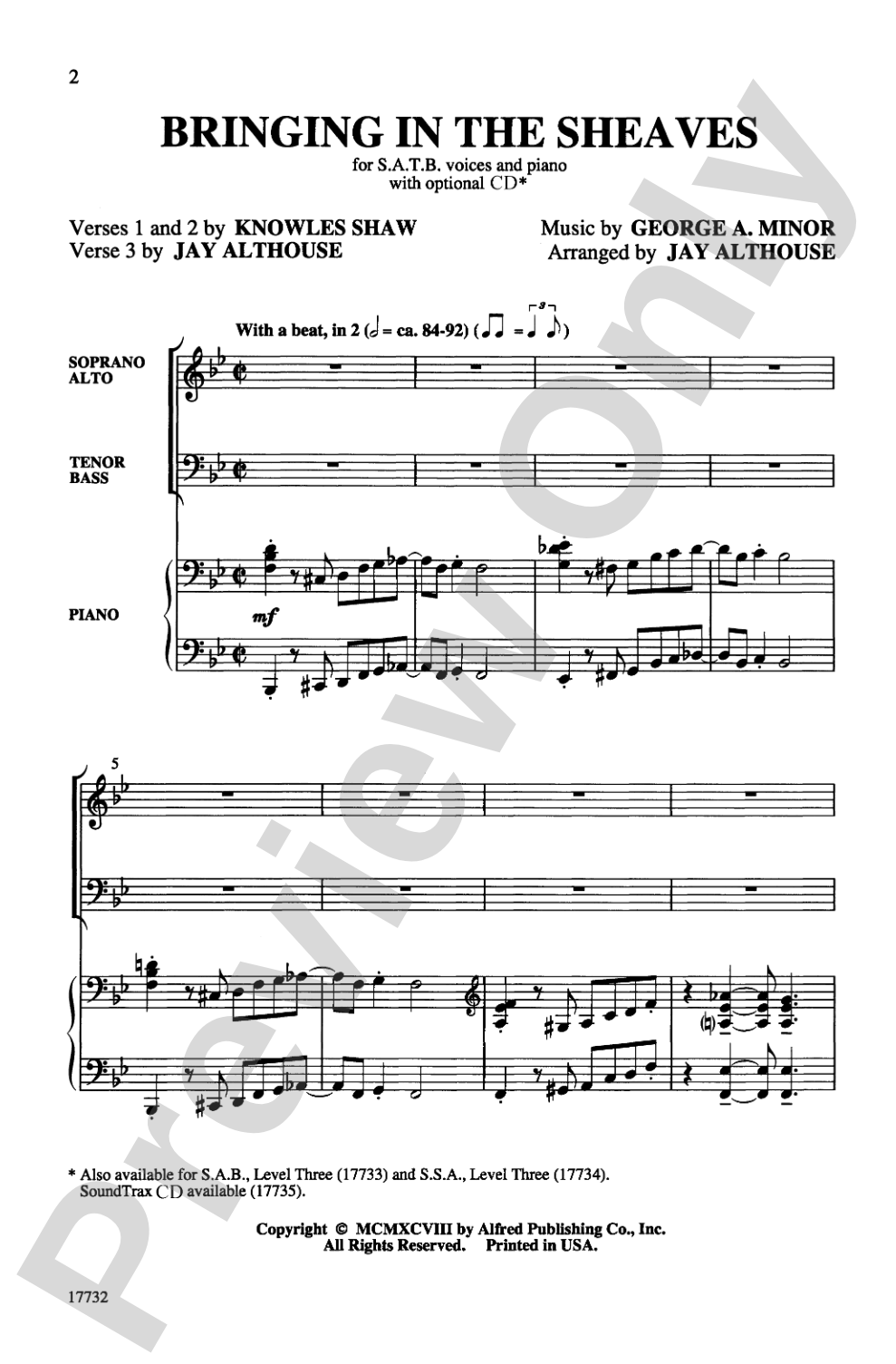
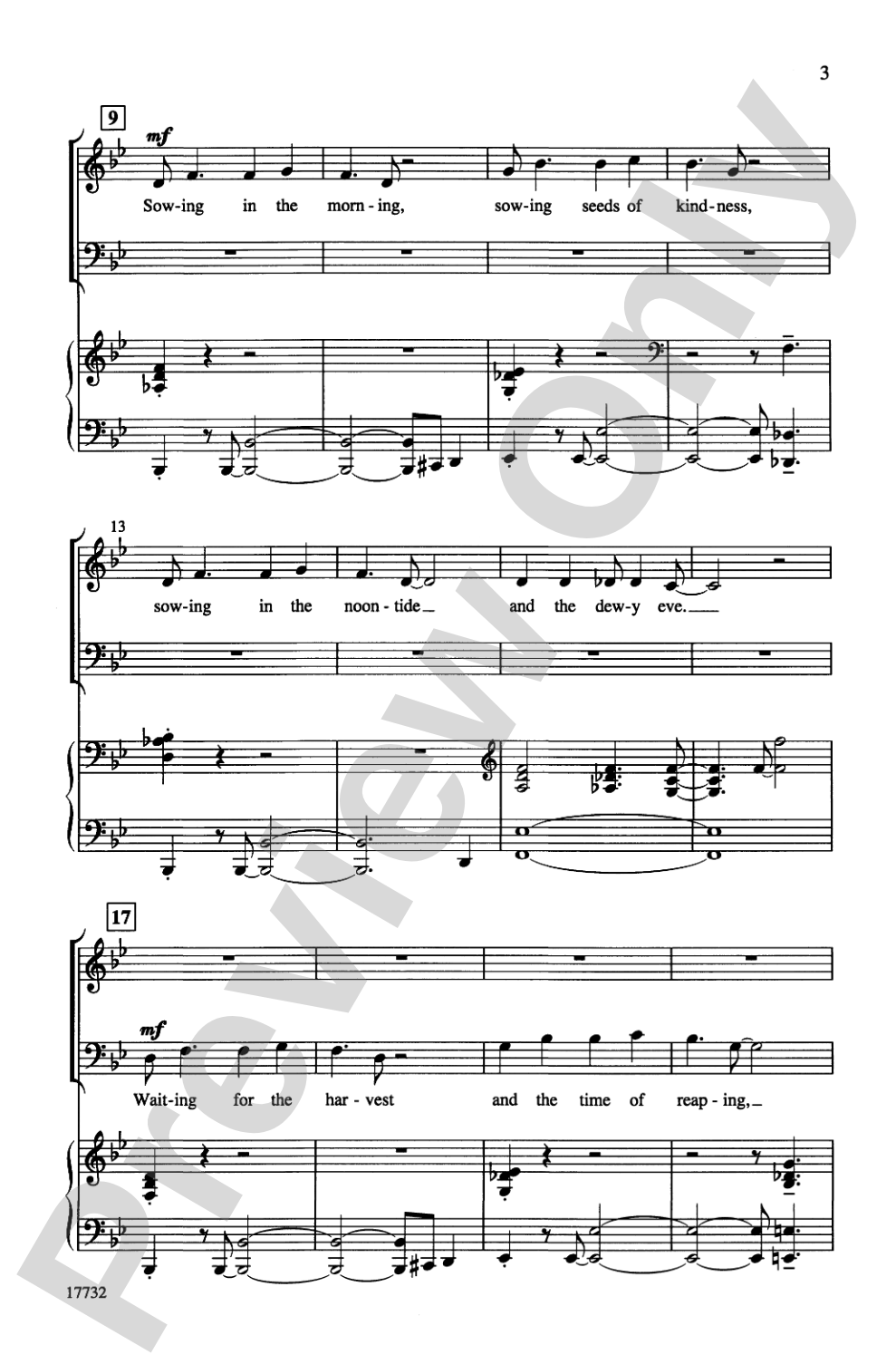
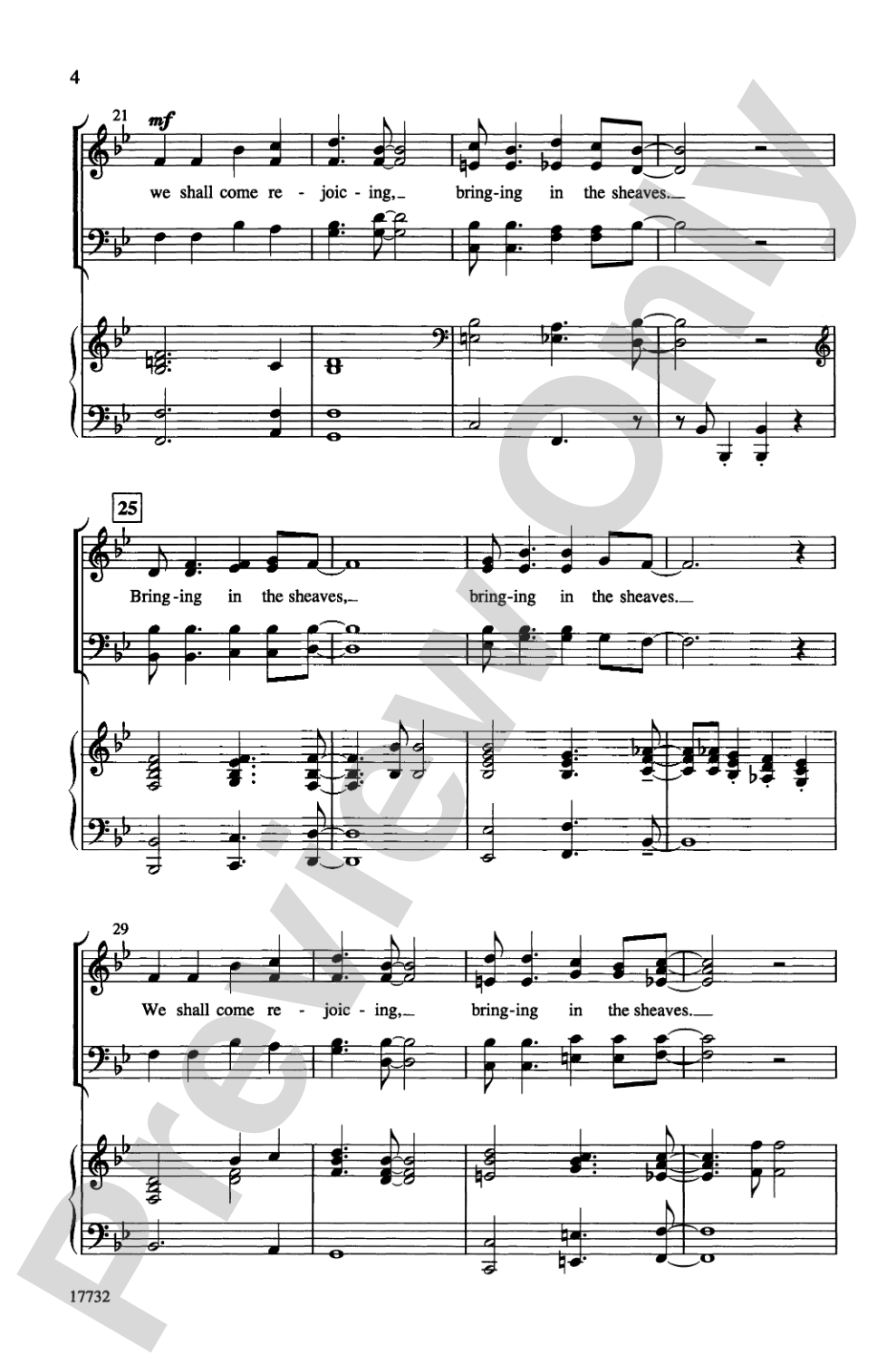

Bringing in the Sheaves: SATB Choral Octavo
Arr. Jay Althouse
Item: 00-PO-0004013
$2.25
Minimum order quantity: 20 copies
Pickup currently not available
Description
Hot new choral version of an American classic appropriate for school use. Rhythmic accompaniment, exciting harmonies, but voice writing is not difficult.


Bringing in the Sheaves: SATB Choral Octavo isn't in MakeMusic Cloud just yet...but it could be. Let us know you'd like to see it, and you'll help shape what comes next. In the meantime, start a free trial and dive into thousands of interactive titles your students can play along with today.
Request This Title
Tell us you want it.
Start Your Free Trial
Explore everything that's ready to play right now.
Sample Audio
1
Audio File
--:--
0:00
0:00
Sample Video
No sample videos found.
Additional Details
Series:
Alfred Archive Edition: Alfred Choral Designs
Publisher:
Alfred Music
Page Count:
12
SKU:
00-PO-0004013
More about this title
About the Arranger: Jay Althouse

Jay Althouse holds degrees in Music Education and Music from Indiana University of Pennsylvania, where he was later recognized as a Distinguished Alumnus. His career spans both the publishing side of music education and composition; he spent eight years managing rights and licenses for a major educational publisher and served on the Executive Board of the Music Publishers Association of America.
With over 800 choral works in print, Althouse has established himself as a prolific voice in American choral writing across all difficulty levels. His compositions receive regular recognition through ASCAP Special Awards. Beyond his own compositions, he has collaborated with his wife Sally K. Albrecht on children's musicals and vocal collections, co-authored influential resources like The Complete Choral Warm-up Book and Accent on Composers, and contributed scholarship to the Folk Art Society of America, where he currently serves on the National Advisory Board.
Why we love this
Althouse understands what makes a folk spiritual work in the modern school choir context. He's given this classic the energy and harmonic interest that keeps singers engaged without burying them in part-writing complexity. The rhythmic accompaniment drives the piece forward while the straightforward voice leading ensures your singers stay confident and focused on interpretation rather than survival.
What to expect
This version honors the spiritual's roots while giving it a modern, energized coat of paint. Lively rhythmic accompaniment and sophisticated harmonies create a sound that feels both familiar and fresh, catching singers and listeners in an optimistic momentum that suits the harvest theme perfectly.
Who it's for
Secondary school choirs with solid fundamental skills but mixed experience levels will thrive with this arrangement. It works equally well for a developing high school choir and a strong middle school ensemble, and it's accessible enough for adult community choirs while remaining musically substantive enough to keep stronger singers interested.
How to get the most out of it
- Lean into the rhythmic drive of the accompaniment; this isn't a contemplative arrangement, so keep the tempo moving and let the pulse energize the phrase shapes.
- Balance the exciting harmonies by having lower voices (tenor and bass) anchor the foundation clearly, which allows upper voices to sit more freely within those richer chords.
- Shape phrases by thinking about where the text naturally breathes rather than where the bar lines fall; the folk melody benefits from a conversational approach even with the contemporary harmonization.
How to use it
Program this alongside other American sacred or folk-inspired pieces for a concert celebrating roots music and cultural heritage. Its approachable difficulty and uplifting character make it an excellent opener or closer that leaves an audience in a warm frame of mind. It also pairs well in a fall concert or thanksgiving service context.
Skills your students will build
- Balancing voice parts within four-part harmony
- Sustaining ensemble rhythmic unity with rhythmic accompaniment
- Interpreting folk melody within modern harmonic language
- Listening and blending across SATB voicings