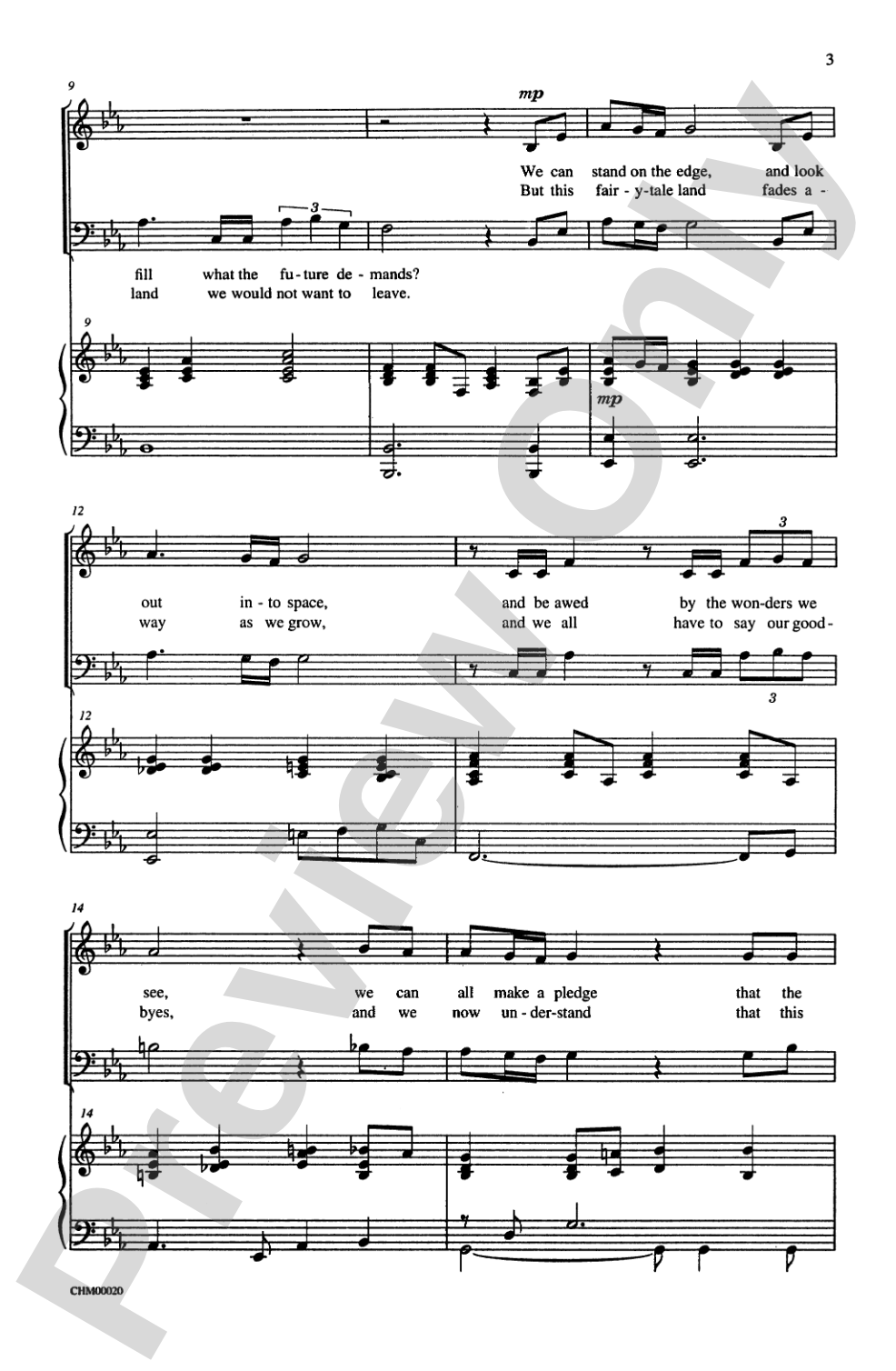
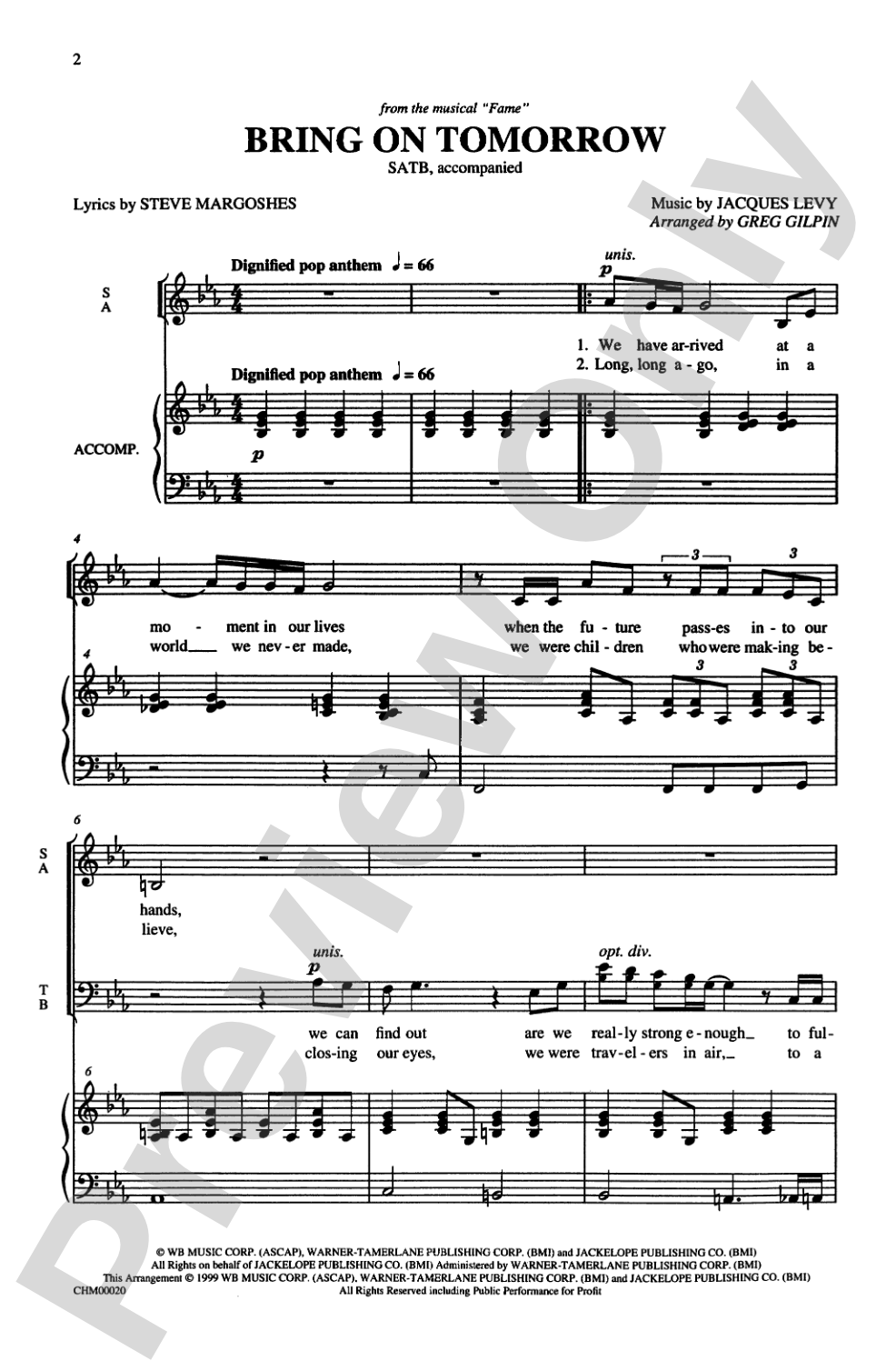
Bring on Tomorrow (from <I>Fame</I>) Sheet Music Preview

Bring on Tomorrow (from Fame): SATB Choral Octavo

From the MusicalFame

Music by Jacques Levy, lyrics by Steve Margoshes / arr. Greg Gilpin

Item: 00-PO-0004750

Digital Download
$2.25

Minimum order quantity: 20 copies

One moment…

Description
From the Broadway production of Fame comes this dramatic and inspiring title that will bring your audience to their feet. With a lush choral sound combined with beautiful and motivational text, this piece would be great for graduation or special civic gatherings. The music lifts the listener and elicits excitement from the performer. Greg Gilpin does production numbers like no one else!

Bring on Tomorrow (from Fame): SATB Choral Octavo isn't in MakeMusic Cloud just yet...but it could be. Let us know you'd like to see it, and you'll help shape what comes next. In the meantime, start a free trial and dive into thousands of interactive titles your students can play along with today.

Sample Audio
No sample audio found.
Sample Video
Additional Details
Series: Alfred Archive Edition: Alfred Pop Choral Series
Publisher: Alfred Music
Page Count: 8
SKU: 00-PO-0004750

More about this title

About the Composer: Jacques Levy

Jacques Levy earned his place in American musical theater as a composer and lyricist whose work has graced Broadway stages and film productions. His collaborative approach to songwriting emphasizes emotional resonance and accessibility, making his pieces particularly effective in educational and community settings. Levy's contributions to Fame and other theatrical projects demonstrate a gift for crafting songs that inspire performers and audiences alike.

Why we love this

Greg Gilpin's arrangement transforms this Broadway anthem into a showstopper for concert choirs without sacrificing the original's dramatic impact. The piece balances accessibility with genuine musical substance, giving singers a song they'll want to perform and audiences a moment they'll remember. It checks every box for a graduation finale: inspirational text, lush four-part writing, and built-in excitement.

What to expect

Bring on Tomorrow pulses with optimism and forward momentum. The lush harmonies create a warm, confident sound that feels both contemporary and timeless, while the text and music work together to inspire both the singers and the people listening. There's an inherent lift throughout the piece that makes performers feel the energy they're creating.

Who it's for

This octavo works for intermediate to advanced high school and collegiate choirs, as well as community and adult singing groups preparing graduation, awards, or civic celebrations. Singers need secure part-reading skills and breath control to sustain the longer phrases, but the accessible harmonic language makes it achievable for groups without extensive experience in contemporary music.

How to get the most out of it

  • Shape the dynamic arc carefully across the full eight pages. This piece lives on momentum, so map where the chorus builds and where it breathes to maintain tension without exhaustion.
  • Lock the rhythm section (or recorded accompaniment) early in rehearsal. The pop-influenced groove needs precision to land its full impact.
  • Balance the SATB texture so no single voice part dominates. The arrangement relies on the blend of all four parts to achieve that lush sound described in the octavo.
  • Connect the text to your singers' own aspirations. The motivational message only resonates if performers genuinely invest in what they're singing about.

How to use it

Reserve this for your final or penultimate number at graduation, awards ceremonies, or spring concerts where you want to send the audience out on a wave of inspiration. Its dramatic arc and motivational text make it equally strong as a standalone closer or paired with lighter fare earlier in the program to create emotional contrast.

Skills your students will build

  • Sustaining longer phrases across eight pages without compromising blend
  • Balancing contemporary pop-influenced harmony with classical voicing expectations
  • Interpreting text-driven music where emotional commitment shapes musical choices
  • Managing dynamic control in four-part writing where all voices contribute equally

You May Also Like