
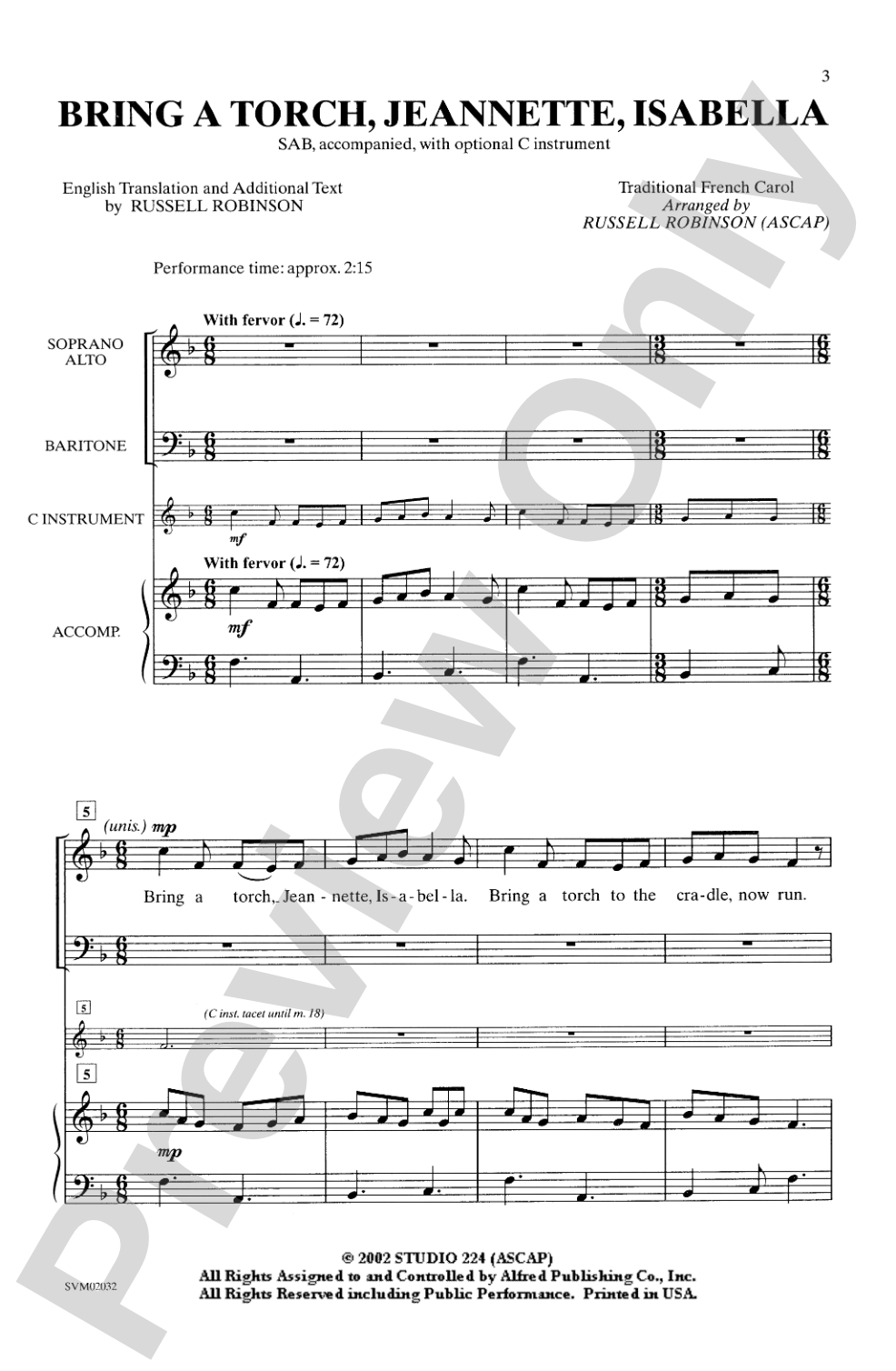
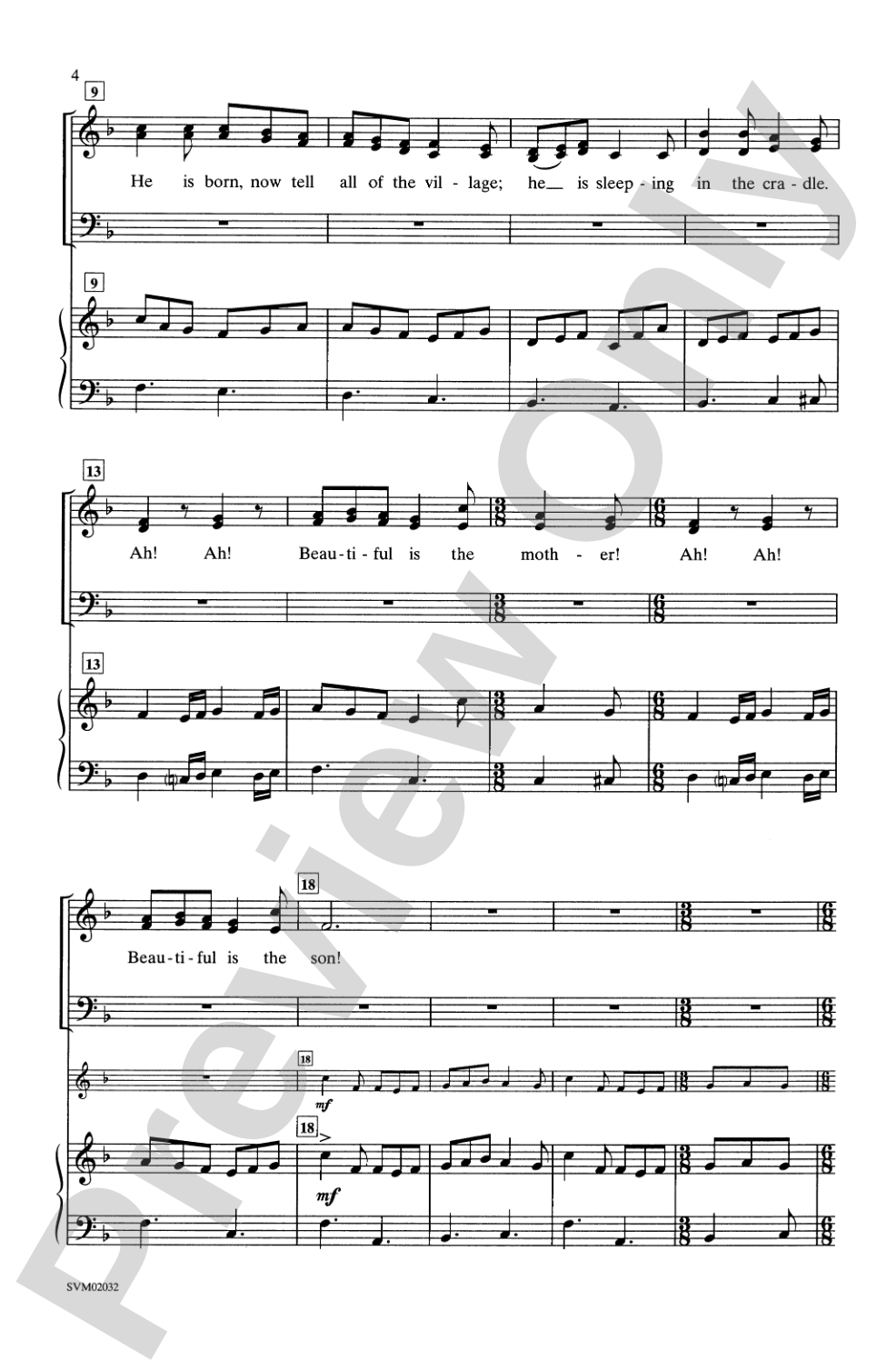
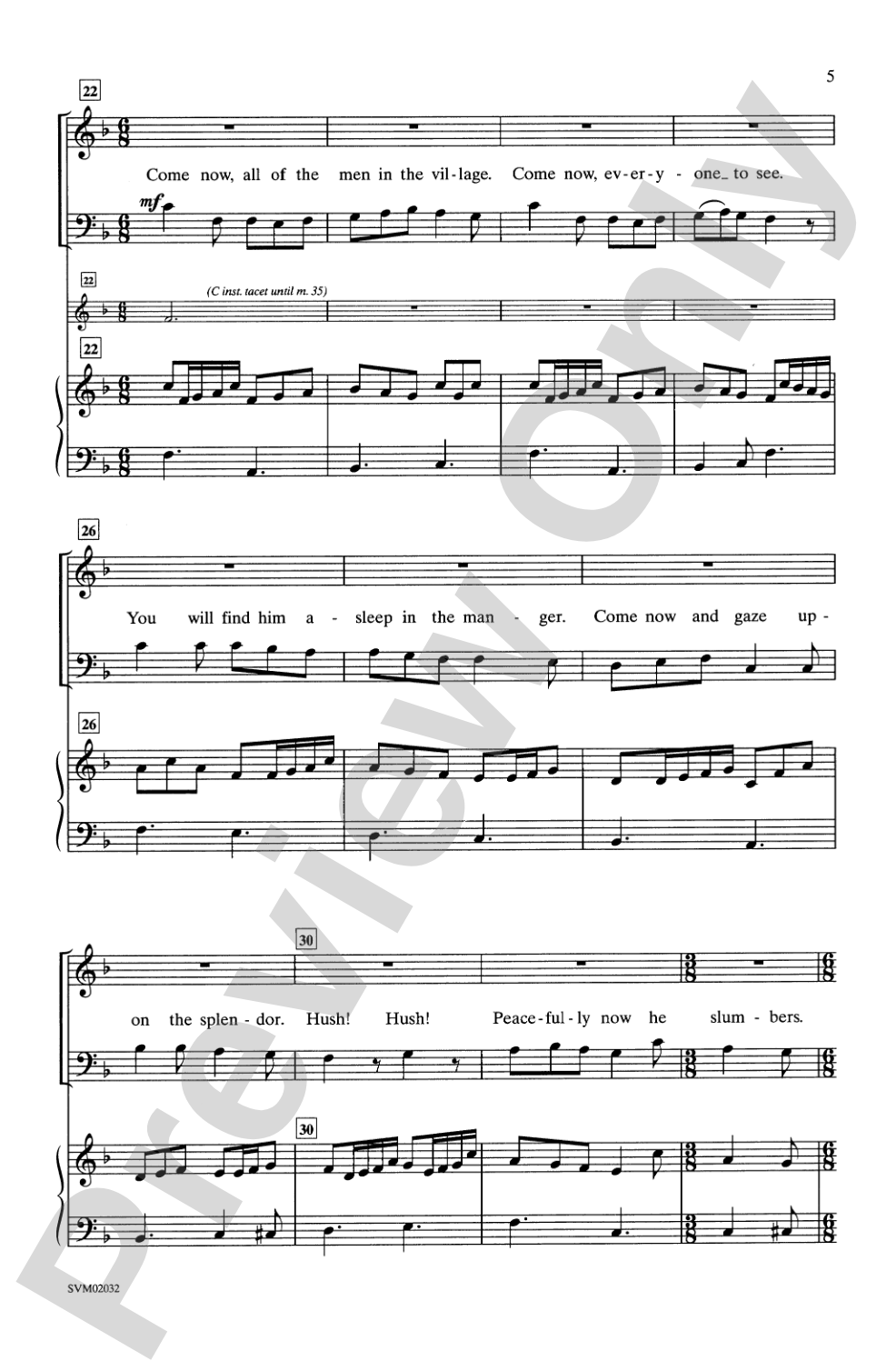

Bring a Torch, Jeannette, Isabella: SAB Choral Octavo
Traditional French Carol / arr. Russell Robinson
Level: Moderate
Item: 00-PO-0005355
$2.95
Minimum order quantity: 20 copies
Pickup currently not available
Description
This sensitive and rich choral octavo by Russell Robinson can be programmed on any holiday concert. The mixed meter adds a wonderful effect without causing confusion. Add the optional C instrument for an even classier approach.


Bring a Torch, Jeannette, Isabella: SAB Choral Octavo isn't in MakeMusic Cloud just yet...but it could be. Let us know you'd like to see it, and you'll help shape what comes next. In the meantime, start a free trial and dive into thousands of interactive titles your students can play along with today.
Request This Title
Tell us you want it.
Start Your Free Trial
Explore everything that's ready to play right now.
Sample Audio
No sample audio found.
Sample Video
No sample videos found.
Additional Details
Series:
Alfred Archive Edition: Studio PR Catalog
Publisher:
Alfred Music
Page Count:
16
SKU:
00-PO-0005355
More about this title
About the Arranger: Russell Robinson

Russell Robinson's career has spanned five decades of leadership in choral music education and conducting. As Emeritus Professor of Music Education at the University of Florida, he has guest conducted and presented at major venues including Carnegie Hall, Lincoln Center, and the Kennedy Center, while also serving as a National Collegiate Chair and Choral Adviser for NAfME. His influence extends across six continents through festival appearances, honor choir clinics, and regional and national conferences.
Robinson's creative output reflects his deep understanding of choral pedagogy and performance. With over 500 publications in print, his catalog spans choral compositions, arrangements, instructional materials, and scholarly articles. His induction into the Florida Music Educators Association Hall of Fame in 2016 recognizes both his conducting leadership and his contributions to choral literature that working directors and singers actually use in rehearsal.
Why we love this
Robinson brings maturity and restraint to a beloved carol, letting the melody breathe rather than overdressing it with unnecessary complexity. The mixed meter feels organic to the song's phrasing instead of academic, which keeps student singers engaged with the music itself rather than fighting notation. The optional C instrument adds genuine sophistication without requiring specialized personnel.
What to expect
The arrangement balances reverence with accessibility, honoring the carol's devotional character while letting it sing naturally within the SAB voicing. The mixed meter creates gentle rhythmic flexibility that feels like breathing rather than stumbling, giving singers room to phrase with warmth and intention.
Who it's for
This arrangement works for any choir building a holiday concert, from high school singers encountering this carol for the first time to mixed community choirs seeking something with real musicianship beneath the seasonal familiarity. The moderate difficulty level means strong middle school groups can also program it successfully without oversimplifying the piece.
How to get the most out of it
- Shape the phrases around the text rather than beating strict metric time; the mixed meter rewards singers who listen for meaning in the words.
- Balance the three parts so the melody floats naturally from whichever voice carries it at any given moment.
- Consider rehearsing with the optional C instrument part from early stages so instrumentalists and singers lock together comfortably before performance.
How to use it
This sits comfortably in the choral core of any winter or Christmas concert, strong enough to anchor a program segment on its own or paired with other traditional carols in a diverse holiday set. Its moderate demand on rehearsal time makes it ideal for programming in the final weeks before performance, when ensemble balance and musicality matter more than technical breakthrough.
Skills your students will build
- Reading mixed meters (3/4 and 4/4) within a single piece
- Balancing three-part voicing with independent melodic lines
- Shaping phrases according to text and harmonic function rather than metric regularity
- Coordinating with optional instrumental accompaniment