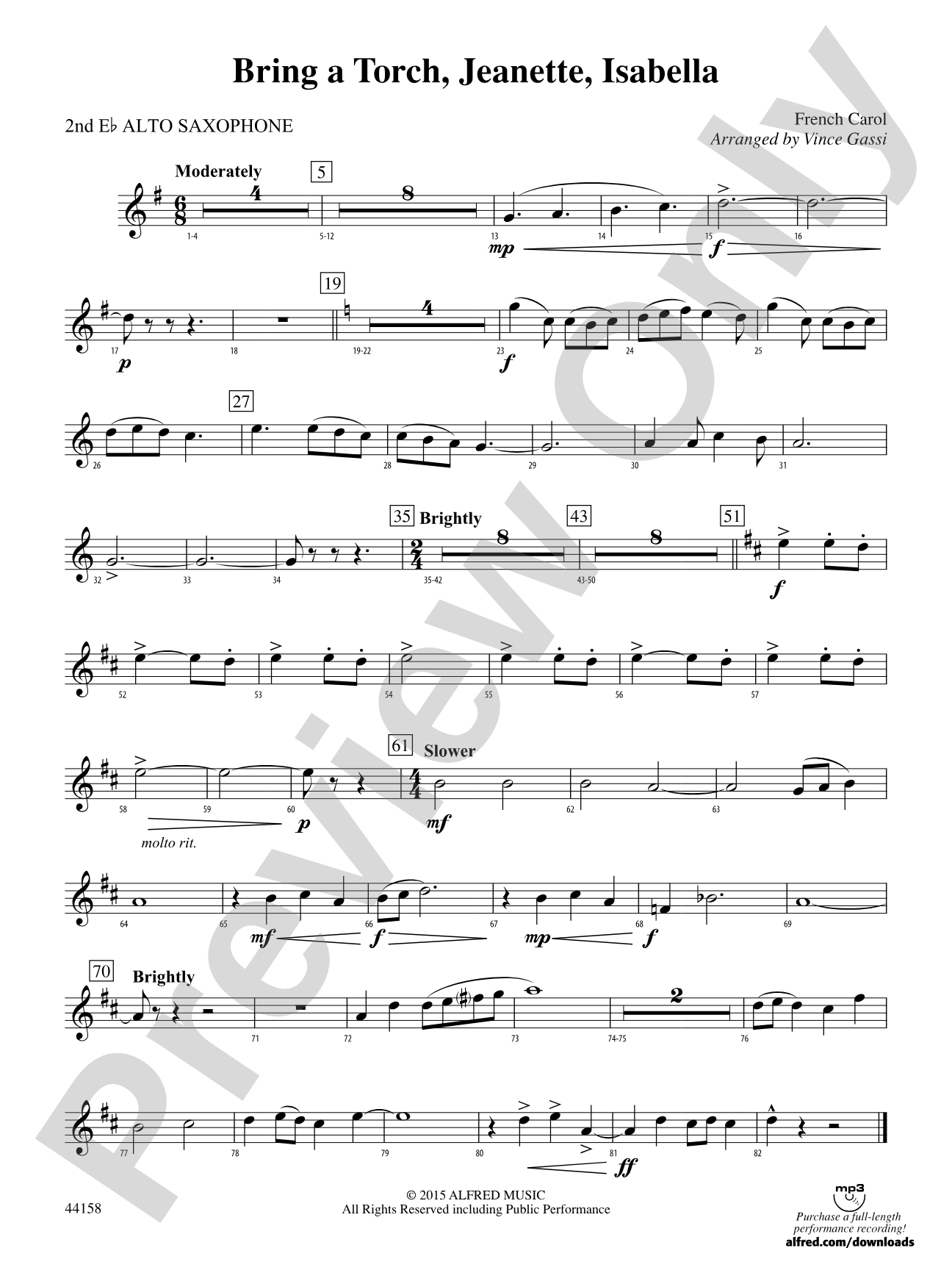
Bring a Torch, Jeanette, Isabella: 2nd E-flat Alto Saxophone Sheet Music Preview

Bring a Torch, Jeanette, Isabella: 2nd E-flat Alto Saxophone

French Carol / arr. Vince Gassi

Grade: 2 (Medium Easy)

Item: 00-PC-0017008_AX2

Digital Download
$3.00
Description
Celebrate Noel with this carol taken from a 16th century courtly dance tune. The variations in this new setting will lift your spirits as they pass from a joyous opening, through a brief moment of reflection, and on to a jubilant ending. This little bit of effervescence is a great addition to any part of your Christmas program. (2:25)

Don't just read it, hear it, play along with it, and watch your students grow with it. In MakeMusic Cloud, Bring a Torch, Jeanette, Isabella: 2nd E-flat Alto Saxophone comes alive with professional accompaniment, adjustable tempo, and built-in practice tools that turn solo practice into real progress.

Sample Audio
0:00
0:00
Sample Video
Additional Details
Series: Challenger Band Series
Publisher: Alfred Music
Page Count: 124
SKU: 00-PC-0017008_AX2

More about this title

About the Arranger: Vince Gassi

Vince Gassi

Vince Gassi has been publishing with Alfred Music since 2006 and has become one of the most prolific voices in young band literature, with over 100 works in print. His arrangements and compositions are known for their musicality and accessibility; they consistently appear on festival programs and contest lists across North America, Europe, and Japan. Gassi holds a Bachelor of Music from the University of Western Ontario and studied composition and arranging at the Dick Grove School of Music in Los Angeles. He completed his Ph.D. in music at York University in Toronto.

For more than two decades, Gassi taught instrumental music at the elementary and secondary levels and remains active as a guest conductor, adjudicator, and clinician. His seminars on creative engagement and digital workflows for music directors reflect his commitment to helping educators and students work together in the creative process. His arrangements are heard regularly at major venues including the Midwest Clinic in Chicago.

Why we love this

Gassi's treatment of this 16th century tune gives you real variety without overcomplicating the score. The arc from joyful opening through a quieter moment and back to jubilation gives your students something genuinely musical to shape, and the Grade 2 level means even developing bands can execute the contrasts effectively.

What to expect

Jeanette and Isabella opens with infectious brightness, the kind of energy that feels festive without being cloying. The middle section brings quiet introspection that shows your students' ability to shape and breathe together, before the final section erupts with genuine joy and celebration.

Who it's for

Band directors programming Grade 2 Christmas concerts who want something more thoughtfully arranged than a straight carol reading. This works equally well early or late in the concert because it stands alone and doesn't demand a specific program context.

How to get the most out of it

  • Bring out the character shift at the reflective section by adjusting dynamics carefully; this brief moment of restraint makes the final jubilant section land harder.
  • Balance the melody between sections so it stays prominent regardless of which instruments carry it, ensuring the familiar tune remains the anchor throughout.
  • Keep the opening buoyant with articulation clarity; crisp attacks in the early statements establish the "effervescent" character Gassi intended.
  • Allow the final section to build with confidence; this is where the full band energy pays off, so conductor energy and clear cues are essential.

How to use it

Use this as a centerpiece for a shorter Christmas set, or as a standalone holiday offering that fills a 2.5-minute slot with substance. It pairs well with other carols at this level because Gassi's arrangement is distinctive enough to justify varied programming rather than feeling like filler.

Skills your students will build

  • Shaping phrase dynamics to create sectional contrast
  • Maintaining ensemble balance across changing instrumentation
  • Playing with articulation clarity at moderate tempos
  • Understanding how arrangement and variation extend a simple melody

You May Also Like