
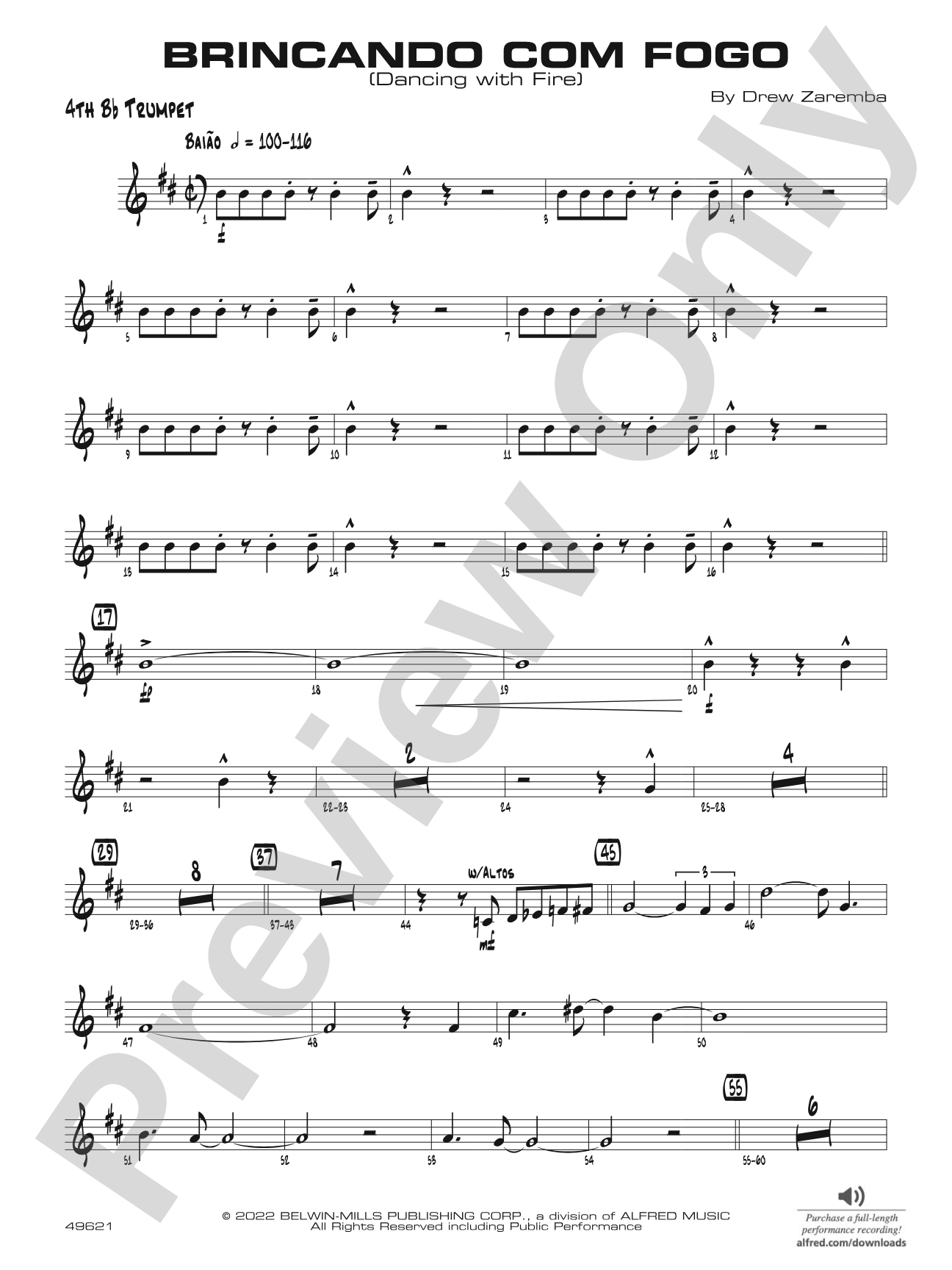

Brincando com Fogo: 4th B-flat Trumpet
(Dancing with Fire)
By Drew Zaremba
Grade: 3.5
Item: 00-PC-0018849_T4
$3.00
Pickup currently not available
Description
Brincando com Fogo by Drew Zaremba is a fiery baião Latin played at half note = 100 BPM. Lead trumpet range is to written G on top of the staff, suggested written solos for tenor 1 and trumpet 2, space for drum fills, auxiliary percussion, optional instruments to include vibes, plus non-stop action. Energy abounds! (6:16) This title is available in MakeMusic Cloud.


Don't just read it, hear it, play along with it, and watch your students grow with it. In MakeMusic Cloud, Brincando com Fogo: 4th B-flat Trumpet comes alive with professional accompaniment, adjustable tempo, and built-in practice tools that turn solo practice into real progress.
Open in the Player
Jump straight in and assign it today.
Start Your Free Trial
Open this title and explore the full library in minutes.
Sample Audio
1
Audio File
--:--
0:00
0:00
Sample Video
Additional Details
Series:
Jazz Band Series
Publisher:
Alfred Music
SKU:
00-PC-0018849_T4
More about this title
About the Composer: Drew Zaremba
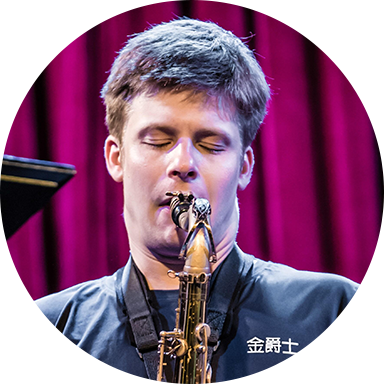
Drew Zaremba has built a distinguished career as a composer, arranger, and conductor working across classical, jazz, and world music contexts. His commissions and collaborations span major orchestras including the BBC, Dallas Symphony, and Metropole Orkest, alongside work with acclaimed soloists such as Randy Brecker, Eddie Gomez, and members of Chicago. He joined the University of Northern Colorado faculty in 2018, where he teaches jazz composition and arranging.
Zaremba's ambition extends beyond traditional jazz writing. A two-month residency in Zhuhai, China resulted in a full concert titled "Crossing Chinese Opera with Jazz," demonstrating his commitment to cross-cultural musical dialogue. His original compositions have earned significant recognition, including the Sammy Nestico Award in 2018 and first prize in the Sherman/Barsanti Inspiration Award. His work has been recorded extensively with the University of North Texas Lab Bands and published through Sierra Music and UNC Jazz Press.
Why we love this
This piece captures the relentless momentum of authentic baião without sacrificing the accessibility your ensemble needs at this level. The half-note pulse at 100 BPM sits comfortably for developing jazz players while the fiery articulation and non-stop rhythmic drive demand real commitment from every section. You get genuine Latin jazz character and genuine ensemble energy in one package.
What to expect
Brincando com Fogo burns with infectious Brazilian rhythm and relentless forward motion. The piece layers bright horn writing over propulsive bass and drums, creating a sound that feels both sophisticated and irresistibly danceable. You can feel the heat in every measure.
Who it's for
Jazz ensemble directors working with high school or early college students who are ready to stretch beyond beginner swing charts but still need accessible range and part writing. Players need basic jazz vocabulary (swing feel, blues changes, ensemble reading) but not advanced soloing experience, since written solos frame the expected style.
How to get the most out of it
- Establish the swing feel early in rehearsals; the baião rhythm sits between straight and swing, so lock the rhythm section on the characteristic Brazilian comping patterns before adding soloist textures.
- Give trumpet 2 and tenor 1 clear ownership of their solo sections; these written suggestions work as performance models, but encourage students to find their own voice within the harmonic framework.
- Balance the auxiliary percussion carefully so drums and vibes enhance rather than muddy the Latin foundation; the piece thrives on transparency in the high-end textures.
- Use the drum fill spaces to build anticipation; these moments are your chance to create dynamic contrast before the ensemble re-enters with full energy.
How to use it
Program this as an energizer mid-set or as the closer to a concert that needs a high-octane finish. It pairs well with ballads or swing standards earlier in the program, offering stark contrast in tempo and texture. The six-minute duration makes it substantial enough to anchor a jazz portion of a mixed ensemble concert without overwhelming your rehearsal calendar.
Skills your students will build
- Reading and executing baião rhythms with consistent precision
- Swing feel within a Latin framework (distinguishing straight rhythms from swung phrasing)
- Ensemble articulation in fast-moving jazz passages
- Soloing over changes using written models as guides
- Listening and responding to rhythm section pocket