
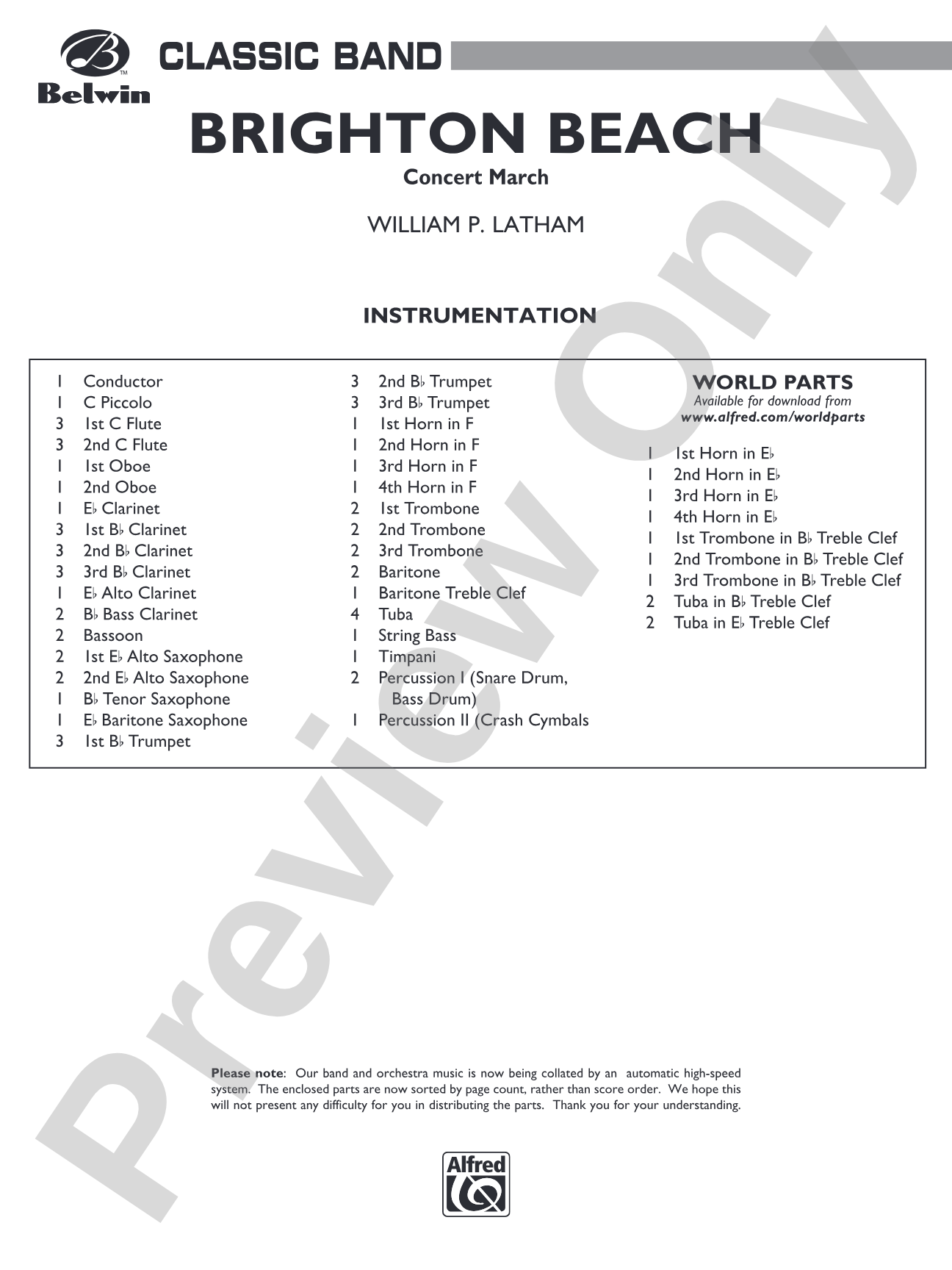
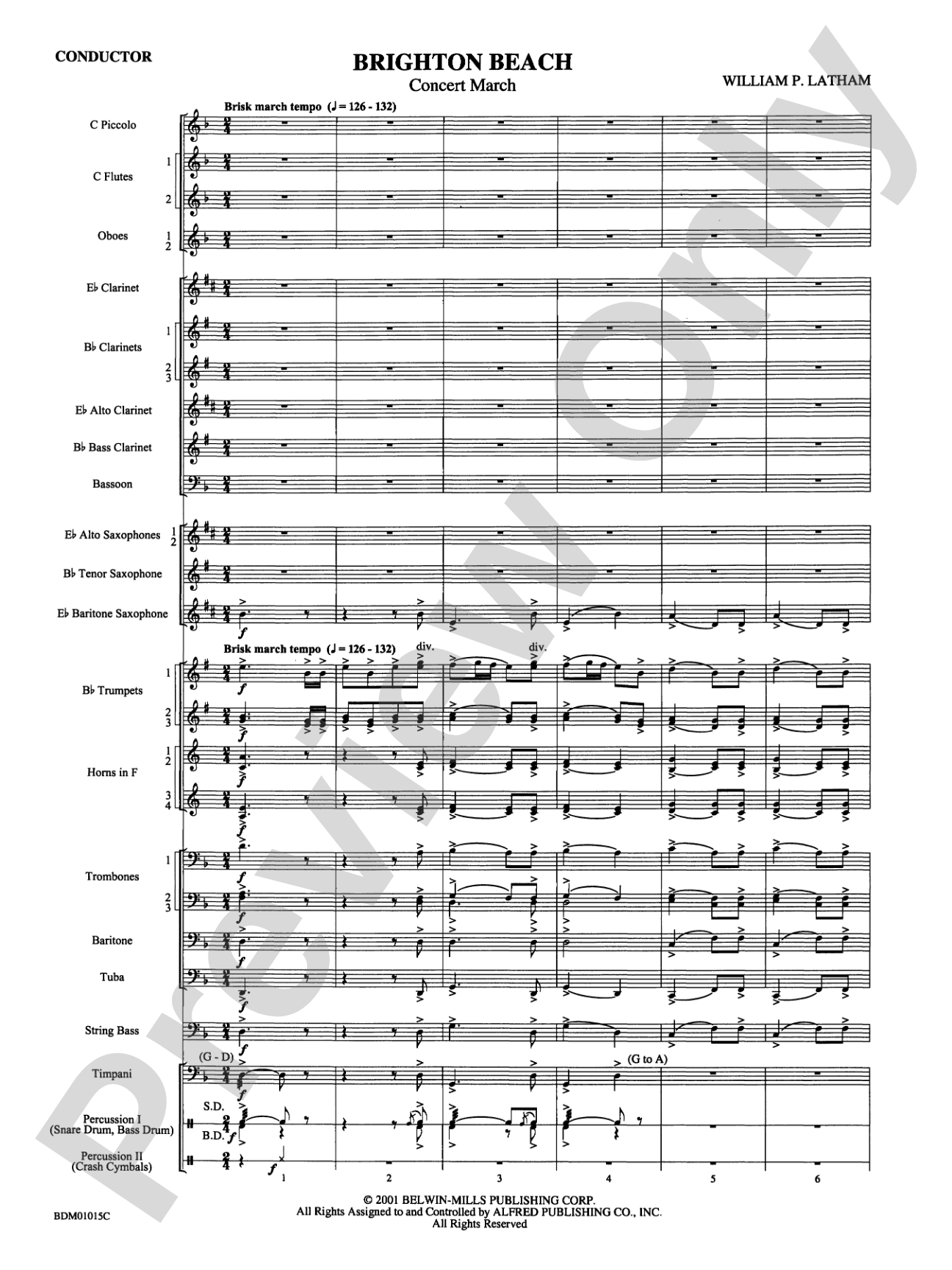
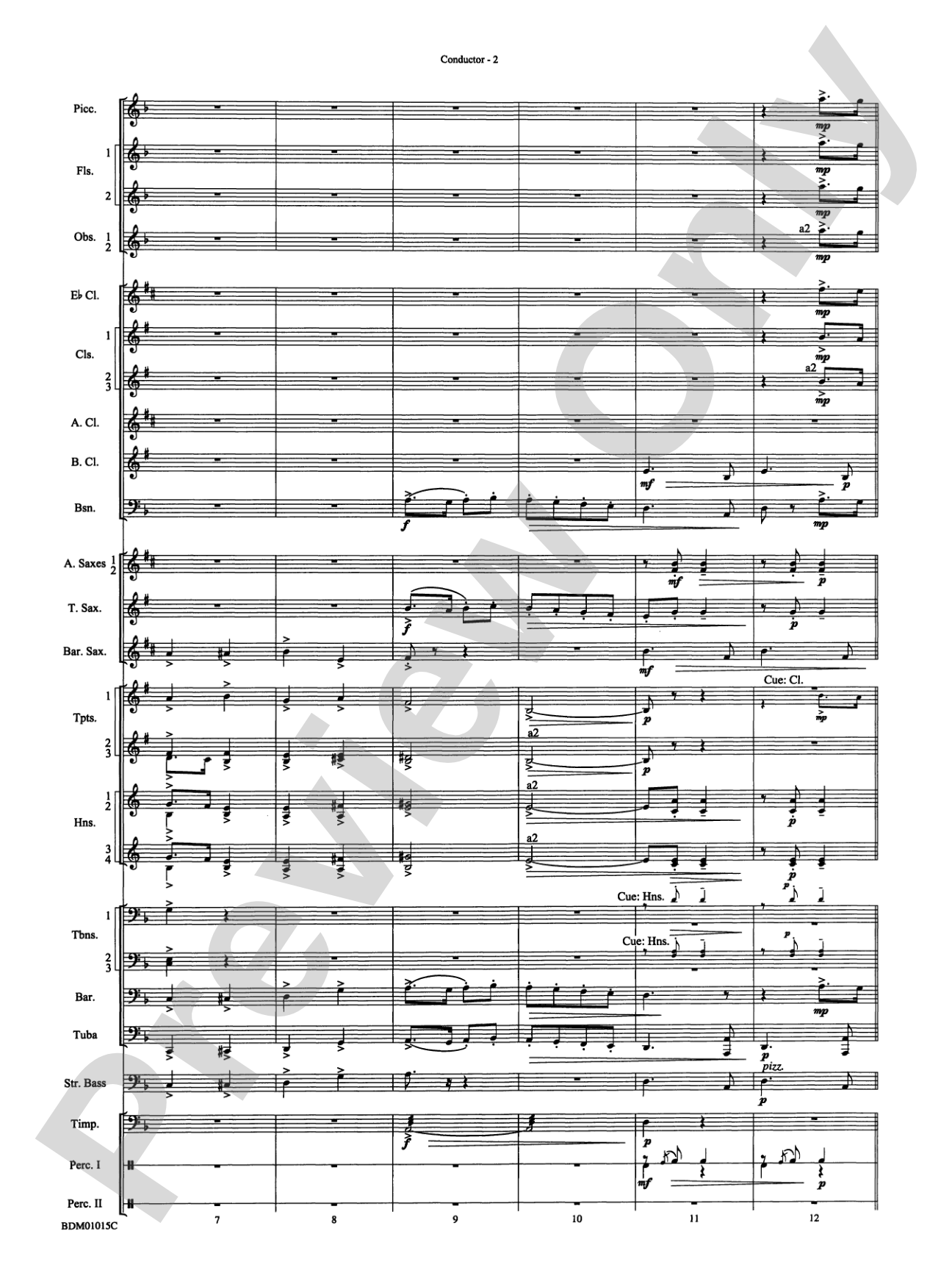
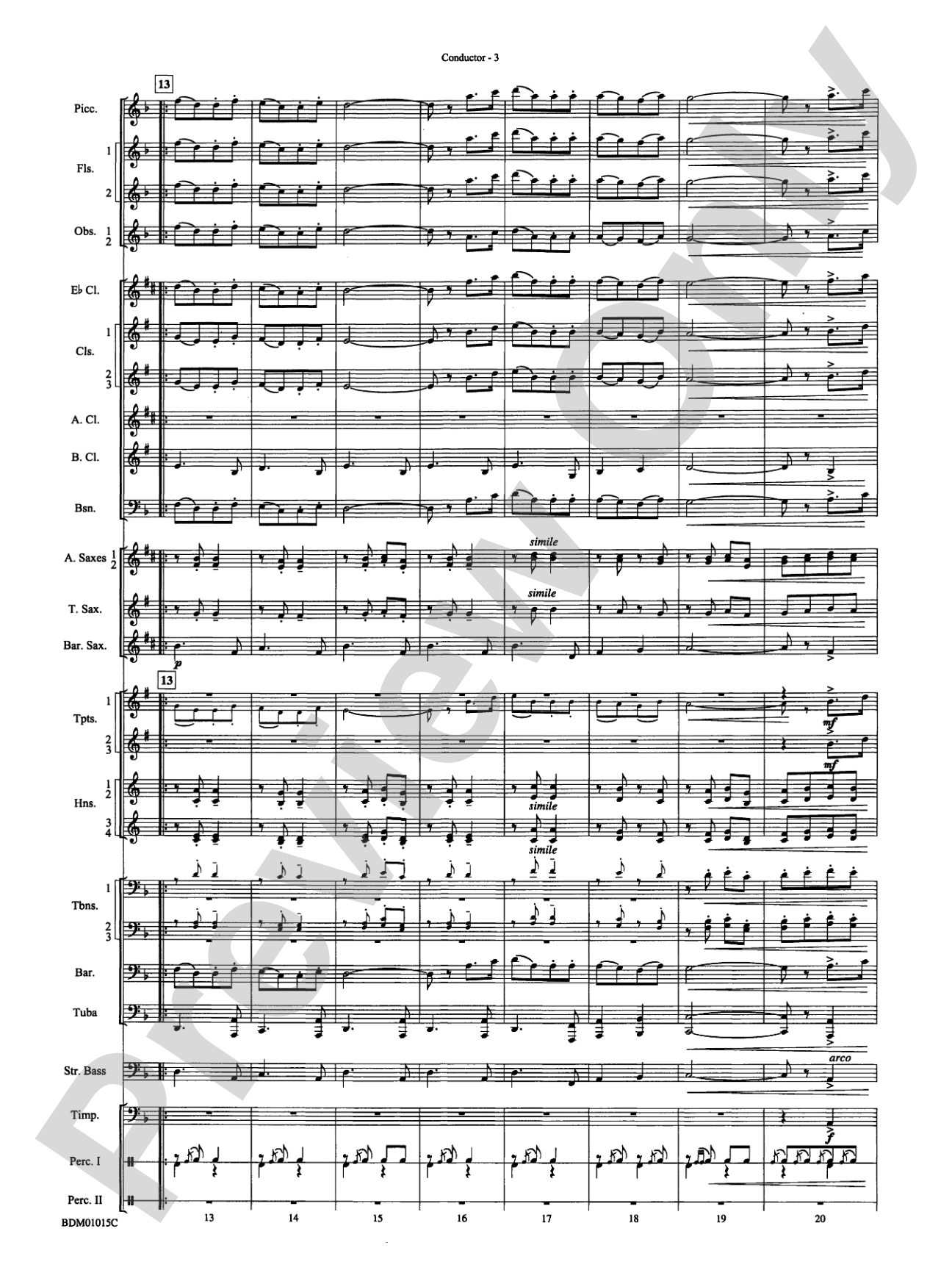
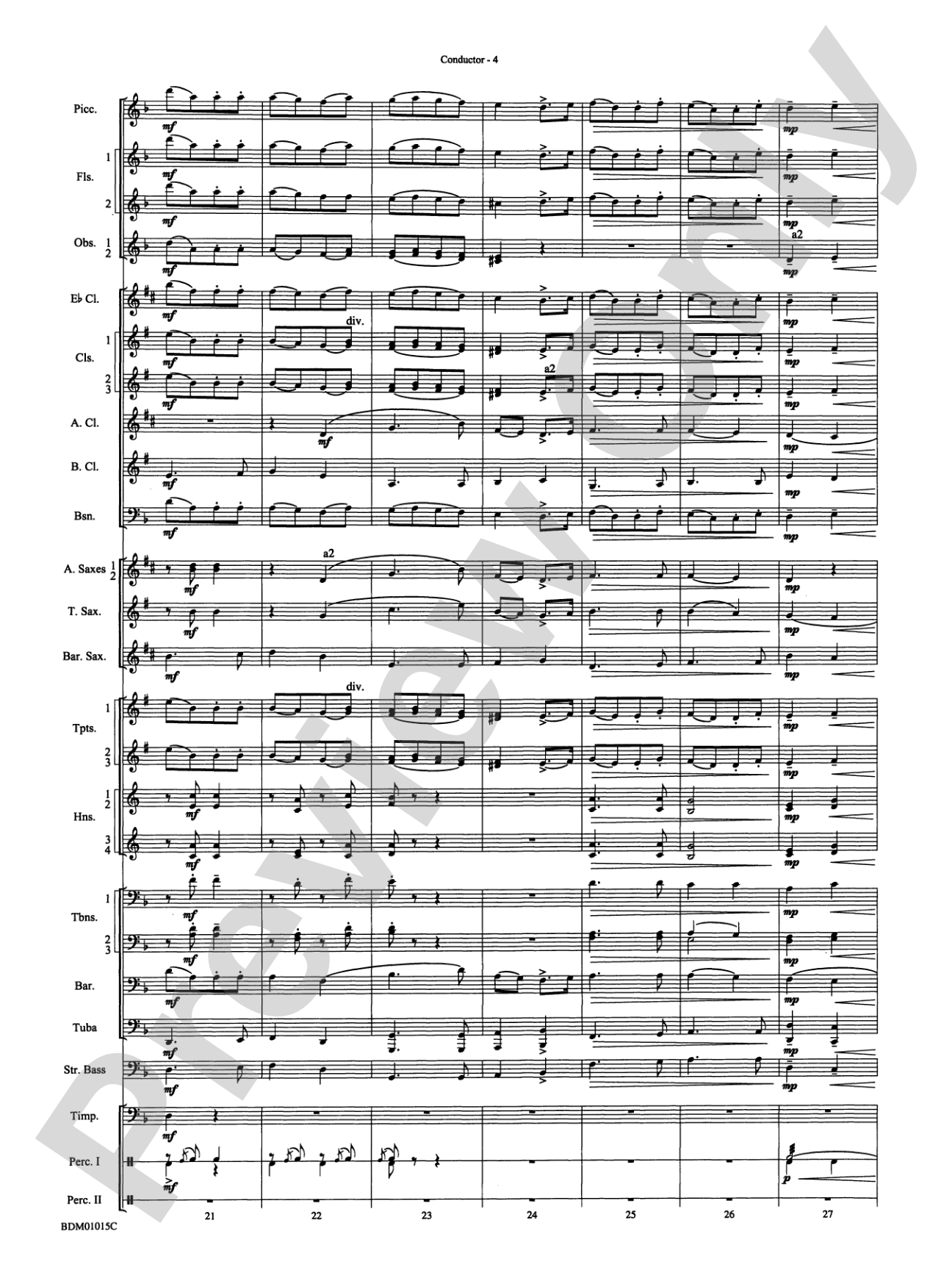
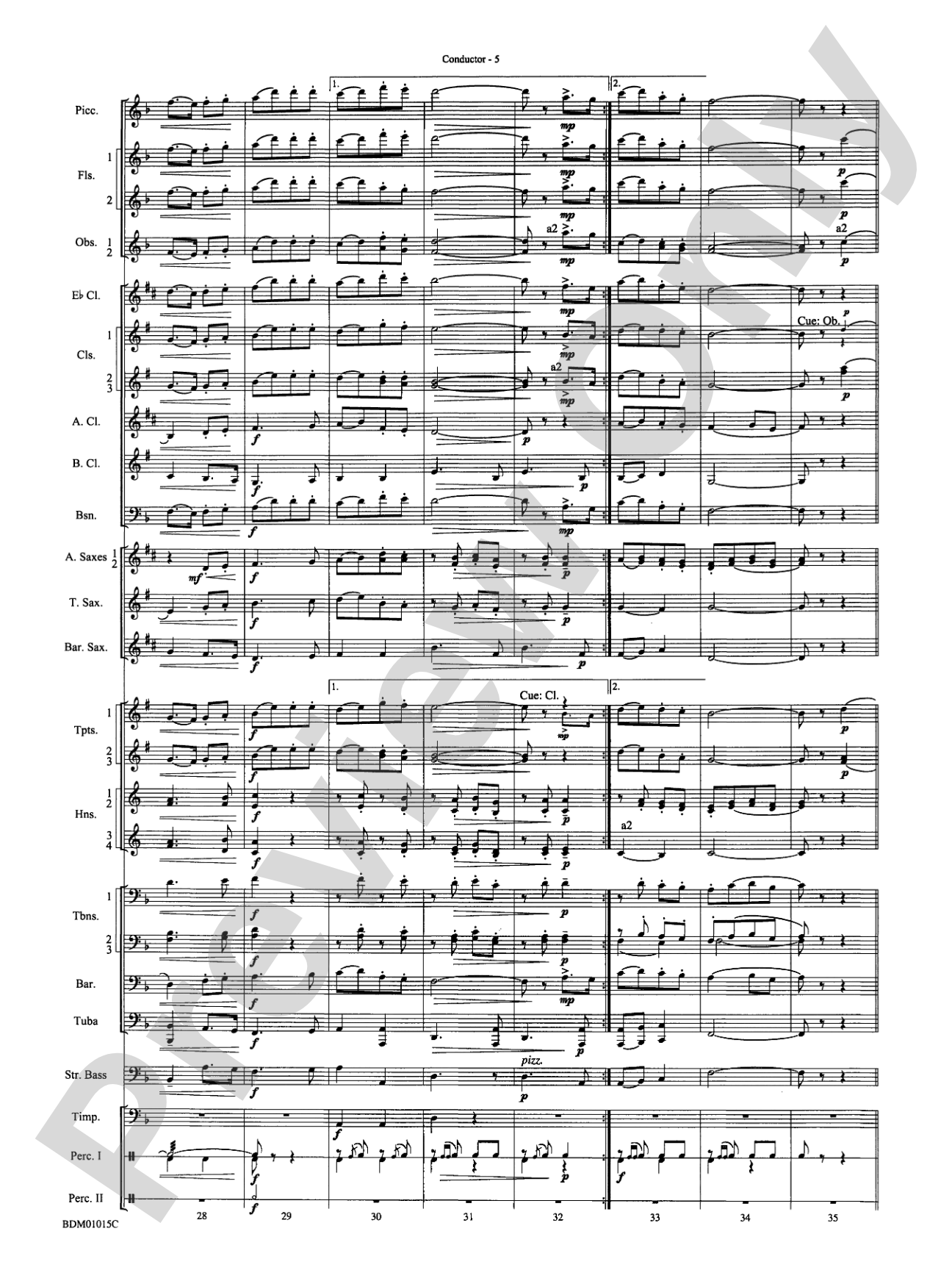
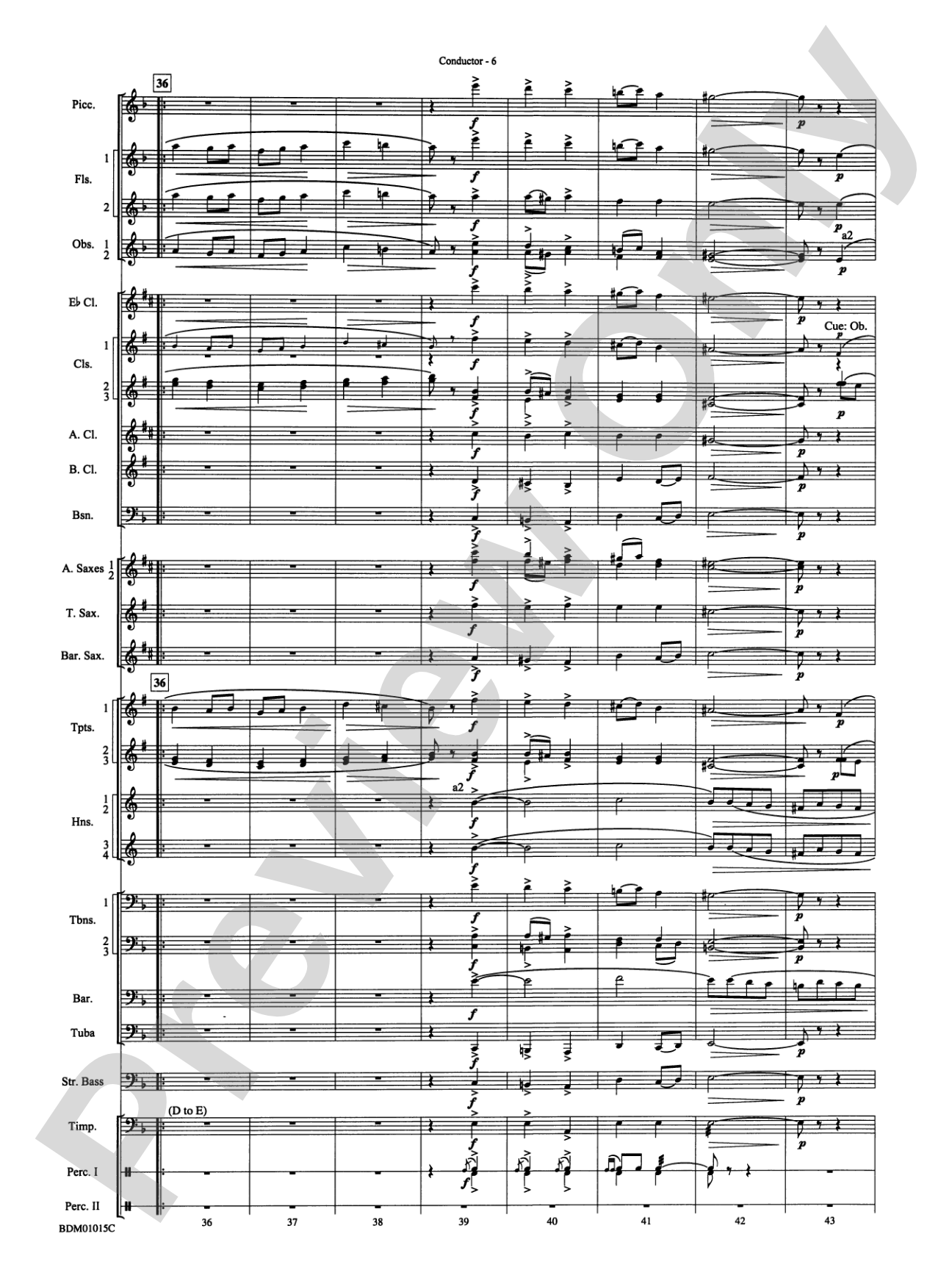
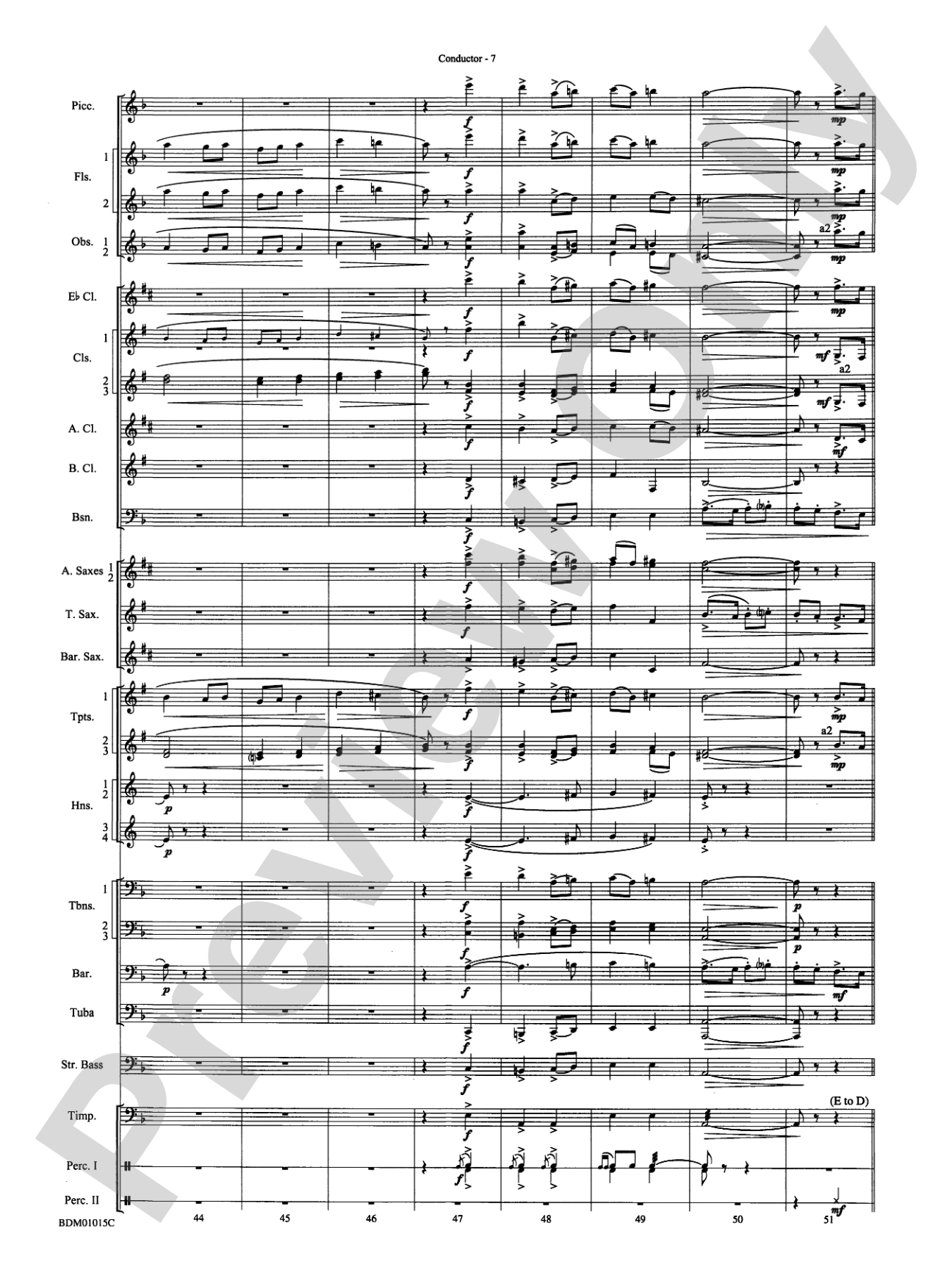
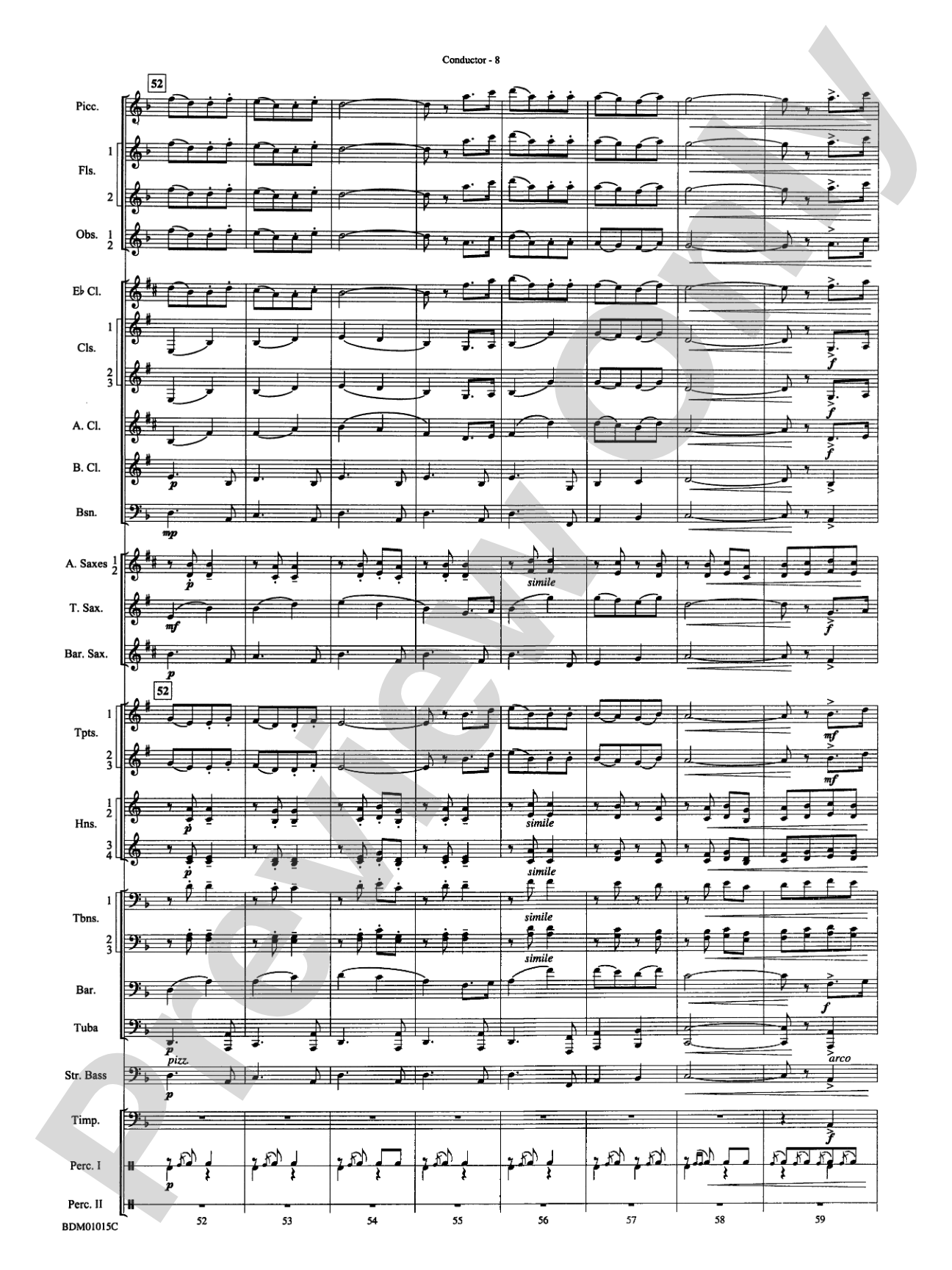
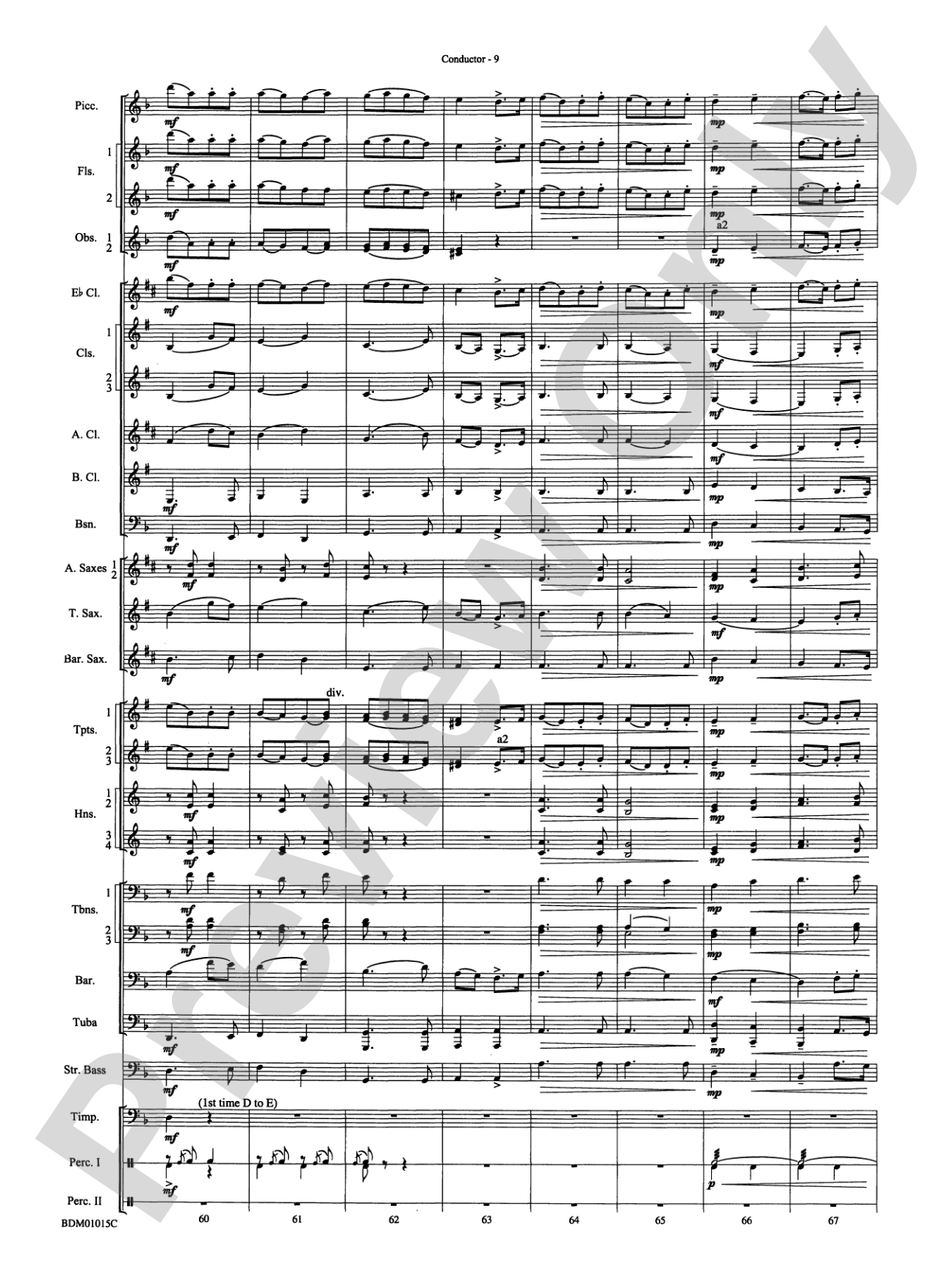
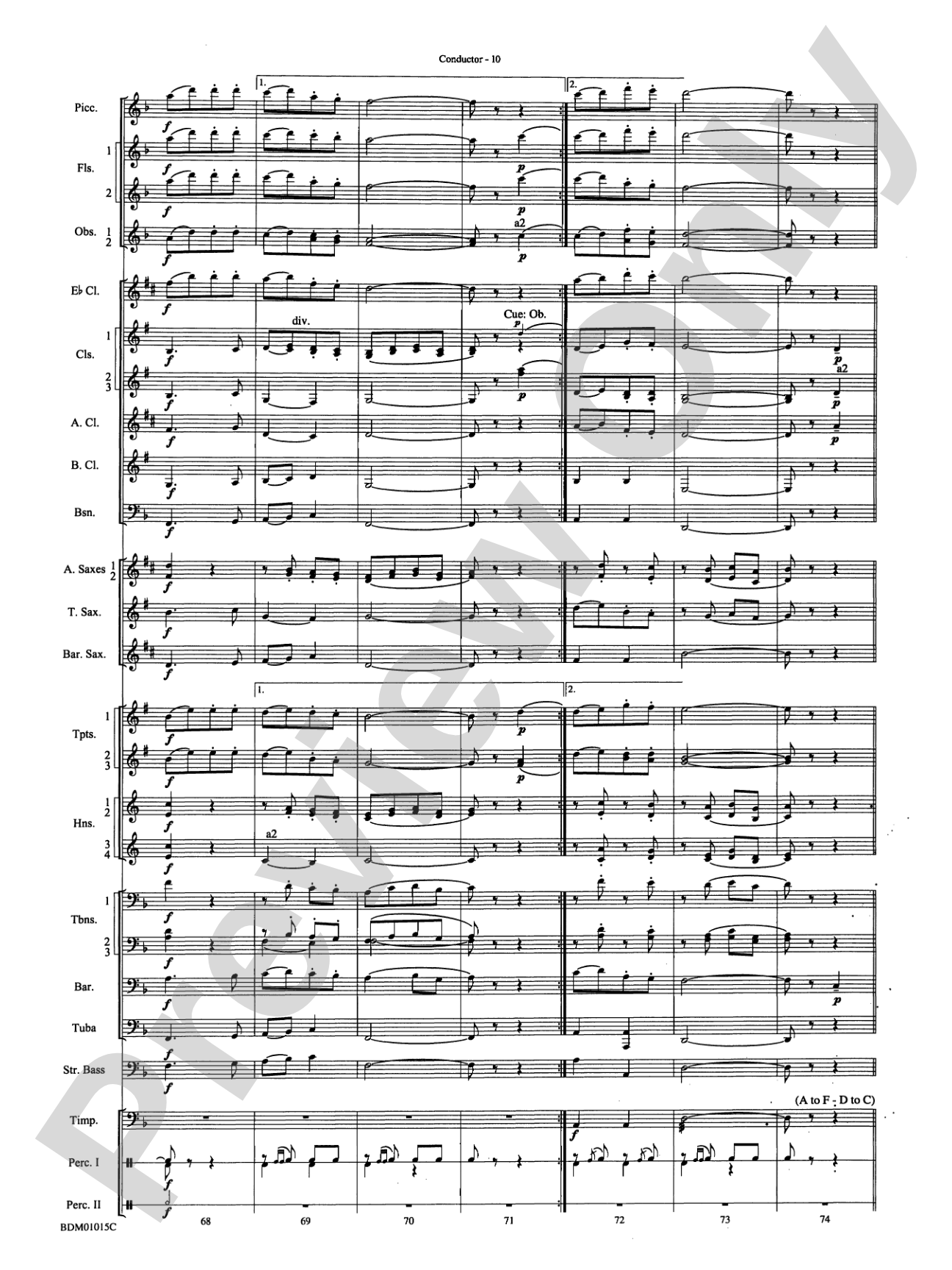
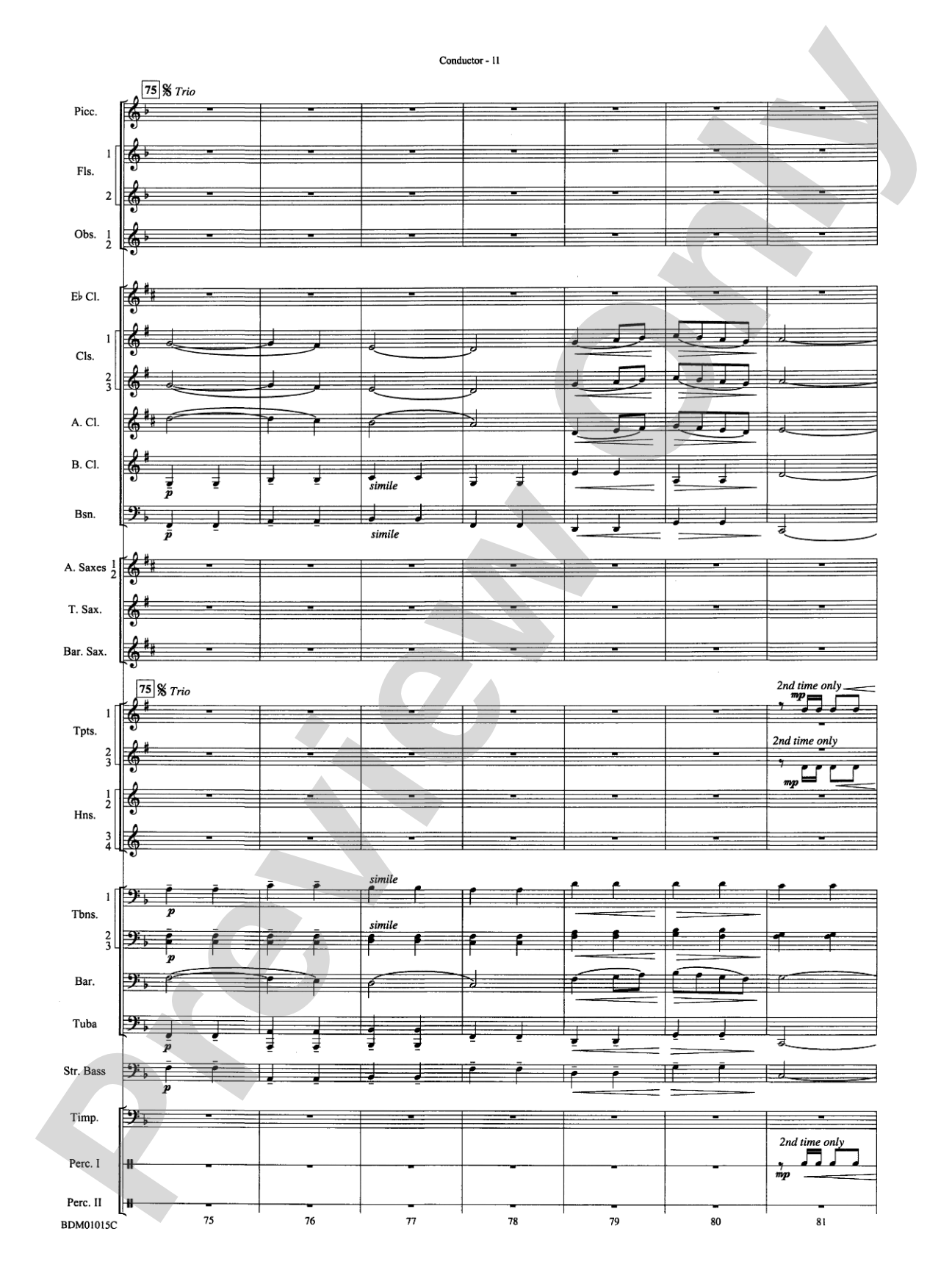
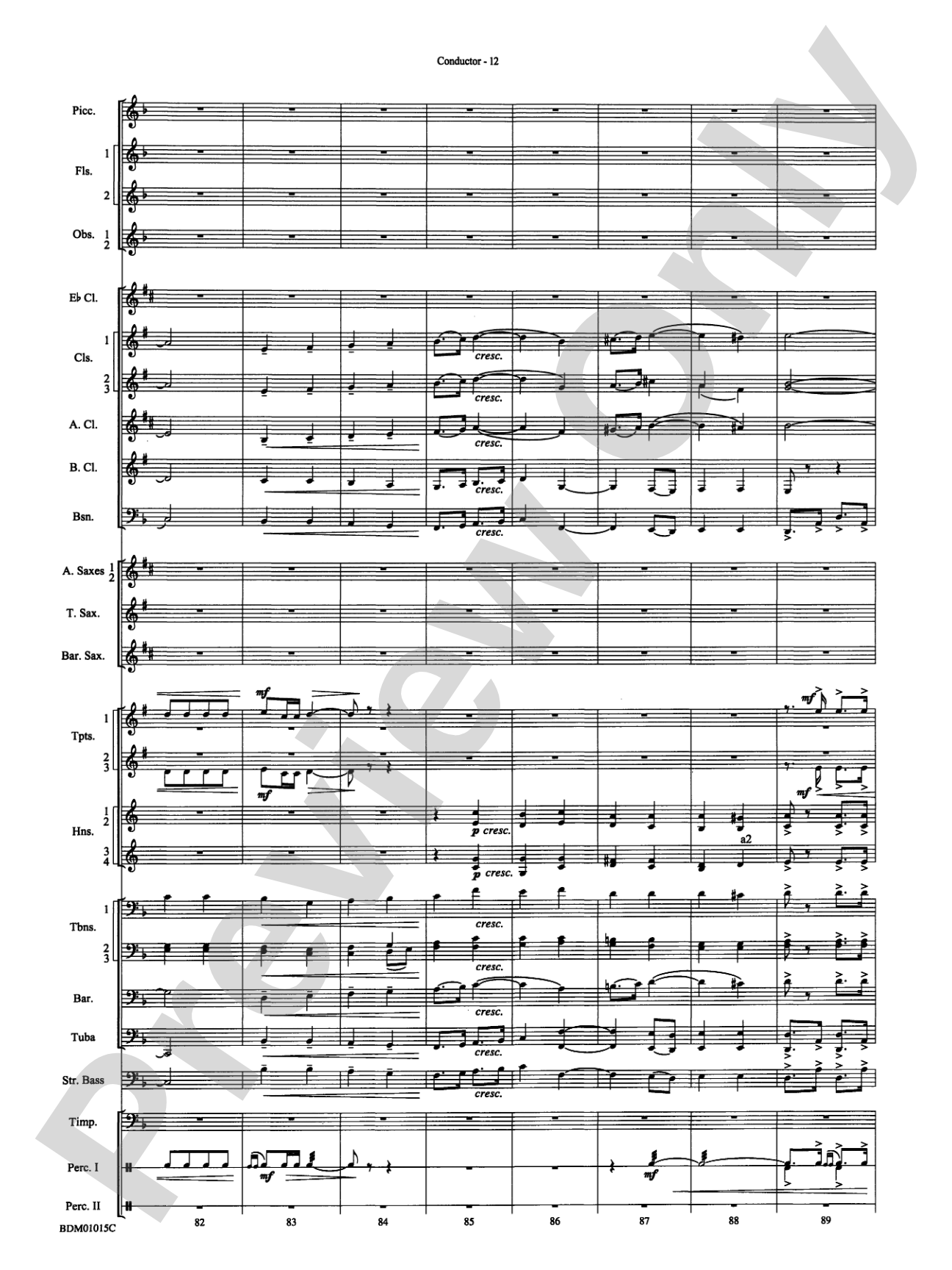
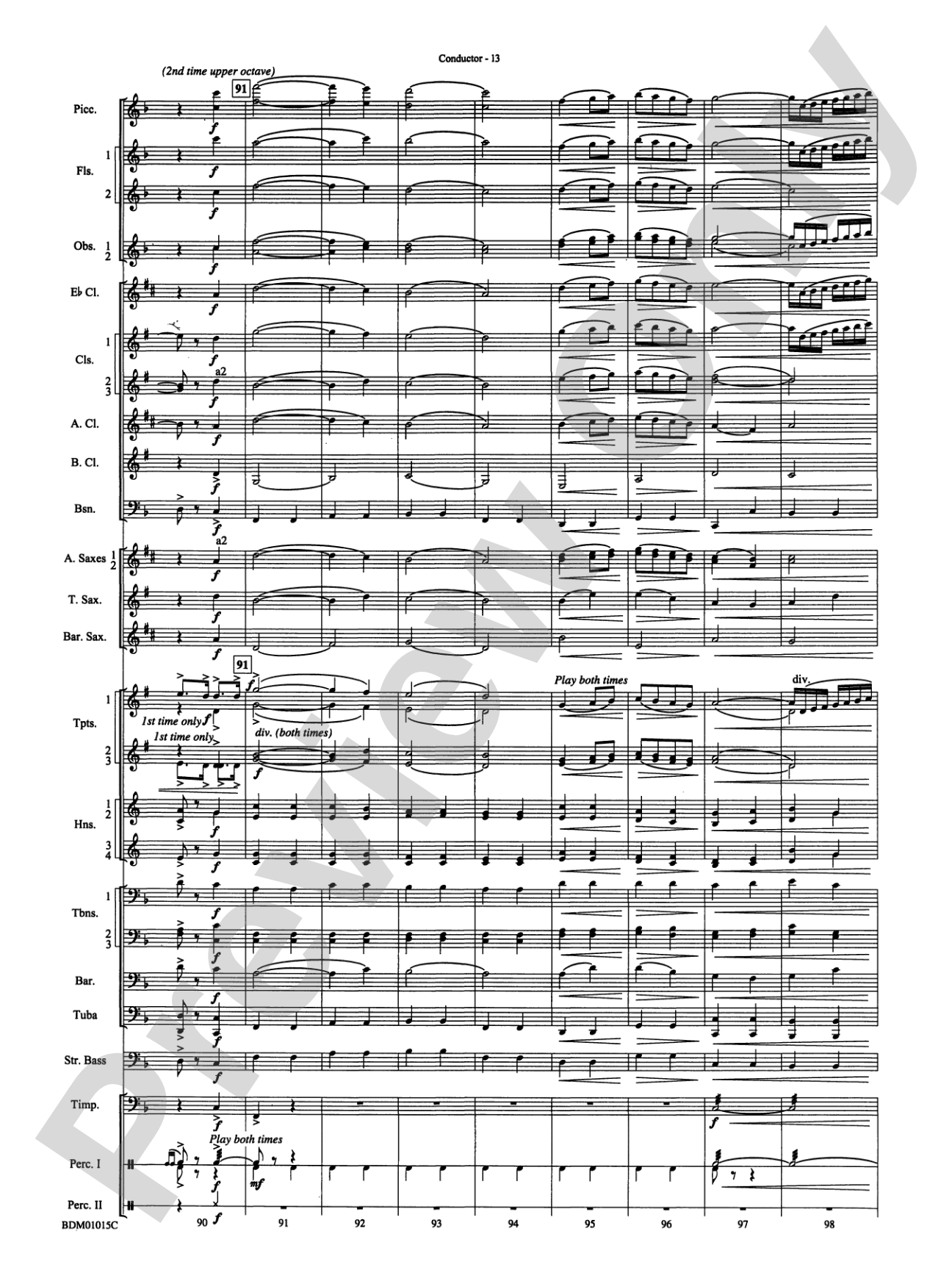
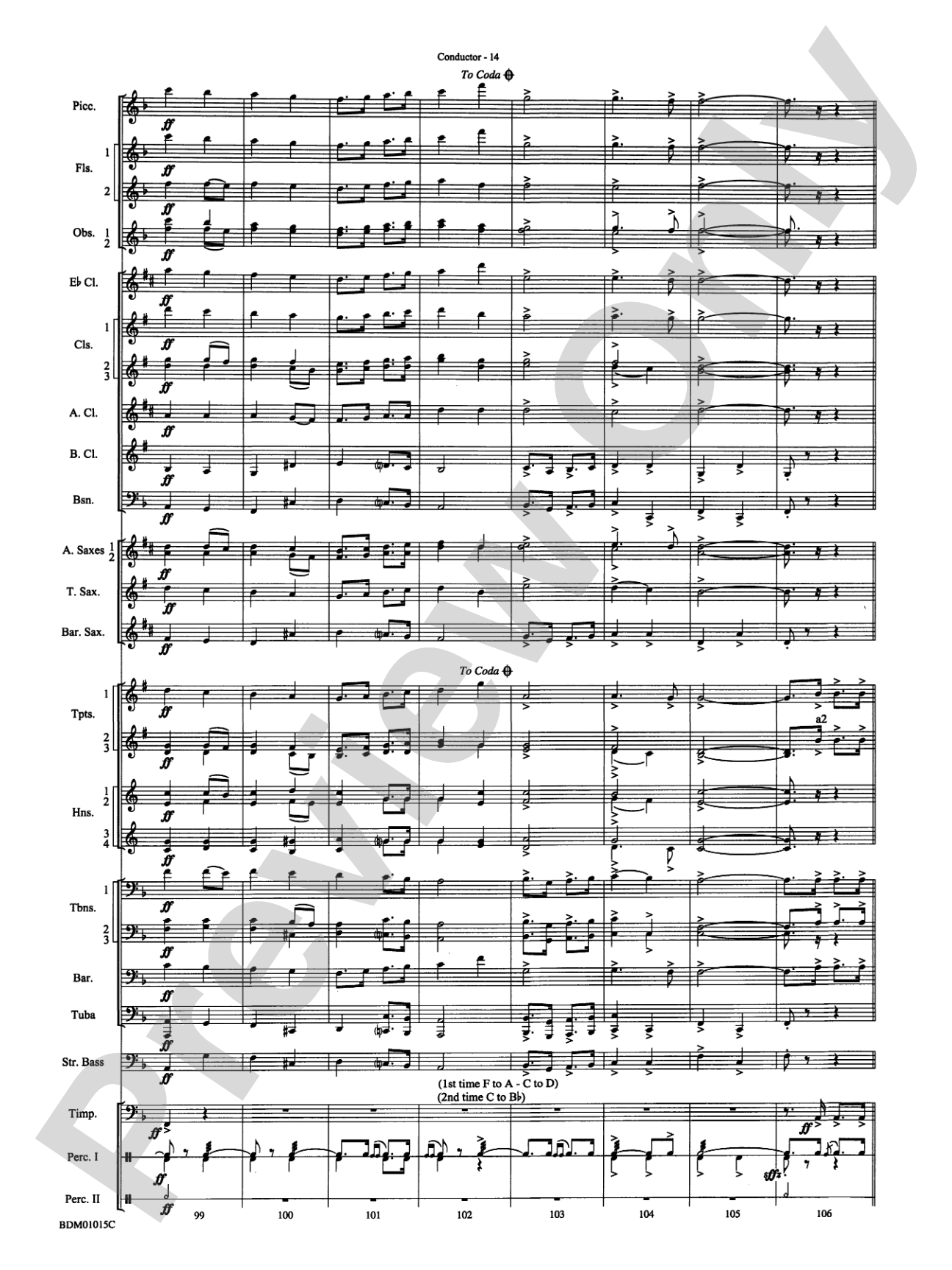
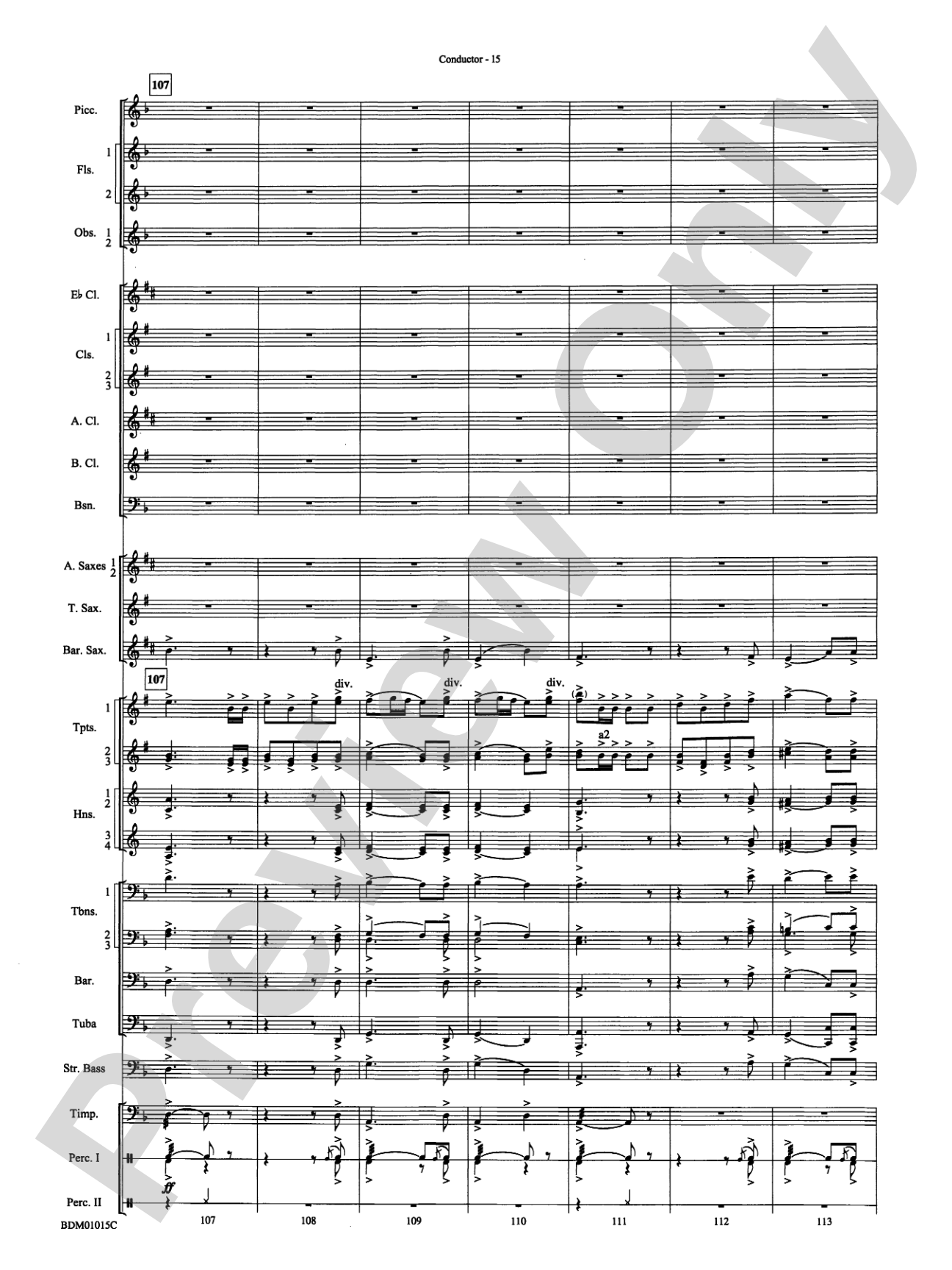
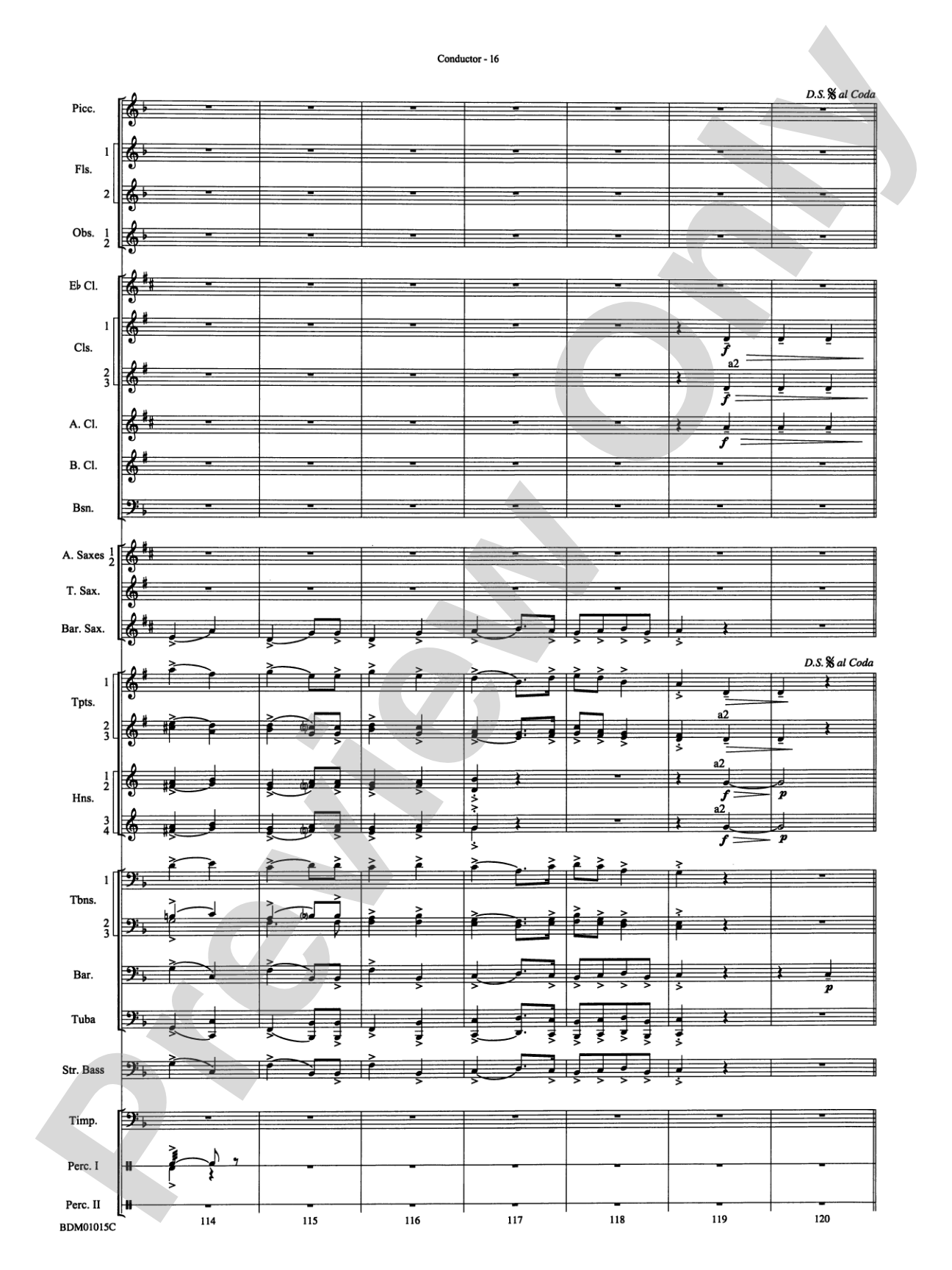
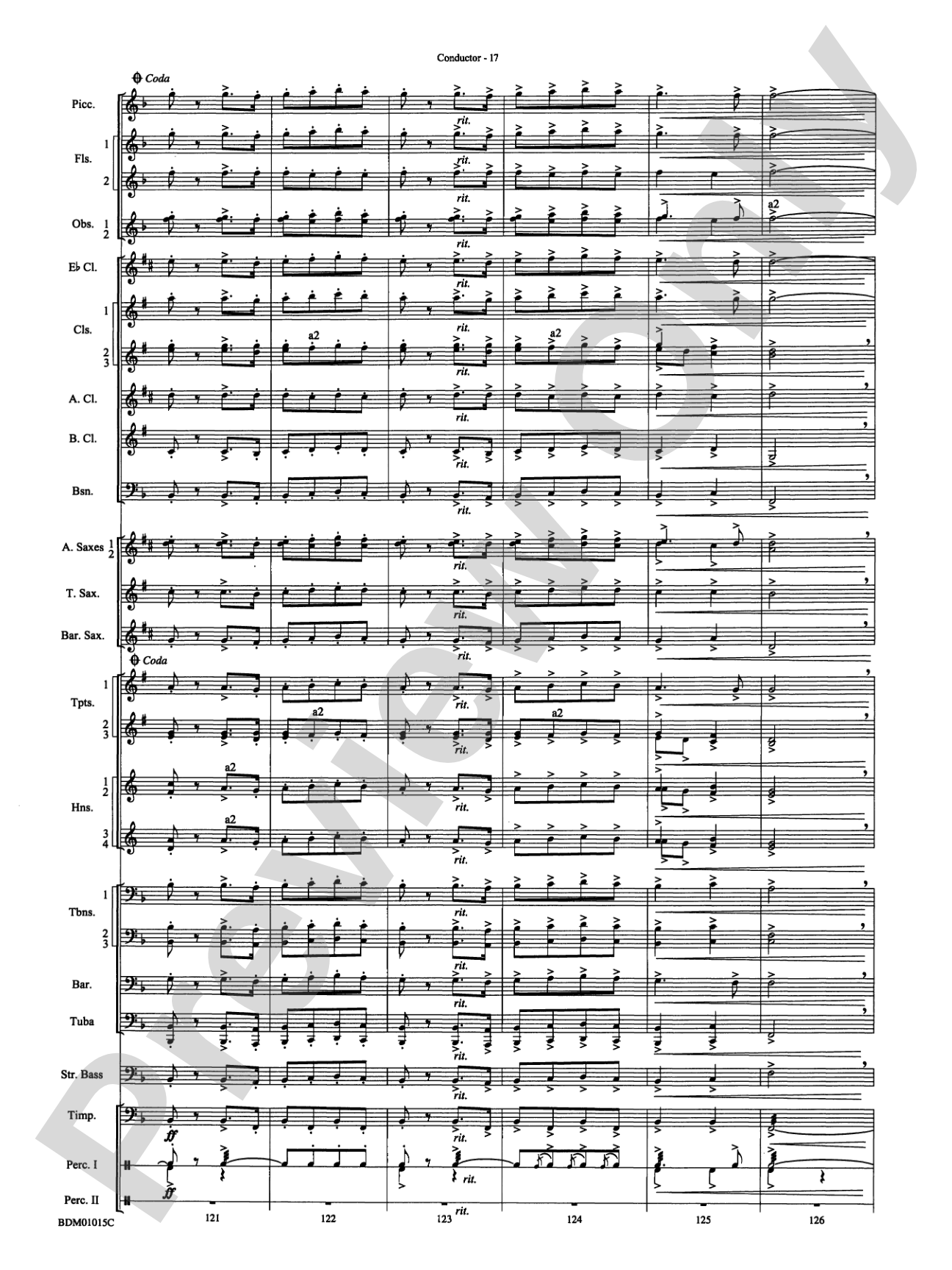
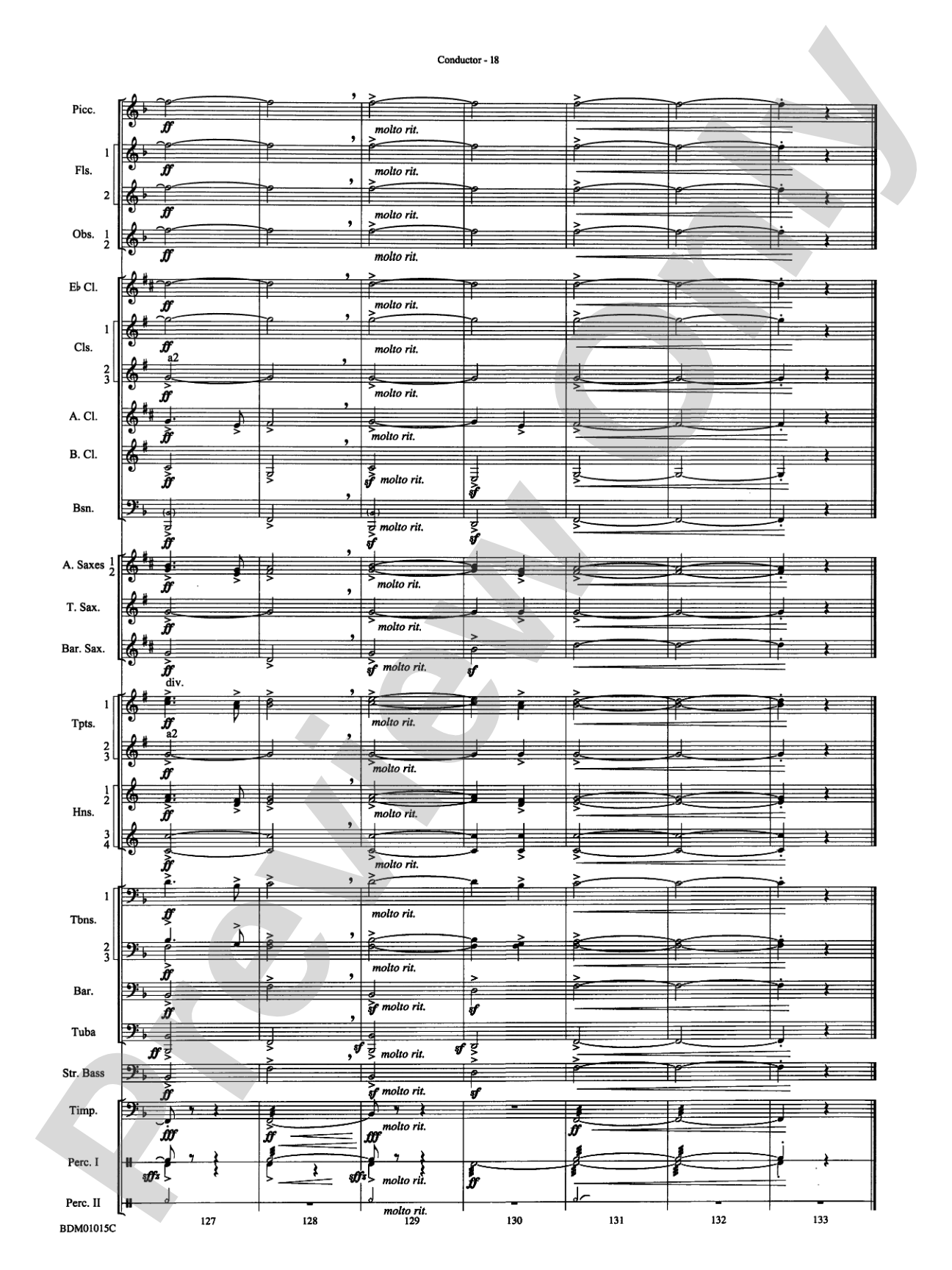


Brighton Beach (Concert March): Score
Concert March
By William P. Latham
Grade: 3 (Medium Easy)
Item: 00-PR-0002112
$12.00
Pickup currently not available
Description
Numerous dynamic contrasts combined with unique woodwind contributions unite in this solid concert march. William Latham's "Brighton Beach" concert march serves equally well as an outstanding recessional for graduation ceremonies. This work is a must for every school band library. (3:51) This title is available in MakeMusic Cloud.


Don't just read it, hear it, play along with it, and watch your students grow with it. In MakeMusic Cloud, Brighton Beach (Concert March): Score comes alive with professional accompaniment, adjustable tempo, and built-in practice tools that turn solo practice into real progress.
Open in the Player
Jump straight in and assign it today.
Start Your Free Trial
Open this title and explore the full library in minutes.
Sample Audio
1
Audio File
--:--
0:00
0:00
Sample Video
Additional Details
Series:
Belwin Classic Band
Publisher:
Alfred Music
Page Count:
284
SKU:
00-PR-0002112
More about this title
About the Composer: William P. Latham
William P. Latham (1917-1999) composed over 150 works for band, orchestra, and chorus during a career spanning five decades. He held teaching positions at several universities and was deeply committed to writing accessible concert music that challenge students without overwhelming them. Latham's marches and concert pieces remain staples in school band libraries, valued for their musical substance and practical scoring.
Latham understood the developmental needs of young ensembles and wrote with clarity and intention. His works balance strong thematic content with manageable technical demands, making them ideal for teaching solid musicianship while building confidence.
Why we love this
Brighton Beach exemplifies why Latham's marches have endured in school band repertoire. The woodwind writing is genuinely interesting without becoming sectional showcase material; those colorful contributions emerge naturally from the harmonic structure rather than feeling tacked on. The dynamic range keeps energy focused and prevents the piece from settling into predictable march patterns, and it works equally well as a concert opener or closing recessional.
What to expect
Brighton Beach has the confident stride of a classic concert march without sacrificing harmonic interest or orchestral sophistication. Woodwind colors shift the piece away from predictability, creating moments of brightness and unexpected warmth. The work feels both ceremonial and celebratory, fitting equally well at a formal graduation or a spring concert.
Who it's for
Concert bands at the Grade 3 level will find this a solid addition to their concert and ceremonial repertoire. Directors seeking a graduation recessional with genuine musical substance rather than a generic processional will appreciate Latham's approach. The piece also works well for contest or festival programming where a well-crafted march with character is needed.
How to get the most out of it
- Balance the woodwind contributions carefully. They should color the texture without overpowering the brass foundation. Latham's scoring allows these voices to emerge clearly when properly balanced.
- Shape the dynamic contrasts deliberately. The shifts in intensity are compositional features, not accents. Bring them out cleanly so the form remains clear.
- Maintain steady march tempo and secure articulation in the ensemble. Clear rhythmic precision makes the woodwind writing sparkle.
How to use it
Program this as a recessional at graduation ceremonies, where it provides a dignified yet spirited closing. On a concert, it pairs well alongside lighter contemporary fare or as a contrast to a dramatic work. The piece also makes an excellent opener when you want to establish energy and polish right away.
Skills your students will build
- Maintaining steady tempo and rhythmic precision in march form
- Balancing multiple melodic lines within the ensemble
- Responding to subtle dynamic shifts and their effect on phrasing
- Tuning unison and octave doublings in brass and woodwind sections