
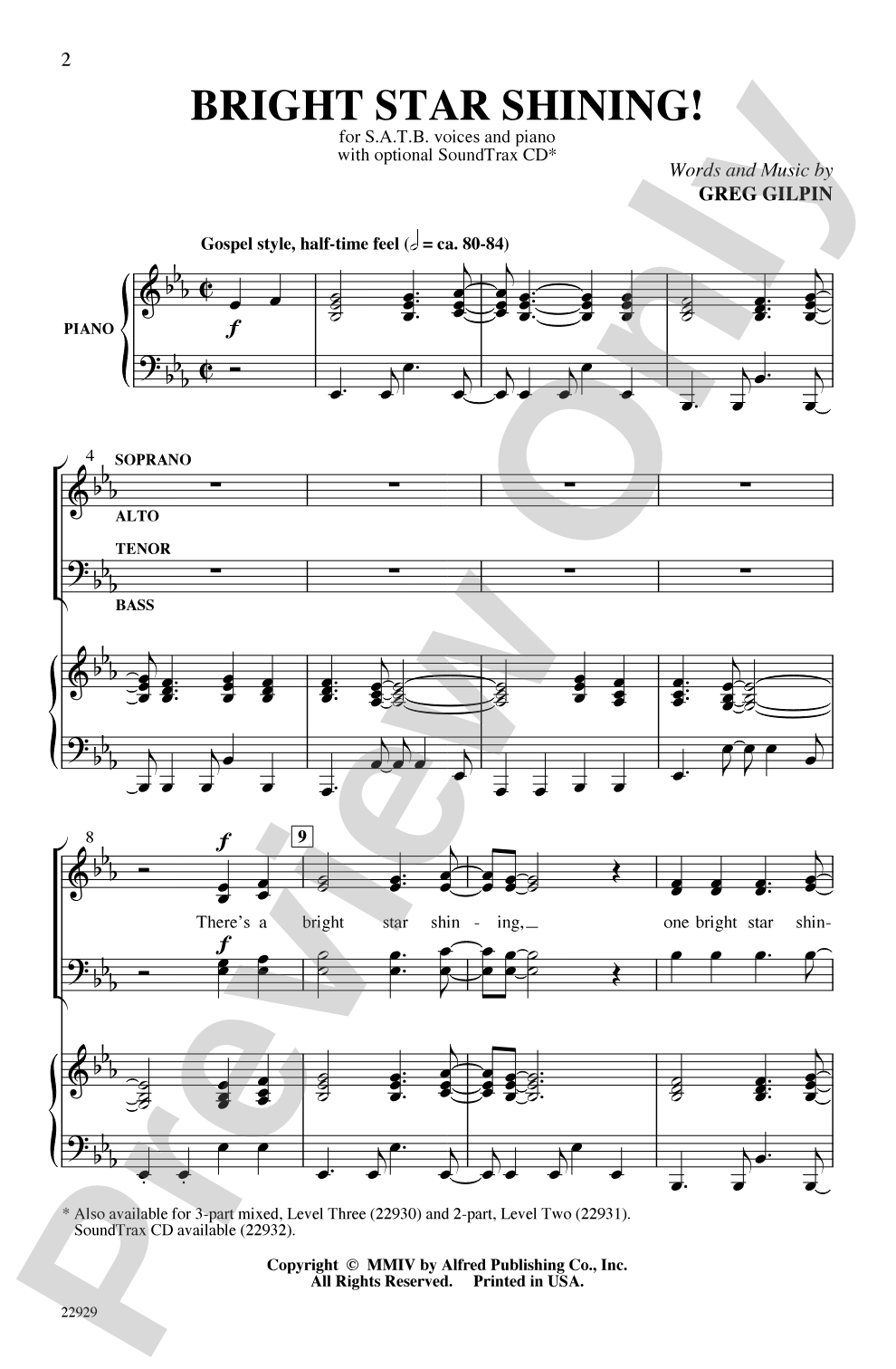
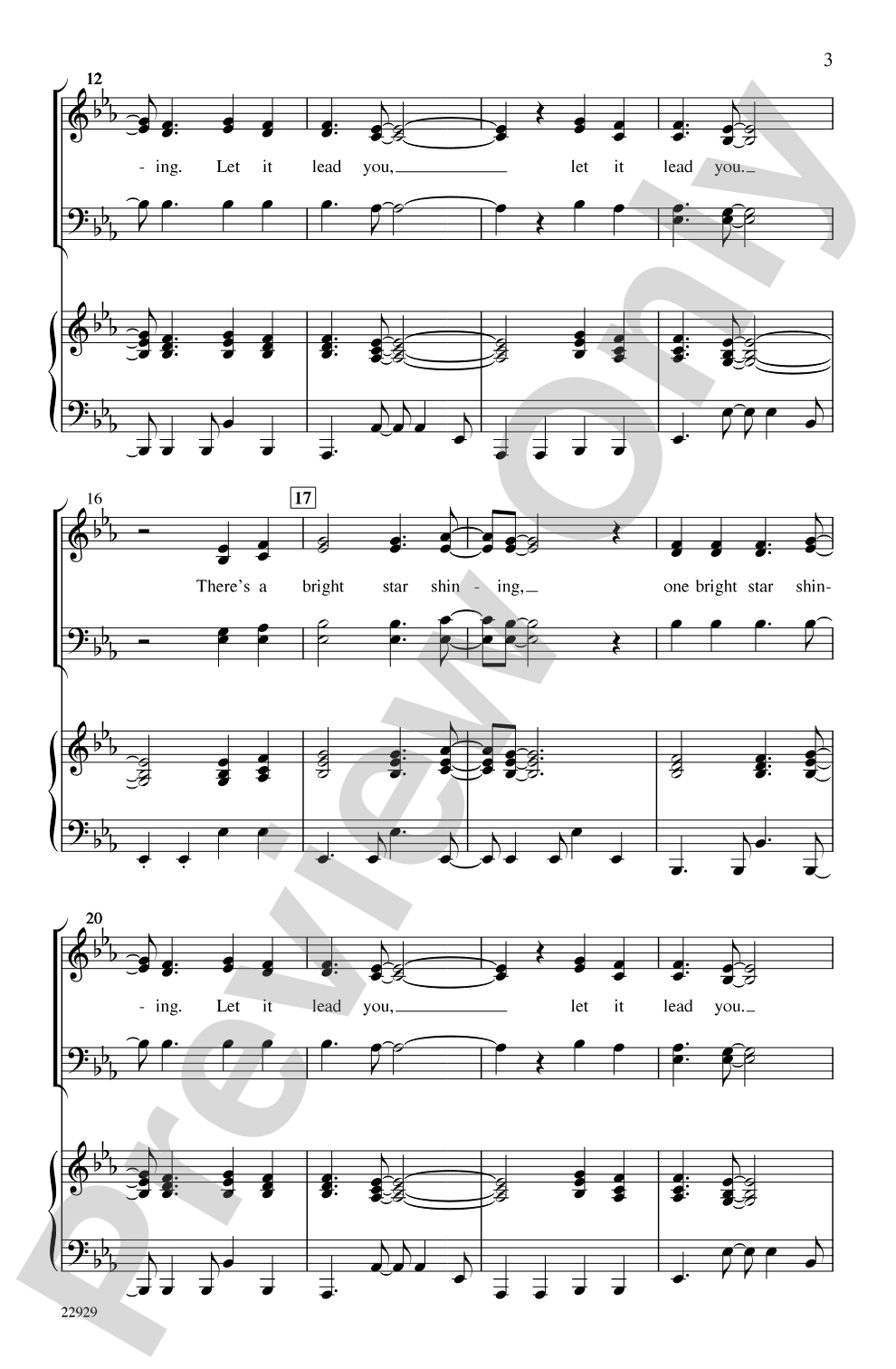
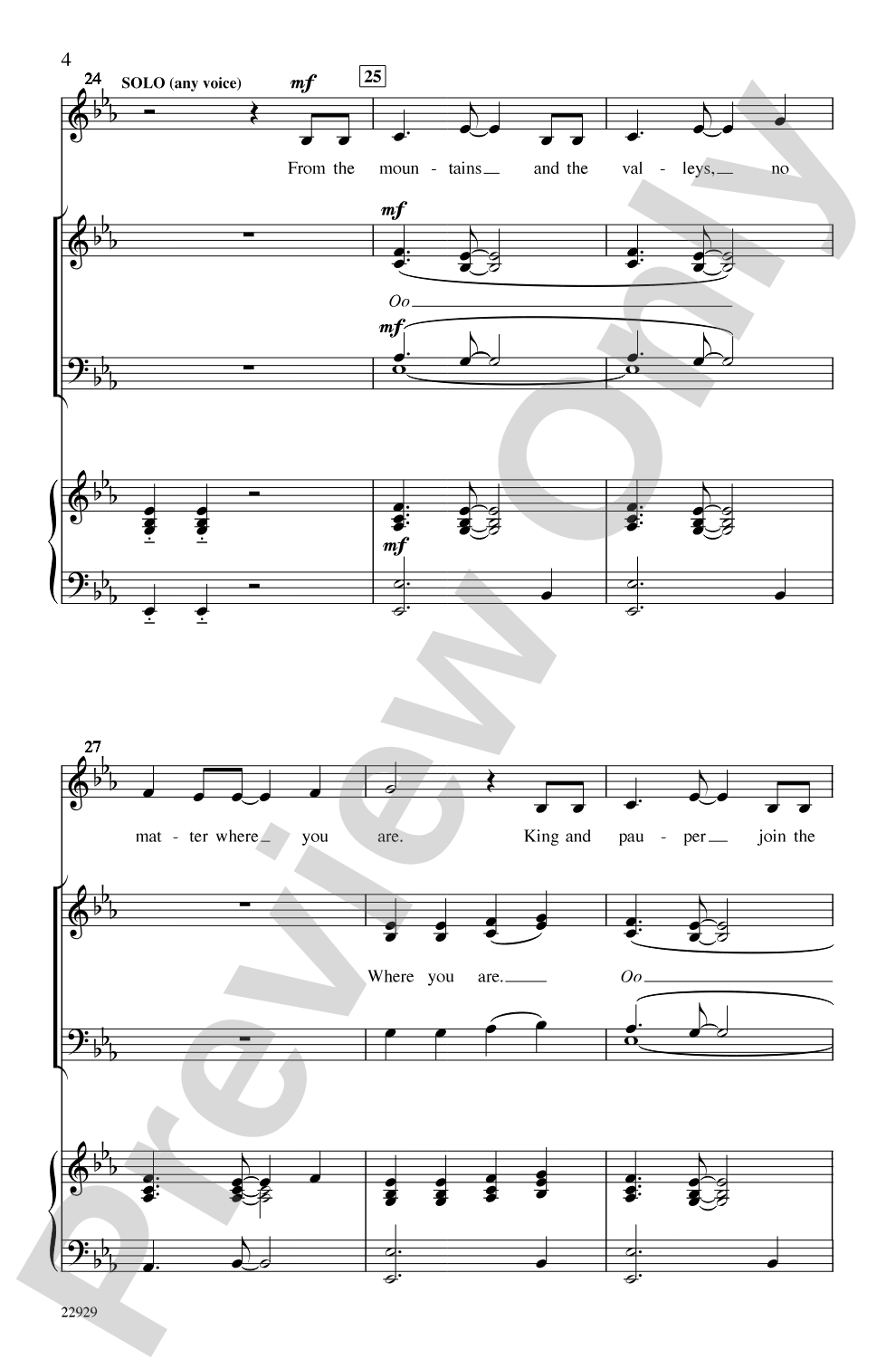

Bright Star Shining!: SATB Choral Octavo
Music by Greg Gilpin
Item: 00-PO-0007931
$1.65
Minimum order quantity: 20 copies
Pickup currently not available
Description
Here is an irresistible gospel style Christmas number from Greg Gilpin that your students will want to sing again and again. And with infectious syncopated rhythms, resonant gospel chords, and spirited handclaps added on the final a cappella refrain, it's sure to be a hit with your audience as well. Feature a low voice soloist on the catchy first verse, and high voice descant singers at the big finish. Effective with the piano or with the optional highly energized SoundTrax CD.


Bright Star Shining!: SATB Choral Octavo isn't in MakeMusic Cloud just yet...but it could be. Let us know you'd like to see it, and you'll help shape what comes next. In the meantime, start a free trial and dive into thousands of interactive titles your students can play along with today.
Request This Title
Tell us you want it.
Start Your Free Trial
Explore everything that's ready to play right now.
Sample Audio
1
Audio File
--:--
0:00
0:00
Sample Video
No sample videos found.
Additional Details
Series:
Alfred Choral Designs
Publisher:
Alfred Music
Page Count:
12
SKU:
00-PO-0007931
More about this title
About the Composer: Greg Gilpin

Greg Gilpin's career spans the highest levels of choral performance and composition. An ASCAP award-winning composer and conductor, he has led performances at Carnegie Hall, Lincoln Center, the Ryman Auditorium, and venues across Australia, England, and Iceland. His work as Director of Educational Choral Publications for Shawnee Press has shaped the repertoire available to school choirs nationwide.
Beyond the concert stage, Gilpin has expanded his creative reach into film scoring, recording production, and television appearances. His 2021 score for the award-winning short film "Rosie's Rescue" earned Best Score recognition, and he has collaborated with celebrated opera singer Angela Brown on innovative arrangements. A passionate member of ACDA, NAfME, and Phi Mu Alpha Sinfonia, Gilpin remains active in teaching, composing, and conducting as the choral world continues to flourish.
Why we love this
Gilpin understands what makes gospel arrangements work in a choral setting. The syncopated rhythms sit naturally under students' voices, the optional descant and solo spotlight create flexibility for different ensemble strengths, and the a cappella handclap finale gives you an authentic moment that audiences genuinely remember.
What to expect
The energy crackles with infectious forward momentum. Gospel chord colors and syncopated rhythms keep the piece moving, while the a cappella finale strips everything down to voices and hands, creating a moment of pure, joyful simplicity that connects directly with your audience.
Who it's for
Choirs with solid vocal technique and rhythmic confidence will thrive with this piece. It works especially well when you want to feature strong soloists and have room for a high voice descant section.
How to get the most out of it
- Establish the groove early in rehearsals by isolating the syncopated rhythms in sections before layering harmonies; this locks the ensemble into the gospel feel rather than fighting against it.
- Balance the low voice soloist in the first verse so the melody carries clearly over the harmonic support; this sets up the narrative arc before the energy builds.
- Teach the handclap patterns as part of your final rehearsals, not as an afterthought; clean, unified clapping transforms the a cappella refrain from a nice moment into an exciting one.
- If using the SoundTrax accompaniment, run through rehearsals both with and without it so singers internalize the music and don't become dependent on the recording.
How to use it
This works perfectly as the closing number on a winter concert, where its infectious energy sends people out the door energized. It also pairs beautifully with more traditional Christmas repertoire, offering a modern counterbalance that shows the range of your ensemble's style.
Skills your students will build
- Gospel-influenced harmonic voicing and chord quality
- Syncopated rhythmic patterns with consistent pulse
- Solo performance and descant independence
- Ensemble balance between melody, harmony, and rhythmic accompaniment
- A cappella intonation and unaccompanied section management