

Bright Morning Stars: SATB a cappella Choral Octavo
Kentucky Folk Song / arr. Jay Althouse
Item: 00-PO-0000821
$2.05
Minimum order quantity: 20 copies
Pickup currently not available
Related Items
Bright Morning Stars: SAB, a cappella Choral Octavo |
$2.40
|
View | |
Bright Morning Stars: SSAA, a cappella Choral Octavo |
$2.05
|
View | |
Bright Morning Stars: SATB a cappella Choral Octavo |
$2.40
|
View | |
Bright Morning Stars: SAB, a cappella Choral Octavo |
$2.40
|
View | |
Bright Morning Stars: SSAA, a cappella Choral Octavo |
$2.05
|
View |
Description
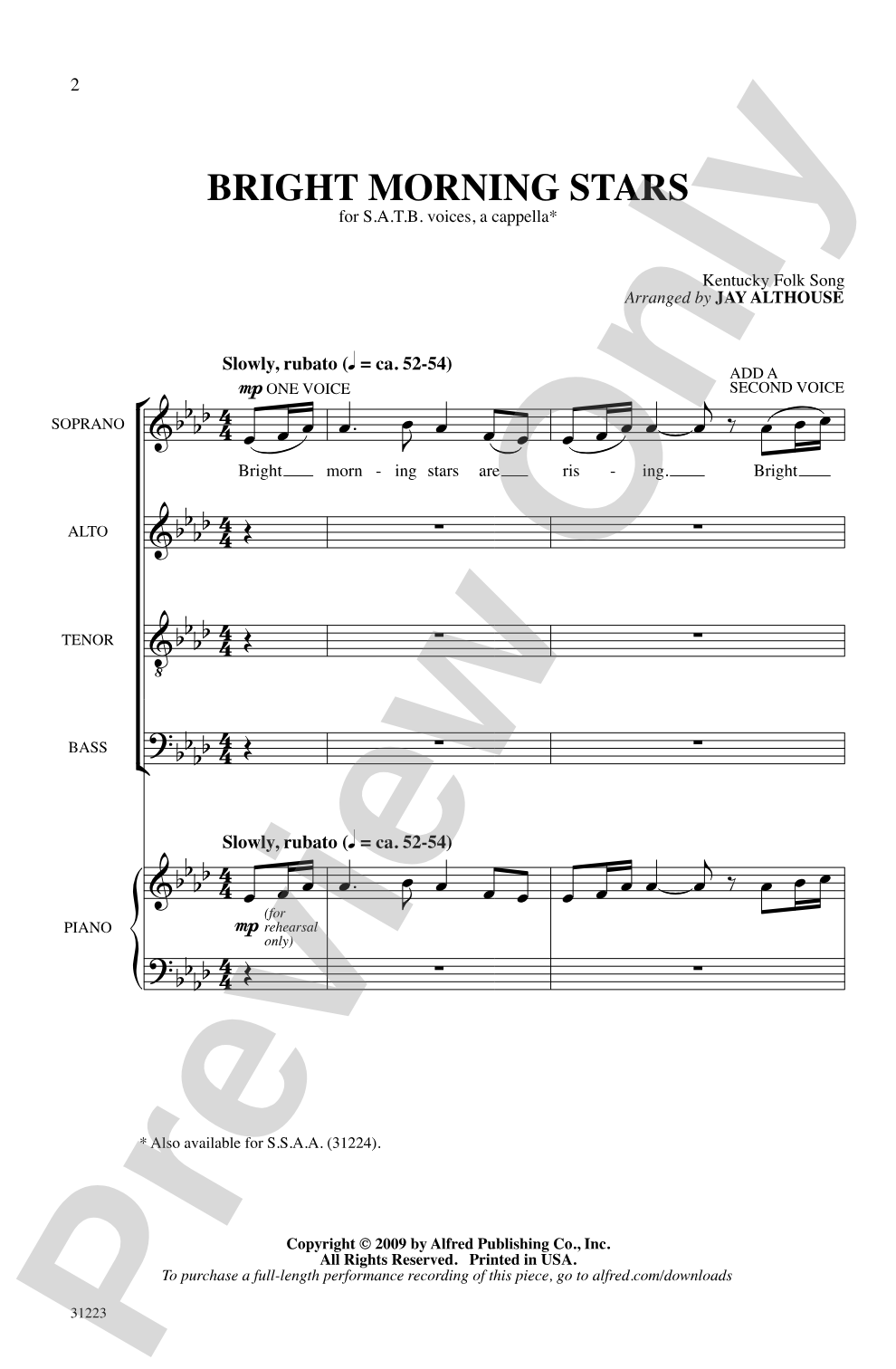
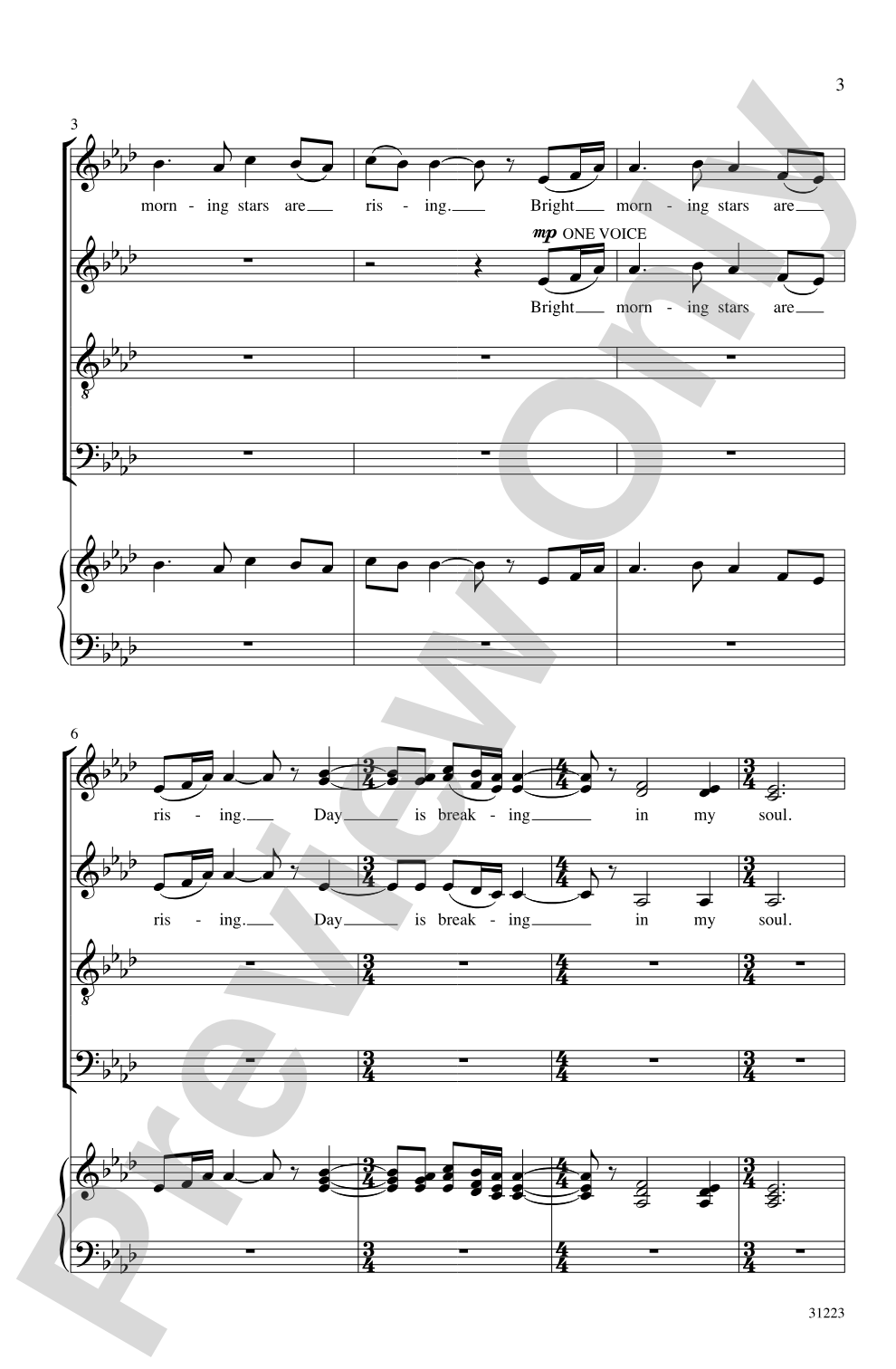
This Appalachian folk song, wonderfully arranged in a breathtaking a cappella setting, will give you chills. Opens and closes with a female trio. Strong choral writing for mixed or treble choirs.


Bright Morning Stars: SATB a cappella Choral Octavo isn't in MakeMusic Cloud just yet...but it could be. Let us know you'd like to see it, and you'll help shape what comes next. In the meantime, start a free trial and dive into thousands of interactive titles your students can play along with today.
Request This Title
Tell us you want it.
Start Your Free Trial
Explore everything that's ready to play right now.
Sample Audio
1
Audio File
--:--
0:00
0:00
Sample Video
No sample videos found.
Additional Details
Series:
Alfred Choral Designs
Publisher:
Alfred Music
Page Count:
8
SKU:
00-PO-0000821
More about this title
About the Arranger: Jay Althouse

Jay Althouse holds degrees in Music Education and Music from Indiana University of Pennsylvania, where he was honored as a Distinguished Alumnus. His career spans both the publishing side of music education (eight years as a rights and licenses administrator, including a term on the Executive Board of the Music Publishers Association of America) and prolific composition, with over 800 choral works in print performed across the English-speaking world.
As a writer member of ASCAP, Althouse has received multiple Special Awards for his contributions to standard music. Beyond choral composition, he has collaborated with his wife Sally K. Albrecht on children's musicals and vocal collections, co-authored influential texts including The Complete Choral Warm-up Book and Accent on Composers, and contributed to music education through reproducible classroom resources. He serves on the National Advisory Board of the Folk Art Society of America and has written for its quarterly publication.
Why we love this
Althouse captures the spiritual depth of this Appalachian hymn without overshadowing its roots, crafting an arrangement that feels both intimate and moving. The framing device of opening and closing with a treble trio creates architectural elegance, while the full SATB sections offer substantial harmonic color and emotional weight that will resonate with audiences and singers alike.
What to expect
Reverent and luminous, this arrangement opens with the quiet confidence of a prayer whispered among friends, then expands into full, rich harmonies that feel ancient and grounded. The return to the trio at the end brings the listener back to stillness, leaving a lingering sense of peace.
Who it's for
Mixed choirs and treble choirs looking for sacred repertoire that honors folk tradition while offering substantial musical writing. Intermediate to advanced ensembles will find the a cappella demands rewarding; this piece suits choirs with solid intonation and blend skills who want to deepen their connection to American hymn culture.
How to get the most out of it
- Ensure the opening trio achieves clarity and warmth by balancing soprano and alto lines delicately; avoid rushing into the full ensemble entrance.
- Shape long phrases with sustained breathing; this hymn benefits from a sense of unhurried devotion rather than technical precision.
- Let the final return to trio voicing mirror the opening in texture and intimacy, creating a sense of return rather than repetition.
- Work the full SATB section to achieve blend in the middle voices, where harmonic richness depends on even tone production across all four parts.
How to use it
Program this as a centerpiece for a concert themed around sacred music, American spirituals, or folk traditions. It pairs naturally with other Appalachian hymn settings or with more contemporary spiritual works, and works equally well in a worship context or secular concert setting given its universal spiritual resonance.
Skills your students will build
- A cappella blend and intonation in SATB voicing
- Shaping long phrases with breath control and musical intention
- Balancing solo trio texture with full ensemble sonority
- Interpreting folk melody through harmonic arrangement
- Sustaining emotional authenticity in sacred music without sentimentality