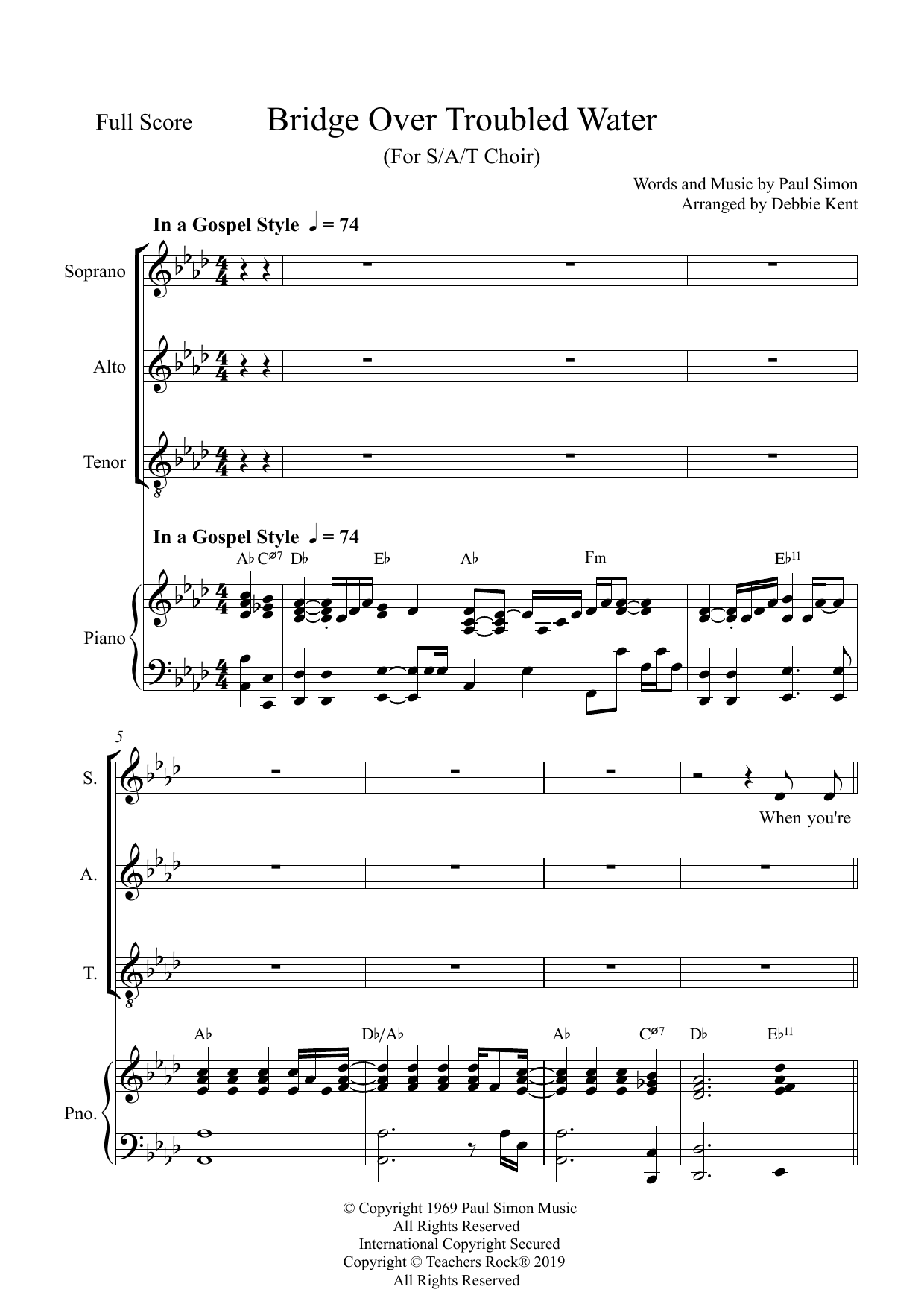
Bridge over Troubled Water (arr. Debbie Kent) Sheet Music Preview

Bridge over Troubled Water (arr. Debbie Kent): SAT Choral Octavo

As performed by Paul Simon / Arranged by Debbie Kent

Item: 35-DS00465313

Digital Download
$2.99

One moment…

Description

Bridge over Troubled Water (arr. Debbie Kent): SAT Choral Octavo isn't in MakeMusic Cloud just yet...but it could be. Let us know you'd like to see it, and you'll help shape what comes next. In the meantime, start a free trial and dive into thousands of interactive titles your students can play along with today.

Sample Audio
No sample audio found.
Sample Video
Additional Details
Publisher: Hal Leonard
Page Count: 17
SKU: 35-DS00465313

More about this title

About the Artist: Paul Simon

Paul Simon emerged from 1960s folk music to become one of America's most influential songwriters. His gift for combining conversational lyrics with sophisticated harmonic progressions created songs that work equally well in intimate settings and large concert halls. 'Bridge over Troubled Water,' written with Art Garfunkel during the Simon and Garfunkel era, exemplifies his ability to craft melodies that resonate across generations and musical contexts.

Why we love this

Debbie Kent's SAT arrangement opens this beloved song to voices that typically struggle finding their place in pop repertoire. The familiar melody sits comfortably across the three parts, allowing singers to feel secure with the tune while supporting harmonies create depth without overwhelming anyone. It's a piece that builds confidence and reminds students why they fell in love with singing.

What to expect

Warm, grounded, and deeply human. The song carries an intimate quality despite its size; it feels like someone reaching across difficulty to offer comfort. There's both vulnerability and strength in the music, creating space for genuine interpretation.

Who it's for

Middle and high school choirs seeking accessible contemporary repertoire with genuine emotional weight. This arrangement works for choirs with developing sight readers because the harmonic language and melodic shapes feel intuitive even on first reading.

How to get the most out of it

  • Balance the melody line with gentle support from the inner voices; this piece thrives on transparency rather than blend.
  • Shape the phrases with natural breathing rather than treating each section as a separate unit. Let the song's emotional arc guide your phrasing.
  • Avoid heavy articulation on repeated text. Let the simplicity of the language speak through sustained, connected singing.

How to use it

Consider this for winter or spring concerts where you want to shift mood toward reflection and hope. It pairs well with spirituals or other songs about resilience, and its accessibility makes it ideal for community engagement concerts or settings where you're mixing classical and contemporary work.

Skills your students will build

  • Singing sustained harmonic parts that support rather than double the melody
  • Interpreting contemporary song language with vocal expression
  • Managing phrase length and breathing in simple, singable material
  • Balancing individual voice independence with ensemble unity

You May Also Like