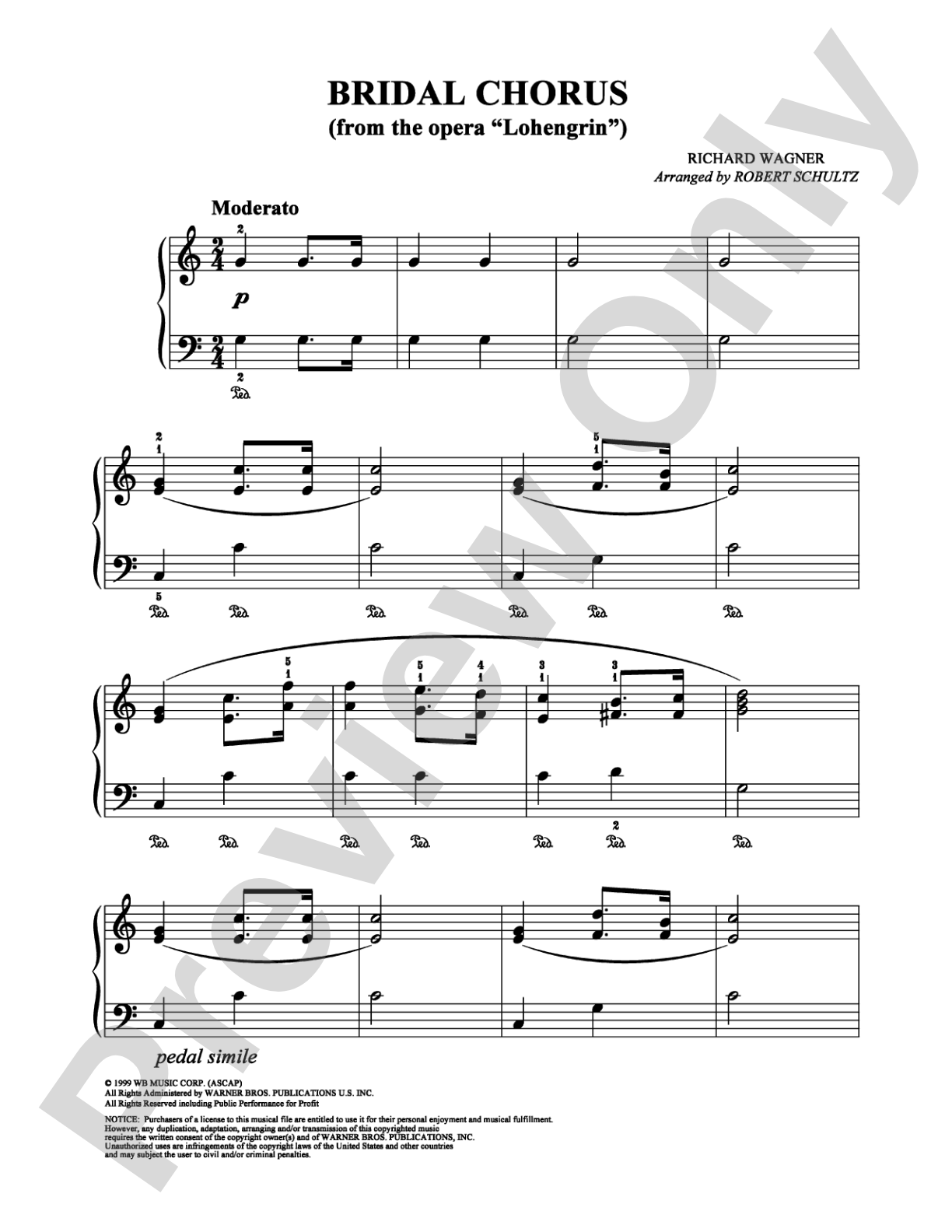
Bridal Chorus (from the opera "Lohengrin"): Easy Piano Digital Sheet Music

Bridal Chorus (from the opera "Lohengrin"): Easy Piano Digital Sheet Music

Richard Wagner

Item: 00-PS-0007652

Digital Download
$3.99
Description

Bridal Chorus (from the opera "Lohengrin"): Easy Piano Digital Sheet Music isn't in MakeMusic Cloud just yet...but it could be. Let us know you'd like to see it, and you'll help shape what comes next. In the meantime, start a free trial and dive into thousands of interactive titles your students can play along with today.

Sample Audio
No sample audio found.
Sample Video
Additional Details
SKU: 00-PS-0007652

More about this title

About the Composer: Richard Wagner

Richard Wagner (1813, 1883) was a German composer whose operatic innovations reshaped music history. His approach to orchestration, harmonic language, and dramatic storytelling influenced generations of composers across all genres. The Bridal Chorus from Lohengrin (1850) became one of the most recognizable melodies in Western music, adapted countless times for weddings, concerts, and celebrations worldwide.

Wagner's gift for writing memorable, singable melodies is on full display in this piece. Even simplified for piano, the tune retains the grandeur and ceremonial weight that makes it immediately identifiable. Its accessibility to amateur pianists has contributed significantly to its enduring popularity.

Why we love this

This arrangement brings one of classical music's most recognizable melodies into the hands of pianists who are just building their technique and confidence. The easy piano version preserves the ceremonial grandeur of the original while offering an accessible entry point to Wagner's harmonic language.

What to expect

A stately procession captured in sound. The piece unfolds with quiet dignity and measured elegance, evoking the ceremonial solemnity of the original operatic moment while remaining intimate at the keyboard.

Who it's for

Piano students at the early intermediate level who want to tackle recognizable classical repertoire with real musical weight. It works equally well for students preparing a first recital piece or adults returning to piano study.

How to get the most out of it

  • Maintain consistent tempo throughout; a stately, measured pace (around quarter note = 80, 90) lets the melody breathe and the harmonic structure register clearly.
  • Shape the melody with subtle dynamic swells at phrase peaks rather than rigid dynamics, giving the piece ceremonial warmth without oversinging.
  • Listen to a full orchestral recording beforehand to internalize the piece's intended character; this context will guide your interpretive choices.
  • Keep the accompaniment clear and rhythmically stable so the right-hand melody remains the focal point.

How to use it

Feature this as a standalone recital piece that requires minimal preparation time relative to its recognizable impact, or pair it with other classical favorites to create a traditional piano recital program. It also serves as an effective student performance option for school assemblies or community events where a polished classical selection is needed.

Skills your students will build

  • Playing sustained melodic lines with appropriate phrasing and breath
  • Managing a steady accompaniment pattern while highlighting the melody
  • Reading and executing basic dynamic markings in a classical context
  • Developing touch control across both hands to balance melody and support

You May Also Like