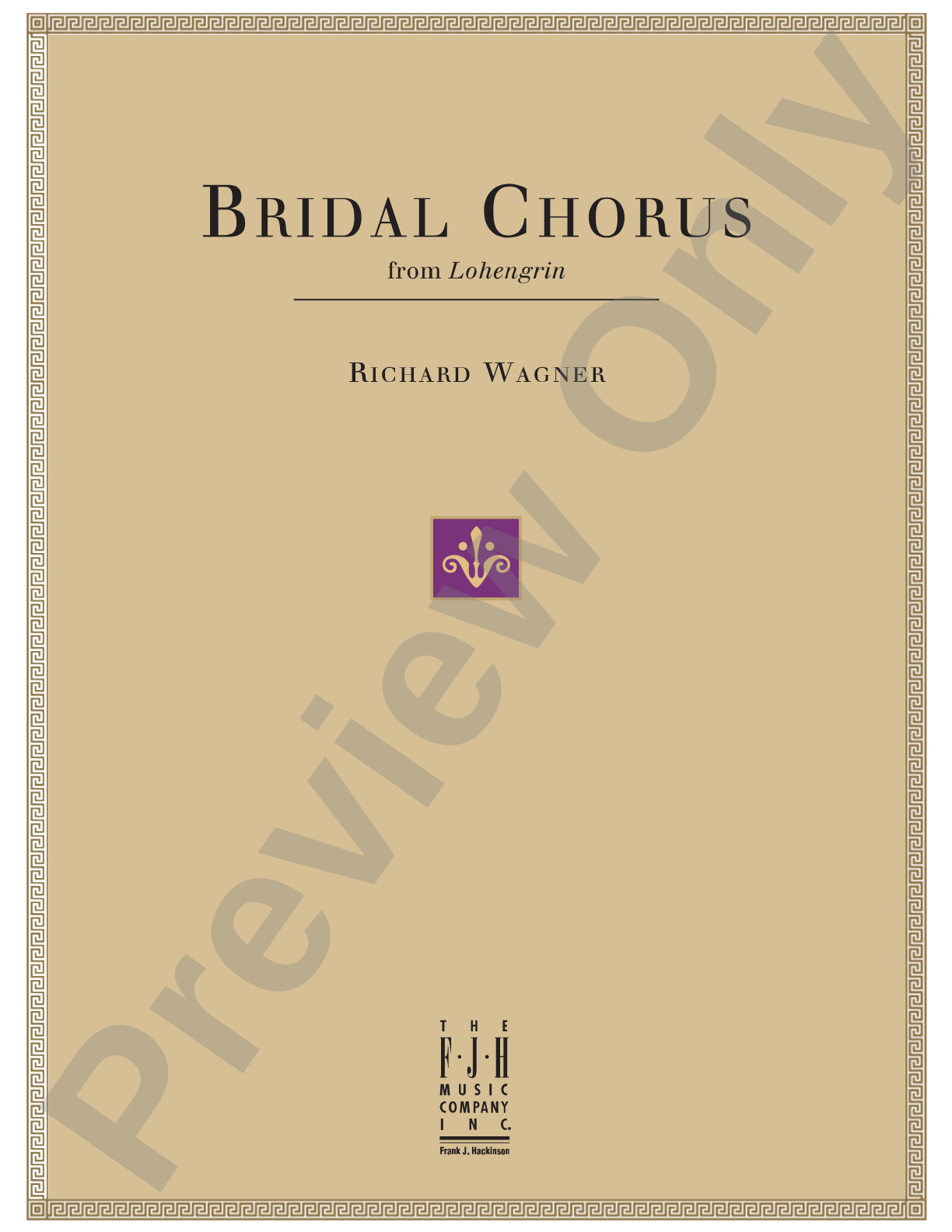
This handsome arrangement of Wagner's traditional Bridal Chorus is a perfect selection for today’s wedding pianist. Superbly choreographed to provide a full sound while remaining accessible for the intermediate performer, this solo is appropriate for a large church or a more intimate setting.
Discover MakeMusic Cloud: thousands of interactive titles your students can play along with today.
Richard Wagner (1813-1883) transformed opera in the nineteenth century through his bold harmonic language, ambitious orchestrations, and integration of music with drama. His works demand both technical mastery and interpretive depth from performers, making his music a cornerstone of advanced repertoire across instrumental and vocal settings.
Why we love this
This arrangement captures the ceremonial grandeur of Wagner's most recognizable melody without requiring virtuosic technique. Edwin McLean's voicing allows intermediate pianists to produce a genuinely full, professional sound that works equally well in formal church settings or smaller venues, making it a practical choice for wedding repertoire that doesn't compromise on musical substance.
What to expect
The Bridal Chorus radiates ceremonial joy and romantic anticipation, with Wagner's lush harmonic palette creating a sense of grandeur and timelessness. Even in this simplified arrangement, the music conveys both dignity and warmth, supporting rather than competing with the solemnity of the occasion.
Who it's for
This arrangement serves intermediate pianists who perform for weddings or ceremonial occasions and need reliable, musically substantial repertoire. It is equally valuable for pianists building confidence with Romantic-era harmony and for teachers seeking accessible gateway music to Wagner's harmonic language.
How to get the most out of it
Maintain a steady, processional tempo throughout; resist the urge to rush during the climactic moments, as the architecture of the piece relies on deliberate pacing.
Balance the melody against the harmonic foundation by voicing the left hand clearly without overwhelming the right hand line.
Shape the phrase arcs by gradually building dynamic intensity toward the center of each section, then releasing slightly to create breathing space.
Listen to how the orchestral original handles the famous theme; use rubato sparingly to avoid obscuring the structural clarity that makes this melody immediately recognizable.
How to use it
Program this as processional music in a wedding ceremony, or include it in a recital of Romantic-era piano arrangements. It also works well in a student recital as a showpiece that demonstrates command of Romantic harmony and pedal technique without requiring advanced technical facility.
Skills your students will build
Pedal control in Romantic-era harmonic progressions
Balancing melody against thick chordal accompaniment
Maintaining steady tempo during emotionally expressive music
Understanding orchestral reduction and voice-leading on the keyboard
Performance presence and communication with formal, ceremonial context
You May Also Like
Scan to Complete Your Purchase
Use your phone's camera to scan the code below
You'll log in on your phone and the order will be added to your account