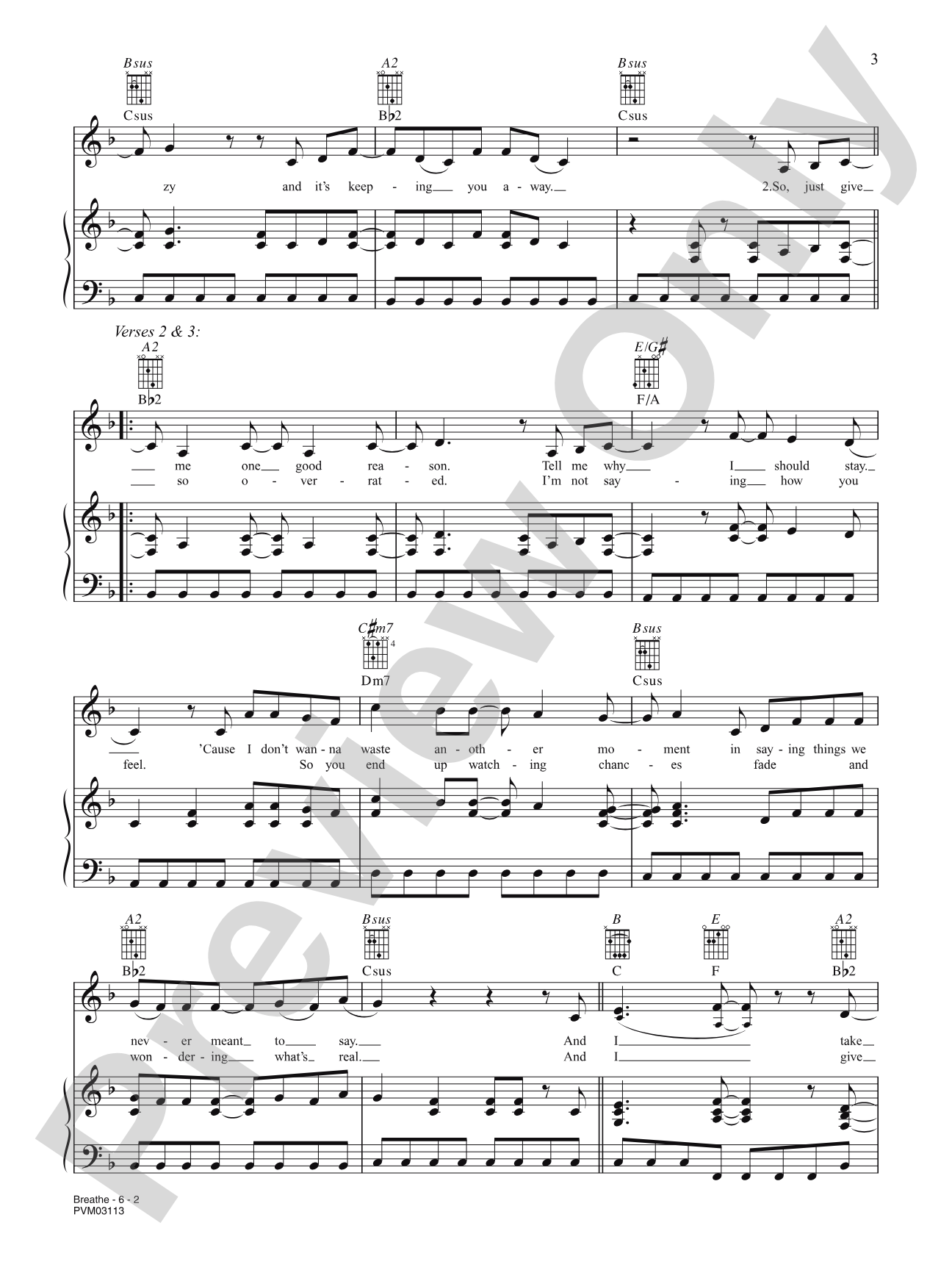
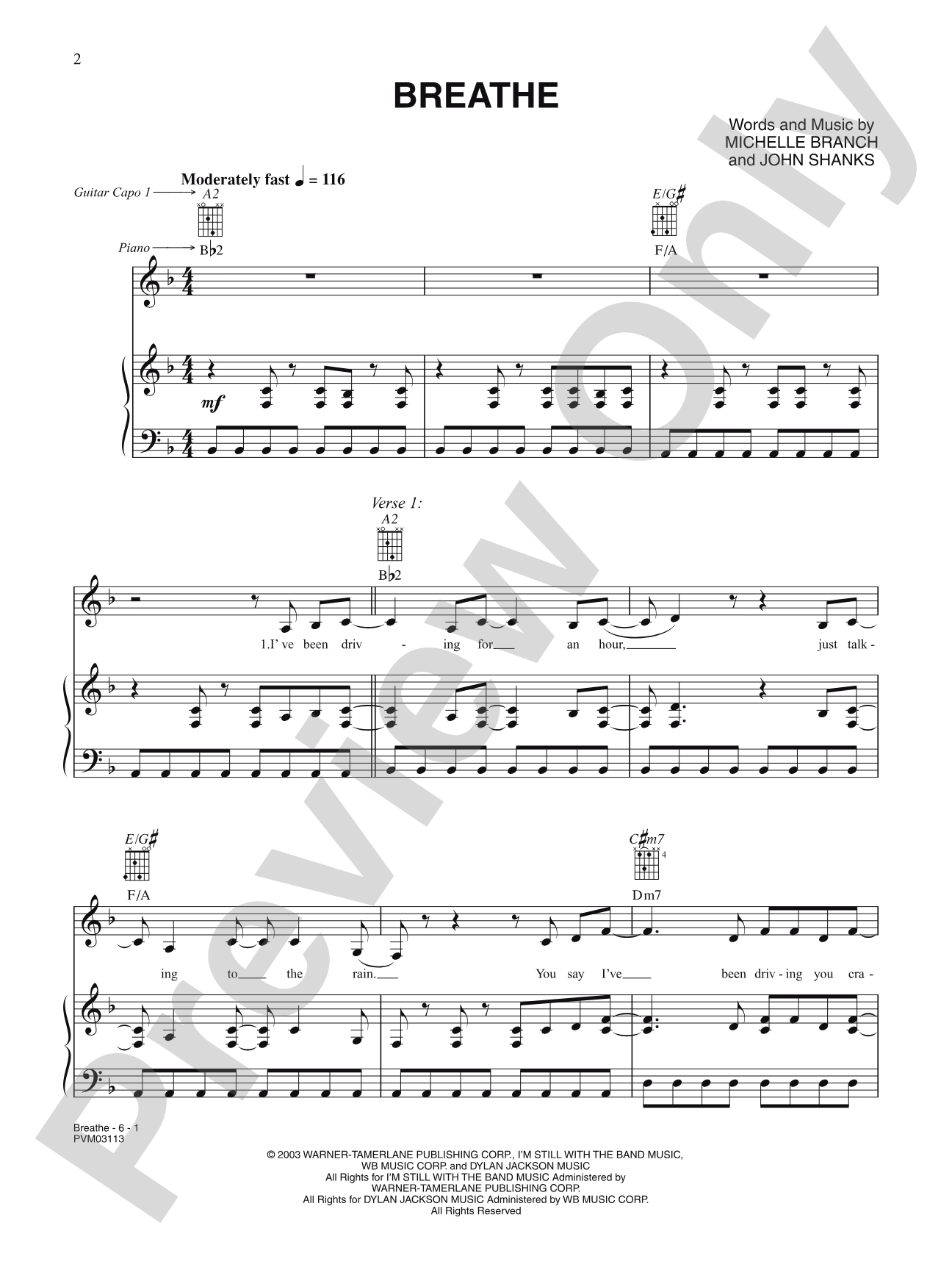
Breathe Sheet Music Preview

Breathe: Piano/Vocal/Chords

Recorded by Michelle Branch

Item: 00-PIP-000528

Digital Download
$3.99

One moment…

Description

Breathe: Piano/Vocal/Chords isn't in MakeMusic Cloud just yet...but it could be. Let us know you'd like to see it, and you'll help shape what comes next. In the meantime, start a free trial and dive into thousands of interactive titles your students can play along with today.

Sample Audio
No sample audio found.
Sample Video
Additional Details
Publisher: Alfred Music
Page Count: 8
SKU: 00-PIP-000528

More about this title

About the Artist: Michelle Branch

Michelle Branch emerged as a multi-instrumentalist singer-songwriter in the late 1990s, blending pop sensibility with genuine musicianship across guitar, piano, and vocals. Her work spans pop, alternative rock, and country genres, establishing her as a versatile artist whose songs emphasize melody and emotional directness.

Why we love this

This arrangement gives students and singers access to a contemporary pop song that actually rewards careful harmonic analysis. The piano/vocal/chords format preserves melodic integrity while keeping the accompaniment playable for pianists at intermediate levels, making it equally useful for voice lessons, piano studio work, or small ensemble contexts.

What to expect

Intimate and introspective, the piece balances accessibility with genuine emotional weight. The piano figurations support rather than overwhelm, creating space for the vocalist's interpretation while maintaining a modern, polished sound.

Who it's for

Intermediate to advanced pianists doubling as accompanists, singers building a contemporary solo repertoire, and piano students exploring pop arrangements that don't sacrifice musical substance. This sheet also works for music theater students and jazz pianists interested in functional harmony within a pop context.

How to get the most out of it

  • Treat the vocal melody as your priority during rehearsal; the piano comping should support rather than compete with the singer's phrasing.
  • Experiment with the dynamic shape of the chorus; let the arrangement breathe at the song's emotional turning points rather than driving hard throughout.
  • Balance the chord symbols with the written piano part; use them as a guide for interpretation and reharmonization if you want to adapt the arrangement for different ensemble sizes.
  • Listen closely to the original recording to internalize the rhythmic pocket, especially where the piano interacts with the vocal rhythm in ways notation alone might not fully capture.

How to use it

Program this in a recital setting alongside classical art songs and musical theater numbers to show range and contemporary relevance. It works equally well as an audition piece for voice or piano students, or as a duet feature in a pops concert where the piano and vocal partnership takes center stage.

Skills your students will build

  • Reading and interpreting lead sheets with chord symbols
  • Balancing vocal melody with piano accompaniment textures
  • Understanding contemporary harmonic language and pop song structure
  • Developing expressive phrasing in a non-classical idiom
  • Collaborative ensemble listening between vocalist and pianist

You May Also Like