Breakfast at Tiffany's (arr. Frank de Vreeze) Sheet Music Preview

Breakfast at Tiffany's (arr. Frank de Vreeze): SSATB Choral Octavo

As performed by Deep Blue Something / Arranged by Frank de Vreeze

Item: 35-DS00481382

Digital Download
$2.99

One moment…

Description

Breakfast at Tiffany's (arr. Frank de Vreeze): SSATB Choral Octavo isn't in MakeMusic Cloud just yet...but it could be. Let us know you'd like to see it, and you'll help shape what comes next. In the meantime, start a free trial and dive into thousands of interactive titles your students can play along with today.

Sample Audio
No sample audio found.
Sample Video
Additional Details
Publisher: Hal Leonard
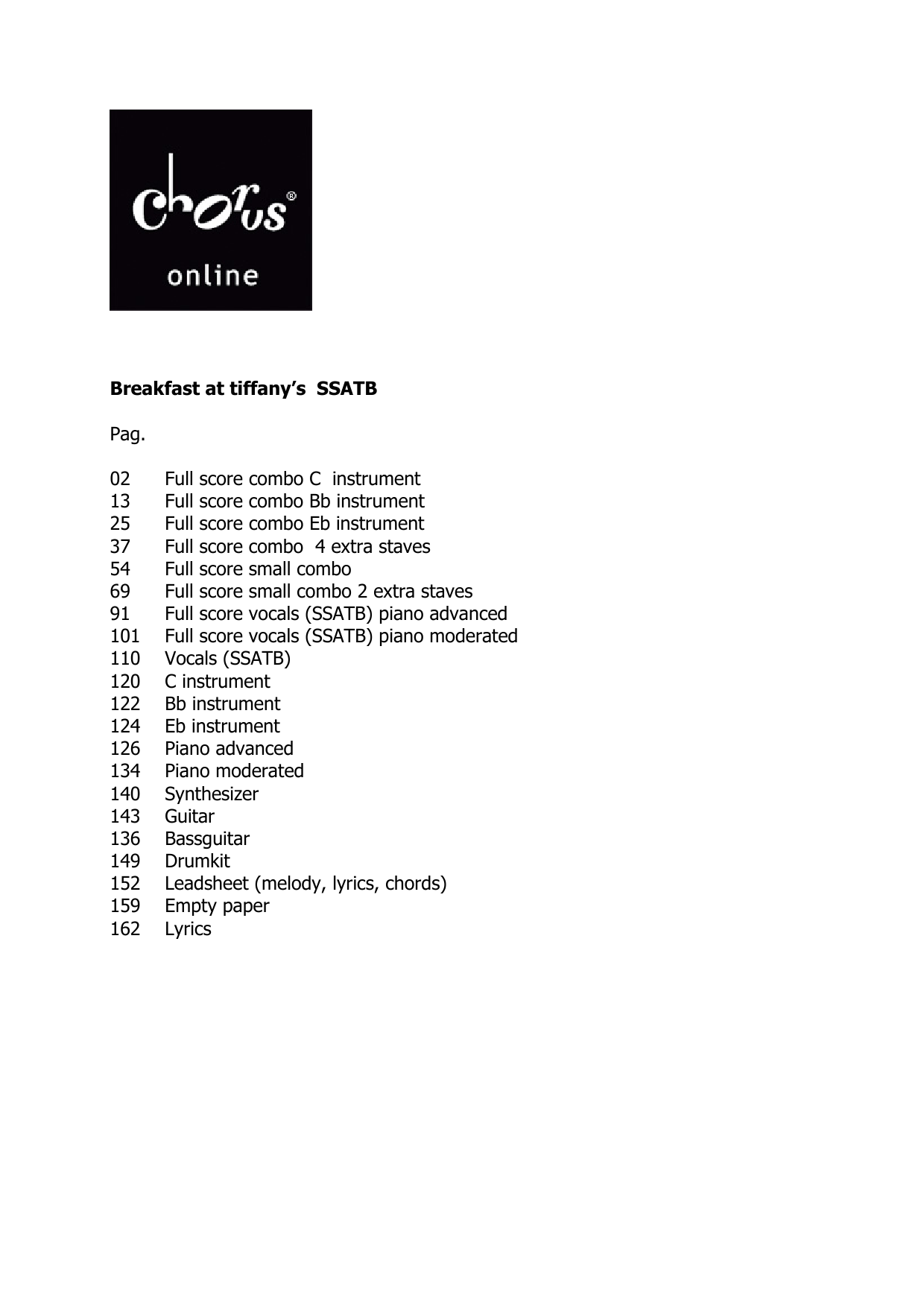
Page Count: 162
SKU: 35-DS00481382

More about this title

About the Artist: Deep Blue Something

Deep Blue Something emerged from Texas in the early 1990s, becoming one of the defining voices of mainstream rock during that decade. Their breakthrough single "Breakfast at Tiffany's" became a cultural touchstone, blending introspective lyrics with infectious melodic hooks that made the song instantly memorable to millions of listeners.

The band's ability to craft universally relatable songs about relationships and memory has given their work remarkable staying power in popular music. For choral directors, their catalog offers accessible, emotionally resonant material that engages singers and audiences alike, especially when arranged for ensemble voicing.

Why we love this

This arrangement captures the nostalgic warmth and gentle humor of the original while giving your choir genuine melodic interest across all voice parts. The Frank de Vreeze arrangement respects the song's iconic melody while distributing musical material that keeps singers engaged rather than relegated to background support. Programming a song this well-known creates immediate connection with your audience, but this voicing ensures the arrangement itself demonstrates real compositional craft.

What to expect

There's a bittersweet nostalgia woven through this arrangement, combining the reflective quality of the original with the warmth that ensemble voicing provides. The piece carries an almost cinematic quality, where each section pulls listeners into intimate moments before opening up into fuller harmonic textures. Singing it creates a collaborative storytelling experience, with voices weaving together to honor the song's emotional honesty.

Who it's for

This arrangement serves choirs looking to connect with contemporary pop repertoire without sacrificing musical depth. High school and college choirs will find accessible material that doesn't condescend, while community and semi-professional ensembles can use it to explore modern songwriting within a classical ensemble format.

How to get the most out of it

  • Balance the upper voices during the melody sections; the SSA/SSAA voicing can easily overwhelm if sopranos dominate. Encourage tenors and altos to sing with clear tone and support the line rather than receding.
  • Anchor the harmonic foundation by asking lower voices to find the root and fifth of each chord before adding upper voice flourishes. This prevents the arrangement from floating without grounding.
  • Shape the phrases to mirror conversational speech patterns rather than treating each phrase as equally weighted. The lyrical content carries emotional meaning, so let phrasing follow the natural arc of the text.
  • Maintain a conversational dynamic throughout rather than building to climactic moments. This song works best when it feels intimate and personal, even in a full choir setting.

How to use it

This works beautifully in concert settings focused on contemporary music, film music, or popular songs reimagined for ensembles. The accessibility of the source material makes it an excellent programming choice when you want to reach patrons who might not typically attend classical concerts. Consider pairing it with other iconic pop songs or film repertoire to create a cohesive thematic program.

Skills your students will build

  • Balancing melodic lines across multiple voice parts
  • Singing in contemporary popular song idioms within ensemble settings
  • Phrase shaping based on lyrical content rather than bar lines
  • Achieving blend and unity across SSA/SSAA voicing configurations
  • Interpreting emotional subtext through precise harmonic placement

You May Also Like