Breakfast at Tiffany's (arr. Frank de Vreeze) Sheet Music Preview

Breakfast at Tiffany's (arr. Frank de Vreeze): SAB Choral Octavo

As performed by Deep Blue Something / Arranged by Frank de Vreeze

Item: 35-DS00481372

Digital Download
$2.99

One moment…

Description

Breakfast at Tiffany's (arr. Frank de Vreeze): SAB Choral Octavo isn't in MakeMusic Cloud just yet...but it could be. Let us know you'd like to see it, and you'll help shape what comes next. In the meantime, start a free trial and dive into thousands of interactive titles your students can play along with today.

Sample Audio
No sample audio found.
Sample Video
Additional Details
Publisher: Hal Leonard
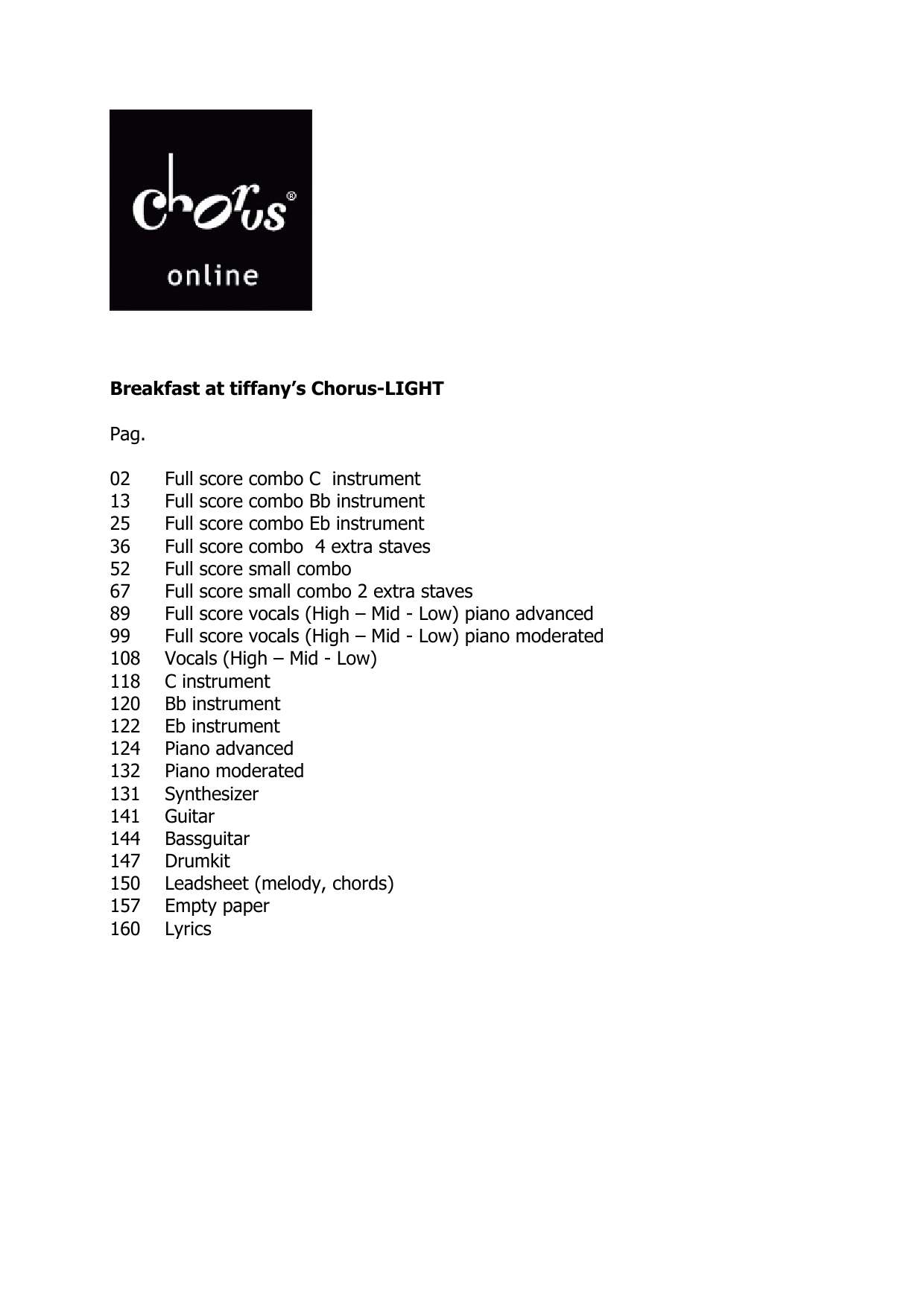
Page Count: 160
SKU: 35-DS00481372

More about this title

About the Artist: Deep Blue Something

Deep Blue Something emerged from the Texas rock scene in the late 1980s and became known for their introspective songwriting and radio-friendly melodies. The band's 1995 album "Breakfast at Tiffany's" achieved mainstream success, driven by the title track's nostalgic lyrics and accessible harmonic language. Their ability to write songs that balance emotional directness with broad appeal has made their work a natural fit for choral arrangement.

The song's themes of memory and longing resonate across generations, which explains why it remains a popular choice for educators seeking contemporary material with genuine substance. Deep Blue Something's compositional clarity and tuneful approach translate especially well to vocal settings where singability and emotional delivery must coexist.

Why we love this

Frank de Vreeze's arrangement honors the song's dreamy, reflective quality while crafting writing that sits naturally for three-part mixed voices. The arrangement captures what makes the original compelling without demanding technical fireworks, allowing singers to focus on lyrical storytelling and blend. For choirs balancing contemporary and traditional programming, this piece offers genuine musical substance in a format that builds genuine ensemble cohesion.

What to expect

There's a wistful, almost cinematic quality to this arrangement that invites introspection. The harmonic language supports that nostalgic mood while keeping the texture light enough for the text to remain the focal point. Singers often discover that this piece draws them into genuine emotional communication, making it as rewarding to perform as it is to hear.

Who it's for

Directors seeking accessible, emotionally mature pop repertoire for three-part mixed choirs will find this arrangement both singable and engaging. It works well in programs where you want contemporary material that doesn't require extensive vocal technique to land musically. This is equally valuable for choirs of varying experience levels, since the writing is clear without feeling simplistic.

How to get the most out of it

  • Shape the melodic contours with long lines rather than stopping at phrase marks; this song thrives on continuity and flow.
  • Layer the dynamic progression carefully so that key moments feel earned, not rushed; allow quieter sections to breathe before building intensity.
  • Balance vibrato thoughtfully across sections, especially in the SAB voicing where the second part carries important harmonic color.
  • Connect the recorded accompaniment's tempo and groove to your singers' natural sense of phrasing; the song should feel conversational, not metronomic.

How to use it

Position this in a set with other songs that explore memory or reflection, creating a thematic arc that feels cohesive to audiences. It pairs nicely in concerts that blend pop and art song literature, signaling to singers and listeners that contemporary music can carry the same emotional weight as standard repertoire. Consider it as an opener or strategic placement midprogram where a shift in tone and mood will refresh audience attention.

Skills your students will build

  • Sustaining legit phrases across longer melodic lines in pop style
  • Blending three-part SAB voicing while maintaining individual line independence
  • Shaping dynamics expressively without losing ensemble cohesion
  • Connecting lyrics to musical gesture and emotional subtext
  • Responding to recorded accompaniment as a rhythmic and harmonic reference point

You May Also Like