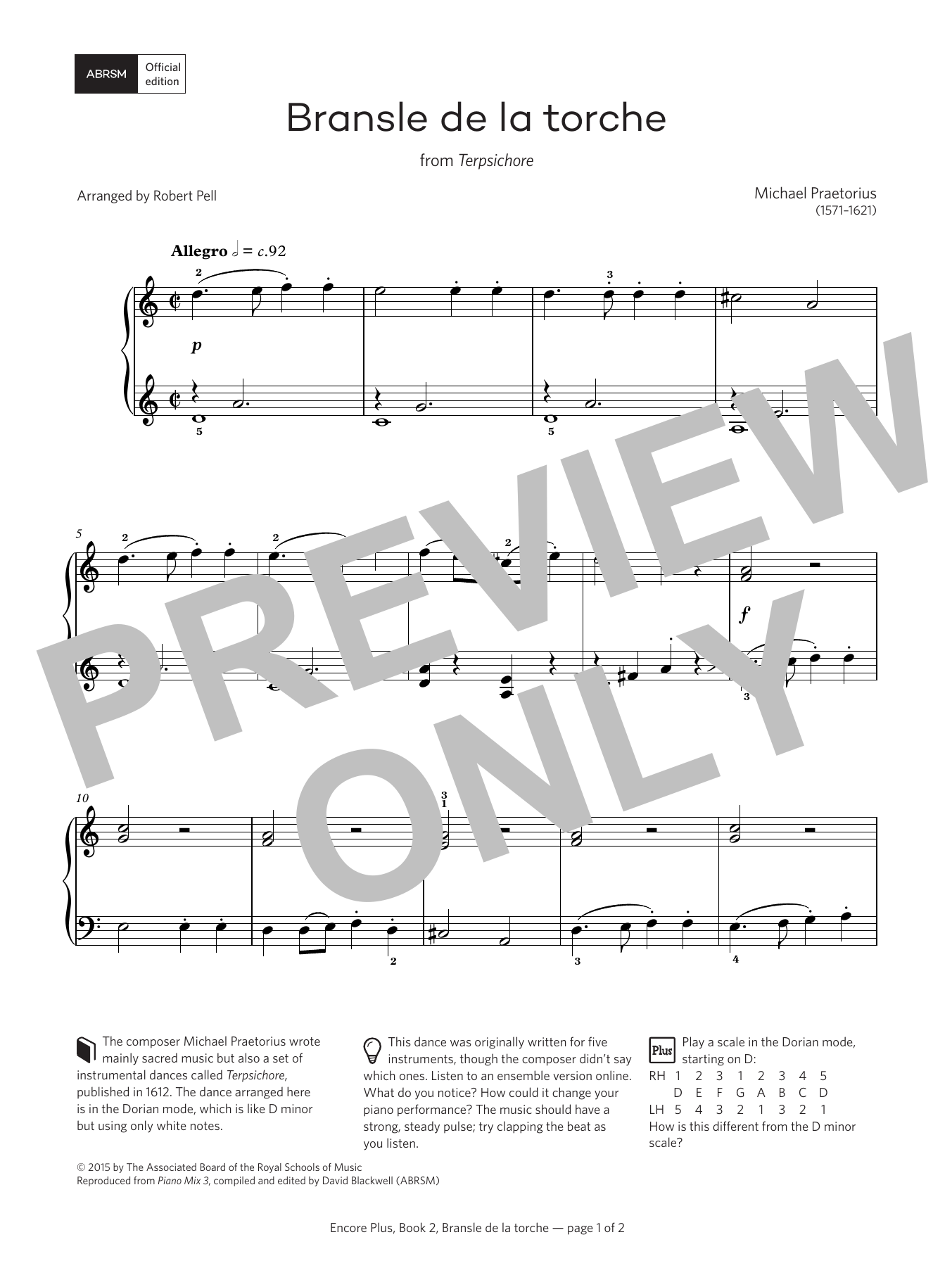
Michael Praetorius (1571-1621) was a German composer, theorist, and court musician whose output shaped early Baroque music across Europe. His vast catalog ranged from sacred works to instrumental dances, and his writings on music theory and performance practice remain foundational texts for understanding the period. Praetorius had a gift for crafting melodically direct, rhythmically clear pieces that worked equally well in chamber settings or as functional music for court life.
Why we love this
This arrangement captures the buoyant character of Renaissance dance music while keeping technical demands reasonable for developing pianists. The piece sits comfortably under the hands, allowing students to focus on period style, phrasing, and the bright articulation that makes Praetorius' dances come alive.
What to expect
Bright and purposeful, with the forward momentum of a court dance. The piece maintains an elegant simplicity that invites both performer and listener into the refined world of Renaissance celebration.
Who it's for
Grade 3 pianists ready to move beyond simplified arrangements into authentic Renaissance repertoire. This works well for students discovering how piano can convey period style and for teachers building a diverse recital program beyond the standard Romantic and contemporary catalogs.
How to get the most out of it
Shape the melodic line with gentle dynamic swells that follow the natural breath points of the phrase, rather than playing with uniform volume throughout.
Keep the accompaniment texture light and rhythmically precise; the integrity of the dance rhythm depends on clean articulation in the supporting voices.
Explore a touch that's responsive but not heavy; Praetorius' dances benefit from clarity over weight.
How to use it
Pair this with other Renaissance or early Baroque keyboard works to create a themed recital section, or use it as a character piece that contrasts with the deeper textures of Romantic or contemporary selections. Its concise length makes it ideal for student showcases or informal performances where variety and engagement matter.
Skills your students will build
Articulation and phrasing in period style
Light touch and control at moderate tempos
Reading and performing dance rhythms with precision
Voice leading and texture awareness in early Baroque writing
You May Also Like
Scan to Complete Your Purchase
Use your phone's camera to scan the code below
You'll log in on your phone and the order will be added to your account