
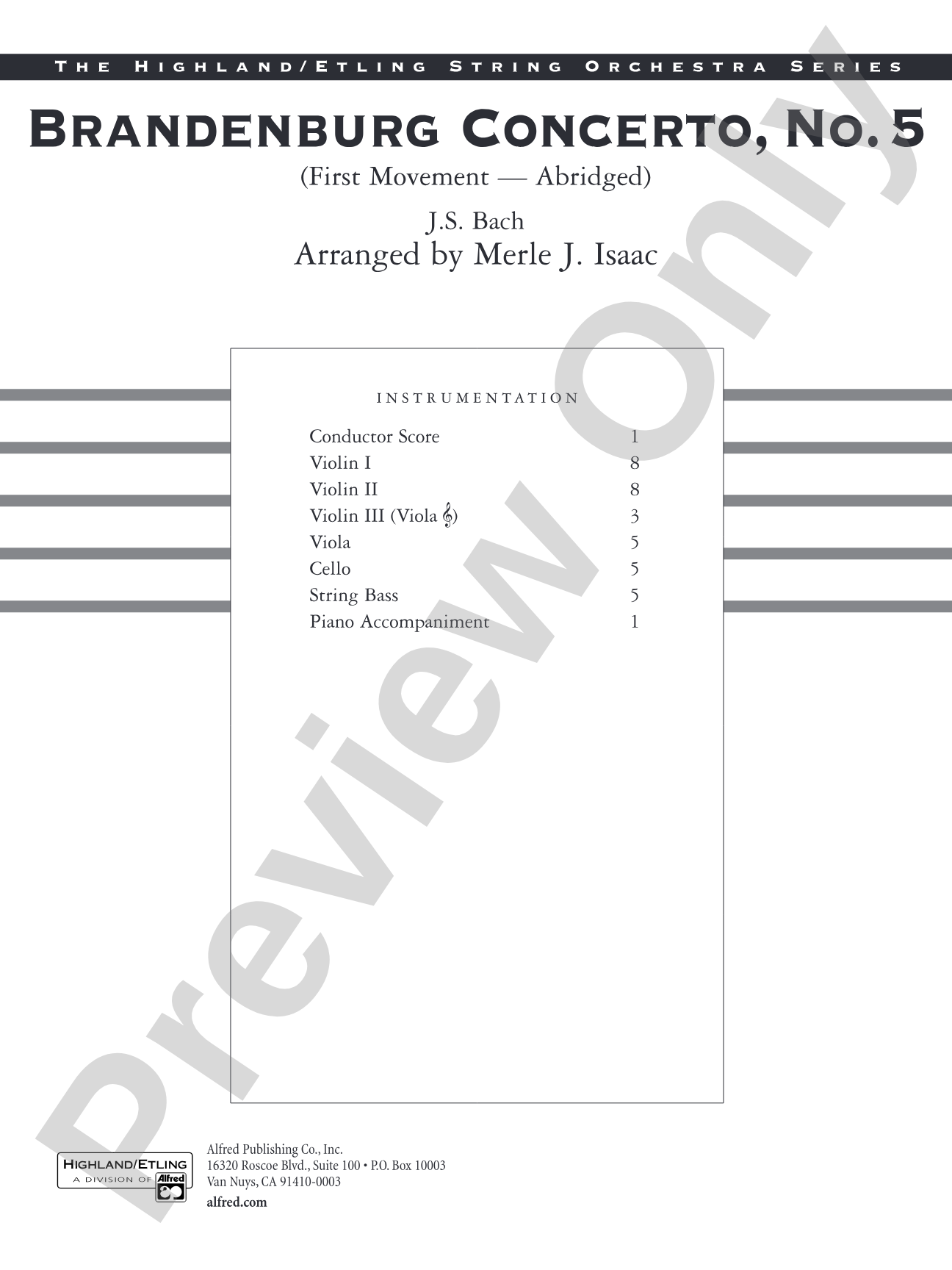

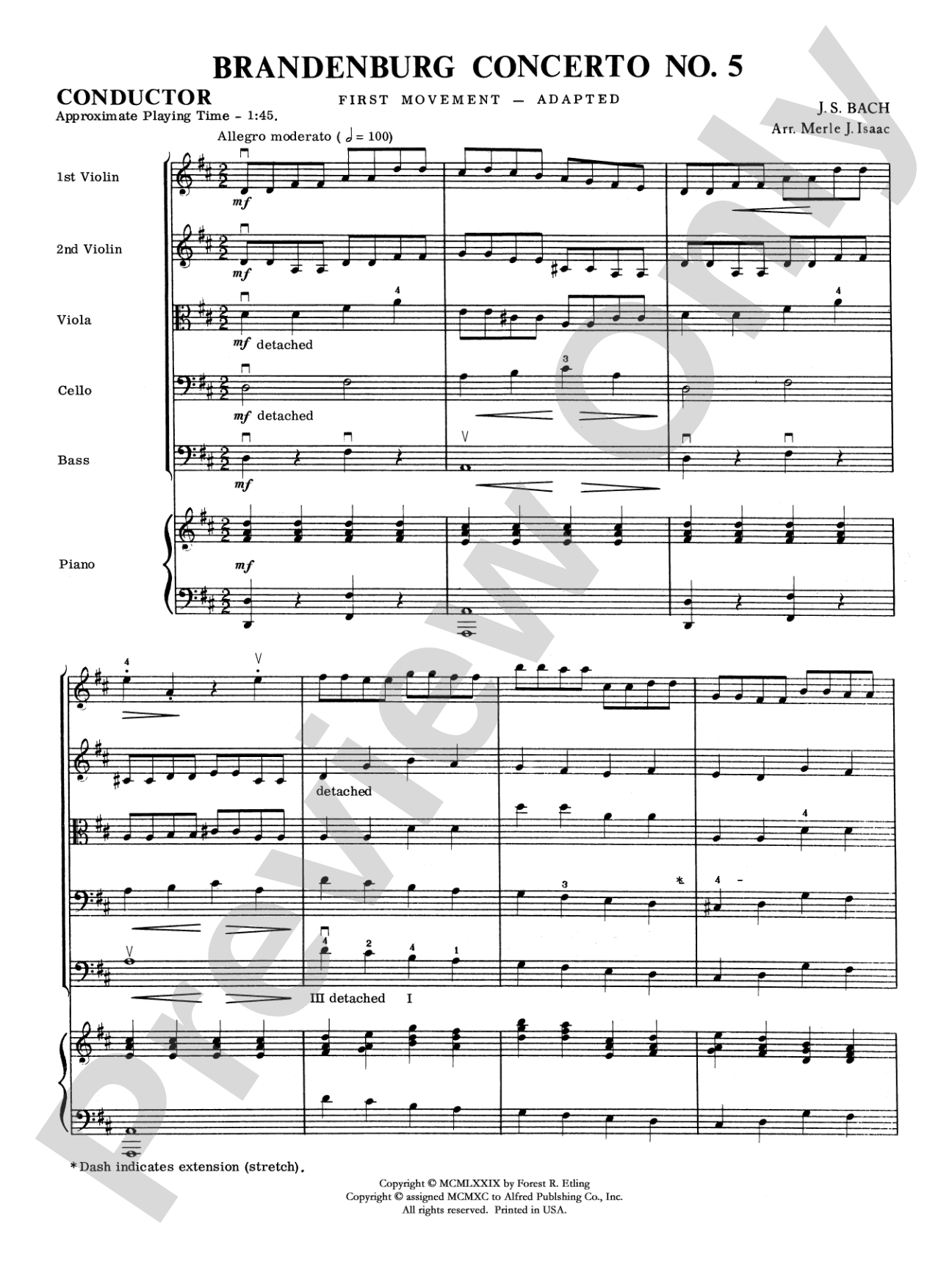
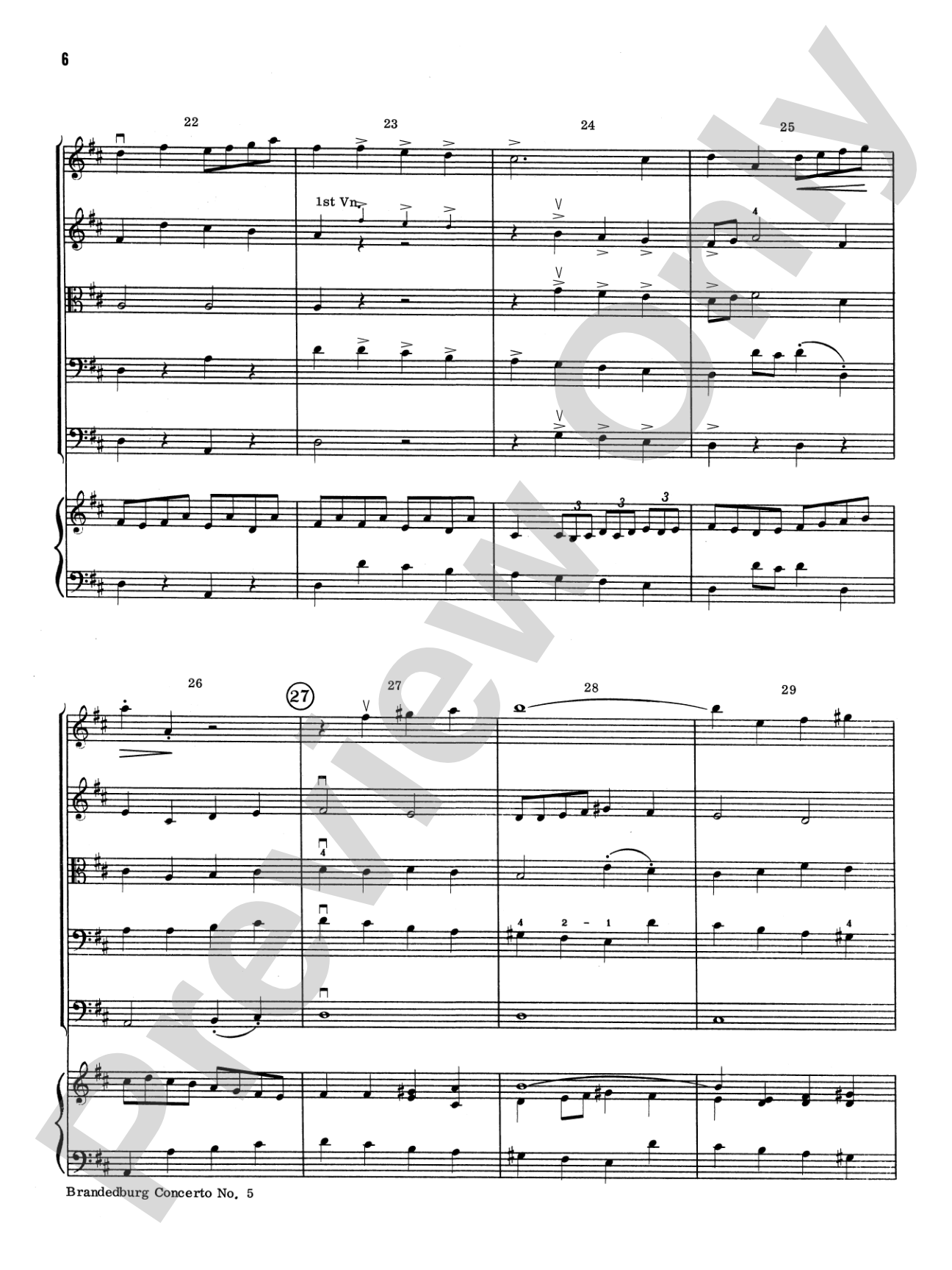
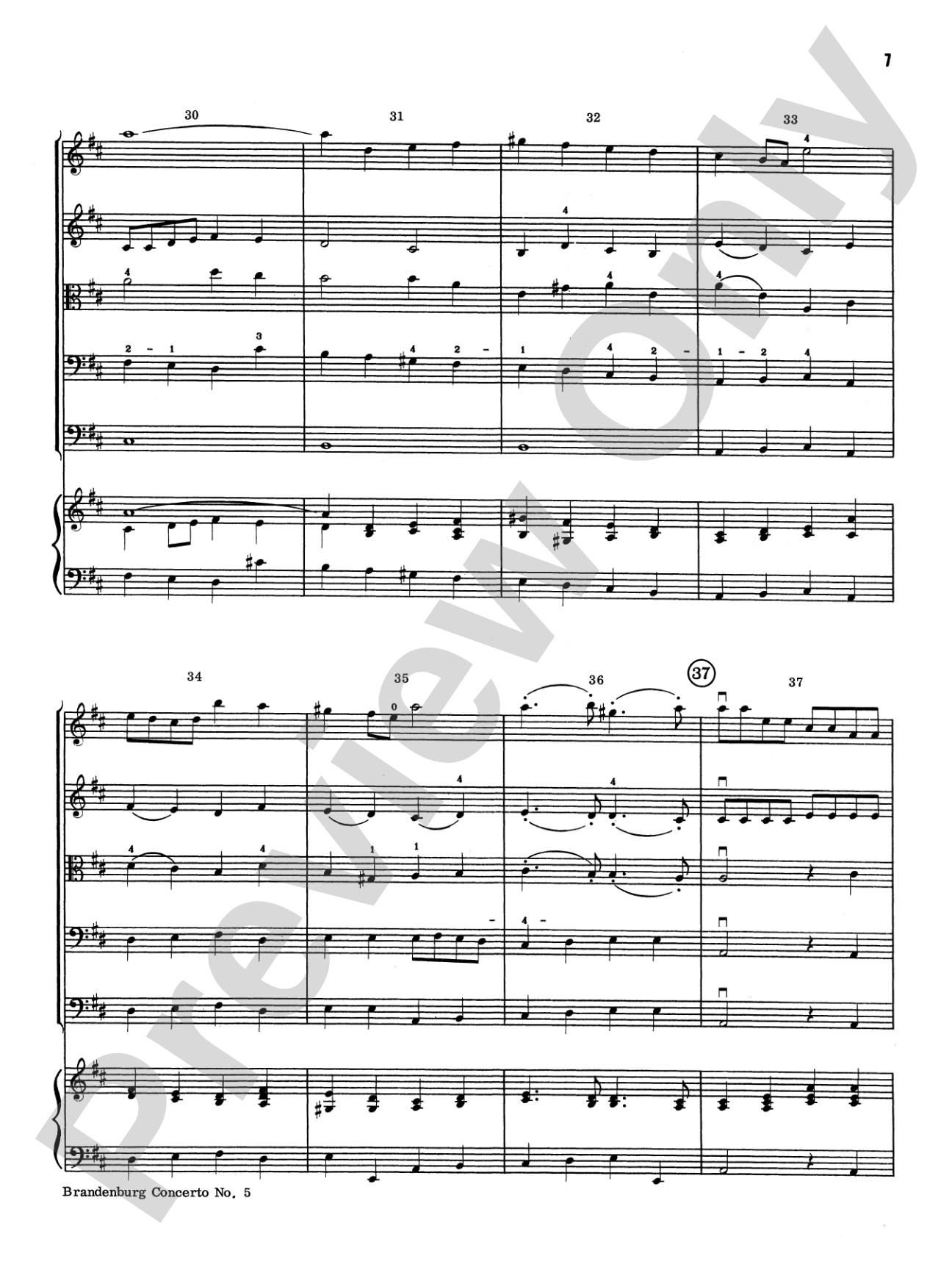
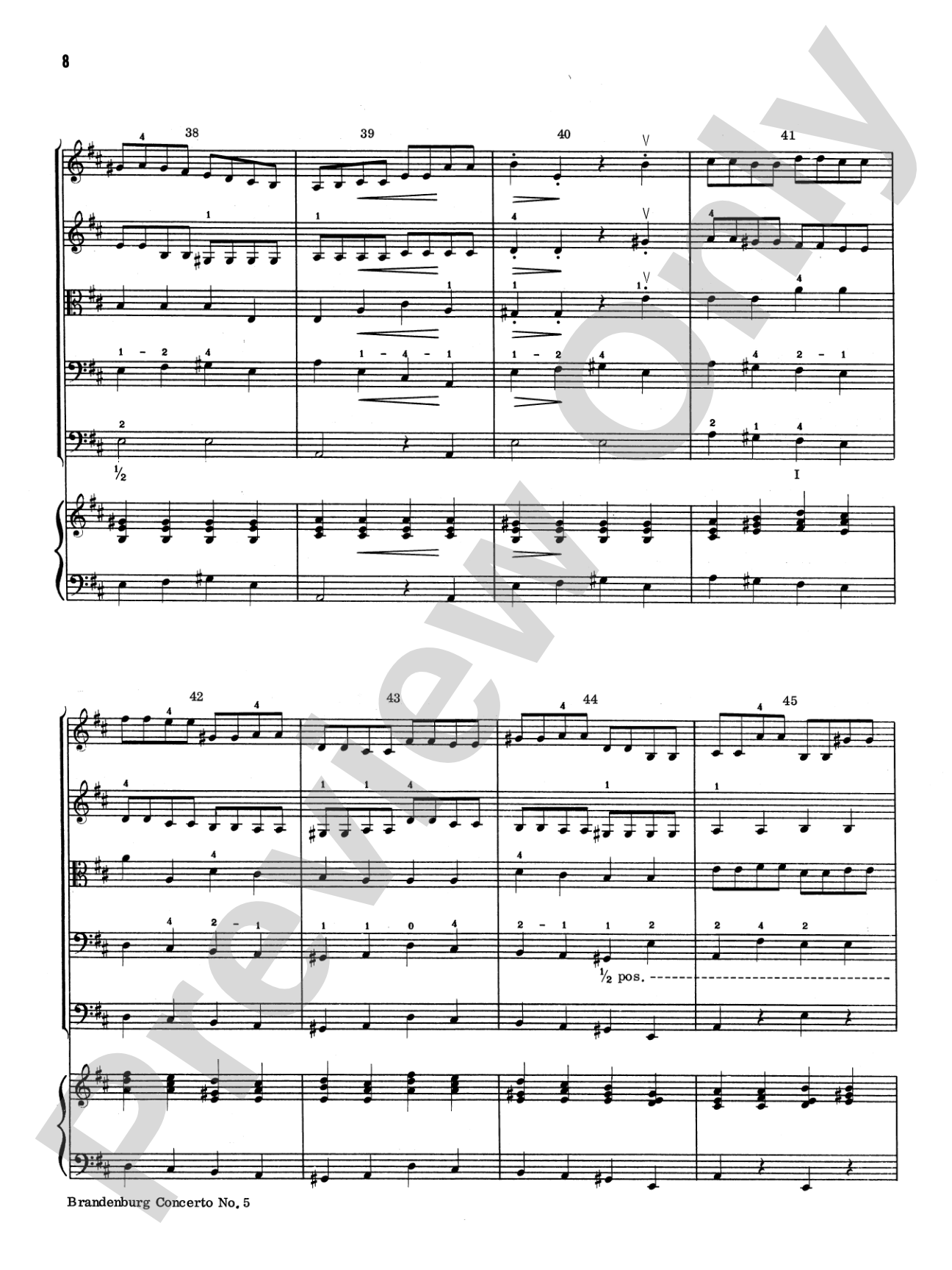
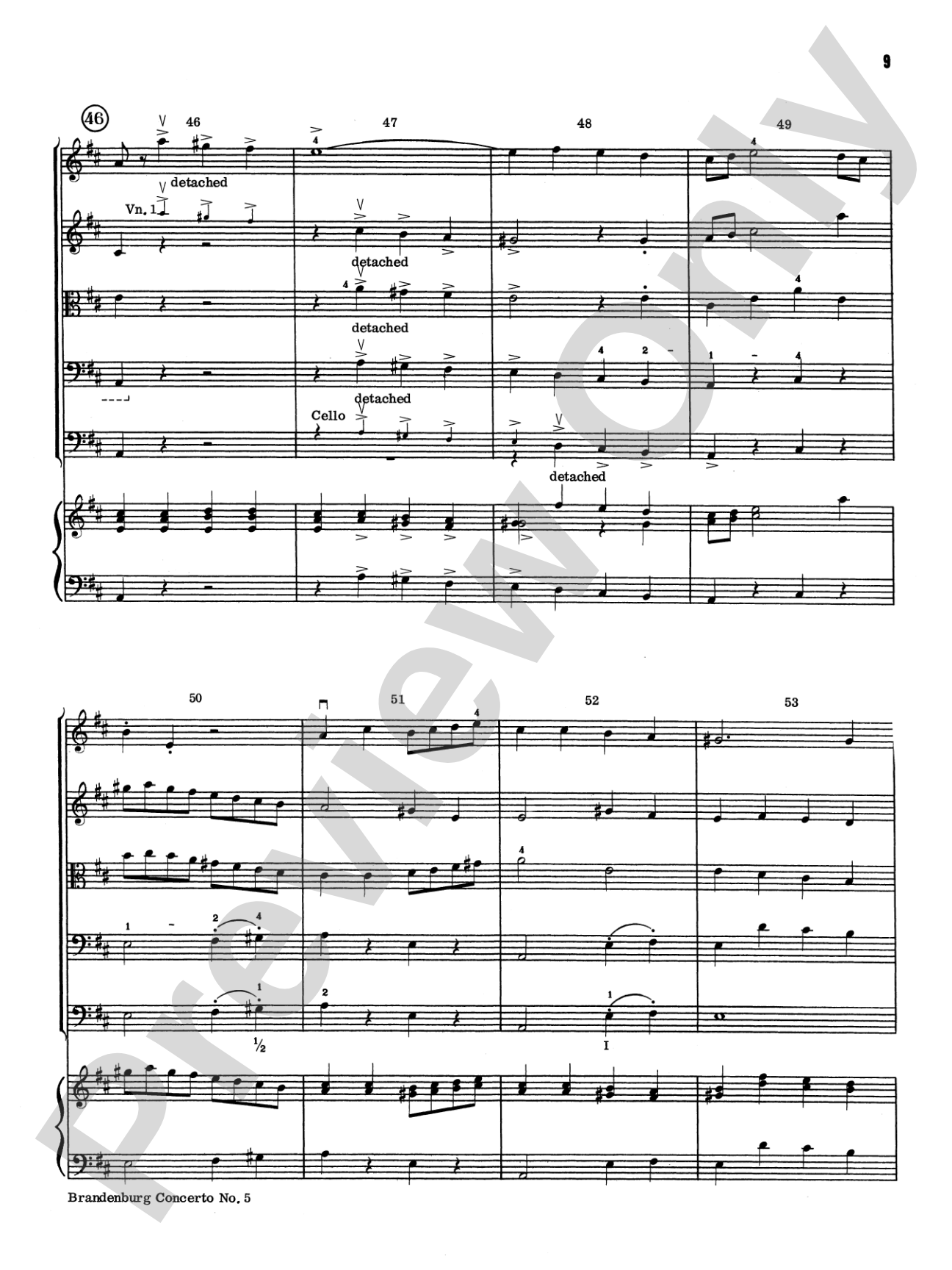
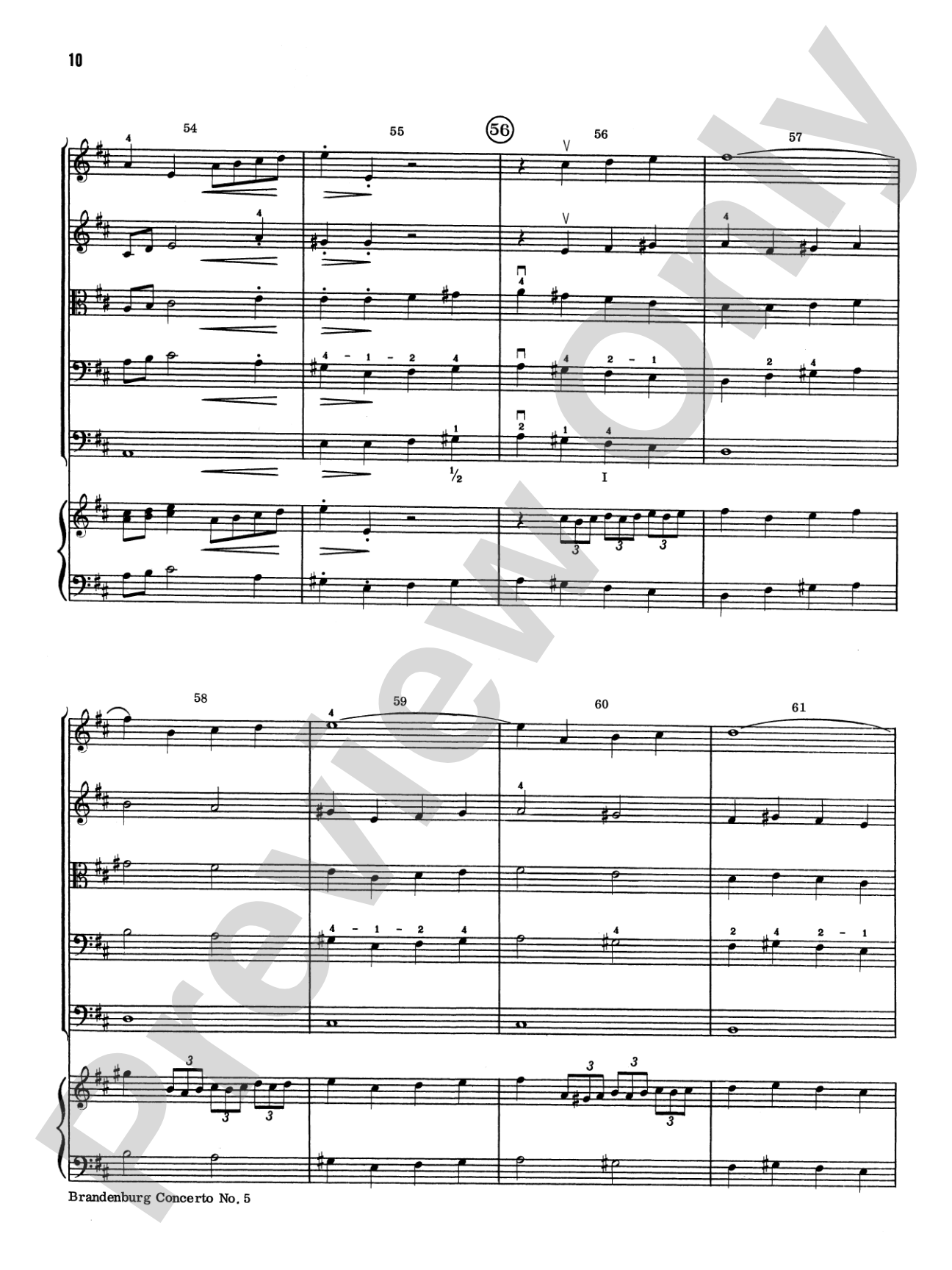
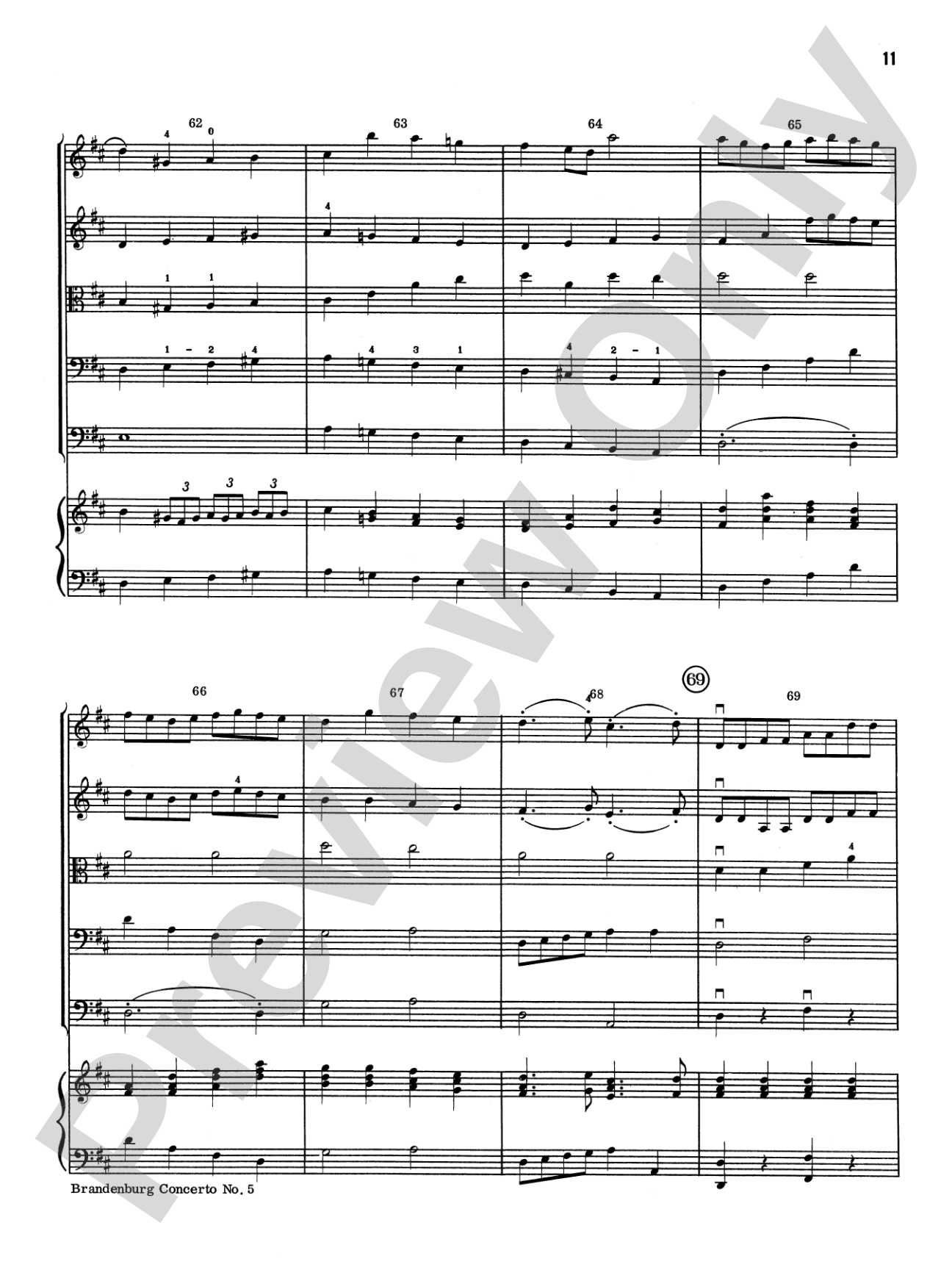
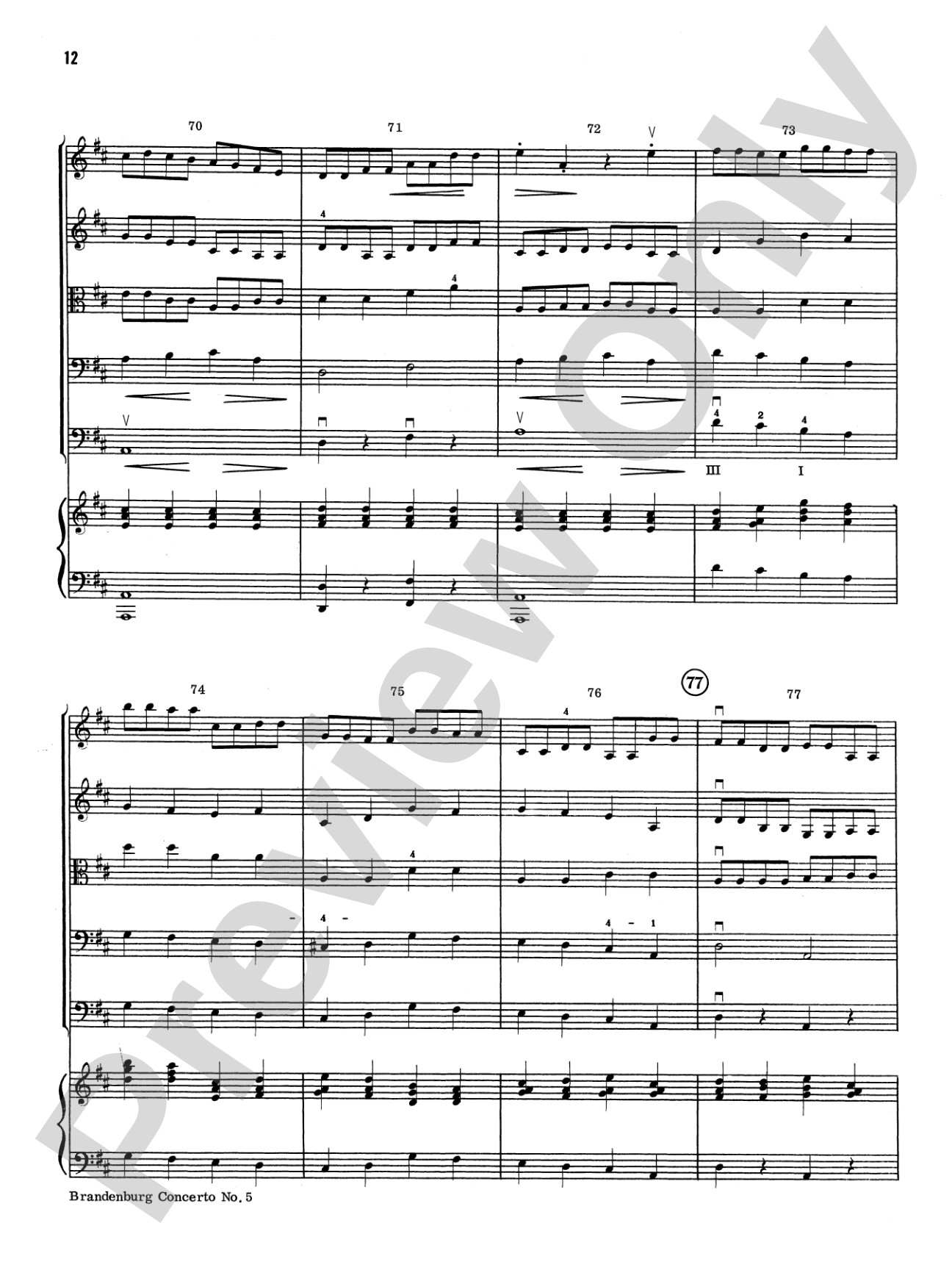
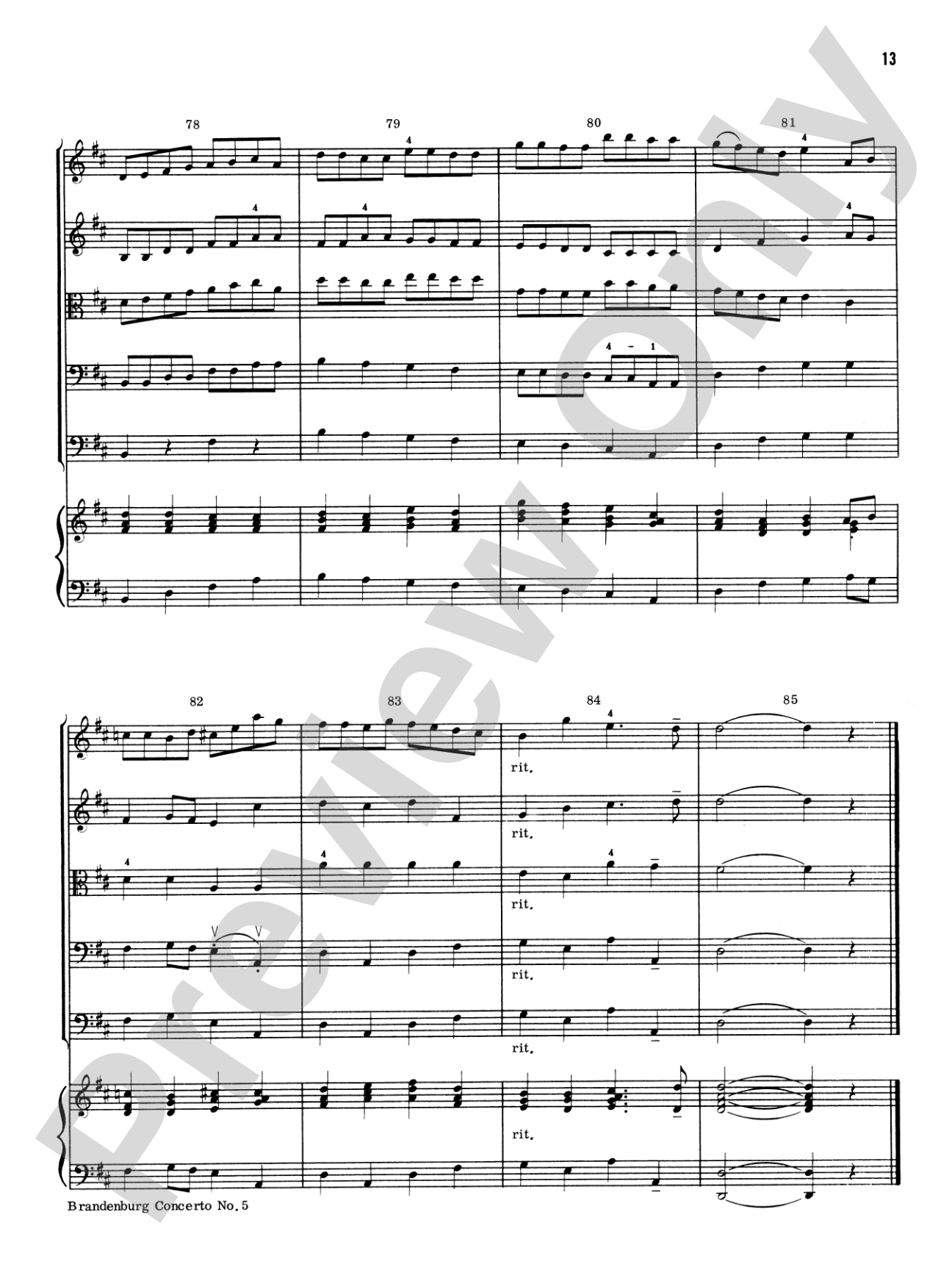




Brandenburg Concerto No. 5: String Orchestra Conductor Score & Parts
By Johann Sebastian Bach / arr. Merle J. Isaac
Grade: 3
Item: 00-PK-0000093

$65.00
Pickup currently not available
Buy Extra Parts (Digital PDF Download)
| Product | Price | Quantity |
|---|---|---|
| Brandenburg Concerto No. 5: Score | $10.00 | |
| Brandenburg Concerto No. 5: 1st Violin | $5.99 | |
| Brandenburg Concerto No. 5: 2nd Violin | $5.99 | |
| Brandenburg Concerto No. 5: 3rd Violin (Viola [TC]) | $5.99 | |
| Brandenburg Concerto No. 5: Viola | $5.99 | |
| Brandenburg Concerto No. 5: Cello | $5.99 | |
| Brandenburg Concerto No. 5: String Bass | $5.99 | |
| Brandenburg Concerto No. 5: Piano Accompaniment | $5.99 |
Parts Added to Cart!
Description
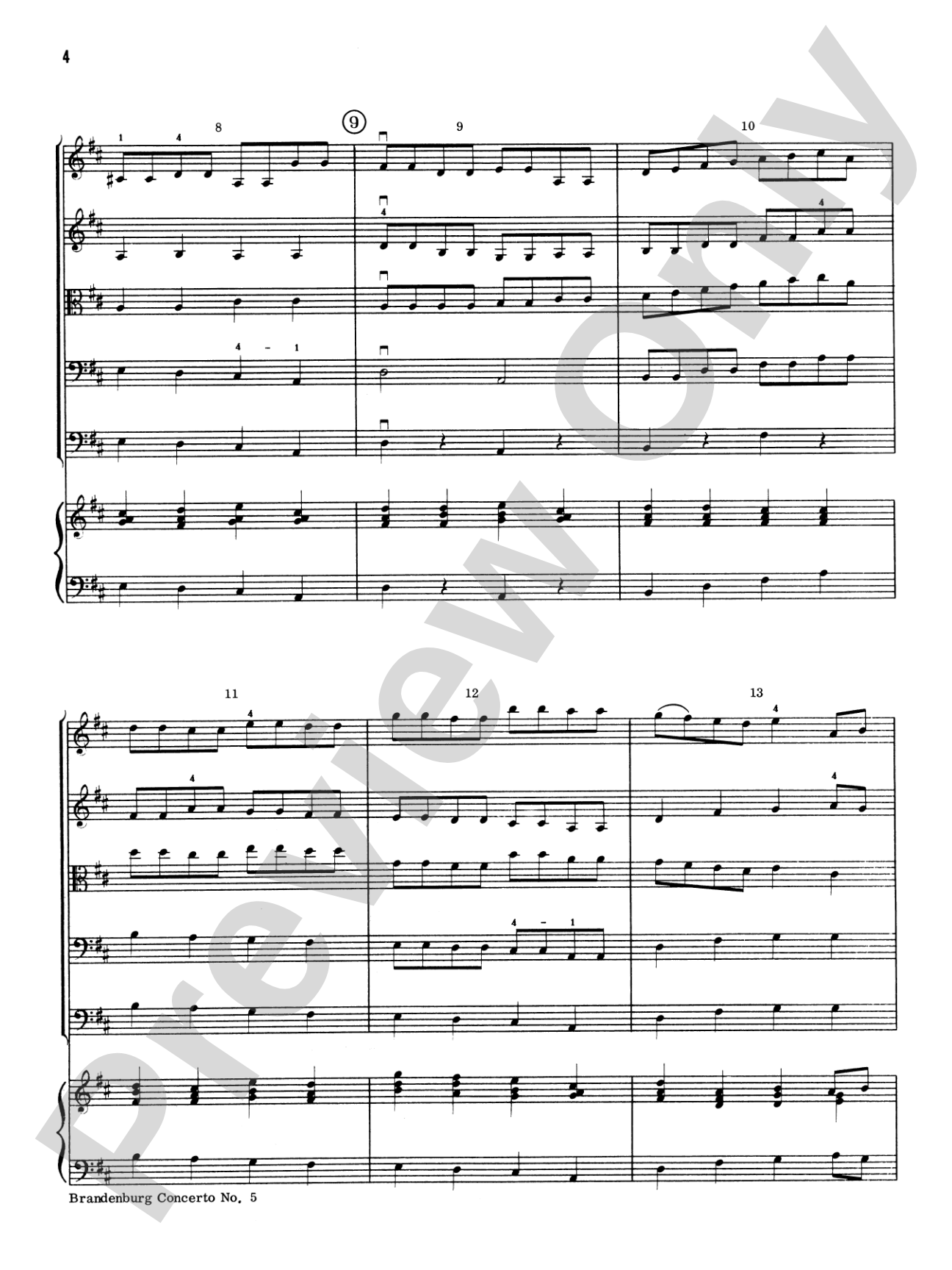
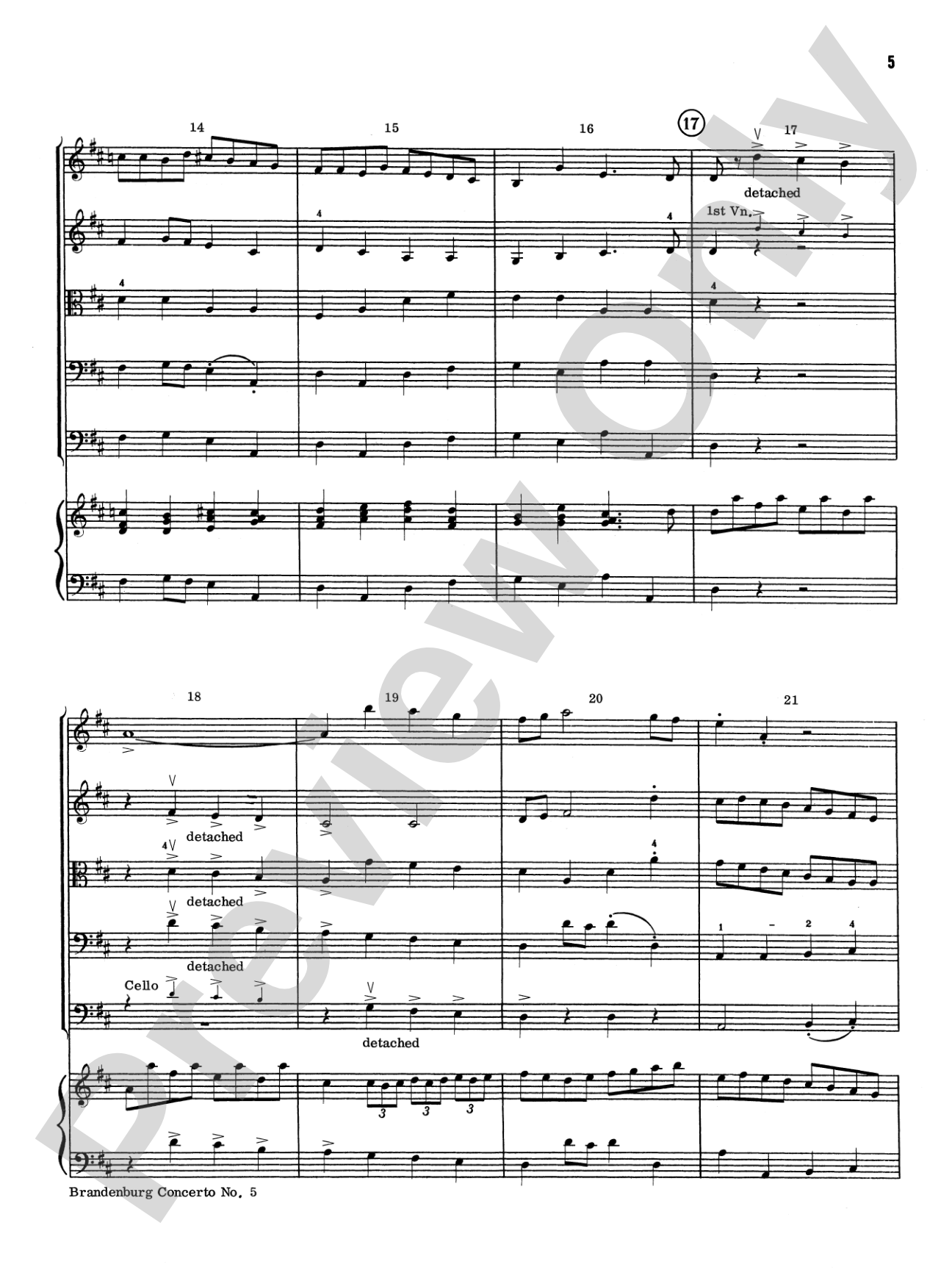
One of Bach's most well-known works has been arranged for younger string orchestras in this classic abridged edition. This title is available in MakeMusic Cloud.


Don't just read it, hear it, play along with it, and watch your students grow with it. In MakeMusic Cloud, Brandenburg Concerto No. 5: String Orchestra Conductor Score & Parts comes alive with professional accompaniment, adjustable tempo, and built-in practice tools that turn solo practice into real progress.
Open in the Player
Jump straight in and assign it today.
Start Your Free Trial
Open this title and explore the full library in minutes.
Sample Audio
No sample audio found.
Sample Video
No sample videos found.
Additional Details
Series:
Highland/Etling String Orchestra
Publisher:
Alfred Music
Page Count:
140
SKU:
00-PK-0000093
More about this title
About the Composer: Johann Sebastian Bach
Johann Sebastian Bach (1685, 1750) stands at the center of Baroque music, a composer whose technical mastery and emotional depth shaped everything that followed. His work across every genre, from intimate chamber music to monumental sacred works, demonstrates a command of counterpoint and harmonic language that remains unmatched. For string players, Bach's music offers an essential education in phrasing, intonation, and the architecture of melody.
Why we love this
Merle Isaac's arrangement opens Brandenburg Concerto No. 5 to orchestras that might otherwise never perform it. The Grade 3 setting preserves the brilliance of Bach's original concerto grosso design while making the technical demands manageable; your students still feel the architecture and glory of the piece without drowning in complexity.
What to expect
The opening ricercar sparkles with forward motion and elegant counterpoint; there's a sense of courtly sophistication even as the lines dance around each other. The work radiates confidence and coherence, the kind of Baroque brightness that makes young players feel like they're part of a centuries-old musical tradition.
Who it's for
String orchestras at the intermediate level who are ready to tackle a major canonical work without waiting for advanced high school years. Teachers seeking contest or festival repertoire will find a piece that's both substantial and achievable.
How to get the most out of it
- Shape the ritornello sections with clarity and rhythmic precision. Bach's Baroque idiom depends on clean articulation and intentional phrasing, not romantic rubato.
- Pay special attention to the harpsichord part in the score. Even in this arrangement, the continuo voice anchors the harmonic progression and helps your ensemble stay grounded.
- Balance the solo passages carefully. When the concertino instruments (typically violin, flute, and harpsichord in the original) step forward, the ripiano strings must recede without disappearing entirely.
- Rehearse the dotted rhythms and quick note passages separately if your ensemble struggles with Baroque rhythmic conventions. Precision here lifts the entire performance.
How to use it
This works beautifully on a concert that explores historical breadth, perhaps pairing it with a Romantic or contemporary piece to show evolution of string writing. It's also ideal for music appreciation units where students benefit from analyzing a masterwork in real time rather than discussing it in isolation.
Skills your students will build
- Reading Baroque articulation and phrasing conventions
- Balancing concertino and ripiano sections in concerto grosso texture
- Intonation in fast scalar passages and harmonic progressions
- Part independence and ensemble awareness within polyphonic writing
- Rhythmic precision with dotted figures and Baroque note values