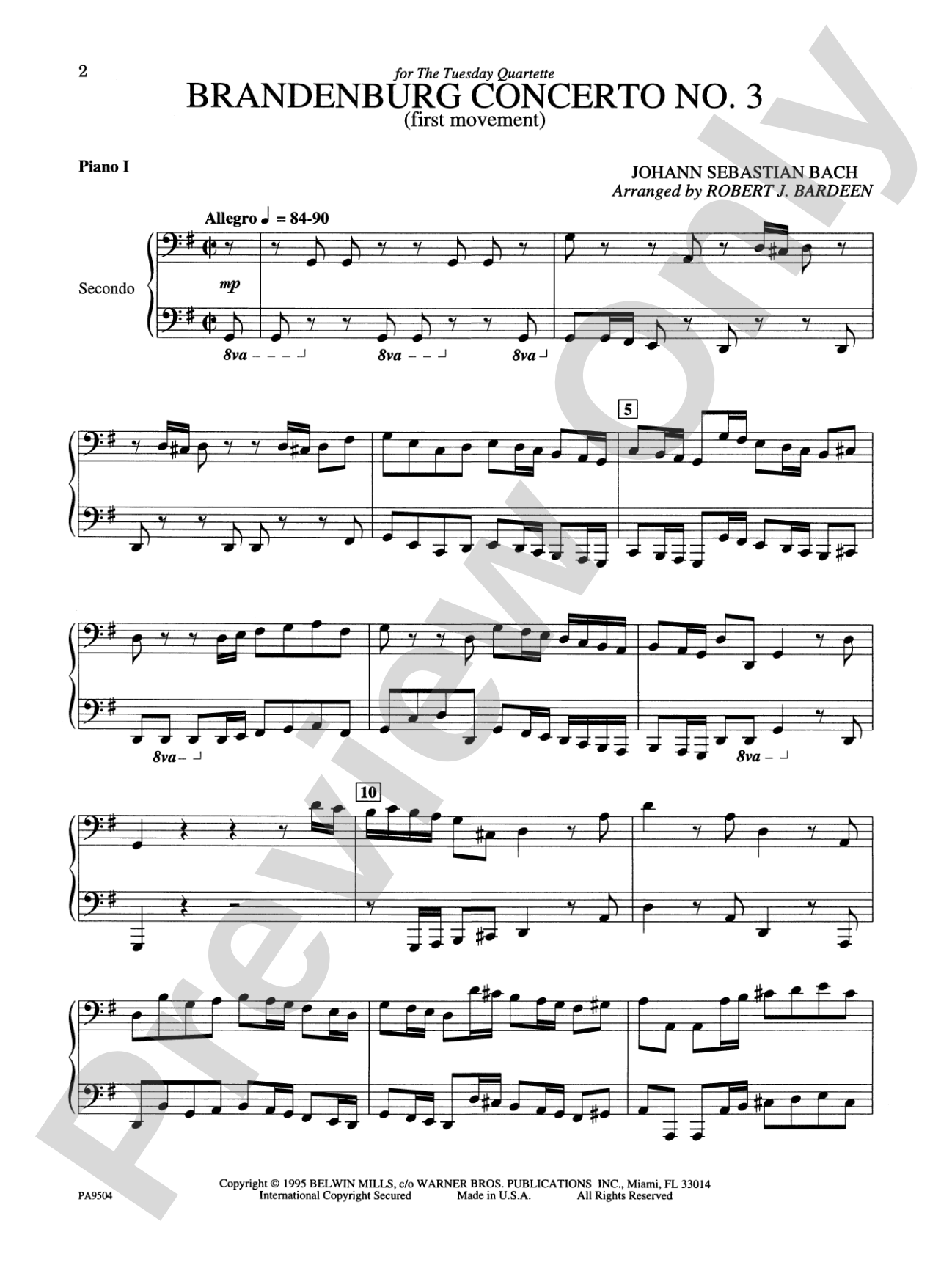
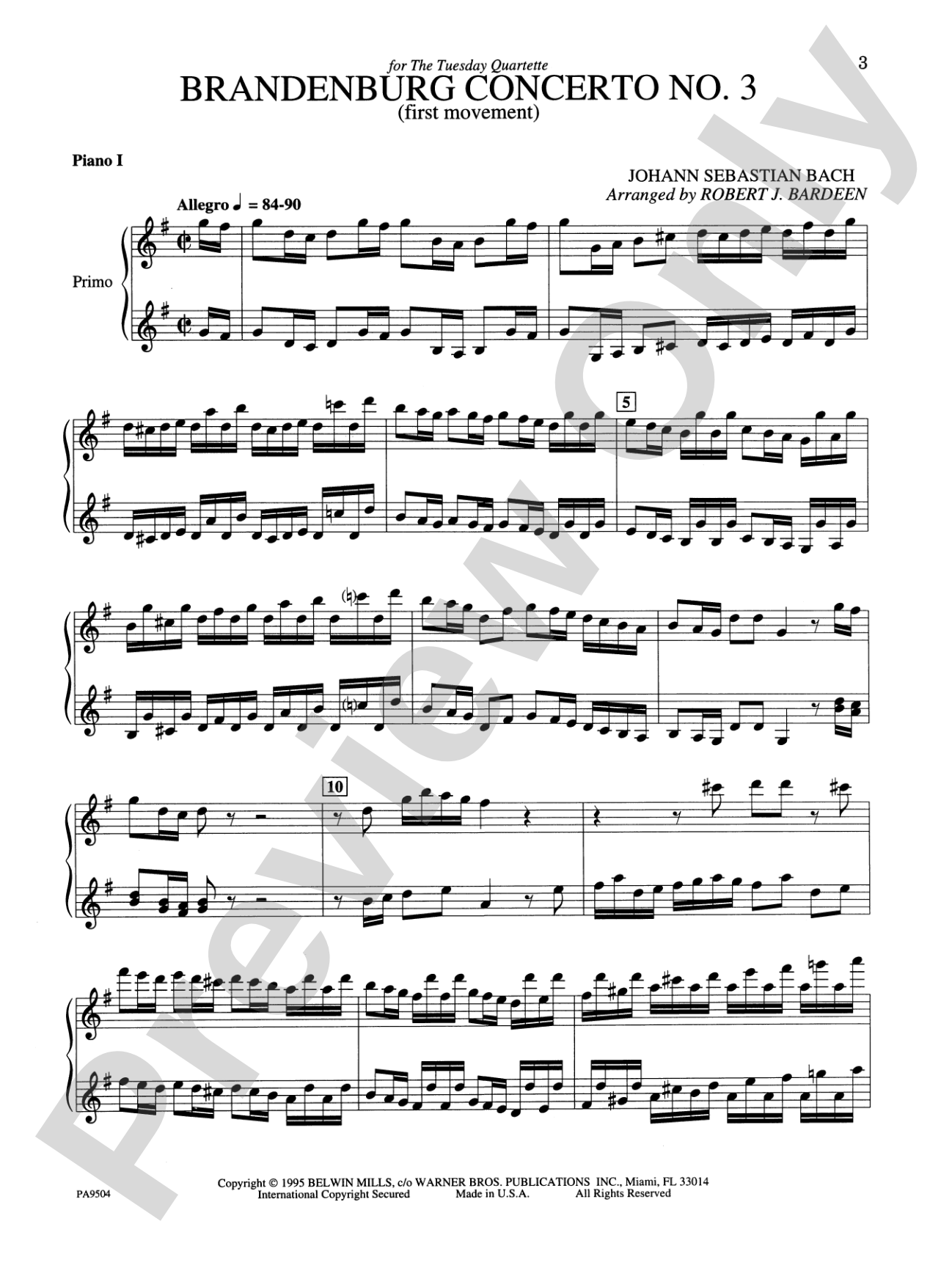
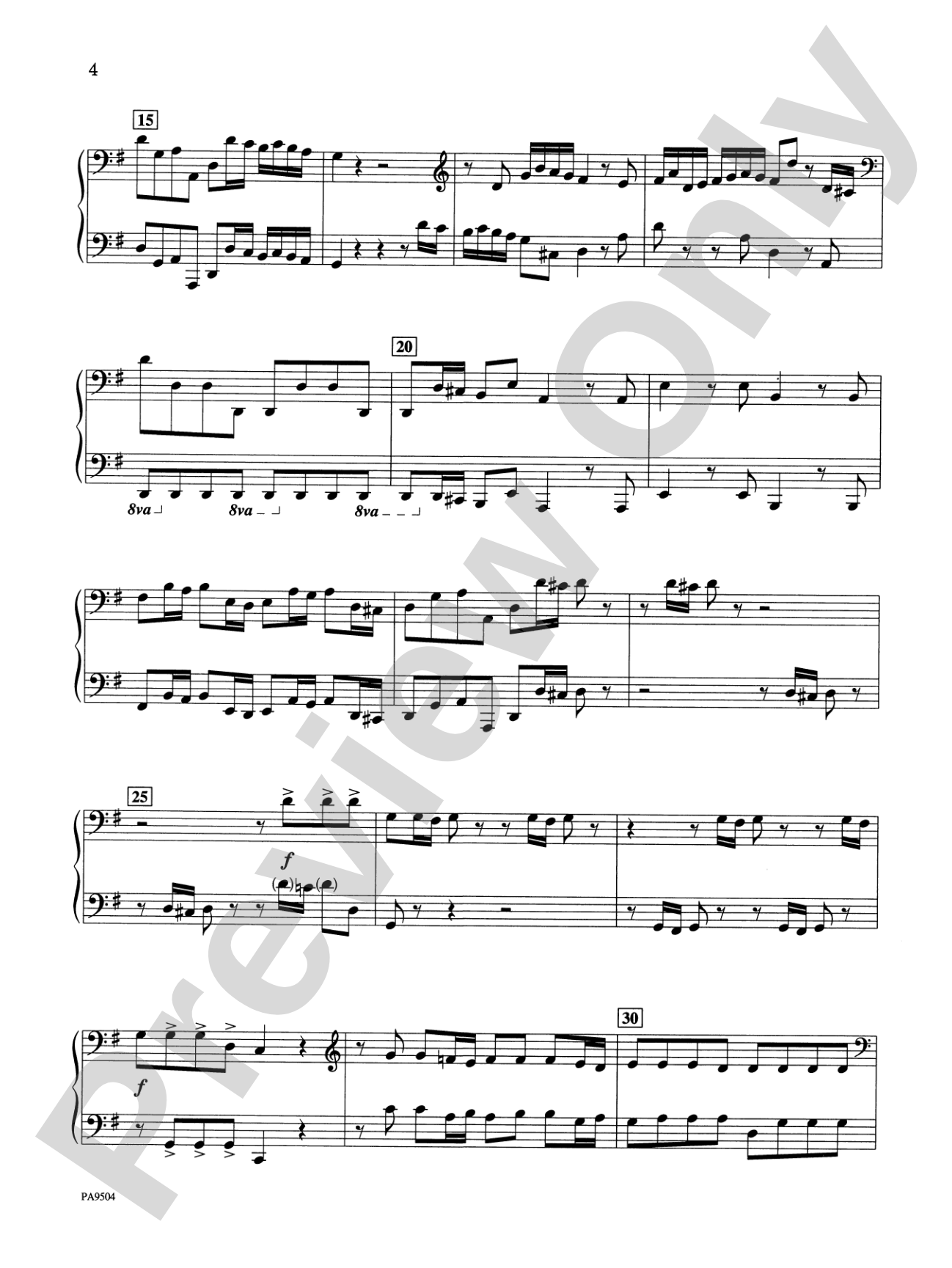
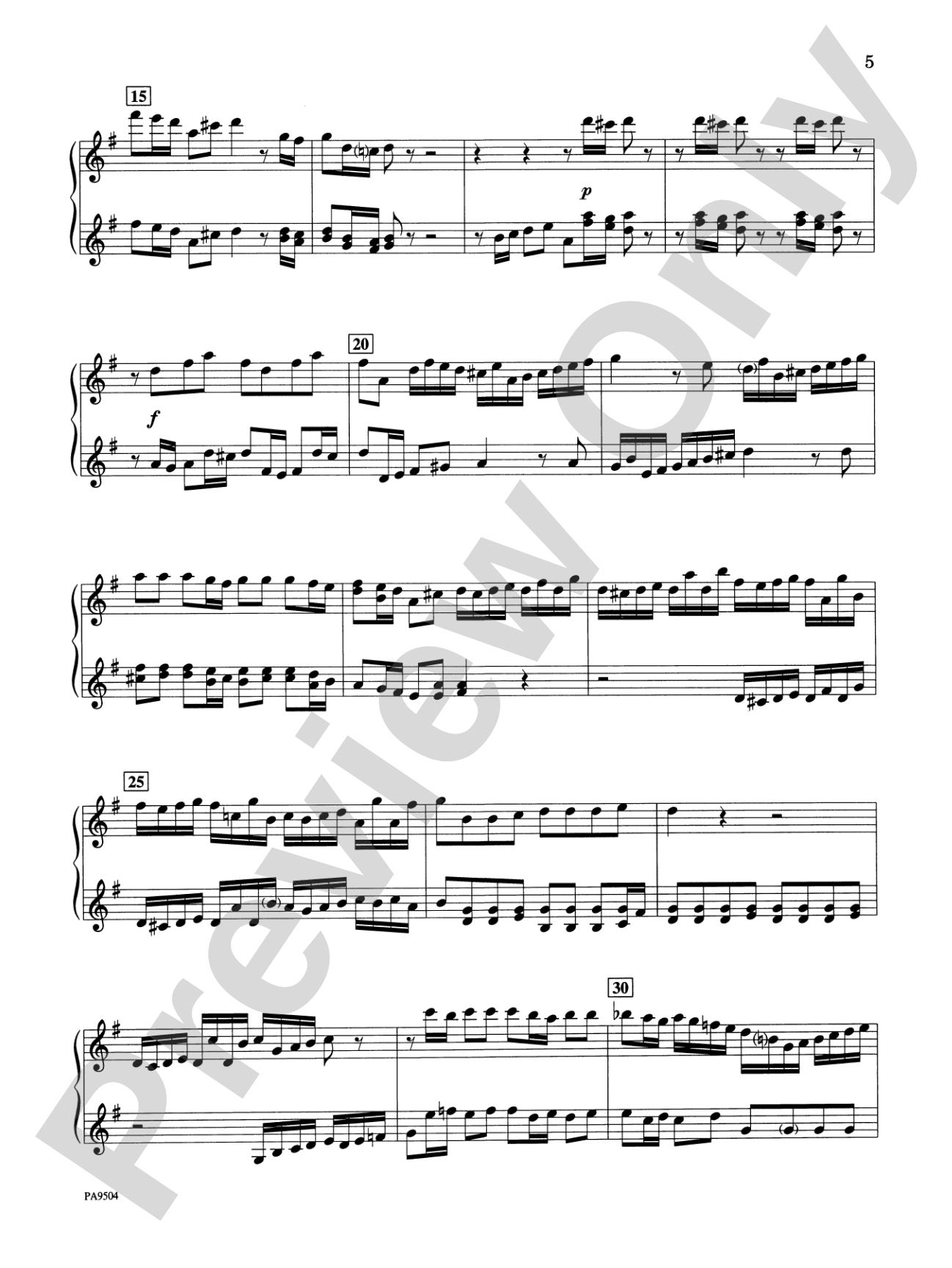
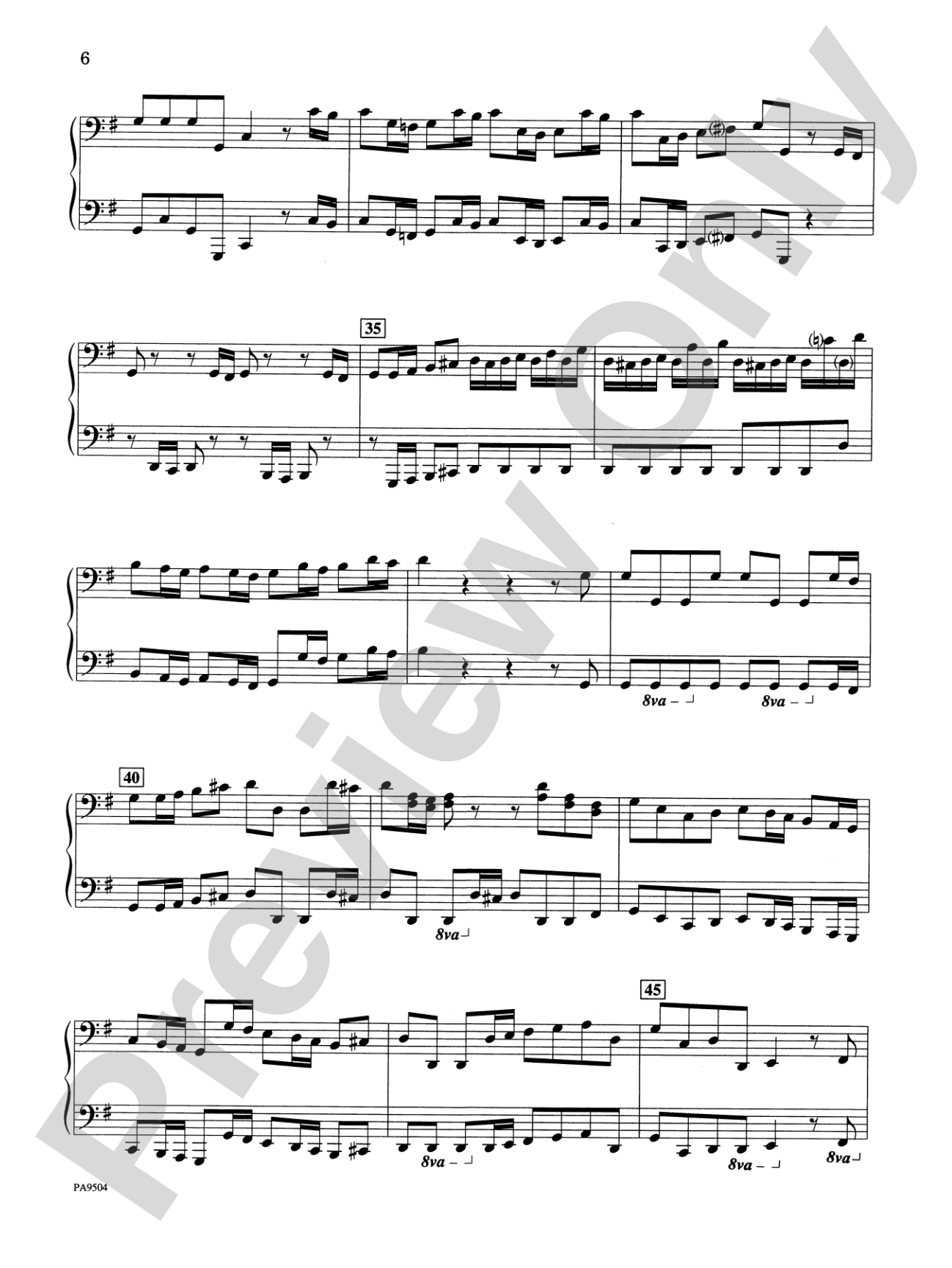
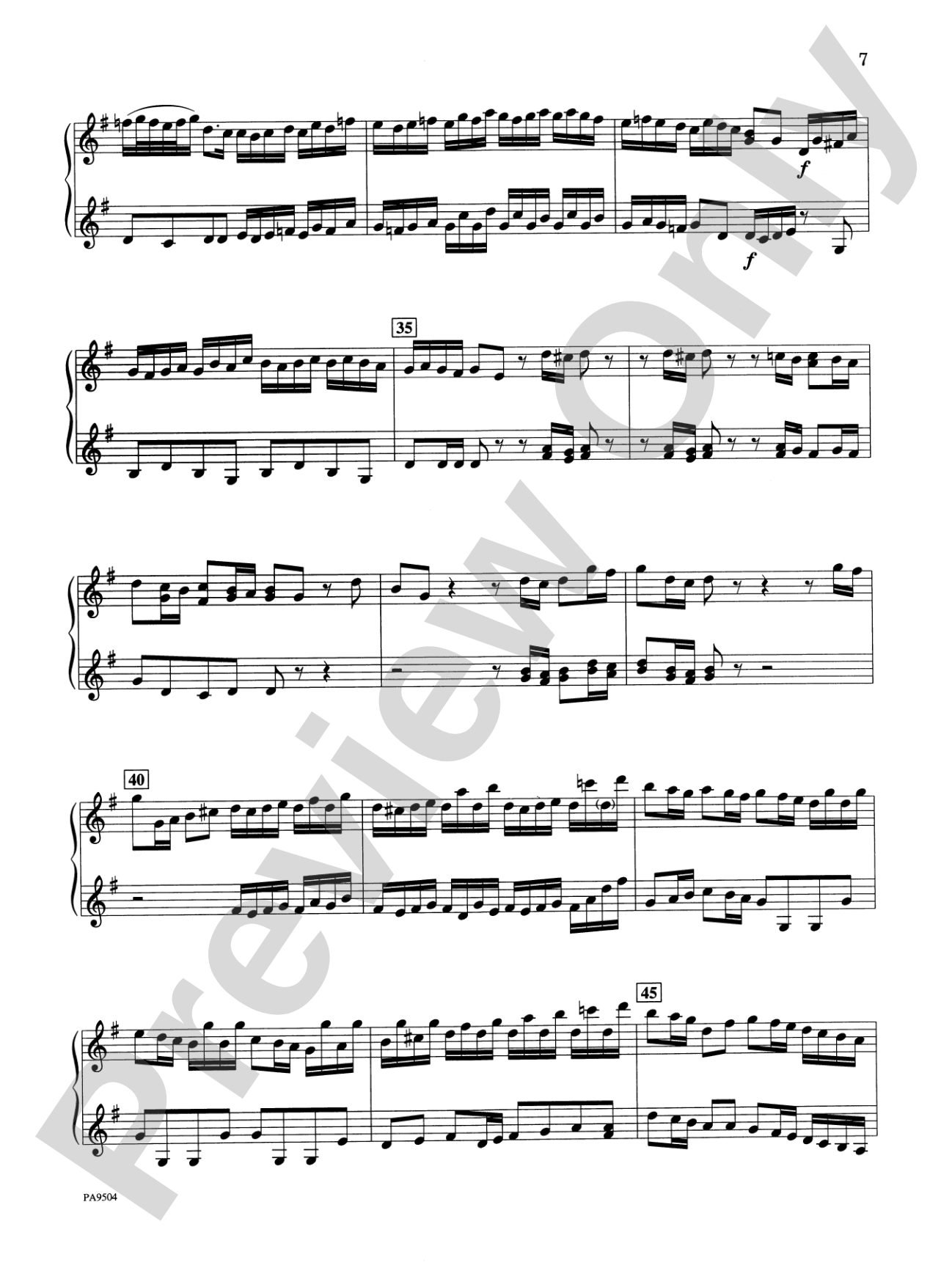
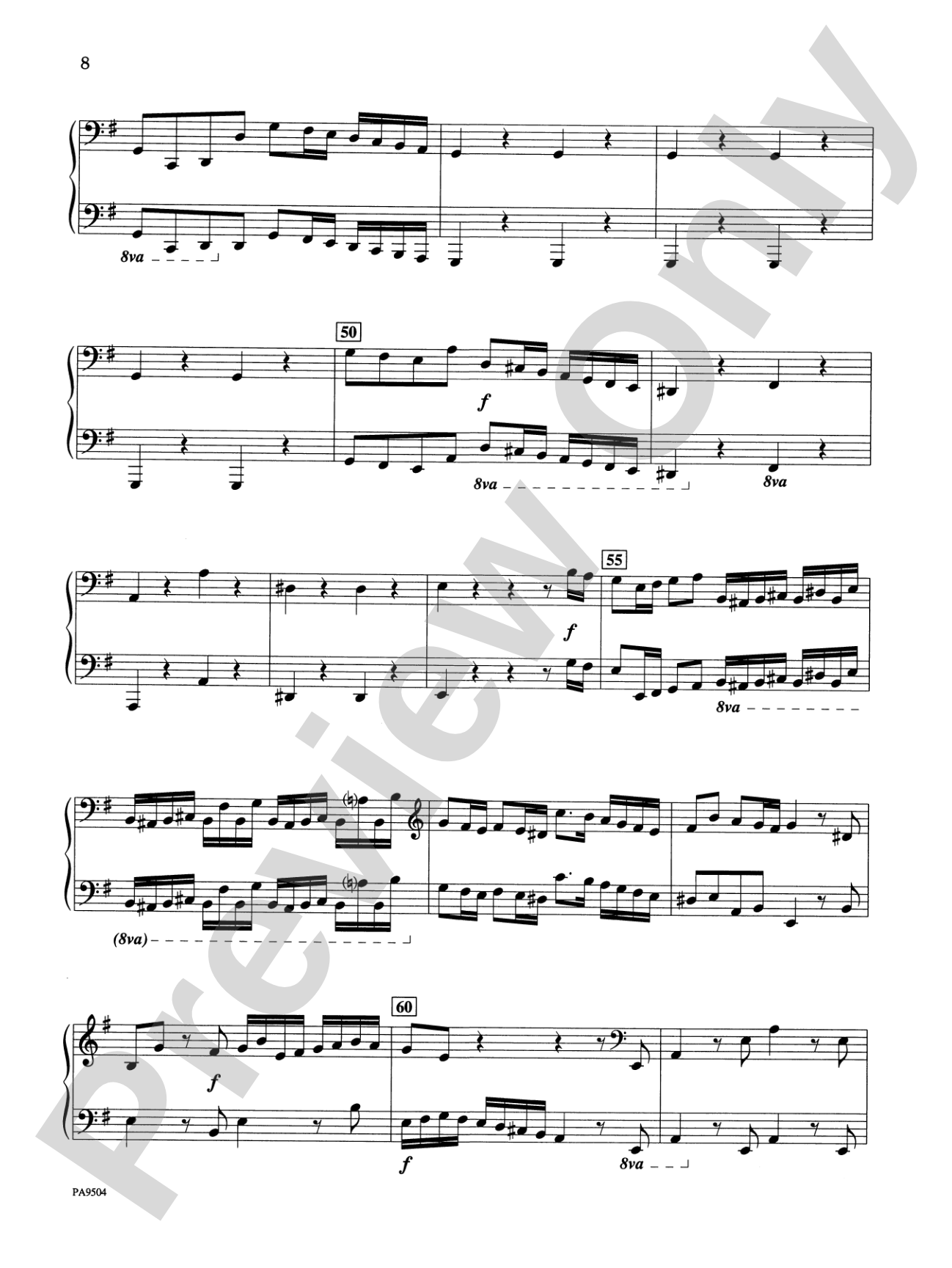
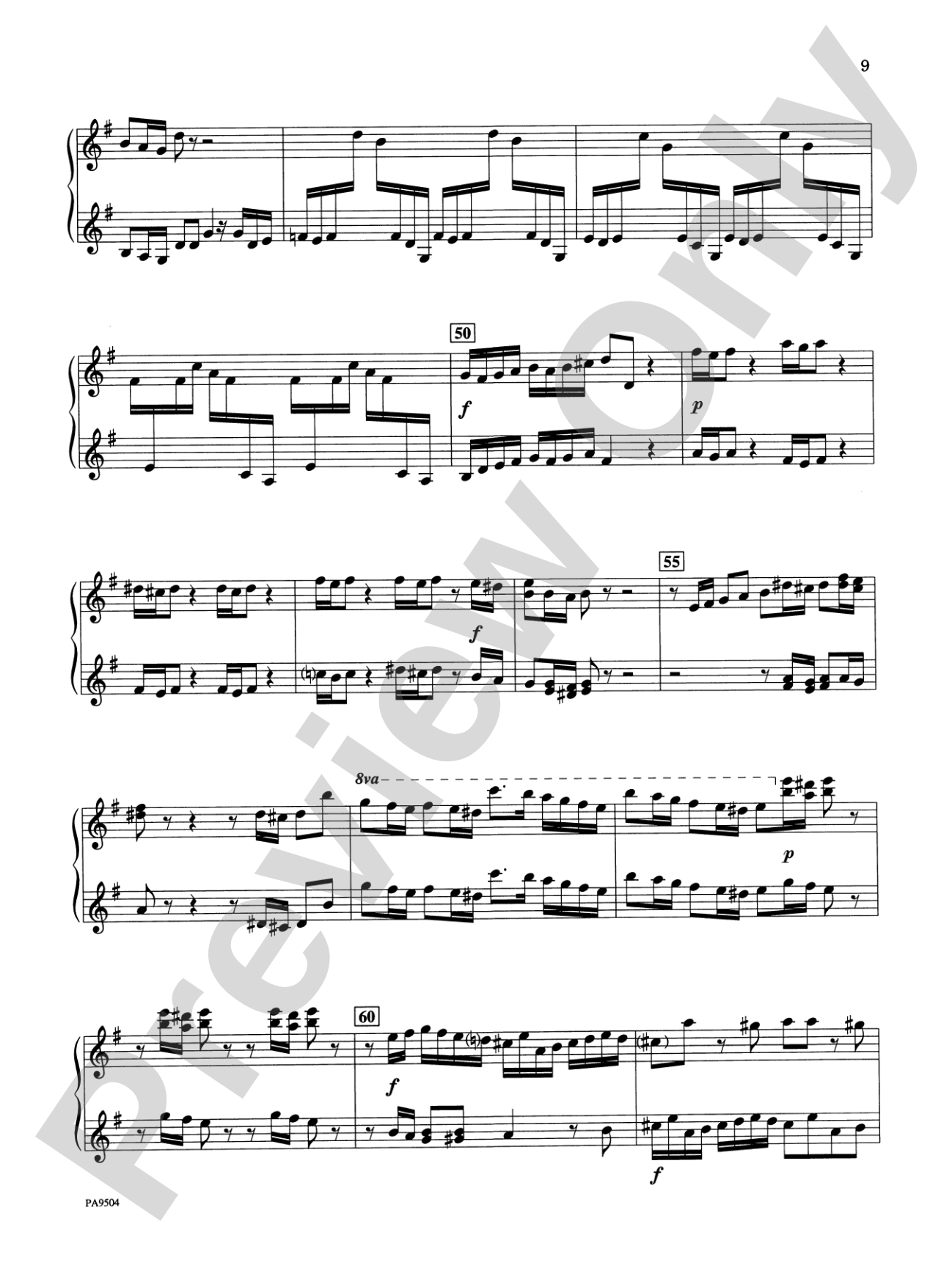
Brandenburg Concerto No. 3 (First Movement) - Piano Quartet (2 Pianos, 8 Hands) Sheet Music Preview

Brandenburg Concerto No. 3 (First Movement) - Piano Quartet (2 Pianos, 8 Hands): Piano

By Johann Sebastian Bach / arr. Robert J. Bardeen

Level: Early Advanced

Item: 00-PB-0000599

Digital Download
$8.50
Description
The piano quartet repertoire has been made much richer with this stunning Bardeen arrangement. The flavor, the character, and the colors come through as the four pianists weave the parts together. Not technically more difficult than the Inventions, this work will please discriminating performers and audiences. A Federation Festivals 2024-2028 selection.

Brandenburg Concerto No. 3 (First Movement) - Piano Quartet (2 Pianos, 8 Hands): Piano isn't in MakeMusic Cloud just yet...but it could be. Let us know you'd like to see it, and you'll help shape what comes next. In the meantime, start a free trial and dive into thousands of interactive titles your students can play along with today.

Sample Audio
No sample audio found.
Sample Video
Additional Details
Series: Keyboard Ensemble Series
Publisher: Alfred Music
Page Count: 40
SKU: 00-PB-0000599

More about this title

About the Composer: Johann Sebastian Bach

Johann Sebastian Bach (1685, 1750) stands as one of Western music's most influential composers, a master of counterpoint whose works remain central to music education across all levels. His systematic exploration of harmonic language, fugal writing, and structural architecture established principles that shaped centuries of musical thought. For ensemble musicians, Bach's concertos offer unparalleled opportunities to develop independence of line, rhythmic precision, and the kind of coordinated listening that makes ensemble playing musical rather than mechanical.

Why we love this

Bardeen's arrangement preserves the architectural brilliance of Bach's original while creating a genuinely idiomatic keyboard piece that four pianists can sink their teeth into. The work lives in that sweet spot where the writing is sophisticated enough to engage serious musicians but remains within reach of performers at the early advanced level, making it a festival-friendly choice that doesn't compromise on musical substance.

What to expect

The opening movement unfolds with controlled energy as four independent melodic lines weave together, creating a sense of musical conversation that feels both complex and inevitable. There's a crystalline quality to Bach's construction, where each player's contribution becomes clear once balance is achieved, revealing the logical beauty underneath what might initially sound intricate.

Who it's for

Accomplished piano students ready to experience chamber music beyond solo repertoire, and serious pianists who want to explore ensemble playing with a work of genuine architectural interest. Festivals, studio recitals, and collaborative concert programming all benefit from having this kind of polished, substantial four-hand material in the repertoire.

How to get the most out of it

  • Establish the metric clarity in rehearsals before diving into stylistic nuance; these parts demand independent counting and steady pulse from all four players.
  • Balance the texture by identifying which line carries the primary melodic content at any given moment and letting secondary voices recede accordingly.
  • Coordinate hand positions and keyboard geography across both pianos so transitions between instruments happen smoothly and without visual tension.
  • Honor the baroque sensibility by resisting excessive rubato; this music thrives on forward motion and intricate rhythmic interplay that wobbles when tempos shift.

How to use it

The Federation Festivals 2024, 2028 selection list stamps this as competition-ready material, but it's equally compelling on a collaborative concert exploring baroque music or a studio recital built around ensemble works. Programming it alongside solo Bach (Inventions, Prelude and Fugues) creates an interesting arc, showing how the same compositional language translates across different instrumental combinations.

Skills your students will build

  • Independence of line within coordinated ensemble texture
  • Reading and executing baroque counterpoint as a group
  • Balancing multiple simultaneous melodic threads
  • Maintaining steady pulse while navigating intricate rhythmic relationships
  • Collaborative listening and response between keyboard players

You May Also Like