
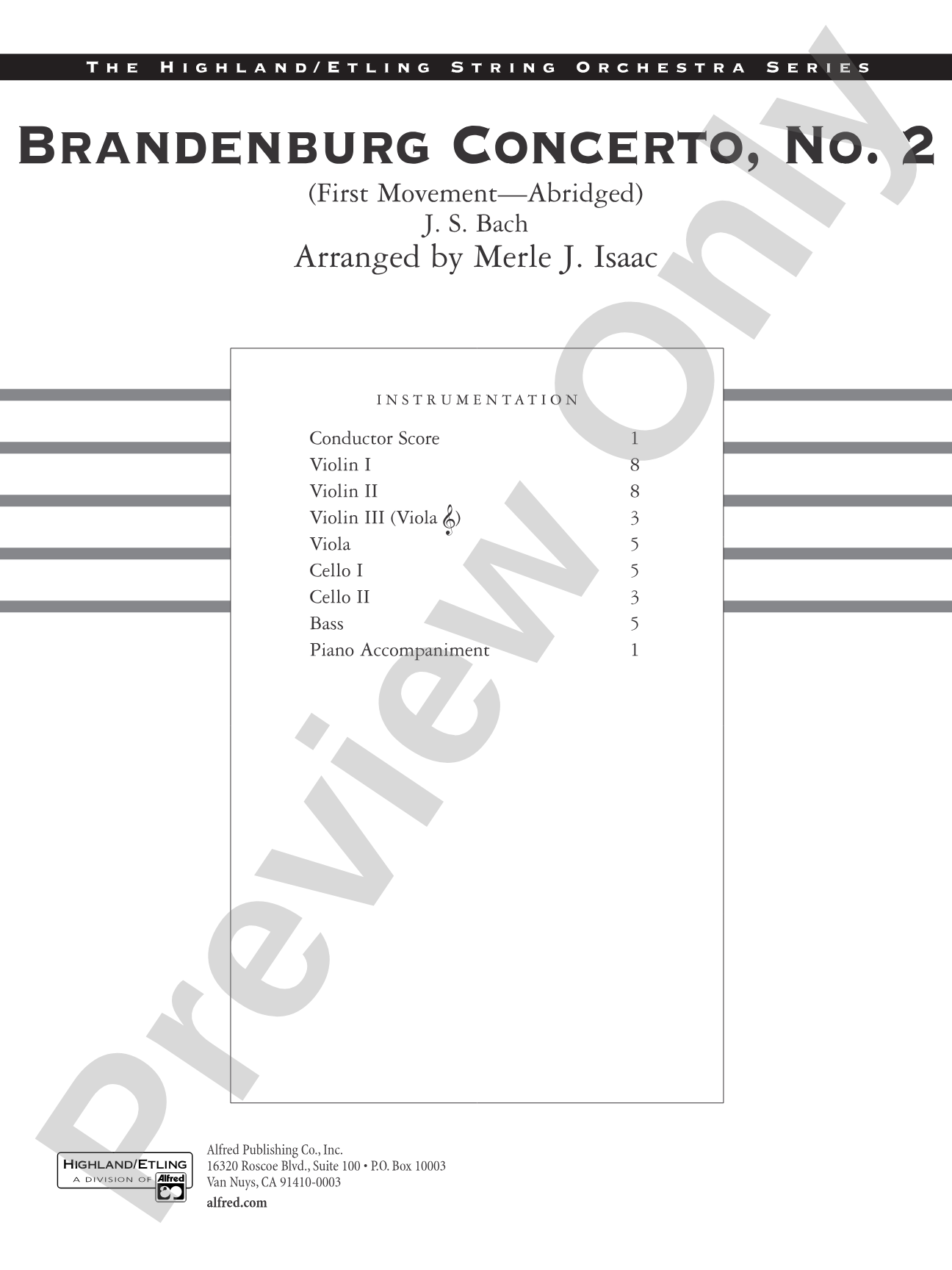
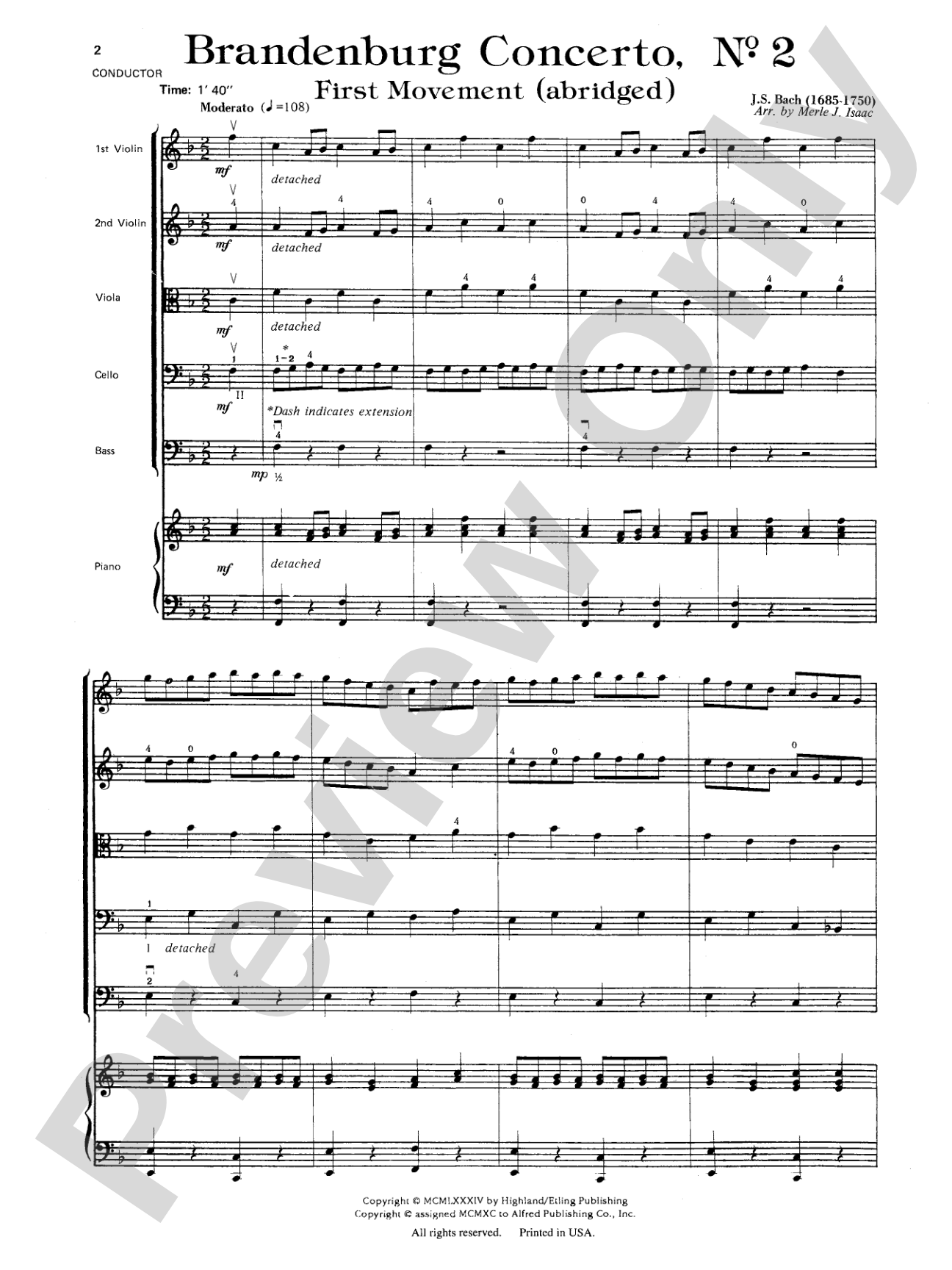
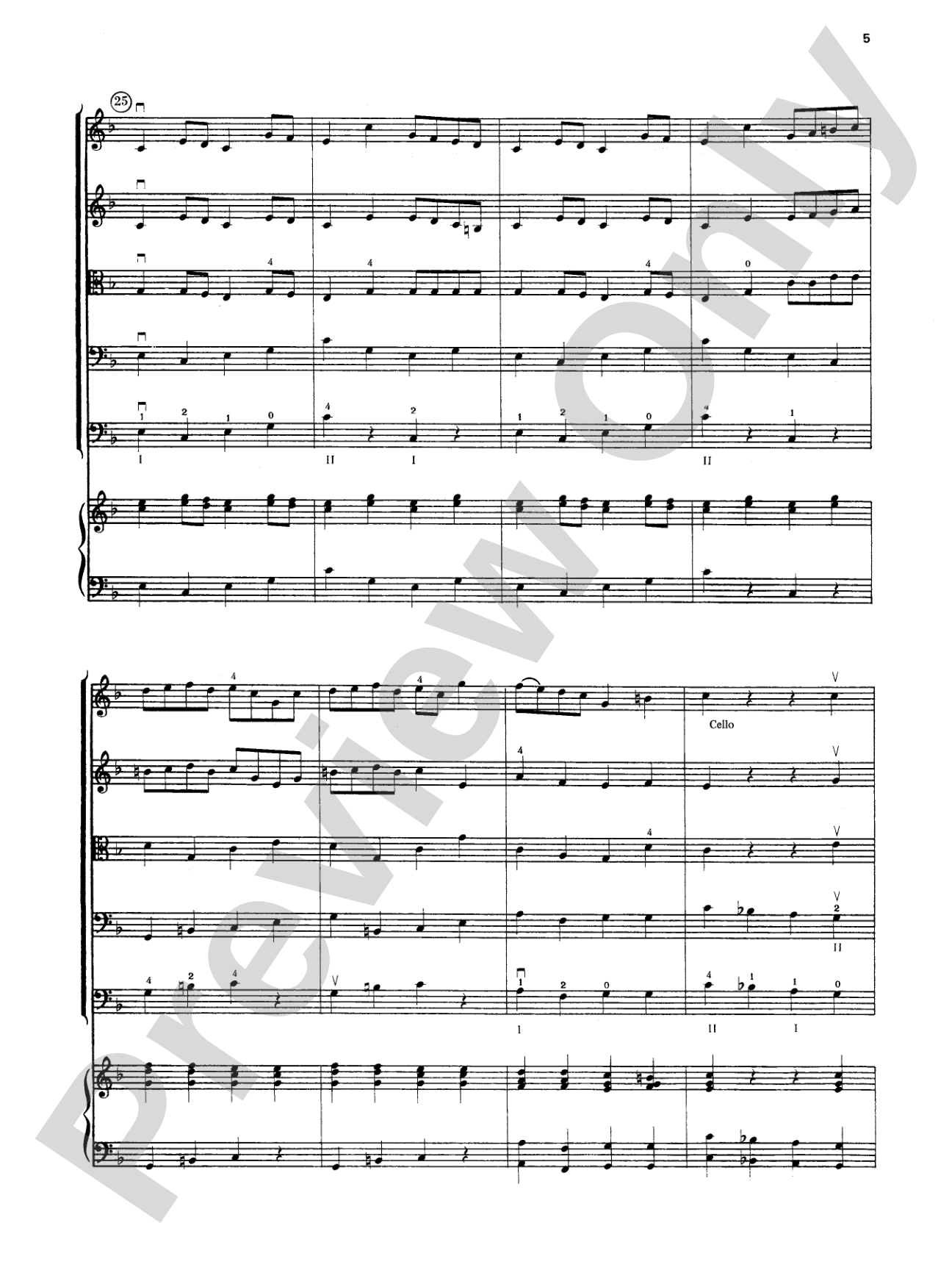
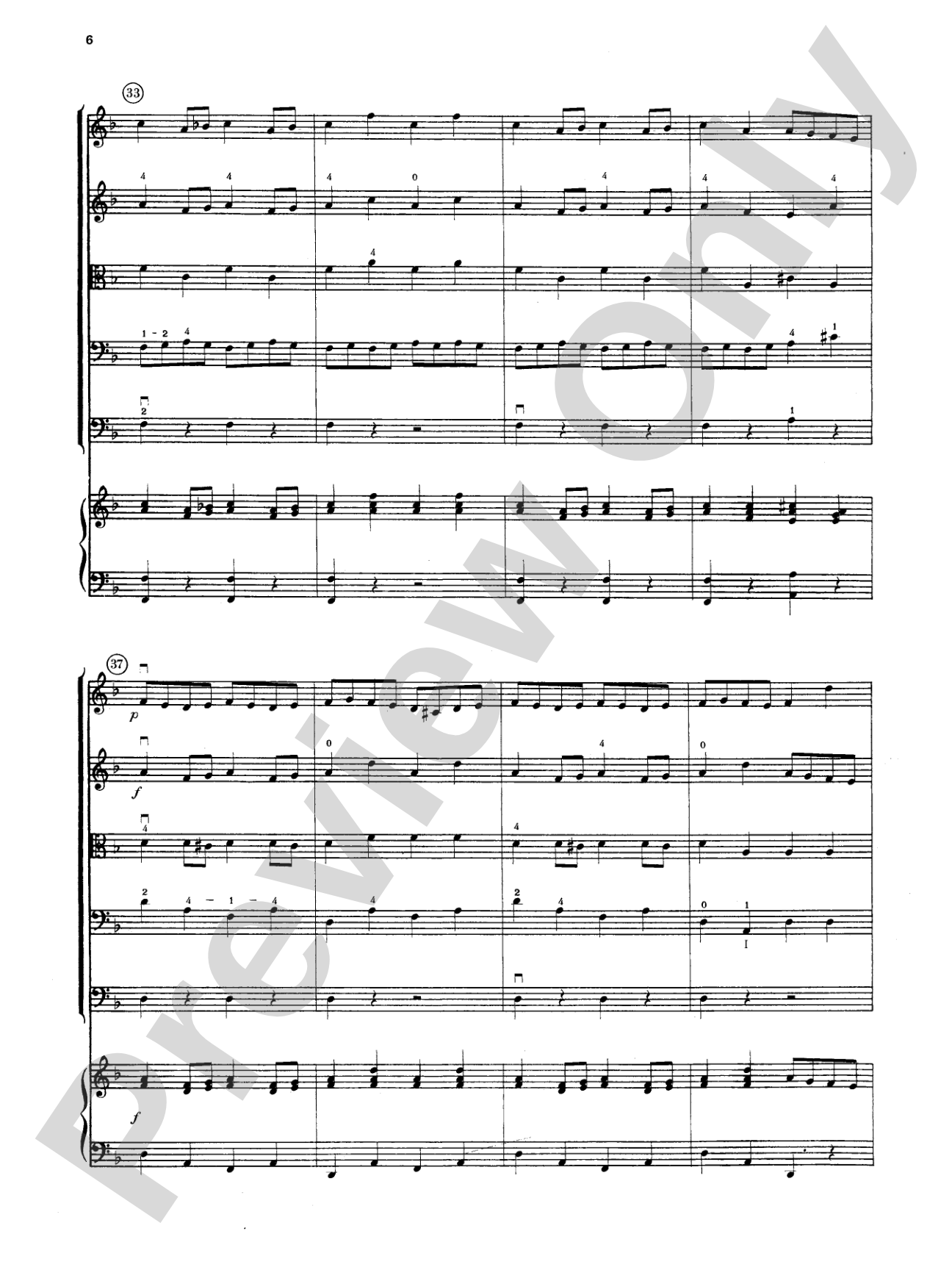
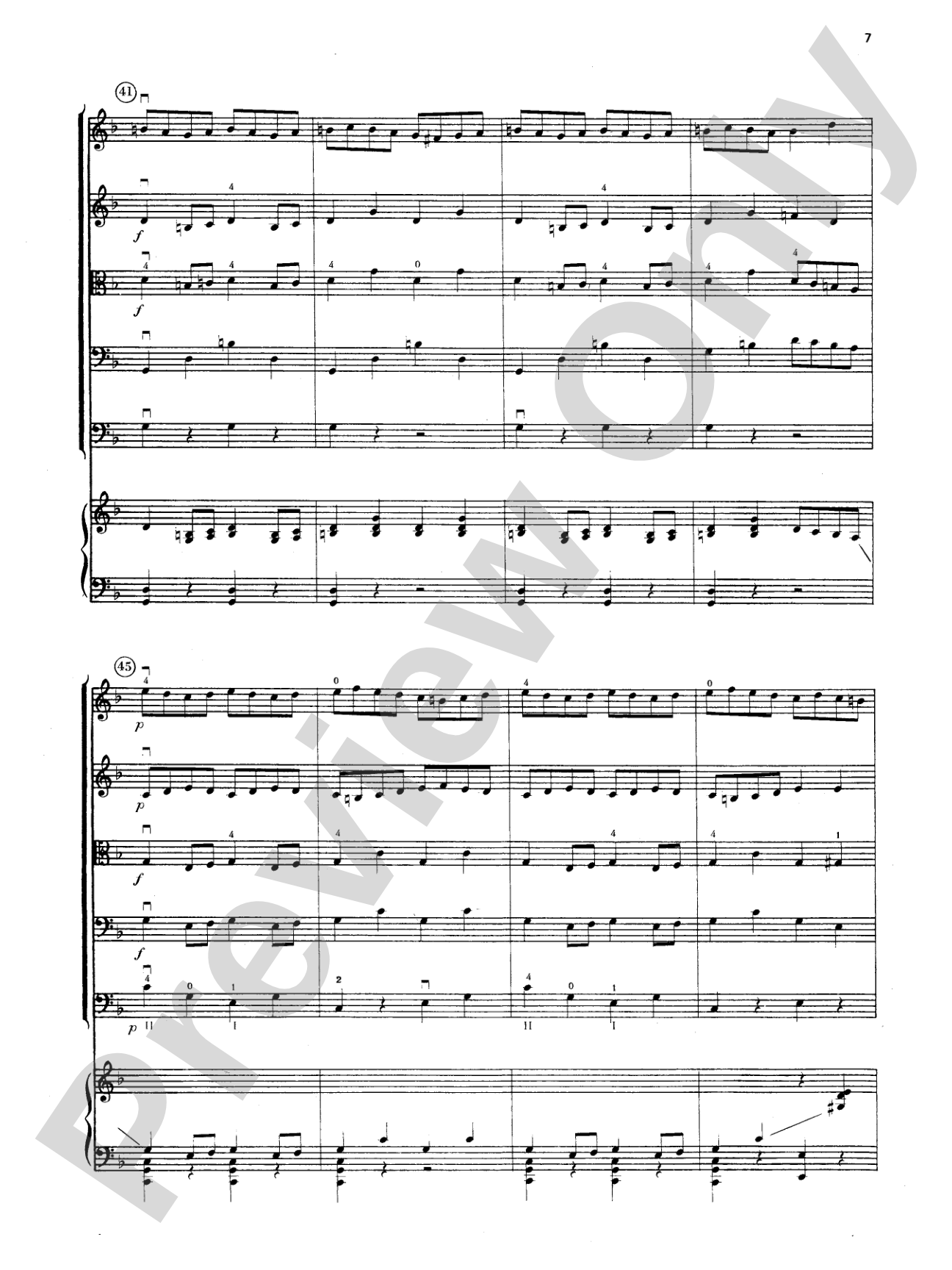
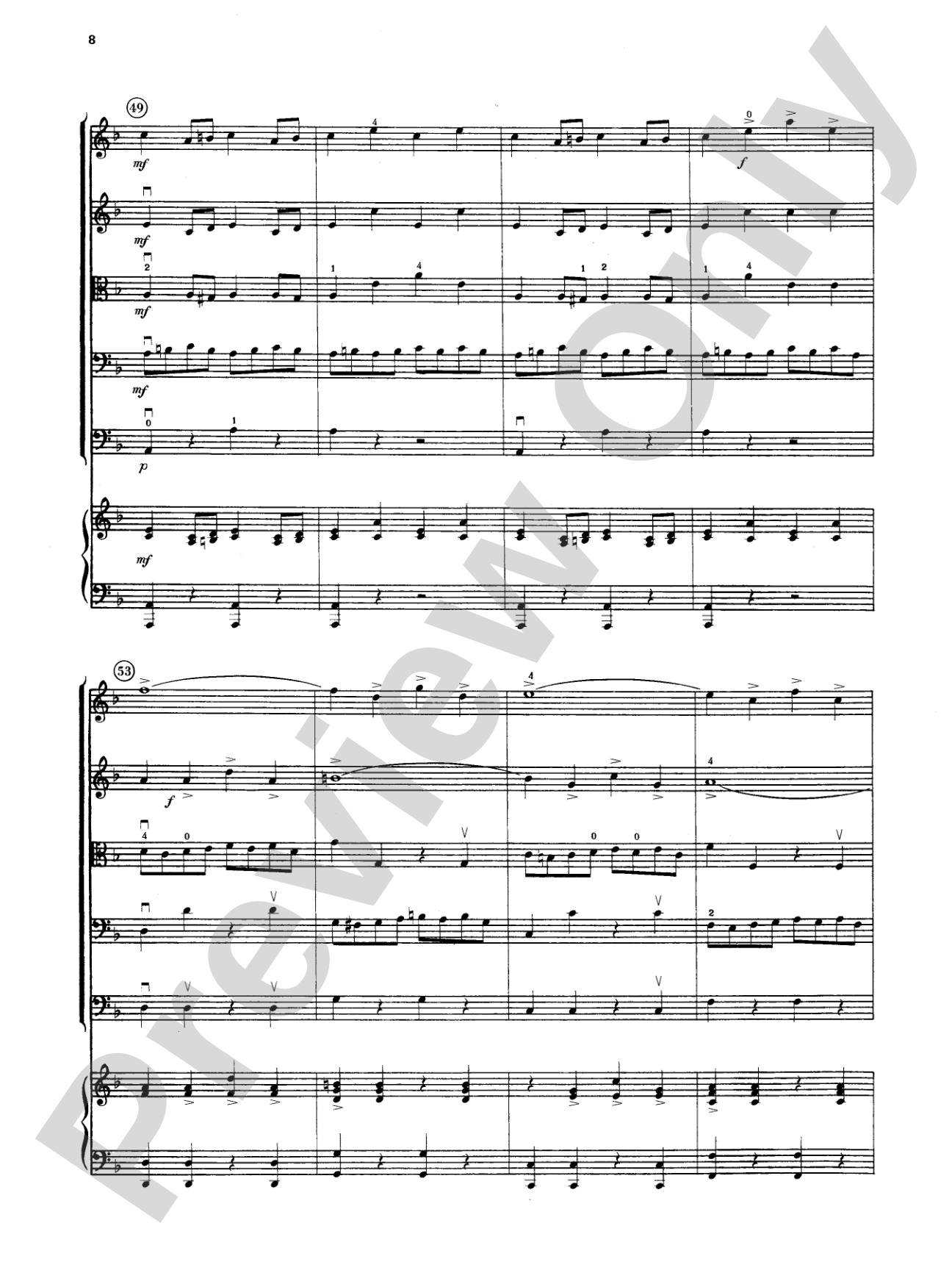
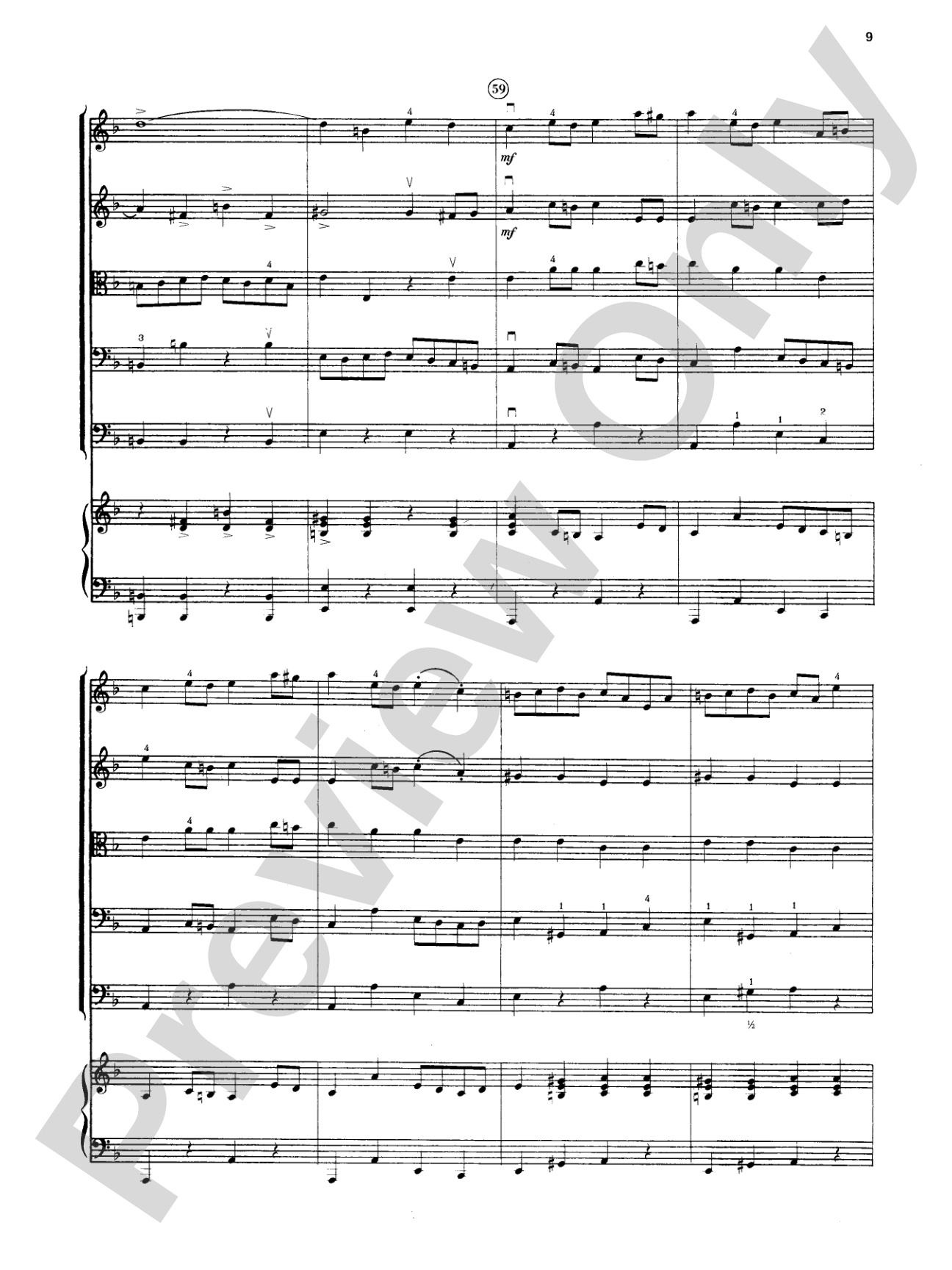
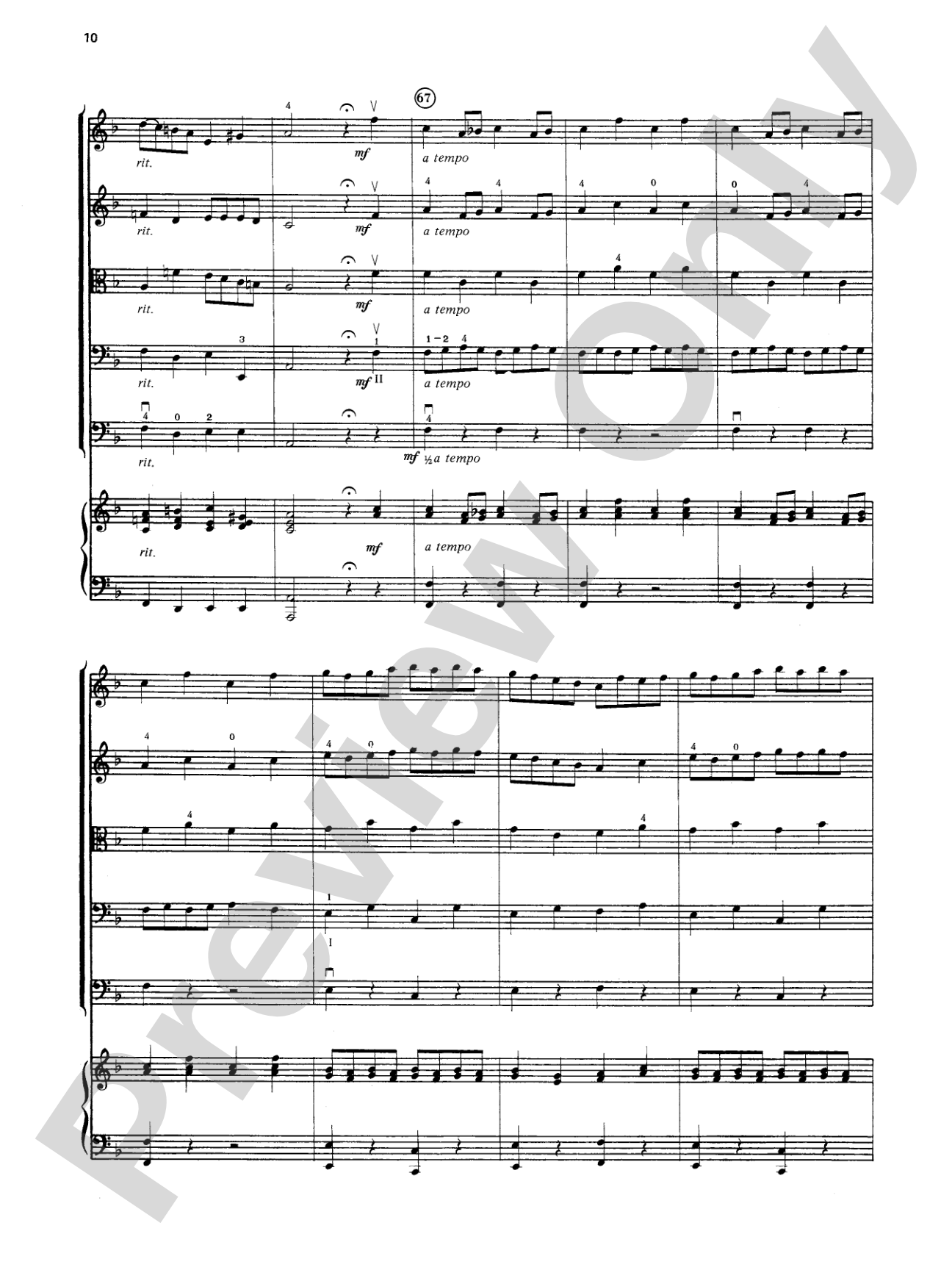
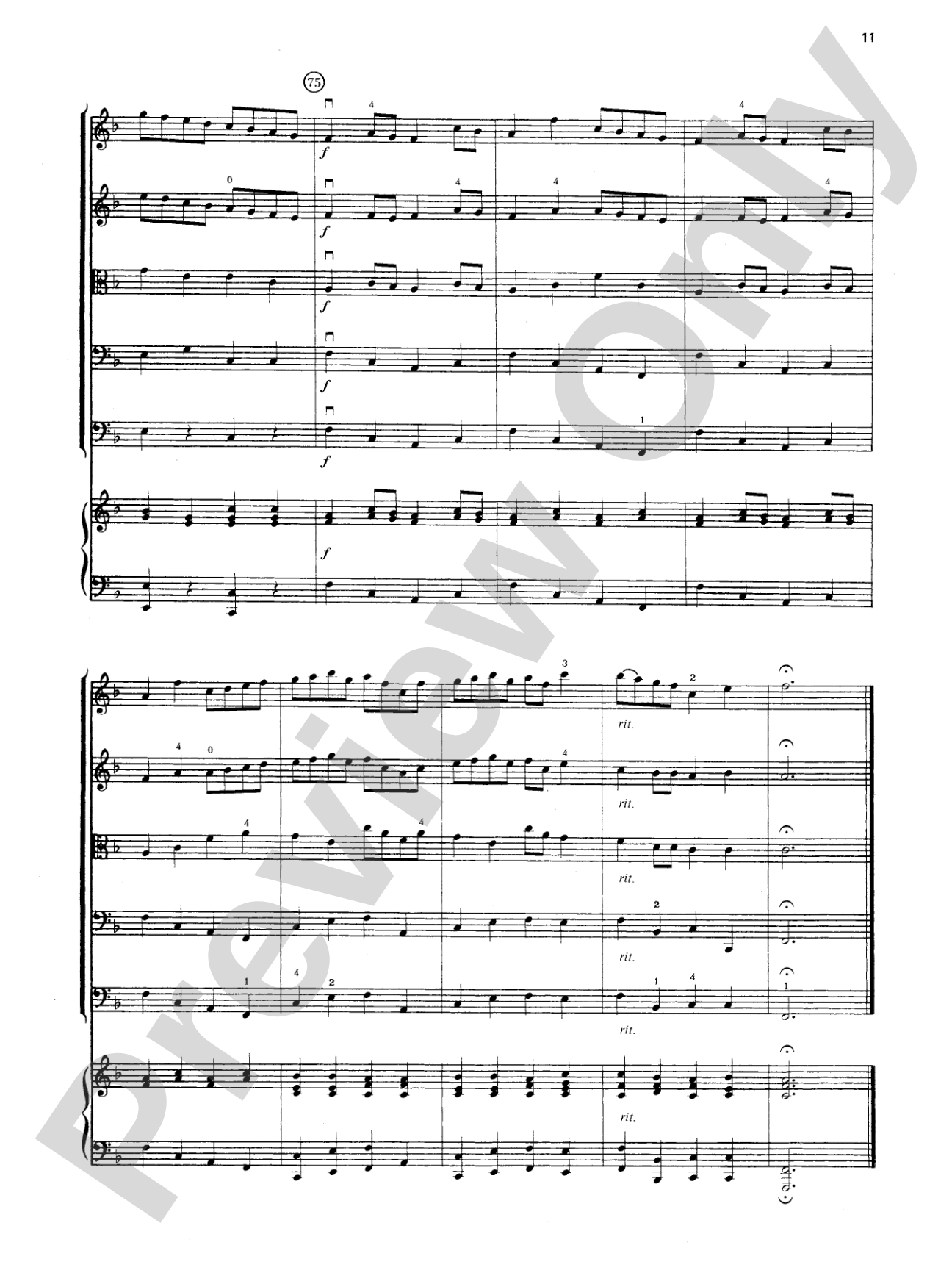


Brandenburg Concerto No. 2: String Orchestra Conductor Score & Parts
By Johann Sebastian Bach / arr. Merle J. Isaac
Grade: 3
Item: 00-PK-0000091

$60.00
Pickup currently not available
Buy Extra Parts (Digital PDF Download)
Parts Added to Cart!
Description


Don't just read it, hear it, play along with it, and watch your students grow with it. In MakeMusic Cloud, Brandenburg Concerto No. 2: String Orchestra Conductor Score & Parts comes alive with professional accompaniment, adjustable tempo, and built-in practice tools that turn solo practice into real progress.
Open in the Player
Jump straight in and assign it today.
Start Your Free Trial
Open this title and explore the full library in minutes.
Sample Audio
No sample audio found.
Sample Video
No sample videos found.
Additional Details
Series:
Highland/Etling String Orchestra
Publisher:
Alfred Music
Page Count:
156
SKU:
00-PK-0000091
More about this title
About the Composer: Johann Sebastian Bach
Johann Sebastian Bach (1685, 1750) stands as one of the most consequential composers in Western music history. A master of counterpoint and fugal writing, Bach synthesized the German, Italian, and French musical traditions of his time into works of unparalleled structural complexity and emotional depth. His music remains the foundation of music theory pedagogy and continues to challenge and inspire musicians across all levels.
Bach's Brandenburg Concertos represent some of his most accessible yet sophisticated works. Written for the court at Köthen, these six concertos showcase his genius for instrumental writing and his ability to balance technical brilliance with lyrical beauty. They remain essential repertoire for understanding Baroque instrumental music and Bach's approach to orchestration.
Why we love this
This arrangement captures the brilliance of one of Bach's most spirited concertos in a version that Grade 3 orchestras can actually execute with genuine musicality. Merle Isaac's scoring opens the door to Baroque counterpoint and interplay without requiring the specialized period instrumentation of the original, making it accessible while preserving the work's essential character and contest appeal.
What to expect
Bright, energetic, and intricately woven. The concerto moves with forward momentum across all voices, creating a sense of conversation and interplay rather than a single melody with accompaniment. There's elegance in the restraint, and clarity in the counterpoint.
Who it's for
String orchestras at the intermediate level ready to tackle Baroque architecture without drowning in complexity. This is ideal for directors seeking repertoire that builds genuine musicianship while remaining performance-ready for festivals and concerts.
How to get the most out of it
- Bring out the distinct instrumental voices as though they were characters in conversation; Bach's counterpoint loses its wit if lines blur together.
- Balance the faster passage work so individual melodies remain clear rather than collapsing into a blur of sixteenth notes.
- Shape phrases with baroque sensibility by gently lifting at cadences rather than using romantic-era rubato; restraint serves the architecture here.
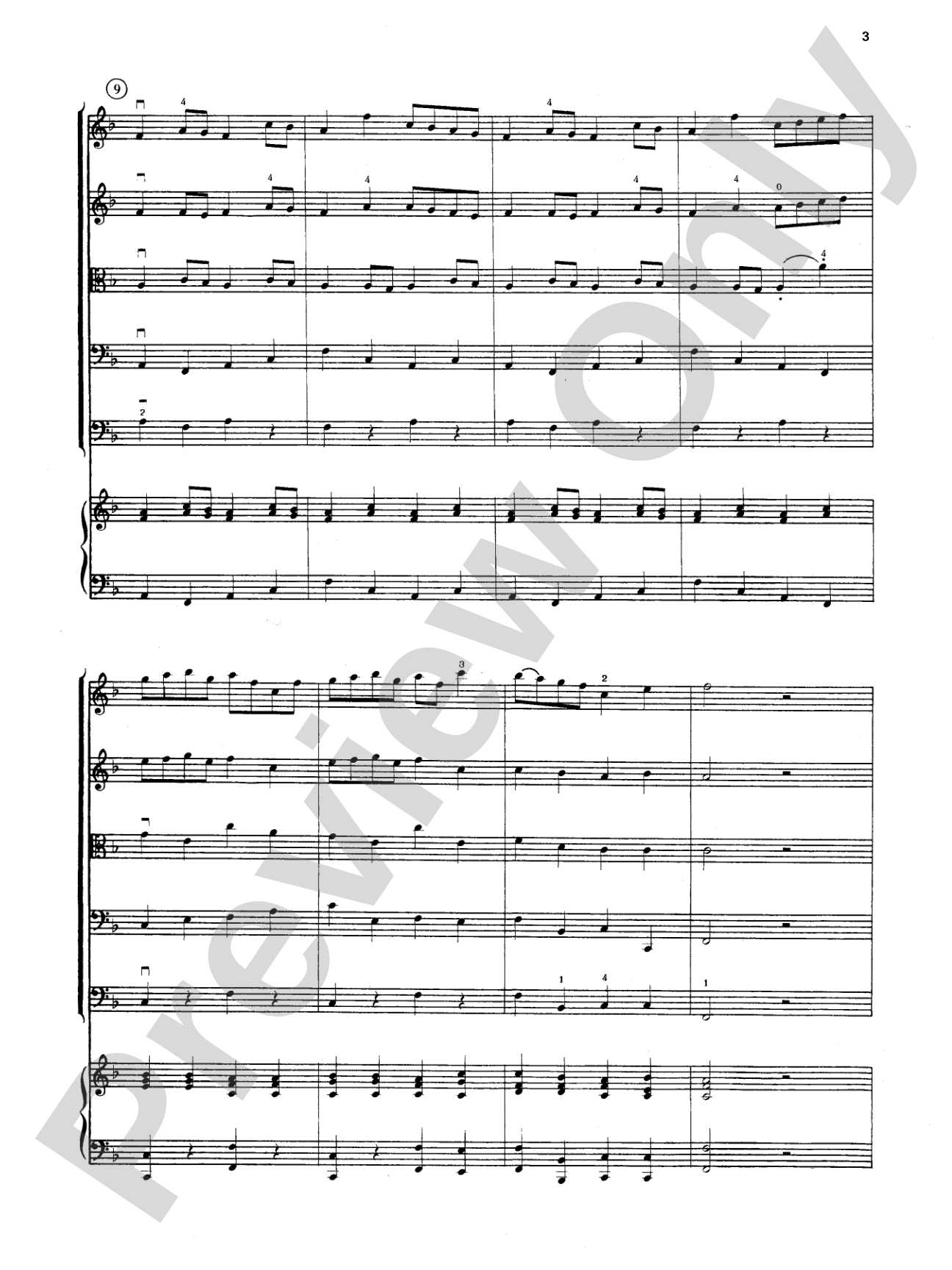
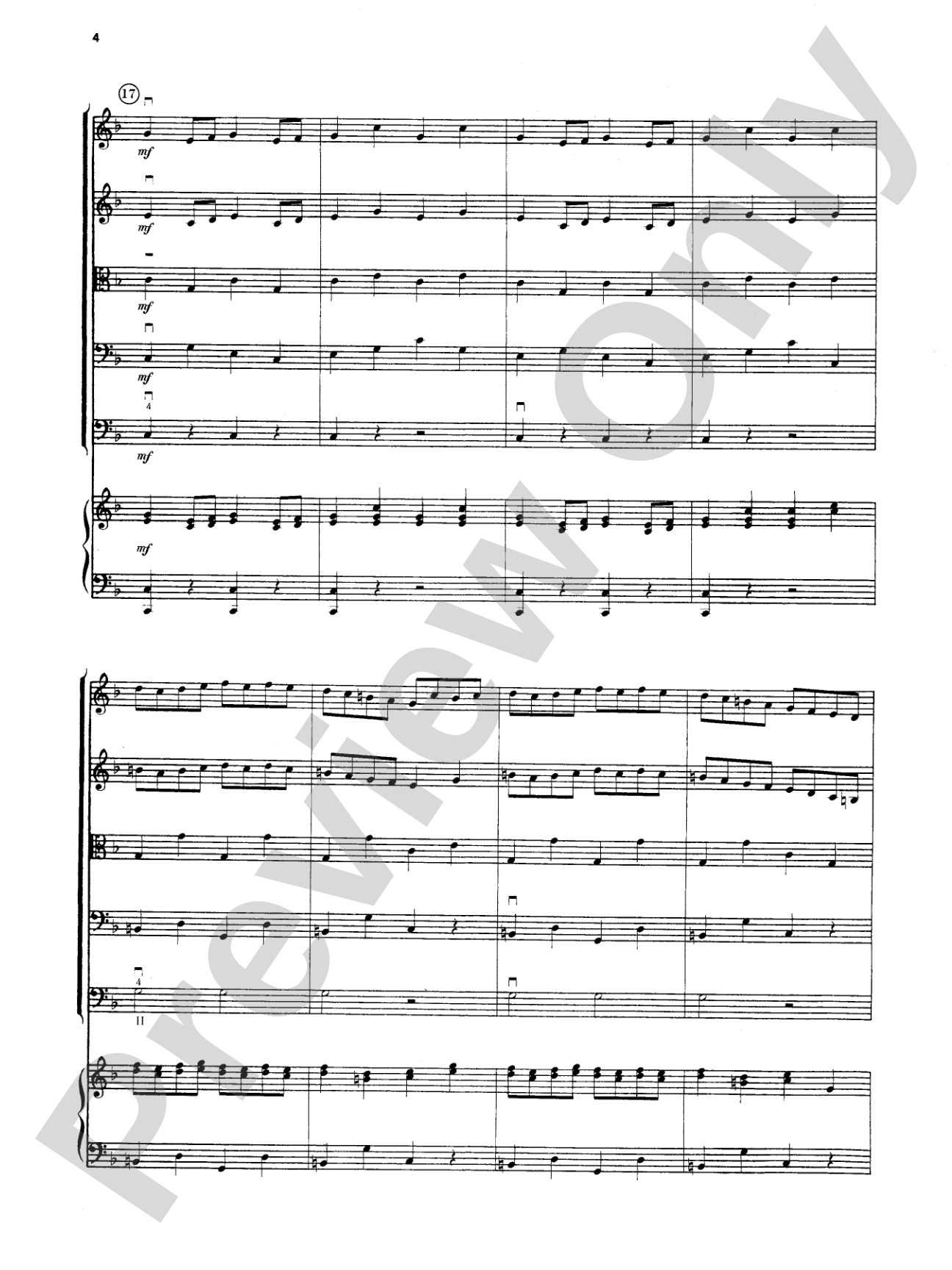
- Use the conductor score to study exactly where each voice enters and how long it sustains; this clarity transfers directly to rehearsal effectiveness.
How to use it
Program this as a contrasting anchor on a concert that might otherwise lean toward romantic or contemporary music. It also serves well at chamber festival competitions where smaller ensembles compete, offering directors a legitimate masterwork option at an achievable level.
Skills your students will build
- Independent line playing while tracking other voices
- Baroque articulation and phrasing conventions
- Reading and executing baroque counterpoint across orchestral sections
- Balancing multiple simultaneous melodic lines
- Precision in rhythmic alignment across divided voices