

Brahms: Waltzes, Opus 39 - Piano Duet (1 Piano, 4 Hands): Piano Duets & Four Hands
By Johannes Brahms / ed. Henry Levine
Level: Late Intermediate / Early Advanced
Item: 00-PB-0000586
$8.99
Pickup currently not available
Related Items
Brahms: Waltzes, Opus 39: Piano Duet (1 Piano, 4 Hands) Book |
$8.99
|
View |
Description
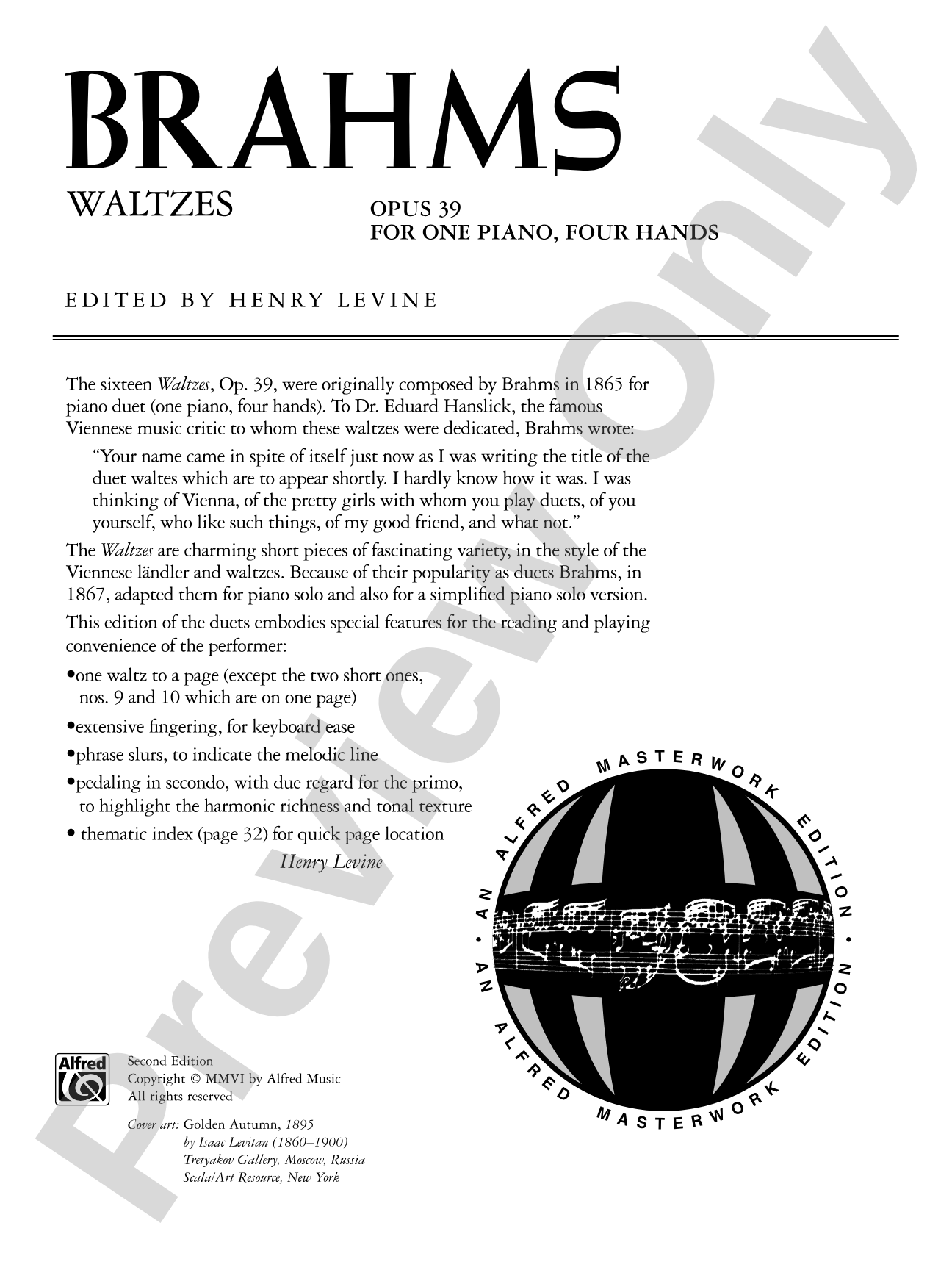
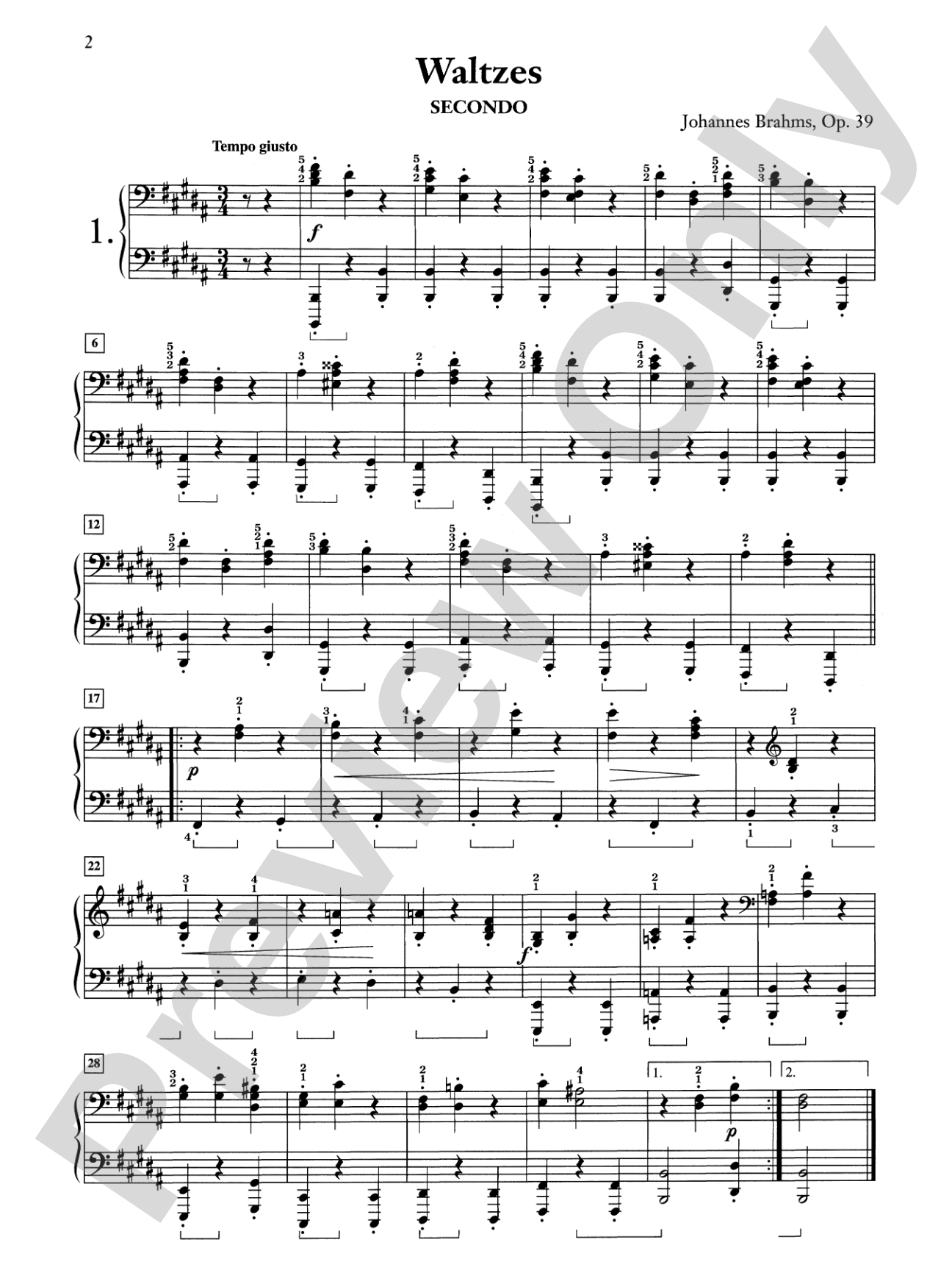
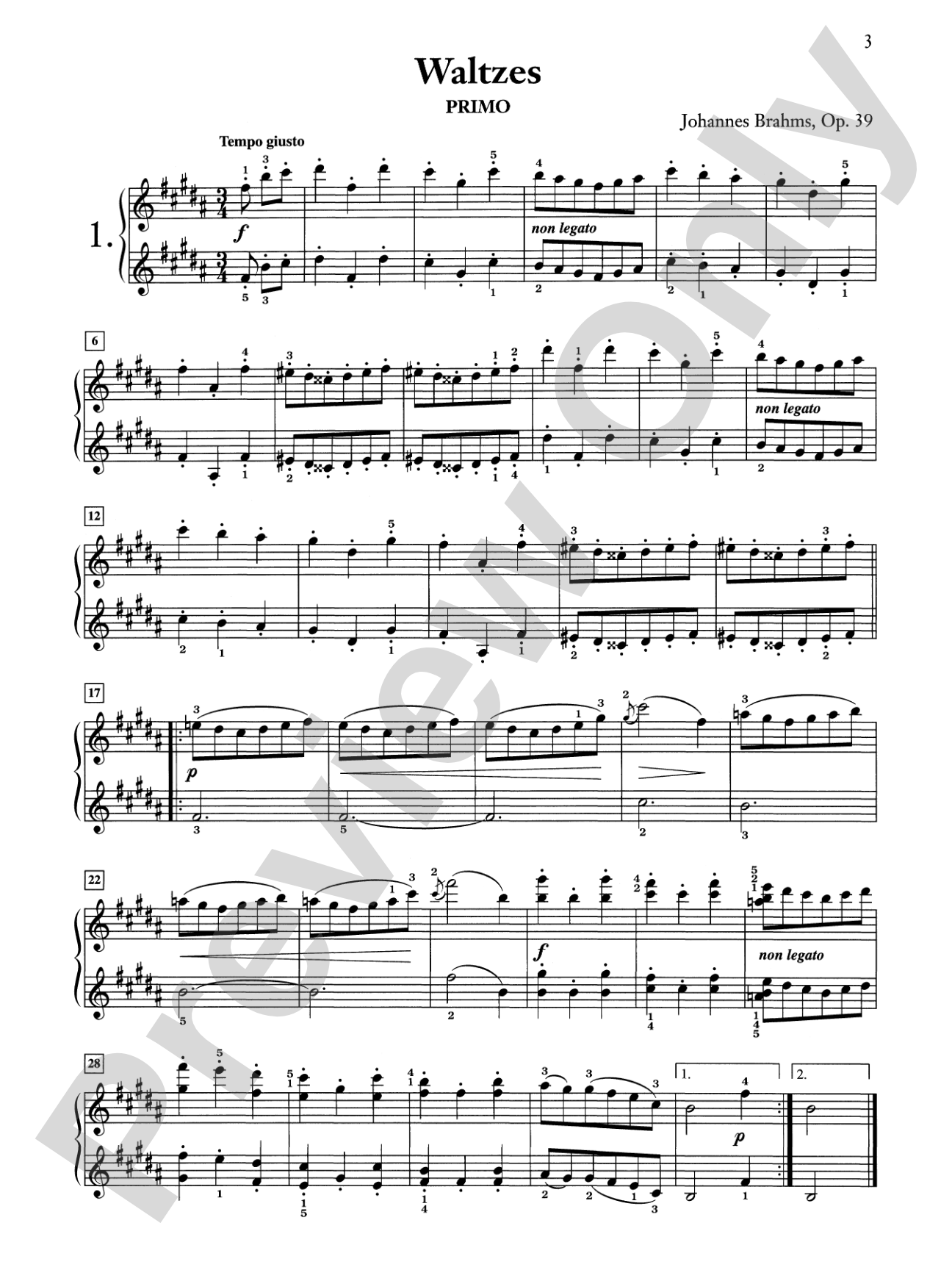
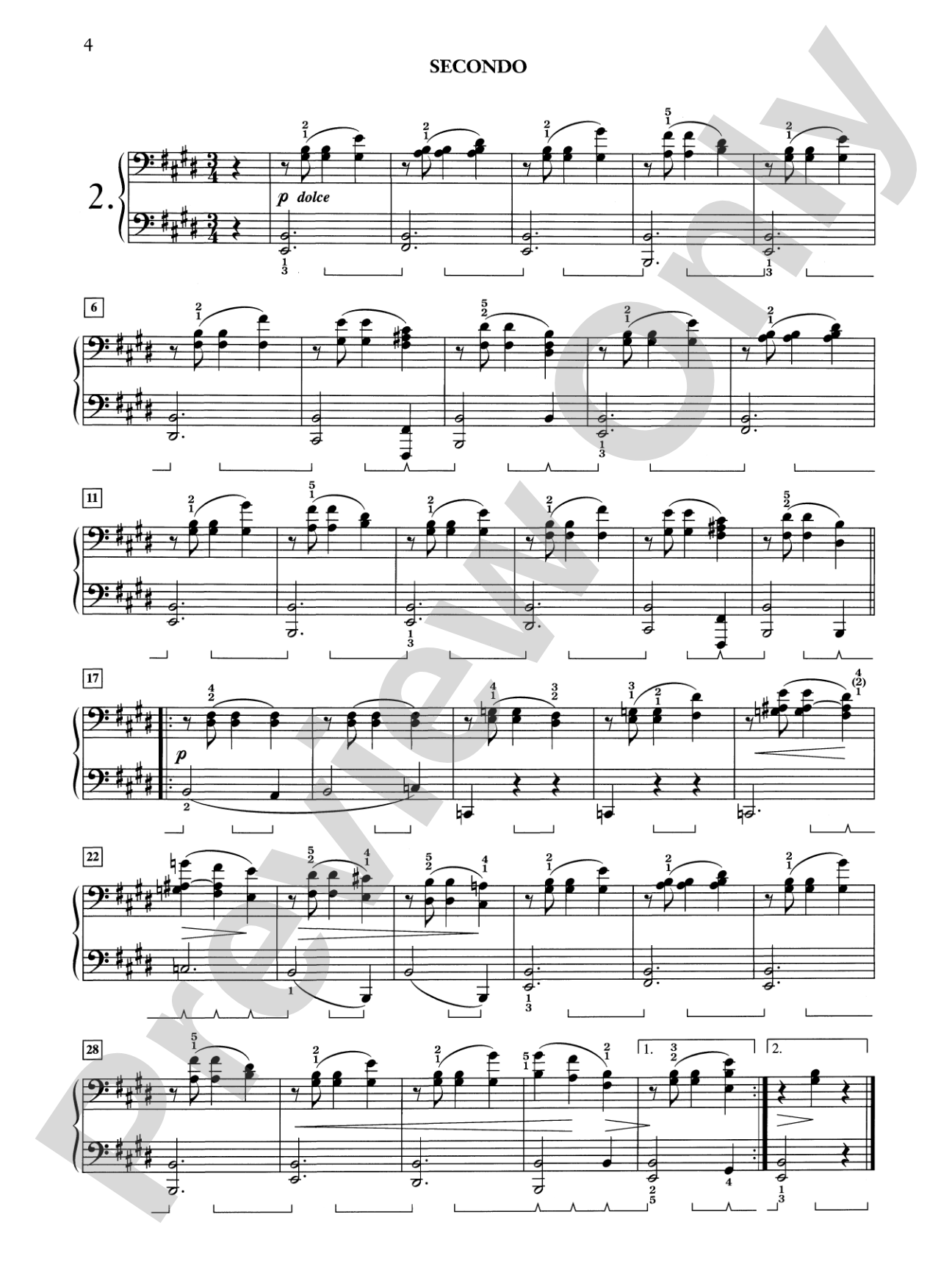
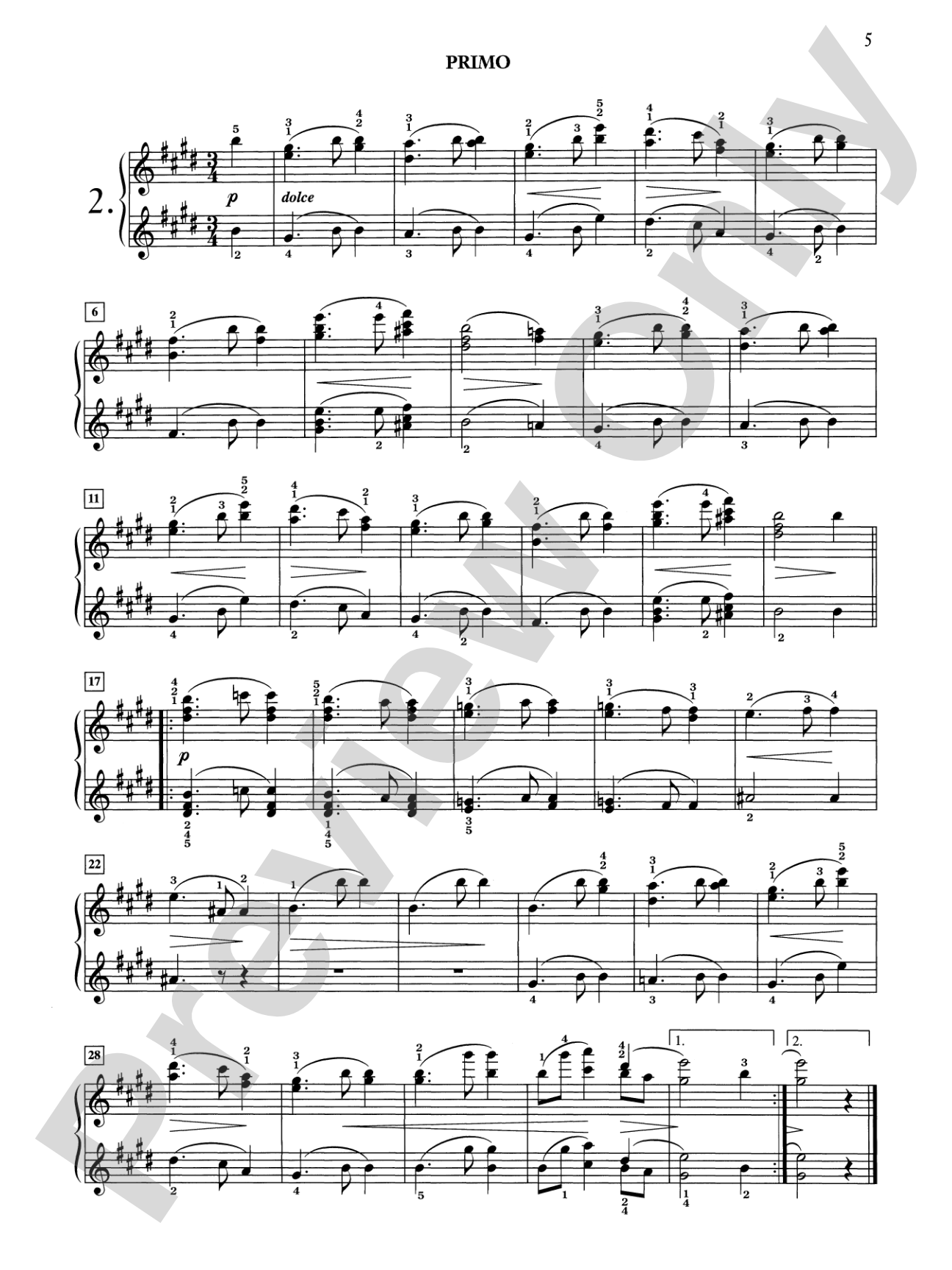
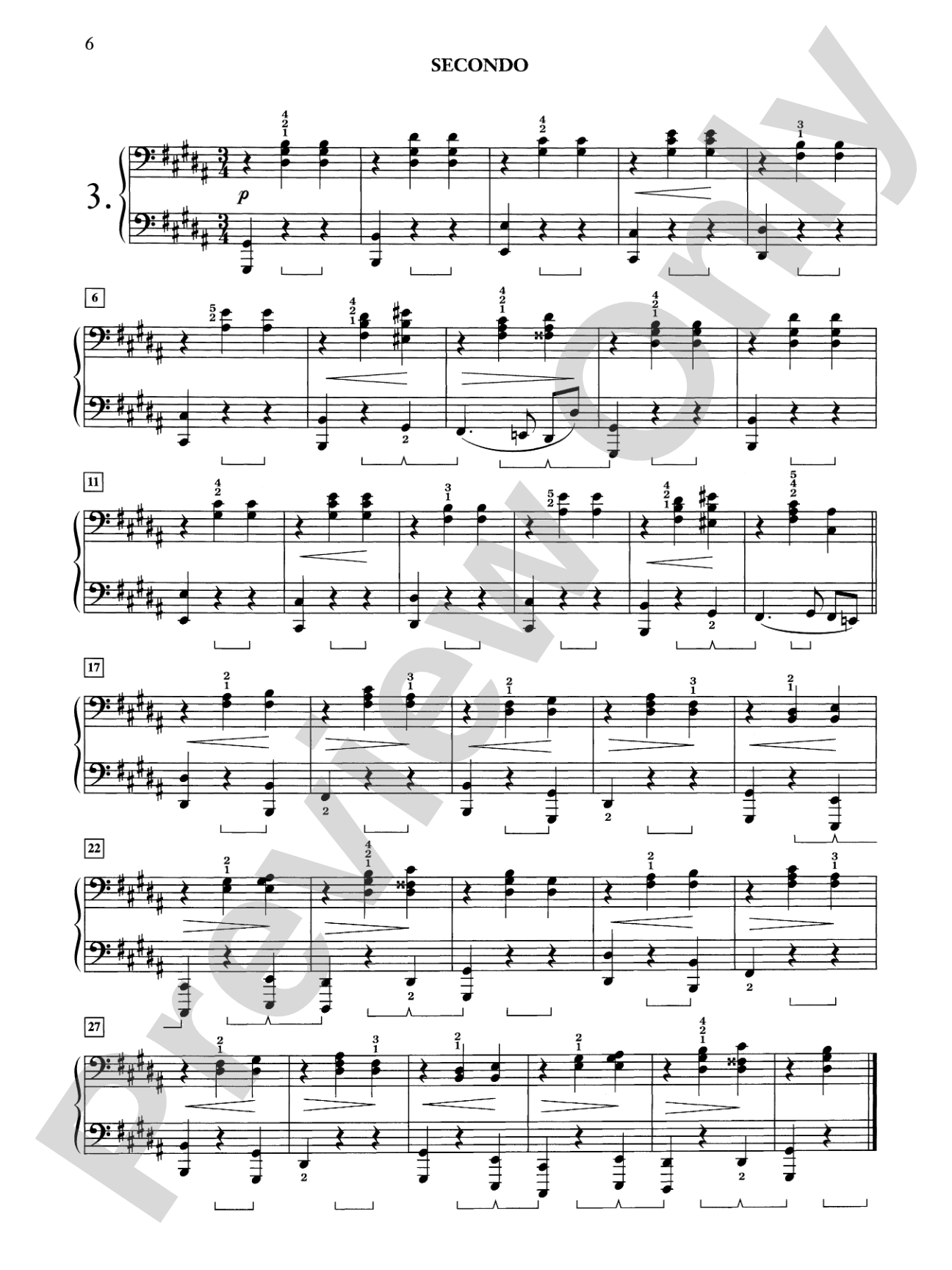
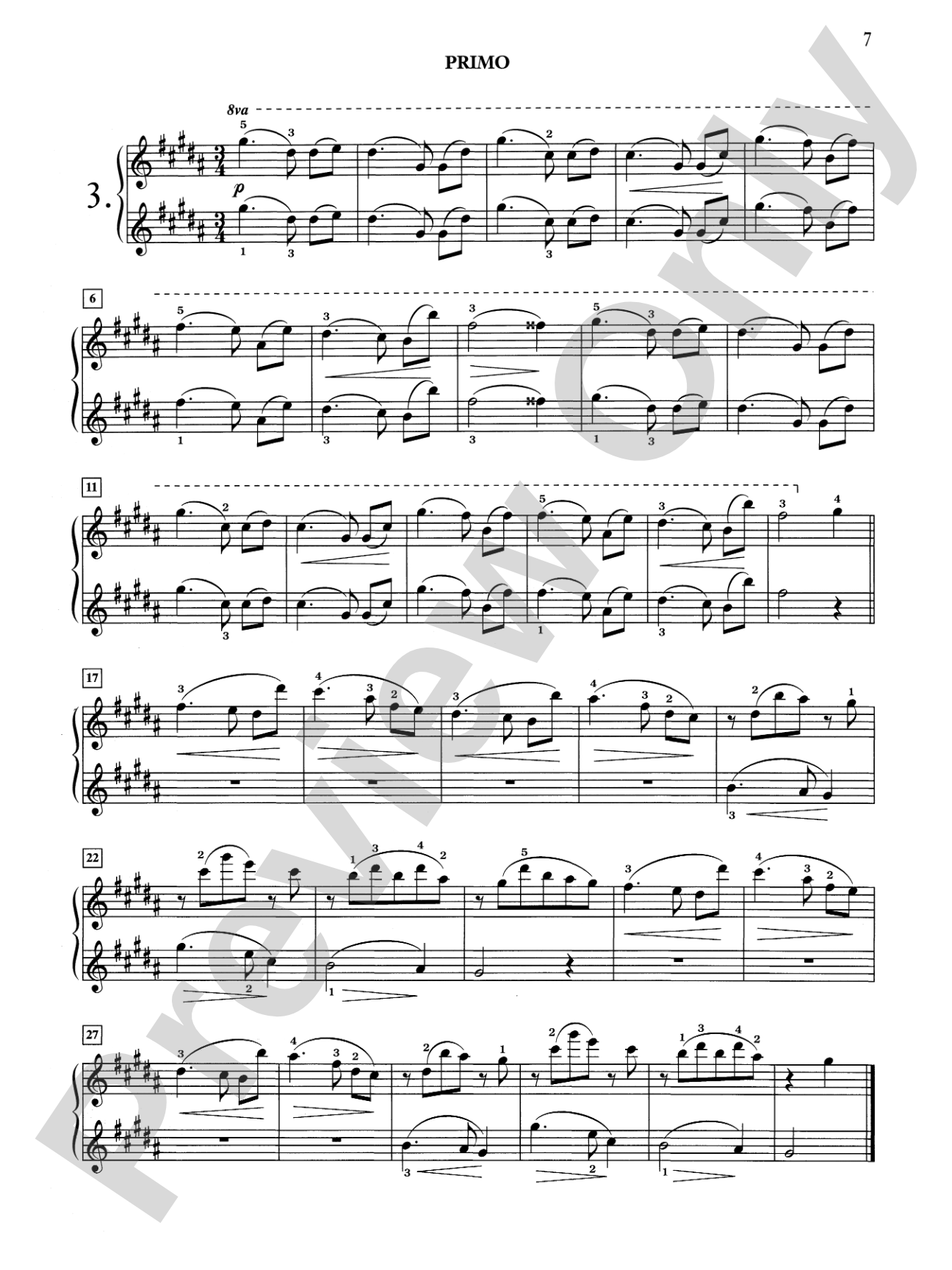
Originally composed in 1865 for piano duet (one piano, four hands), Brahms's 16 Waltzes, Op. 39, are charming short pieces in the Viennese ländler and waltz styles. Editor Henry Levine has included helpful fingering suggestions, pedaling indications in the secondo part, and phrasing that enhances the melodic line. For reading and playing convenience, these beautifully re-engraved waltzes are now available in an attractive upright edition, complete with a thematic index. A Federation Festivals 2020-2024 selection.


Brahms: Waltzes, Opus 39 - Piano Duet (1 Piano, 4 Hands): Piano Duets & Four Hands isn't in MakeMusic Cloud just yet...but it could be. Let us know you'd like to see it, and you'll help shape what comes next. In the meantime, start a free trial and dive into thousands of interactive titles your students can play along with today.
Request This Title
Tell us you want it.
Start Your Free Trial
Explore everything that's ready to play right now.
Sample Audio
No sample audio found.
Sample Video
No sample videos found.
Additional Details
Series:
Alfred Masterwork Edition
Publisher:
Alfred Music
Page Count:
32
SKU:
00-PB-0000586
More about this title
About the Composer: Johannes Brahms
Johannes Brahms (1833, 1897) stands as one of the most significant composers of the Romantic era, bridging the classical traditions of Mozart and Beethoven with the expressive ambitions of his own time. His prolific output spans symphonies, concertos, chamber music, and solo works, yet he remained equally devoted to writing for amateur musicians and domestic music-making, composing hundreds of songs, dances, and smaller forms that brought serious musical craft into the parlor.
Brahms's relationship with dance music was deeply rooted in Viennese culture. The waltzes and ländler he encountered in Austria inspired him throughout his career, and he approached these forms with the same rigor he applied to symphonic writing. His Op. 39 waltzes represent a masterclass in how to preserve folk-like charm while maintaining harmonic sophistication and structural clarity, making them endlessly rewarding for pianists of all levels.
Why we love this
These waltzes land in that rare sweet spot where performers genuinely enjoy playing them at the same time students grow measurably as musicians. The writing sits naturally under the hands, the melodies sing without apology, and the secondo part provides genuine musical interest rather than mere accompaniment. Levine's editing is transparent and helpful, offering the support young players need without cluttering the score.
What to expect
There's an elegant lightness here, a sense of refined social grace without pretension. The melodies unfold with the warmth of candlelit ballrooms and Vienna's café culture, yet the harmonic movement beneath feels modern enough to keep listeners engaged. Playing through this collection feels less like practicing scales and more like conversing in music with a trusted partner.
Who it's for
Late intermediate and early advanced duet players who have mastered foundational technique and are ready to explore Romantic-era writing with expressive depth. These waltzes work equally well for piano studio students seeking accessible recital material and for ensemble pianists building their duet repertoire.
How to get the most out of it
- Establish the waltz pulse early in rehearsal without letting the rhythm flatten into strict metronomic time; Brahms's waltzes breathe and bend in ways that honor their dance heritage.
- Balance the primo's melodic material against the secondo's harmonic foundation by keeping the lower part responsive but not recessive, especially when the primo carries lyrical phrases.
- Shape phrases across multiple bars rather than settling on the downbeat; these pieces reward legato thinking that connects the gentle swell of each measure to the next.
- Attend to the pedaling indications in the secondo part as architectural choices that enhance color and blend the inner voices, not as a tool for covering sloppy playing.
How to use it
These waltzes work beautifully as encore material after larger works, offering audiences a moment of intimate pleasure that stays with them. You might also program several waltzes as a set to demonstrate stylistic variety within a single opus, or pair selections with other Romantic-era character pieces to build a thematic program around dance forms.
Skills your students will build
- Voicing balanced, transparent ensemble textures between primo and secondo
- Pedal control and harmonic awareness in Romantic keyboard writing
- Shaping lyrical melodic lines with appropriate rubato and phrasing
- Counting and maintaining waltz meter while allowing musical breathing room
- Reading and interpreting Brahms's idiomatic harmonic language and voice leading