
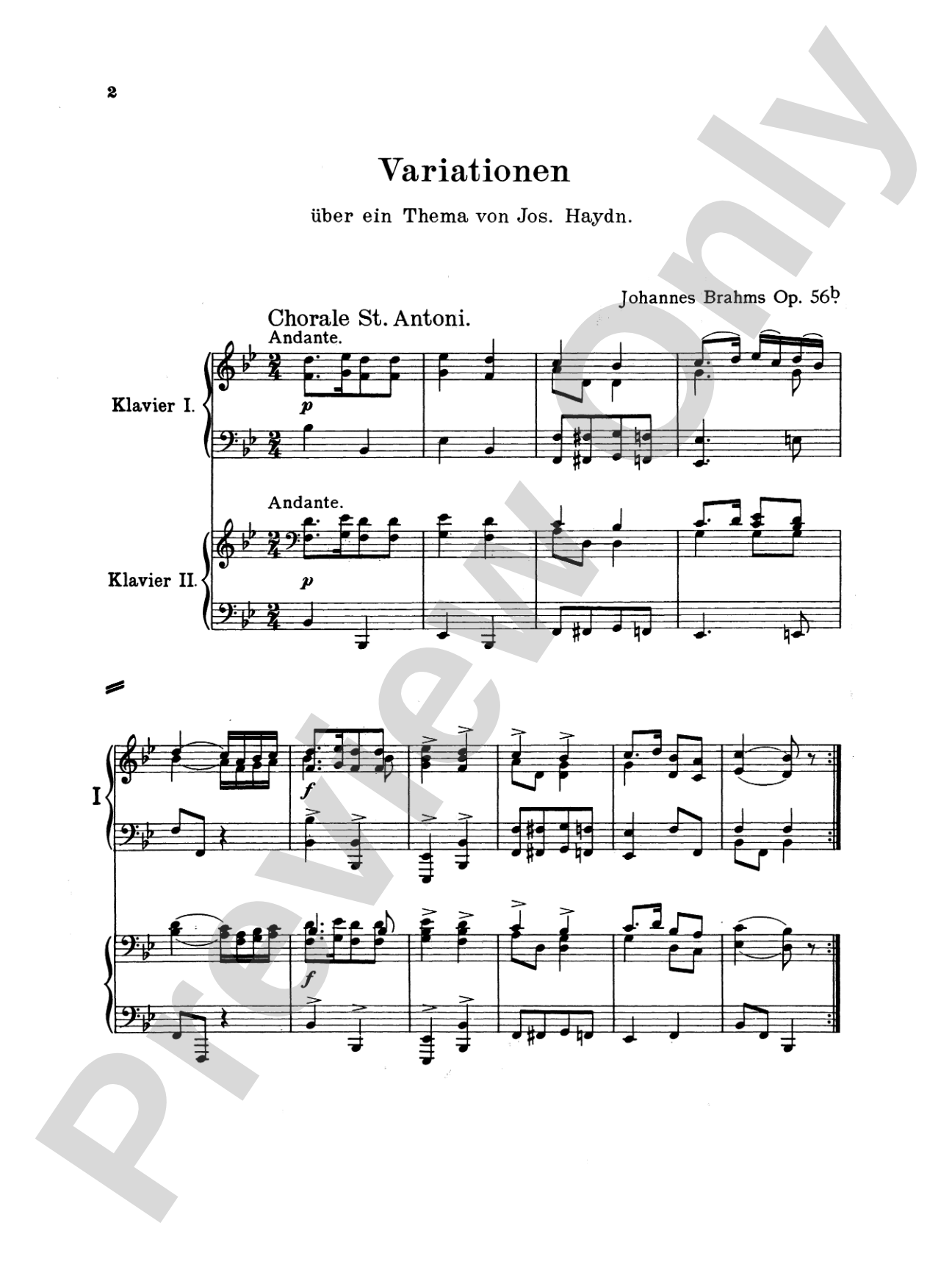
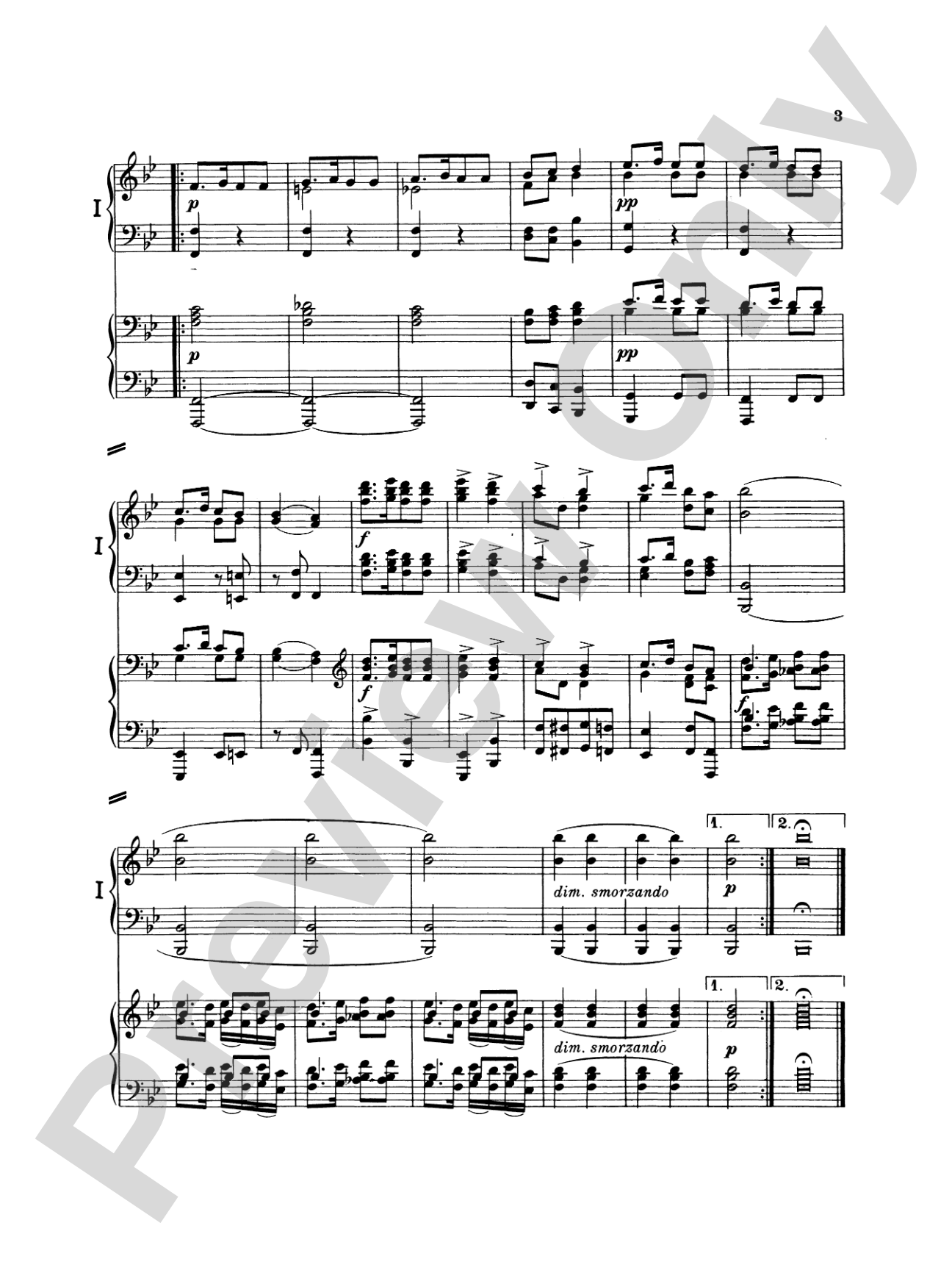

Brahms: Variations on a Theme of Haydn, Op. 56B (Original): Piano Duo (2 Pianos, 4 Hands) Book (2 copies required)
For Two Pianos, Four Hands
By Johannes Brahms
Level: Intermediate / Advanced
Item: 00-PK-0002962

$10.99
Pickup currently not available
Buy Extra Parts (Digital PDF Download)
Parts Added to Cart!
Related Items
Variations on a Theme of Haydn, Opus 56B: Piano Duo (2 Pianos, 4 Hands) Book (2 copies required) |
$10.95
|
View |
Description
A Piano Duet for 2 pianos, 4 hands, composed by Johannes Brahms.


Don't just read it, hear it, play along with it, and watch your students grow with it. In MakeMusic Cloud, Brahms: Variations on a Theme of Haydn, Op. 56B (Original): Piano Duo (2 Pianos, 4 Hands) Book (2 copies required) comes alive with professional accompaniment, adjustable tempo, and built-in practice tools that turn solo practice into real progress.
Open in the Player
Jump straight in and assign it today.
Start Your Free Trial
Open this title and explore the full library in minutes.
Sample Audio
No sample audio found.
Sample Video
No sample videos found.
Additional Details
Series:
Kalmus Edition
Publisher:
Alfred Music
Page Count:
36
SKU:
00-PK-0002962
More about this title
About the Composer: Johannes Brahms
Johannes Brahms (1833, 1897) stands as one of the most significant composers of the Romantic era, bridging the classical traditions of Beethoven with the harmonic and orchestral innovations of his contemporaries. His mastery of variation form, counterpoint, and structural clarity made him a favorite among serious musicians and audiences alike, and his chamber and keyboard works remain cornerstones of musical training at the advanced levels.
Why we love this
This piece sits at the intersection of chamber music intimacy and symphonic scope. The theme itself is elegant and memorable, and each variation unfolds with clear character, giving both pianists material that feels substantial without depending on flashy technical display. Programming this work signals serious artistry to your audience and offers your students a direct encounter with one of music history's finest minds.
What to expect
Contemplative yet intellectually alive. The theme itself is gentle and hymn-like, but each variation transforms it into something new: sometimes playful, sometimes ornate, sometimes reflective. The overall arc moves from simplicity into complexity and back again, creating a journey that feels both inevitable and surprising.
Who it's for
Advanced pianists seeking genuine chamber repertoire that honors both partners equally. This work rewards pianists who have solid technique, strong sight-reading skills, and experience with sustained ensemble playing at the intermediate-advanced level.
How to get the most out of it
- Balance the two pianos carefully during the theme and early variations; resist the urge to let one dominate. The interplay between instruments is the piece's greatest asset.
- Attend to the harmonic movement between pianos, particularly in variation sections where the theme migrates between them. Clarity in voice leading will make the architecture audible.
- Allow the orchestral character of the writing to inform your touch and pedaling. Think of sections as if different instrumental colors are speaking, even on piano alone.
- Establish a steady tempo early and commit to it across variations. The listener's sense of unity depends on structural consistency, not rushing or dragging through any section.
How to use it
This works beautifully in a recital featuring Brahms chamber music, or as the centerpiece of a program exploring variation form across different composers and eras. The piece is substantial enough to anchor a first half, and its structure provides natural program flow when paired with shorter works.
Skills your students will build
- Tracking thematic transformation across multiple variations
- Balancing ensemble sound as equal partners rather than soloist and accompanist
- Reading and interpreting Brahms's harmonic language and orchestral textures on keyboard
- Maintaining structural unity and tempo integrity across an extended multi-part form
- Pedaling technique for both color and clarity in contrapuntal passages