
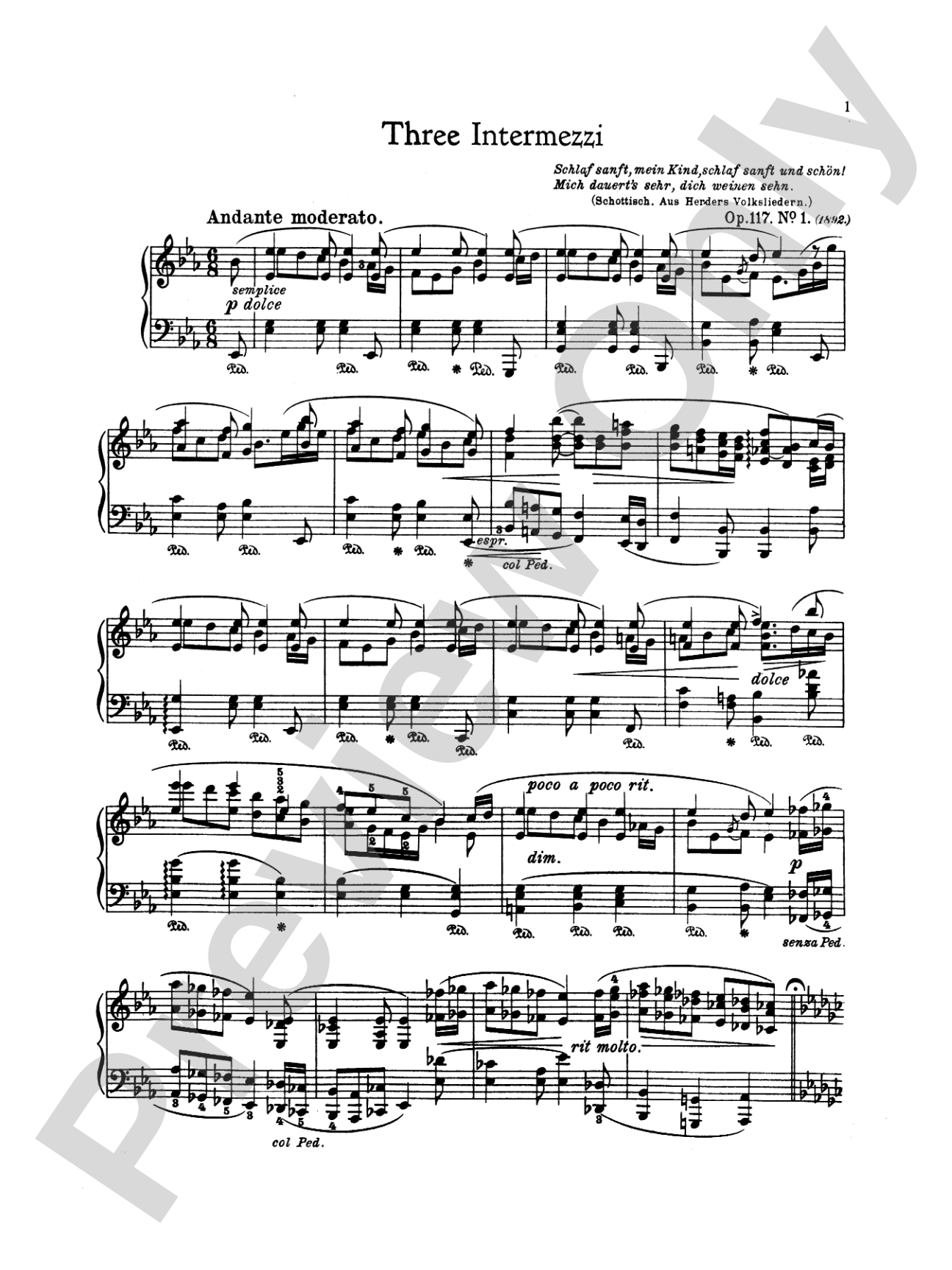

Brahms: Three Intermezzi, Op. 117
By Johannes Brahms
Level: Intermediate / Advanced
Item: 00-PC-0005693
$1.99
Pickup currently not available
Description
The piano intermezzi by Brahms, some of his last compositions, are sets of independent character. Stylistically, they are lyrical and melodic, have an extremely wide emotional range, and are often considered some of the finest character pieces written in the 19th century. Includes: No. 1 in E-flat major * No. 2 in B-flat minor * No. 3 in C-sharp minor.


Don't just read it, hear it, play along with it, and watch your students grow with it. In MakeMusic Cloud, Brahms: Three Intermezzi, Op. 117 comes alive with professional accompaniment, adjustable tempo, and built-in practice tools that turn solo practice into real progress.
Open in the Player
Jump straight in and assign it today.
Start Your Free Trial
Open this title and explore the full library in minutes.
Sample Audio
No sample audio found.
Sample Video
No sample videos found.
Additional Details
Series:
Kalmus Edition
Publisher:
Alfred Music
Page Count:
16
SKU:
00-PC-0005693
More about this title
About the Composer: Johannes Brahms
Johannes Brahms (1833–1897) stands among the most consequential composers of the Romantic era, bridging 19th-century German tradition with forward-looking harmonic and structural innovations. His four symphonies, concertos, chamber music, and solo keyboard works earned him recognition as a master craftsman who commanded both large forms and intimate character pieces with equal authority.
The intermezzi represent Brahms at his most introspective. Composed late in his life, these three character pieces distill decades of compositional maturity into short, self-contained works that explore lyrical melody, harmonic richness, and emotional depth. For pianists and students, they offer direct access to a composer whose technical demands are matched only by the reward of performing music of genuine substance.
Why we love this
These three intermezzi showcase Brahms's gift for writing character pieces that sound deceptively simple but reveal layers of harmonic sophistication and emotional nuance the more you live with them. Each work occupies a distinct emotional territory, giving performers the chance to explore a range of Romantic expression within a single, manageable set. They remain among the finest solo piano works of the late 19th century and deserve a place in any serious pianist's recital life.
What to expect
The three intermezzi move through contrasting emotional landscapes. The E-flat major opens with warm, songlike contentment before revealing undercurrents of melancholy. The B-flat minor piece darkens the mood, building intensity through chromatic tension and restless harmony. The C-sharp minor concludes with introspection tinged by resignation, as if reflecting on memory and loss. Together, they form a kind of intimate emotional journey.
Who it's for
These intermezzi suit intermediate and advanced pianists with solid technical foundations and the musical maturity to navigate Romantic harmonic language and subtle expressive demands. Teachers preparing students for college auditions, recitals, or summer festivals will find these works challenging enough to showcase growth while remaining within reach for serious young players.
How to get the most out of it
- Honor the lyrical voice that flows through each intermezzo; Brahms's melody often lives in an inner voice or moves between hands, so voice leading clarity matters more than surface virtuosity.
- Shape phrase arcs with subtle dynamics and rubato rather than dramatic gestures; these are intimate works that reward restraint and careful listening.
- Allow harmonic progressions to breathe, particularly in the slower sections; Brahms often suspends resolution and uses chromatic voice leading that needs time to register with the listener.
- Attend to the sustain pedal as a compositional element, not a shortcut; Brahms writes specific harmonic densities that the pedal either reinforces or obscures.
How to use it
Program these as a complete set during a solo recital to give the audience a sustained encounter with Brahms's late style, or select one intermezzo as a contrasting piece in a mixed recital of Romantic character works. Students preparing a thesis or capstone recital can use the set to demonstrate command of 19th-century harmonic writing and expressive playing.
Skills your students will build
- Reading and performing chromatic voice leading and advanced harmonic progressions
- Shaping long melodic phrases across multiple octaves and hand positions
- Balancing inner voices and counterpoint without sacrificing lyricism
- Controlling pedal use to enhance rather than blur harmonic clarity
- Interpreting tempo and dynamic nuance in the absence of extreme technical display