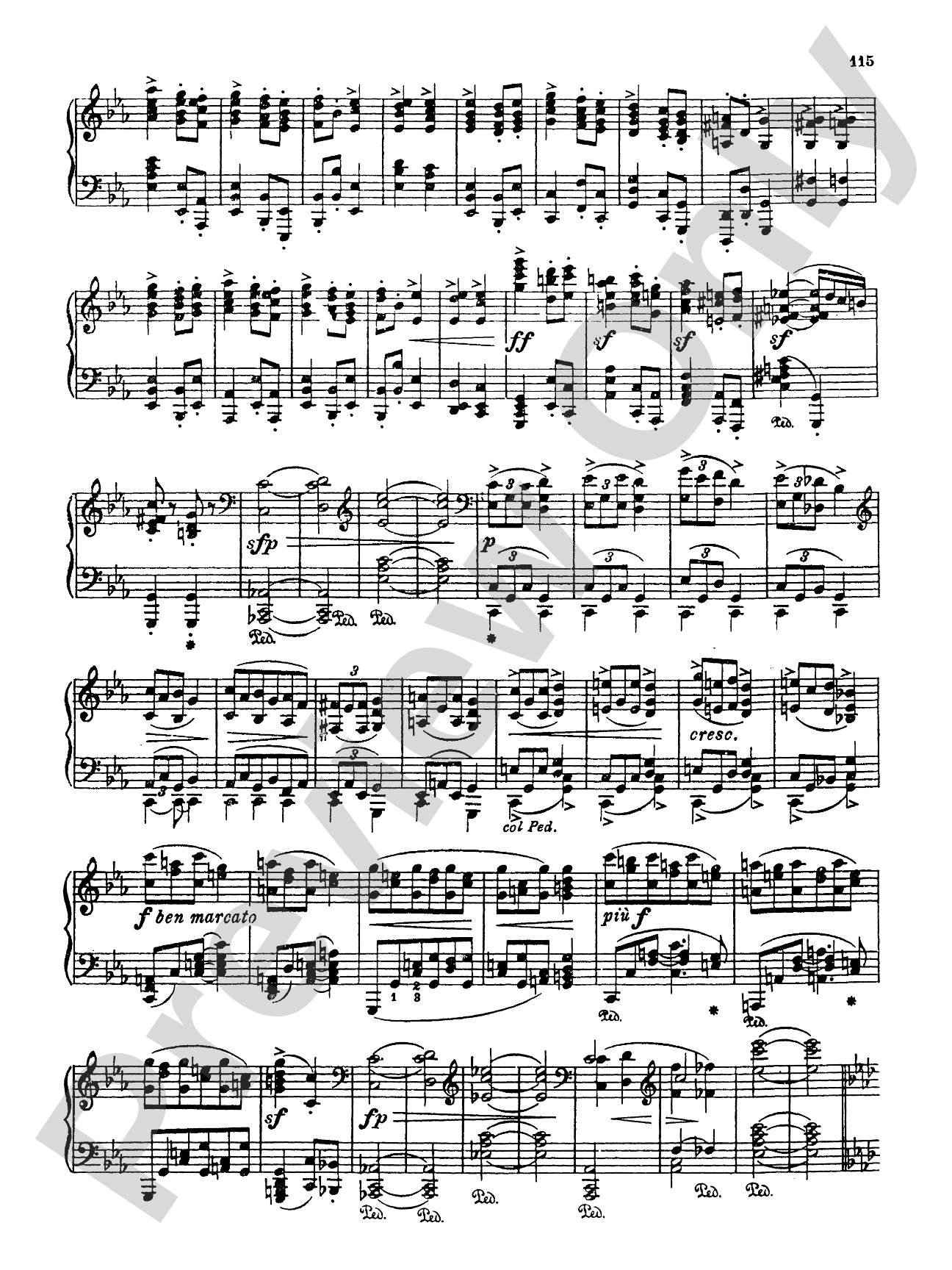
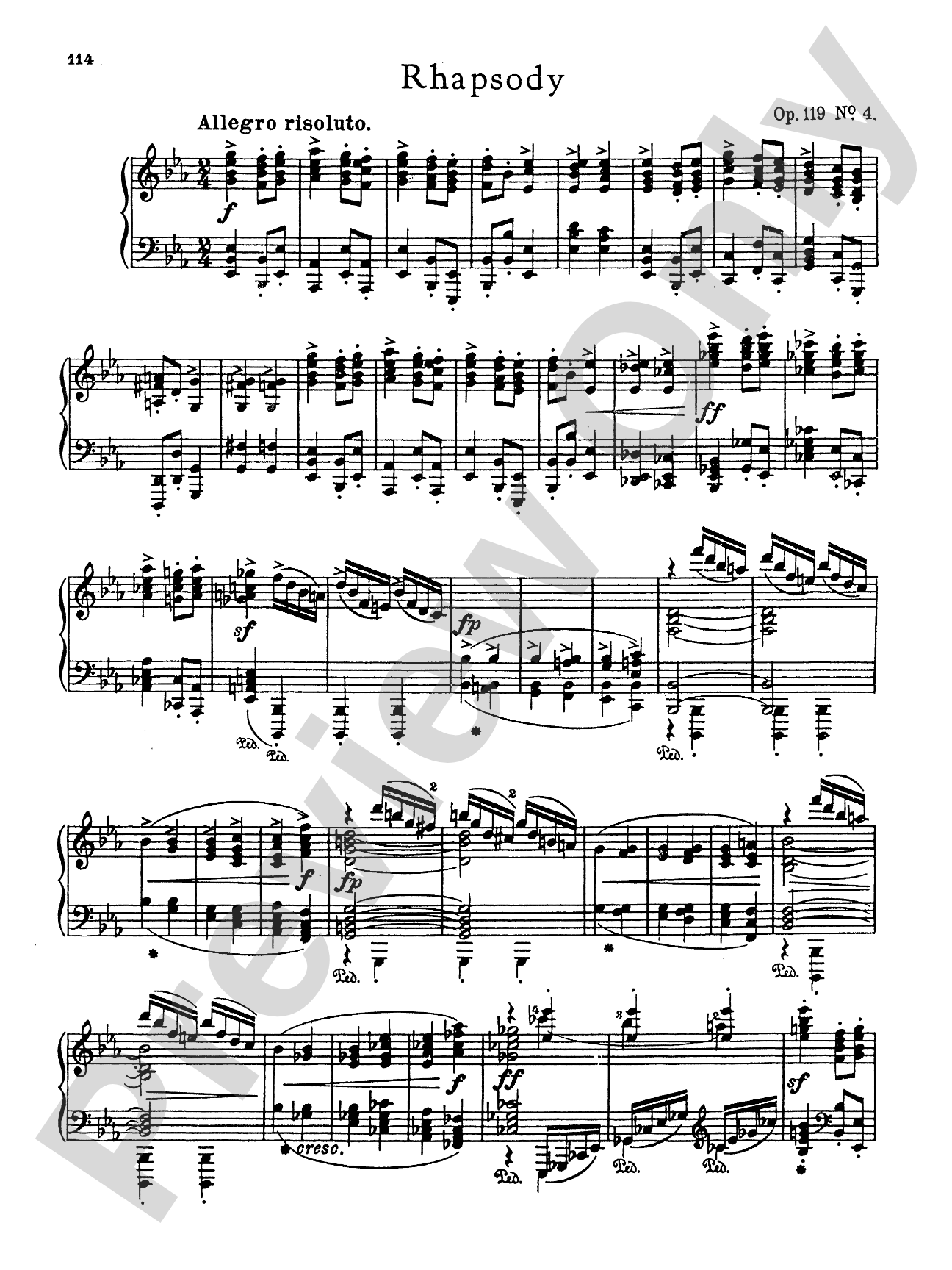
Brahms: Intermezzi, Rhapsody, Op. 119 Sheet Music Preview

Brahms: Intermezzi, Rhapsody, Op. 119

By Johannes Brahms

Item: 00-PC-0005705

Digital Download
$1.99
Description
This collection of piano works from Opus 119 of Johannes Brahms includes: No. 1, Intermezzo in B minor * No. 2, Intermezzo in E minor * No. 3, Intermezzo in C major * No. 4, Rhapsody in E-flat major.

Don't just read it, hear it, play along with it, and watch your students grow with it. In MakeMusic Cloud, Brahms: Intermezzi, Rhapsody, Op. 119 comes alive with professional accompaniment, adjustable tempo, and built-in practice tools that turn solo practice into real progress.

Sample Audio
No sample audio found.
Sample Video
Additional Details
Series: Kalmus Edition
Publisher: Alfred Music
Page Count: 20
SKU: 00-PC-0005705

More about this title

About the Composer: Johannes Brahms

Johannes Brahms (1833–1897) stands as one of the most important composers of the Romantic era, bridging nineteenth-century tradition with bold harmonic innovation. His works span symphonies, concertos, chamber music, and keyboard writing; he was equally at home in large forms and intimate miniatures, and his late piano works rank among the most profound and introspective in the repertoire.

Why we love this

Op. 119 represents Brahms at his most distilled and emotionally direct. These four pieces showcase why late Brahms appeals to pianists seeking substance without virtuosic excess; the musical ideas are complex and deeply felt, yet the writing rewards clarity and control rather than technical display. For teachers building a recital that values maturity and musical depth, this collection is invaluable.

What to expect

These four pieces inhabit a reflective, inward realm. The Intermezzos float between melancholy and acceptance, their harmonic language rich with unexpected turns; the Rhapsody commands attention with passionate urgency before yielding to moments of stillness. Throughout, Brahms balances formal rigor with intimate vulnerability, creating a listening and playing experience that feels both earned and essential.

Who it's for

Advanced pianists preparing recital repertoire, students working toward upper-level conservatory entrance exams, and teachers seeking substantial late Romantic literature that demands maturity without requiring fingers of steel. This collection suits pianists who thrive on harmonic sophistication and introspection.

How to get the most out of it

  • Pay close attention to Brahms's dynamic markings and rubato indications; they guide the emotional pacing and are essential to the character of each piece.
  • Work the left-hand voicings carefully, especially in the Intermezzos, where inner voices often carry important thematic material that must not disappear beneath the melody.
  • Use the transitions between pieces to reset your sound and approach; each work inhabits its own harmonic world and deserves a fresh interpretive stance.
  • Balance texture against passion: Brahms asks for both clarity and warmth, never allowing sentiment to overwhelm structural integrity.

How to use it

Consider pairing these works with earlier Brahms (perhaps a Sonata) to show his stylistic journey, or program individual pieces within a broader recital that spans different Romantic and modern sensibilities. The concentration and emotional weight of Op. 119 reads well as a second half program or as the central work in a pianist's recital statement.

Skills your students will build

  • Harmonic analysis of ambiguous progressions and chromatic voice leading
  • Interpretive independence: responding to sparse notation and building character from structural bones
  • Left-hand voicing and independence, especially sustaining and blending inner voices
  • Pedal technique that allows harmonic color without muddying texture
  • Rubato and phrasing in texturally homophonic writing where weight and shape matter more than melody-accompaniment clarity

You May Also Like