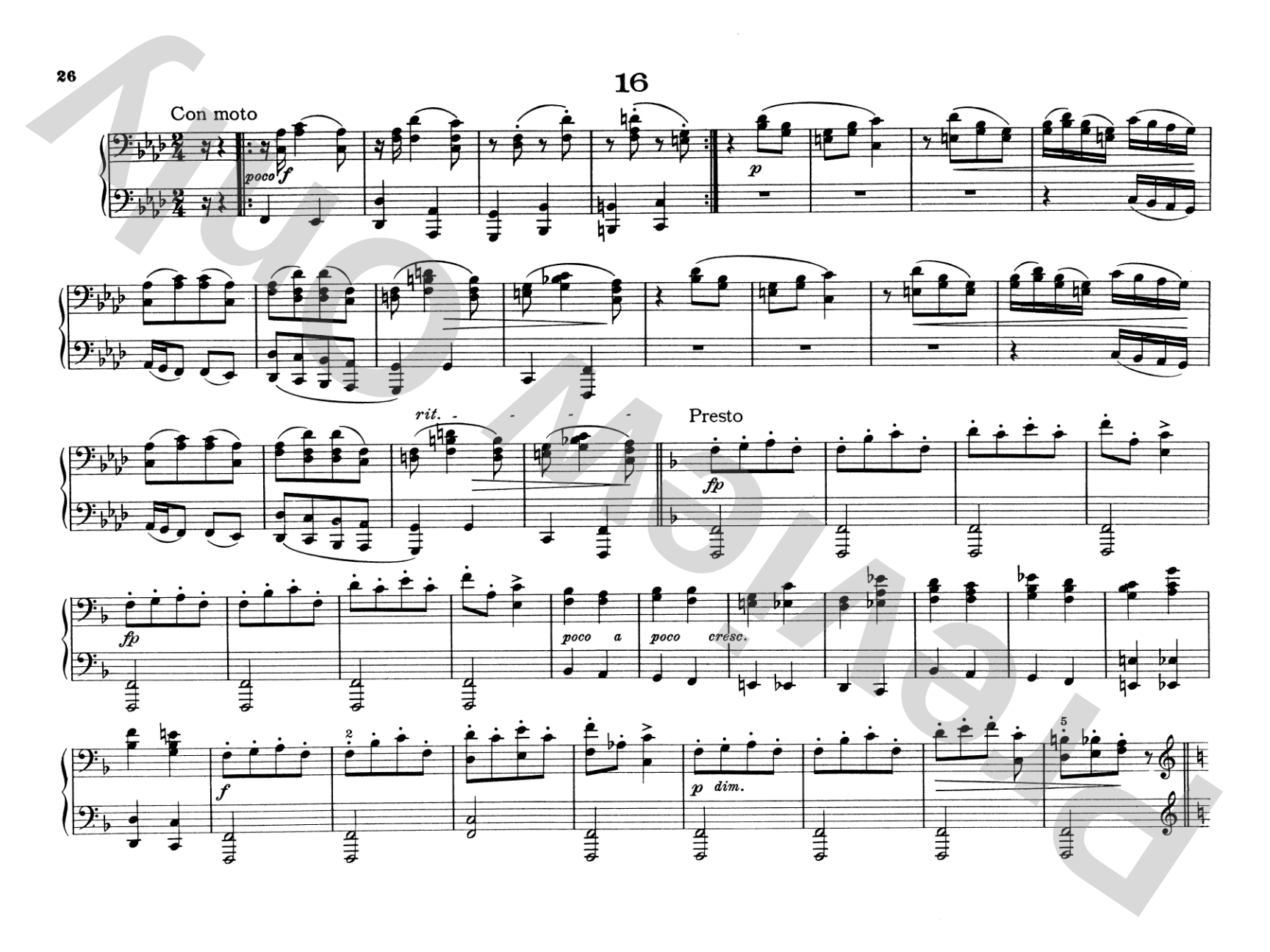
Brahms: Hungarian Dances, Volume II Sheet Music Preview

Brahms: Hungarian Dances, Volume II

By Johannes Brahms

Item: 00-PC-0012781

Digital Download
$0.99
Description
(11-21). The comb binding creates a lay-flat book that is perfect for study and performance.

Don't just read it, hear it, play along with it, and watch your students grow with it. In MakeMusic Cloud, Brahms: Hungarian Dances, Volume II comes alive with professional accompaniment, adjustable tempo, and built-in practice tools that turn solo practice into real progress.

Sample Audio
No sample audio found.
Sample Video
Additional Details
Series: Kalmus Edition
Publisher: Alfred Music
Page Count: 56
SKU: 00-PC-0012781

More about this title

About the Composer: Johannes Brahms

Johannes Brahms (1833-1897) established himself as one of the 19th century's supreme craftsmen, bridging Romantic expression with classical structure. His Hungarian Dances rank among his most beloved works, capturing the raw energy and folk character of Hungarian music while maintaining the sophisticated harmonic language that defines his compositional voice.

Brahms collected and studied Hungarian folk melodies throughout his life, and these dances reflect his deep engagement with that material. The Hungarian Dances cycle demonstrates his gift for orchestration and arrangement, as these pieces appear in multiple versions (solo piano, piano duet, orchestral). The duet arrangements create an ideal chamber music experience, balancing technical display with genuine musical substance.

Why we love this

These dances bring authentic Romantic virtuosity into reach for intermediate pianists without sacrificing either the music's vigor or Brahms's harmonic sophistication. The four-hand format distributes technical demands intelligently between primo and secondo, allowing both players to enjoy genuinely musical parts rather than mere accompaniment. Programming them signals serious repertoire while delivering the kind of energy and immediate appeal that audiences respond to with enthusiasm.

What to expect

Energetic and earthy, with sudden shifts between spirited virtuosity and moments of lyrical tenderness. The music pulses with folk authenticity while maintaining the harmonic sophistication and structural clarity Brahms brought to everything he wrote. There's an infectious joy in these dances, balanced by the kind of craftsmanship that reveals new details with each playing.

Who it's for

Intermediate to advanced piano duet players seeking substantial chamber music that rewards careful study and offers real performance satisfaction. Teachers and students looking to program Brahms at a level that's accessible yet genuinely rewarding, without the technical demands of solo works or the logistics of orchestral arrangement.

How to get the most out of it

  • Establish clear rhythmic independence between the parts; the secondo's role carries harmonic and rhythmic weight beyond what an accompaniment might suggest, and locking into that foundation frees the primo to shape the melodic line with confidence.
  • Honor the folk character without exaggeration. These dances have authentic energy, but Brahms's orchestrations demand ensemble precision and balance; let the music's own vitality drive the tempo rather than forcing excitement.
  • Attend to voice leading across both hands and both players. Brahms frequently weaves material through the texture, and following those lines (especially in the inner voices of the full score) reveals structural coherence and deepens interpretation.
  • Manage dynamic contrast carefully at the keyboard. The comb binding's lay-flat design supports technical ease, but maintaining distinct dynamic levels between primo and secondo without sacrificing blend requires careful listening and adjustment.

How to use it

These dances work beautifully as a standalone concert suite or divided across multiple events to anchor different programming themes. Include them in recitals celebrating Romantic chamber music, or position them as a bridge between classical and modern works. They're equally at home in a salon-style intimate concert or a more formal recital, where they typically draw enthusiastic audience response.

Skills your students will build

  • Balancing independent lines between primo and secondo voices
  • Executing rhythmic precision and synchronized ensemble playing
  • Interpreting Romantic harmonic language and voice leading
  • Performing virtuosic passages with control and character
  • Understanding folk-influenced melodic shapes and phrasing

You May Also Like