
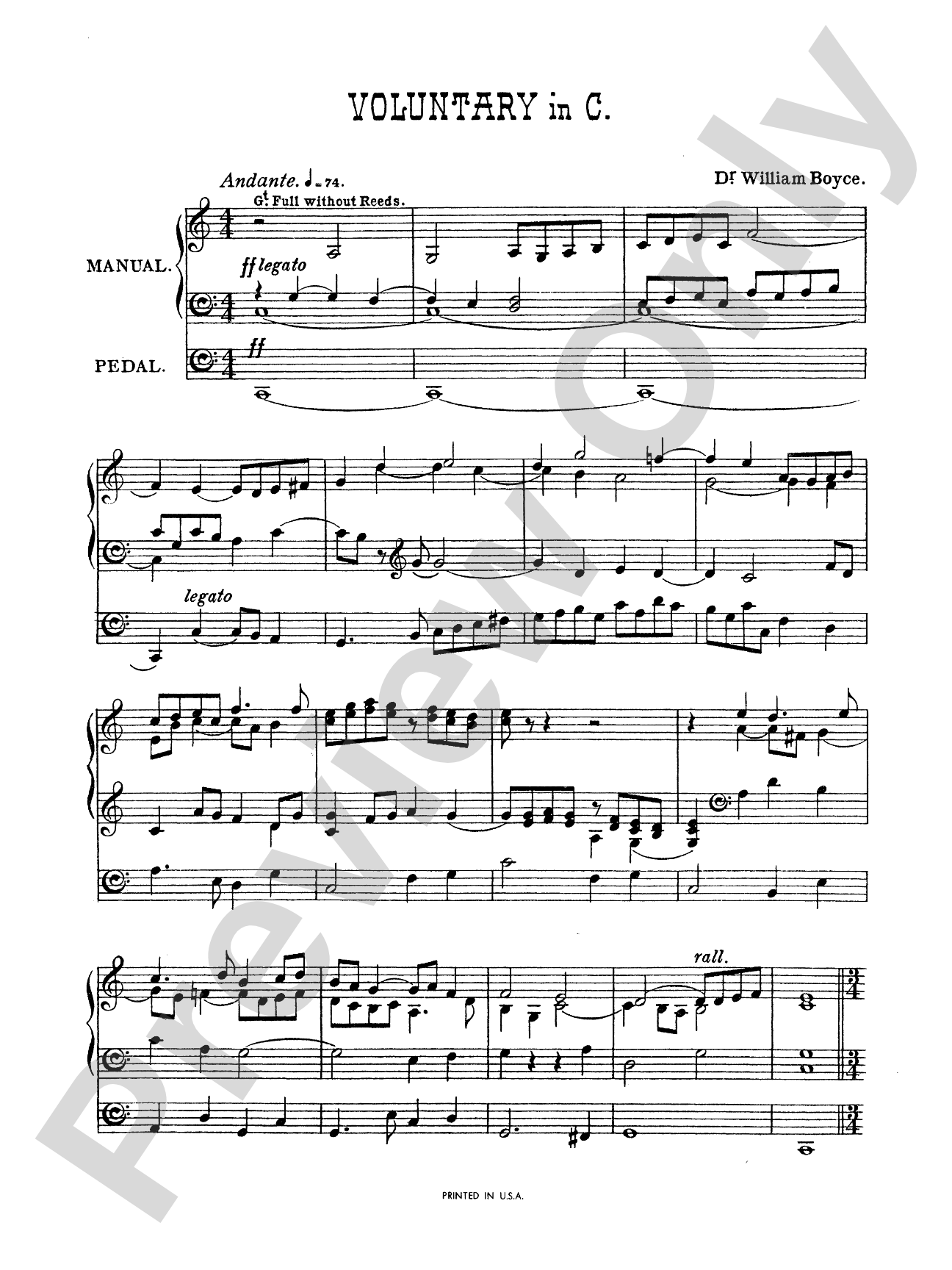
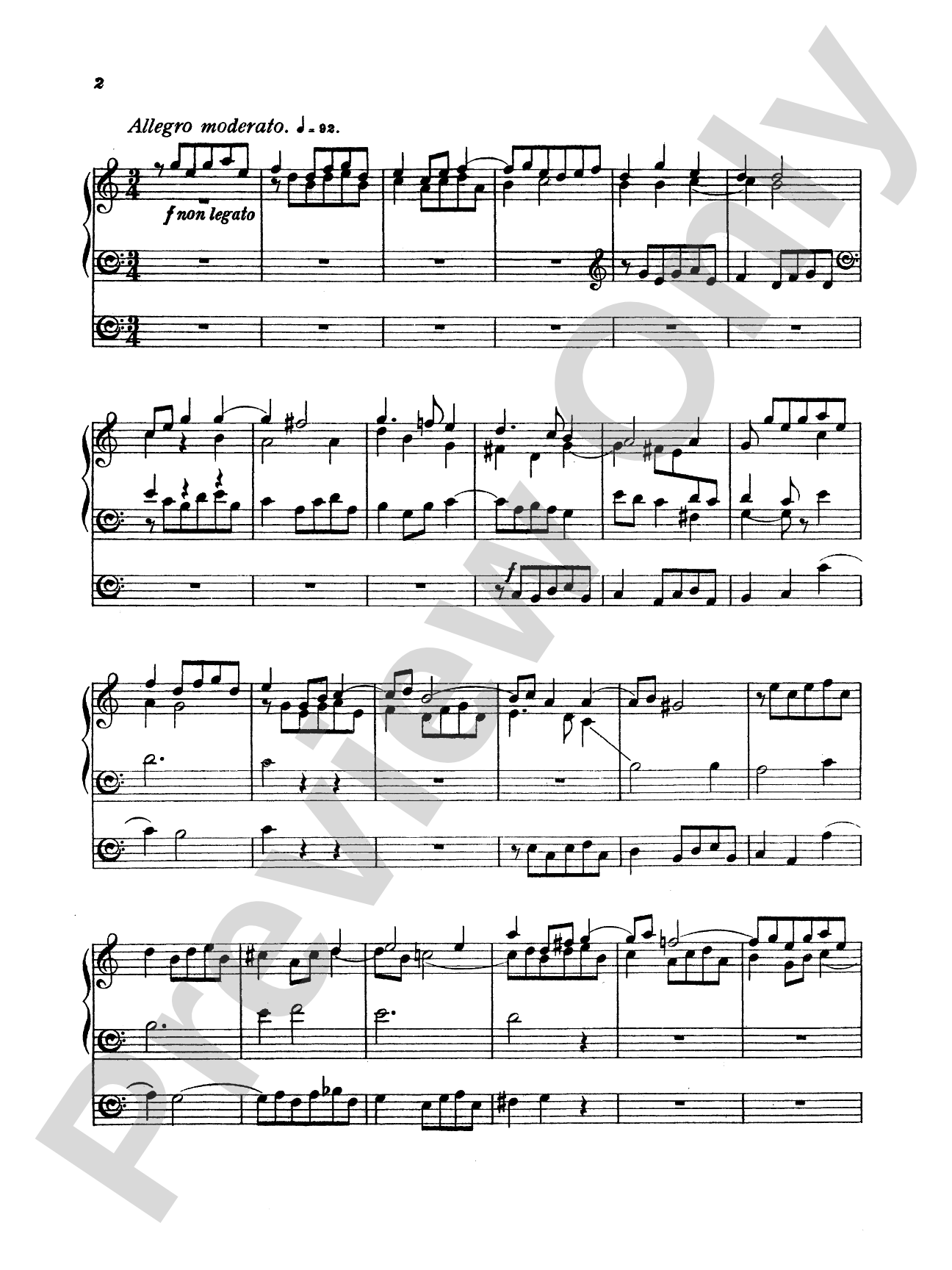
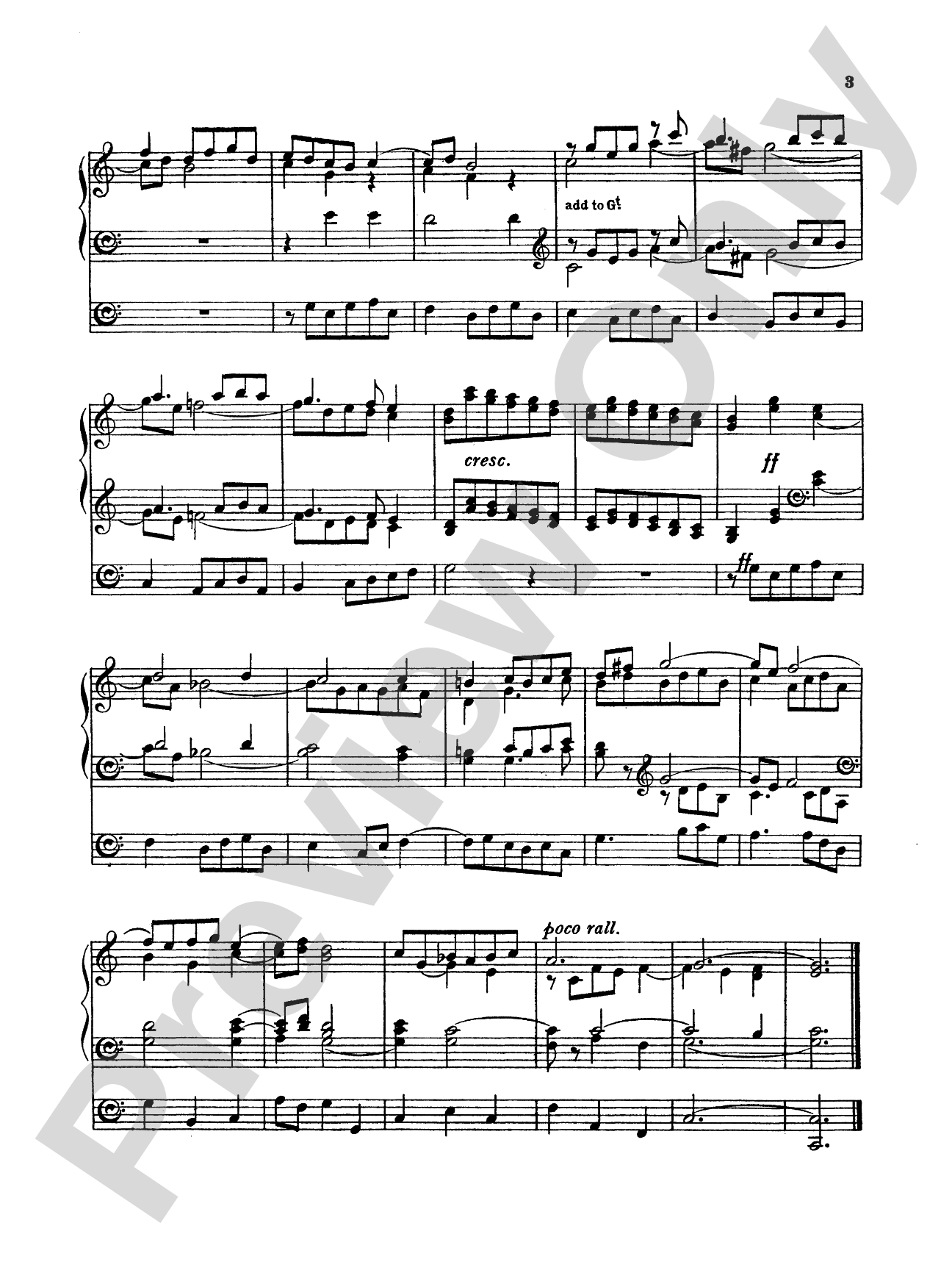

Boyce: Two Voluntaries (Ed. West): Organ Sheet
By William Boyce / ed. John E. West
Item: 00-PK-0003858

$5.99
Pickup currently not available
Buy Extra Parts (Digital PDF Download)
| Product | Price | Quantity |
|---|---|---|
| Boyce: Two Voluntaries (Ed. West) | $1.99 | |
| Boyce: Two Voluntaries (Ed. West) | $1.99 |
Parts Added to Cart!
Related Items
Two Voluntaries: Organ Sheet |
$5.95
|
View |
Description
(C and A Minor) (Edited by J.E. West)


Don't just read it, hear it, play along with it, and watch your students grow with it. In MakeMusic Cloud, Boyce: Two Voluntaries (Ed. West): Organ Sheet comes alive with professional accompaniment, adjustable tempo, and built-in practice tools that turn solo practice into real progress.
Open in the Player
Jump straight in and assign it today.
Start Your Free Trial
Open this title and explore the full library in minutes.
Sample Audio
No sample audio found.
Sample Video
No sample videos found.
Additional Details
Series:
Kalmus Edition
Publisher:
Alfred Music
Page Count:
12
SKU:
00-PK-0003858
More about this title
About the Composer: William Boyce
William Boyce (1711, 1779) was one of the most prolific and respected English composers of his time, holding the position of Master of the King's Music from 1755 until his death. His output spanned symphonies, concertos, vocal music, and keyboard works that bridged the Baroque and Classical styles with distinctly English sensibilities. Boyce's organ voluntaries became a staple of English church music and concert life, showcasing his gift for memorable melody and structural clarity.
His keyboard works remain essential to organists seeking music that combines technical interest with genuine musicality. Boyce wrote with deep understanding of the organ's capabilities, crafting pieces that reward both liturgical and recital performance. His legacy as a teacher and composer ensured that English music education maintained strong standards well into the Classical era.
Why we love this
These two voluntaries offer organists access to dignified, genuinely musical works from the English Baroque-Classical transition at a level that rewards careful playing without requiring virtuosic fireworks. The C major voluntariat provides straightforward architectural appeal, while the A minor piece adds expressive depth and harmonic color. For church musicians and recital organists alike, they anchor a program with authority and demonstrate why Boyce's contemporaries held him in such high regard.
What to expect
These voluntaries breathe with 18th-century courtesy and intelligence. The C major piece unfolds with gracious, almost conversational logic, while the A minor work adds a layer of introspection and harmonic sophistication that gives it genuine emotional weight. Throughout, there is a sense of formal control paired with genuine musical communication, offering both intellectual satisfaction and emotional sincerity.
Who it's for
Organists seeking substantial but accessible repertoire from the Classical era will find these voluntaries ideal for both liturgical use and recital programming. Students preparing for competitions or degree exams will appreciate music that demands good technique, musical maturity, and interpretive sensitivity without requiring the extreme demands of later Romantic works. Church musicians looking to program shorter, self-contained pieces that fit into service contexts will value their modest length and formal clarity.
How to get the most out of it
- Treat the opening statements as solo voice writing; shape the melodic phrases with vocal inflection and maintain a singing tone throughout, even in passage work.
- Balance the manual and pedal parts carefully in passages where both are active; the pedal should provide foundation without overwhelming the manual melody.
- Pay attention to Boyce's use of silence and articulation in the structure; clean releases between sections clarify the form and allow the harmonic progressions to register fully.
- Explore the registration possibilities available on your instrument; these works succeed with relatively transparent, supportive stops that let the compositional lines emerge cleanly.
How to use it
Program the C major voluntaire as a prelude or postlude in a service where you want to establish a dignified, conversational tone without grand gestures. The A minor voluntaire works beautifully on a recital where you're pairing English Baroque works with later Classical or early Romantic repertoire, showing how organists of Boyce's era balanced ornament with structural clarity. Alternatively, use them to open a concert program, establishing both historical context and musical credibility before moving into larger-scale works.
Skills your students will build
- Baroque ornamentation and articulation conventions
- Voicing and balance between manual divisions
- Phrasing and shaping in keyboard writing designed for singing tone
- Registration choices that support compositional clarity
- Understanding of the formal and stylistic bridge between Baroque and Classical keyboard music