Dennis Alexander has shaped music education for nearly four decades through his prolific output of piano compositions. Since 1986, his partnership with Alfred Music Publishing has produced over 400 works and recordings, establishing him as one of the most widely performed composers of educational piano repertoire across all proficiency levels.
Alexander's teaching career spanned multiple institutions, including 24 years as a piano pedagogy instructor at the University of Montana, where he also chaired the piano department. Beyond the classroom, he maintains an active concert schedule as a soloist, chamber musician, and collaborative artist, performing internationally and conducting masterclasses at state and national conventions. His experience as both educator and performing musician informs every piece he writes.
Why we love this
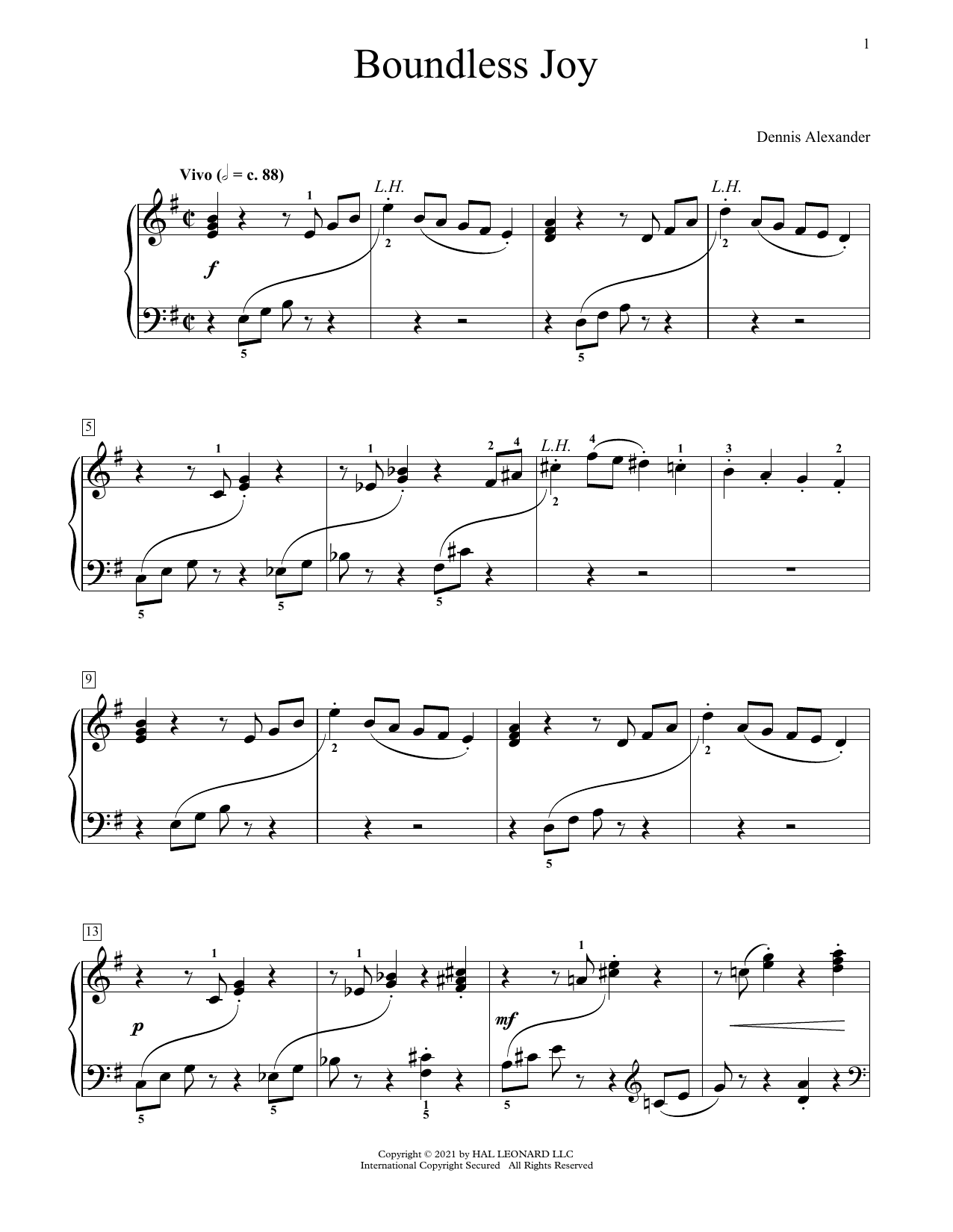
Alexander's gift for capturing genuine musical substance within pedagogically sensible frameworks makes this piece immediately engaging for students while respecting their intelligence. The three-page length and classical framework give this work real concert presence without demanding extensive rehearsal time from an already crowded schedule.
What to expect
Luminous and unhurried, this piece unfolds with the kind of clarity that feels effortless until you realize how carefully every voice has been balanced. The classical framework provides architectural confidence while Alexander's contemporary harmonic sensibility keeps the piece fresh and inviting.
Who it's for
Early intermediate pianists ready to explore classical forms with genuine musical content. Students benefit from Alexander's intuitive voice leading and clear harmonic structure, which reward careful listening and deliberate practice without excessive technical barriers.
How to get the most out of it
Bring out the singing quality of the melody by maintaining consistent voicing through hand position shifts; this prevents the tune from fragmenting across the registers.
Shape phrases toward their harmonic goals rather than treating bar lines as natural stopping points; listen for where Alexander naturally resolves tension.
Maintain rhythmic precision in accompaniment figures while allowing the melody slight flexibility for expressive breathing, creating space between the parts rather than locking them mechanically together.
How to use it
Include this in a student recital showcasing classical repertoire where you want pieces that sing without demanding virtuosity, or pair it with other Alexander works to demonstrate the breadth of his compositional voice. It also fits naturally into piano juries and competitions where musical maturity matters more than technical fireworks.
Skills your students will build
Shaping phrases through voice leading across multiple registers
Balance between melody and accompaniment textures
Reading and interpreting classical harmonic progressions
Sustaining lyrical lines at moderate tempos
Understanding phrase structure and formal organization
You May Also Like
Scan to Complete Your Purchase
Use your phone's camera to scan the code below
You'll log in on your phone and the order will be added to your account