
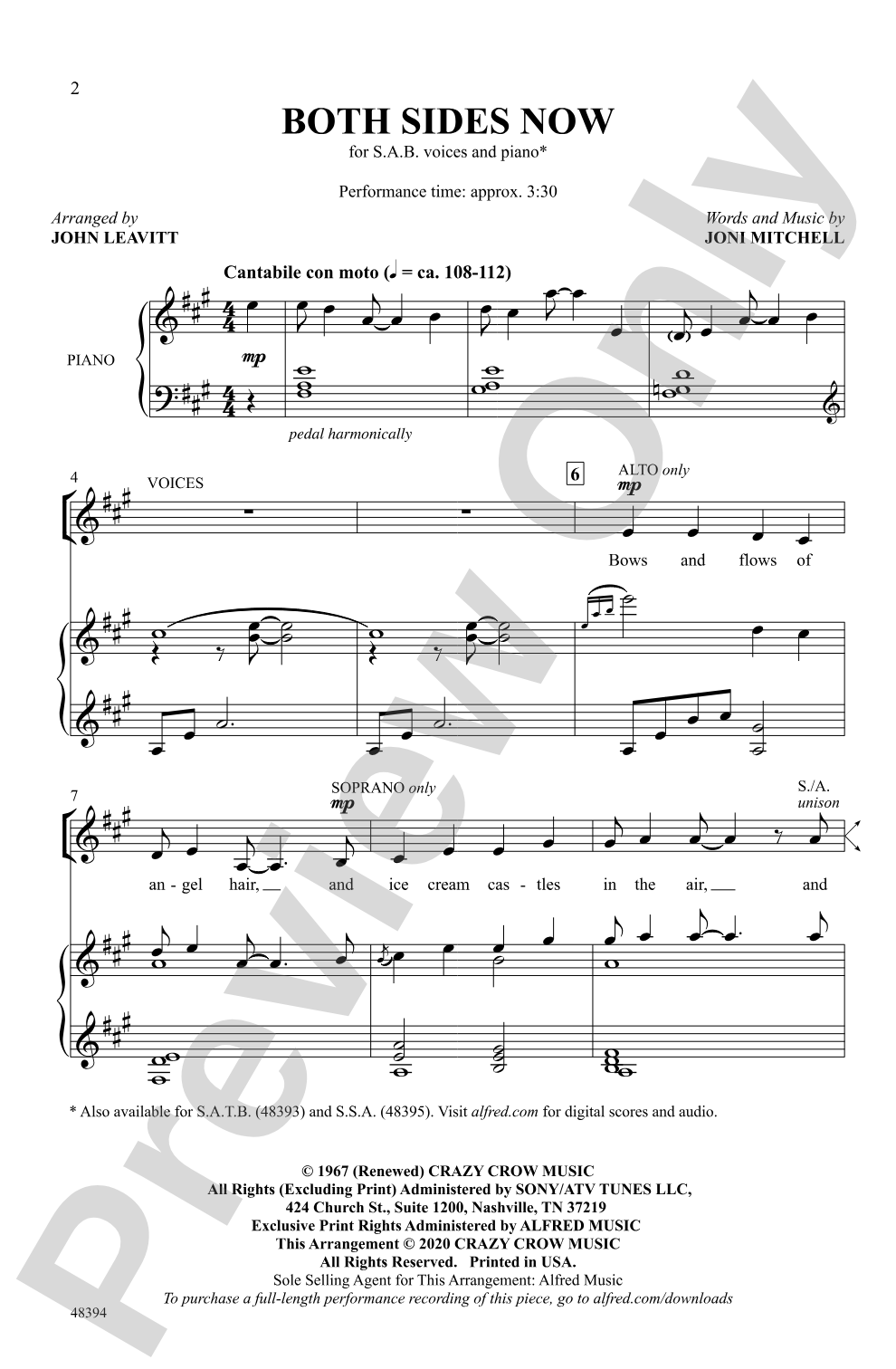
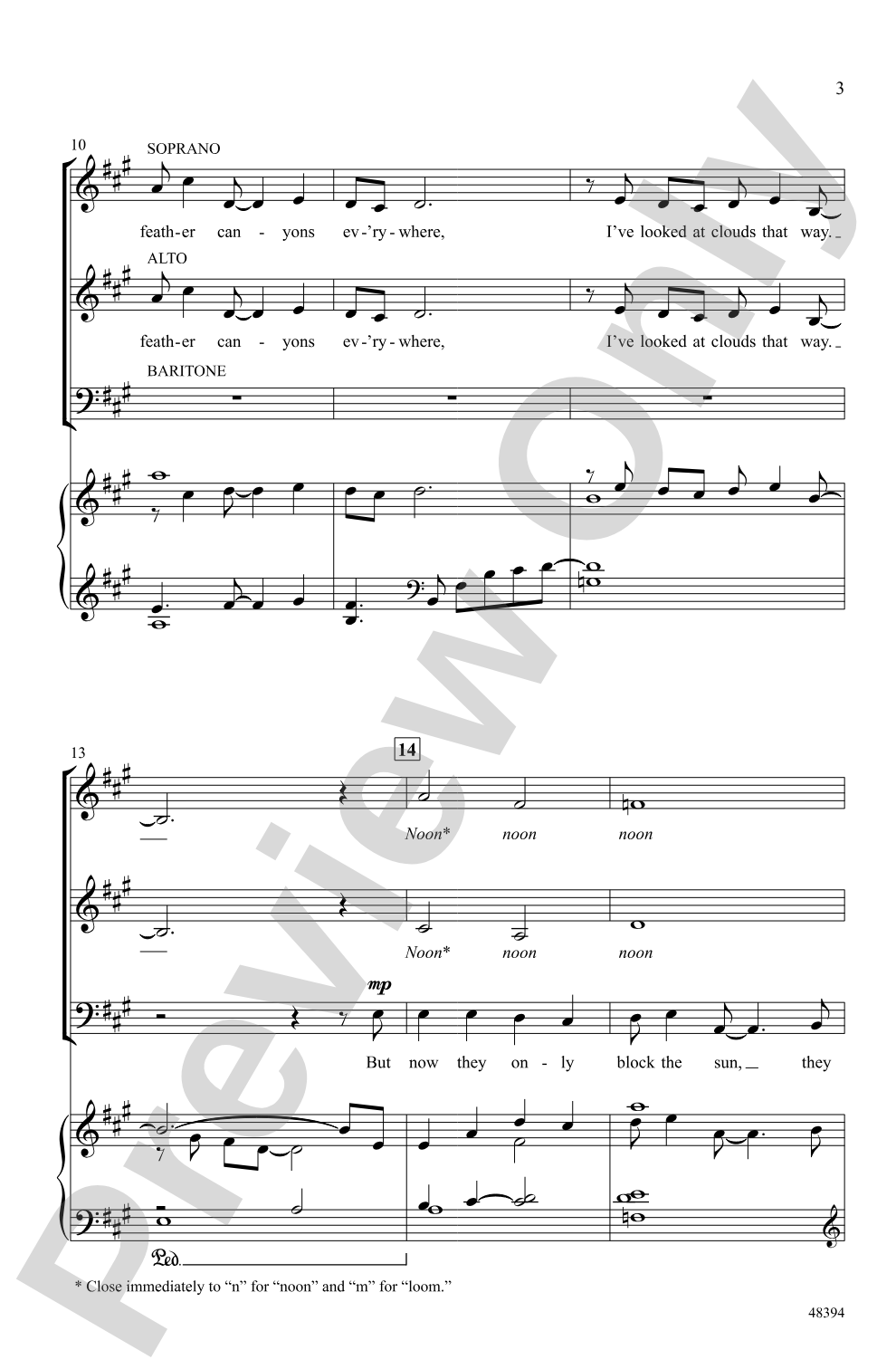
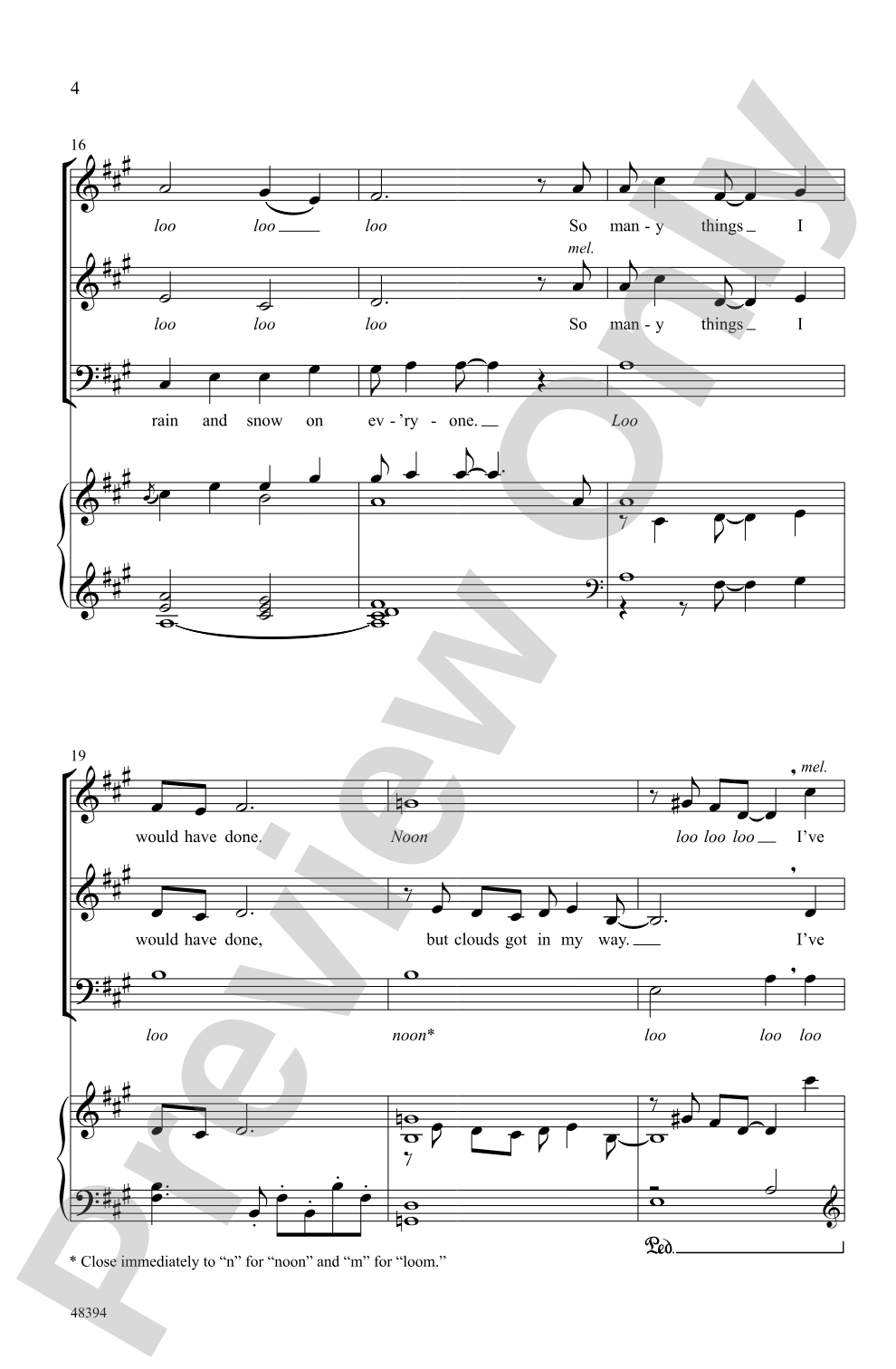

Both Sides Now: SAB Choral Octavo
Words and music by Joni Mitchell / arr. John Leavitt
Item: 00-PO-0006349
$2.25
Minimum order quantity: 20 copies
One moment…
Related Items
Both Sides Now: PianoTrax Digital Audio Download |
$9.99
|
View | |
Both Sides Now: SATB Choral Octavo |
$2.25
|
View | |
Both Sides Now: SSA Choral Octavo |
$2.25
|
View | |
Both Sides Now: SATB Choral Octavo |
$2.25
|
View | |
Both Sides Now: SAB Choral Octavo |
$2.25
|
View | |
Both Sides Now: SSA Choral Octavo |
$2.25
|
View |
Description
Recorded and performed by more than fifty artists in the fifty-plus years since its initial release, this Joni Mitchell song has become an enduring meditation on the shifting perspective that comes with time. The melody passes generously from part to part across a shimmering palette of choral harmonies. John Leavitt provides a piano accompaniment that adds texture and color while fully supporting the voices.


Both Sides Now: SAB Choral Octavo isn't in MakeMusic Cloud just yet...but it could be. Let us know you'd like to see it, and you'll help shape what comes next. In the meantime, start a free trial and dive into thousands of interactive titles your students can play along with today.
Request This Title
Tell us you want it.
Start Your Free Trial
Explore everything that's ready to play right now.
Sample Audio
1
Audio File
--:--
0:00
0:00
Sample Video
No sample videos found.
Additional Details
Series:
Alfred Pop Choral Series
Publisher:
Alfred Music
Page Count:
16
SKU:
00-PO-0006349
More about this title
About the Composer: Joni Michell
Joni Mitchell emerged in the 1960s as a songwriter of remarkable introspection and harmonic sophistication, moving folk traditions into new territory through her innovative guitar tunings and poetic lyricism. Her influence on popular music spans decades, shaping how artists approach storytelling, harmonic complexity, and the relationship between words and melody. "Both Sides Now," initially released in 1967, stands as one of her most recorded compositions, recorded by artists across jazz, pop, and classical traditions.
Why we love this
John Leavitt's arrangement honors the song's reflective character while giving your SAB singers genuine musical substance. The melody floats across all three parts with graceful voice exchanges, creating engaging interplay rather than letting any single line dominate. The piano accompaniment enriches the texture without overwhelming young voices, and the piece's spiritual depth works equally well in secular concert settings or as a sophisticated closer to a lighter program.
What to expect
The arrangement unfolds with a shimmering, contemplative quality. Voices weave in and out of the melody like light shifting through water, supported by piano harmonies that add warmth without heaviness. There's an intimacy to the piece despite its full ensemble texture, inviting listeners into a quiet moment of reflection.
Who it's for
Advanced high school choirs and community ensembles seeking repertoire that bridges contemporary and classical sensibilities. This piece works well for singers with solid part-singing skills who can maintain independence while blending seamlessly.
How to get the most out of it
- Balance the melody line as it passes between parts; mark whose turn it is to carry the tune in each section so no voice part overshadows another during transitions.
- Let the piano establish the gentle, contemplative mood before the voices enter; the accompaniment sets the emotional tone for the entire piece.
- Shape the lyric phrases with natural breath points that honor the song's conversational quality; avoid breaking lines in ways that interrupt Mitchell's poetic intent.
- Keep the tempo steady and unhurried; rushing or dragging will flatten the meditative quality that makes this arrangement special.
How to use it
Program this as a reflective piece midway through a concert, where it can settle the audience into a more introspective frame of mind. It pairs naturally with other art songs or contemporary pieces that prioritize lyrical beauty over dramatic gesture. The piece also works beautifully as a closing number on a lighter program, offering emotional weight without demanding virtuosity.
Skills your students will build
- Voice part independence while maintaining blend across three-part texture
- Tracking a melody that migrates between soprano, alto, and baritone lines
- Sustaining lyrical phrasing across longer phrases
- Responding to piano-driven accompaniment cues
- Interpreting contemporary popular song with choral artistry