
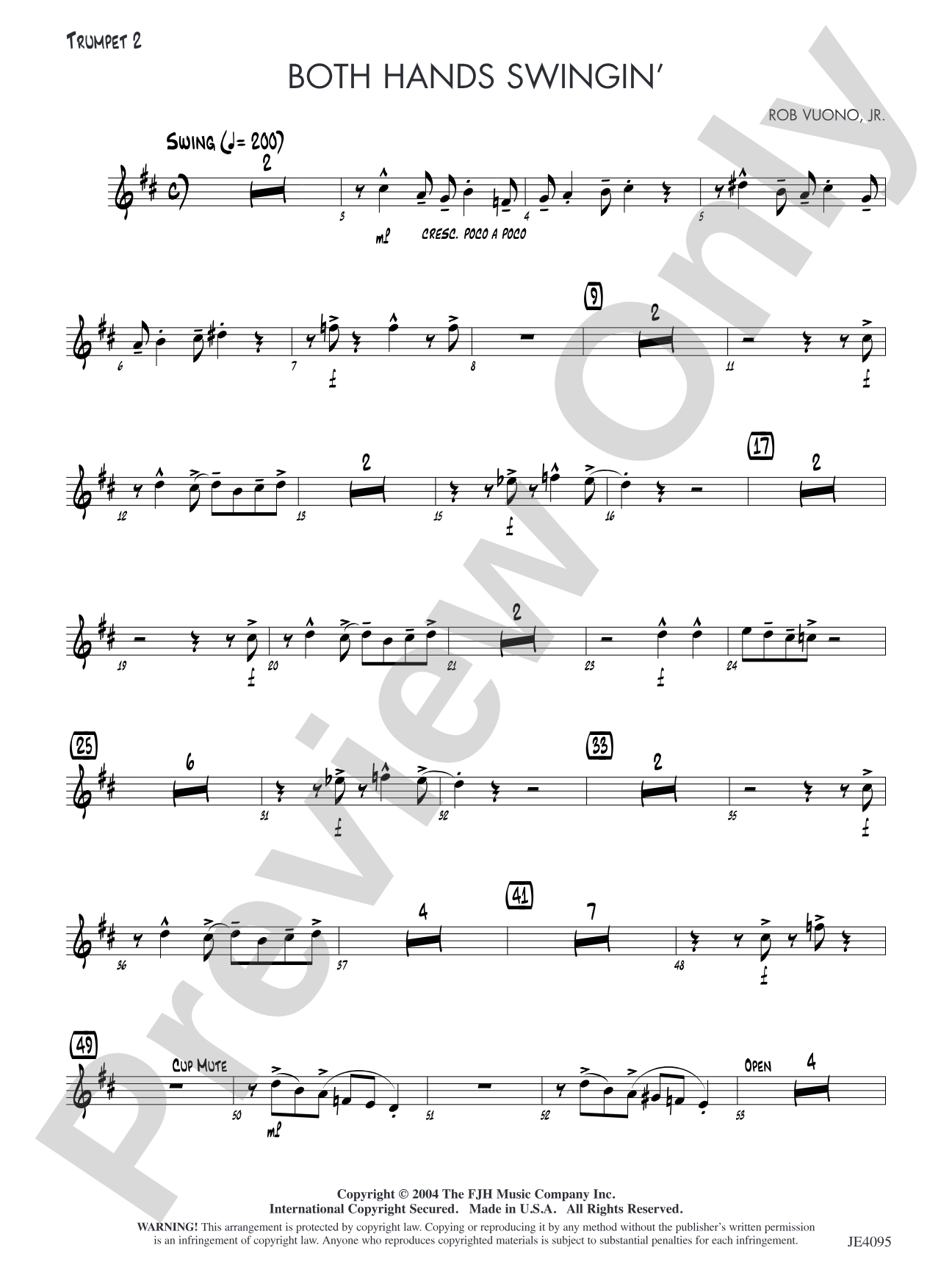

Both Hands Swingin': Trumpet 2
By Rob Vuono Jr.
Grade: 4
Item: 98-PC-DJE4095_T2
$7.00
Pickup currently not available
Description
This hot swing chart has a unique whole tone introduction that really sets the mood for the melody, based on the changes from Take the A-Train. Tenor 1 and trumpet 2 share the solo spotlight in this one (and written solos are provided for less experienced jazz musicians). Exactly what you've come to expect from the professional arranging skills of Rob Vuono, this one will have you coming out with Both Hands Swingin'!


Both Hands Swingin': Trumpet 2 isn't in MakeMusic Cloud just yet...but it could be. Let us know you'd like to see it, and you'll help shape what comes next. In the meantime, start a free trial and dive into thousands of interactive titles your students can play along with today.
Request This Title
Tell us you want it.
Start Your Free Trial
Explore everything that's ready to play right now.
Sample Audio
1
Audio File
--:--
0:00
0:00
Sample Video
No sample videos found.
Additional Details
Series:
FJH Advanced Jazz Ensemble
Publisher:
The FJH Music Company, Inc.
SKU:
98-PC-DJE4095_T2
More about this title
About the Composer: Rob Vuono Jr.
Rob Vuono Jr. has established himself as a go-to arranger for jazz ensembles through his work with the FJH Advanced Jazz Ensemble series. His arrangements consistently balance accessibility with musical sophistication, making him a trusted voice for directors seeking charts that challenge students without overwhelming them.
Vuono's writing reflects deep knowledge of jazz idiom and ensemble balance. He understands how to voice charts that sound full and professional while building in written solo options for students still developing their improvisation skills, a practical approach that has made his work popular in secondary jazz programs.
Why we love this
This arrangement demonstrates real compositional craft in its whole tone introduction, which immediately signals to listeners that they're hearing something musically thoughtful rather than a straightforward swing tune. The decision to base changes on Take the A-Train gives the piece harmonic familiarity while Vuono's original melody and voicings make it feel fresh. Written solos for both tenor 1 and trumpet 2 mean your ensemble sounds polished whether your soloists are confident improvisers or still building that skill.
What to expect
The whole tone opening has a slightly modern, slightly mysterious quality that draws listeners in before the melody arrives with undeniable swing energy. Once the changes kick in, the piece settles into a groove that feels both familiar and unexpected, with enough harmonic movement to keep players engaged but not so much that the form becomes difficult to follow.
Who it's for
Grade 4 jazz ensembles with solid fundamentals in swing style and basic jazz vocabulary. Directors seeking a chart that sounds contemporary and energetic without requiring advanced improvisation skills from every soloist will find this particularly valuable.
How to get the most out of it
- Let the whole tone introduction breathe. Resist rushing through those opening bars; the unusual harmonic color works only if the ensemble plays it with intention and slight space between phrases.
- Balance the tenor and trumpet solos carefully so neither overpowers the section backgrounds. The written solos are marked in the parts, making rehearsal straightforward.
- Lock the rhythm section into a true swing feel rather than straight eighth notes. The groove beneath this chart is what sells the energy and propels the melody forward.
- Use the transition back to the head as an opportunity to build dynamic contrast. If the solos are set at one level, bring the full ensemble back with slightly more weight on the return.
How to use it
Program this as a centerpiece number on a jazz concert where you want to showcase ensemble sophistication and feature your soloists. It works equally well mid-set as an energy builder or as a closing number that leaves the audience wanting more. The written solos also make it an excellent teaching tool for students who want to analyze how an arranger approaches solo construction.
Skills your students will build
- Swing style and feel, particularly maintaining rhythmic precision while playing expressively in a jazz context
- Reading and performing whole tone harmony in an ensemble setting
- Solo spotlight performance with prepared written solos as a bridge to free improvisation
- Section balance and blend when supporting a featured soloist
- Following harmonic changes based on a jazz standard while adapting to original melody and arrangement