Boston School Cadets - March: 1st E-flat Alto Saxophone Sheet Music Preview

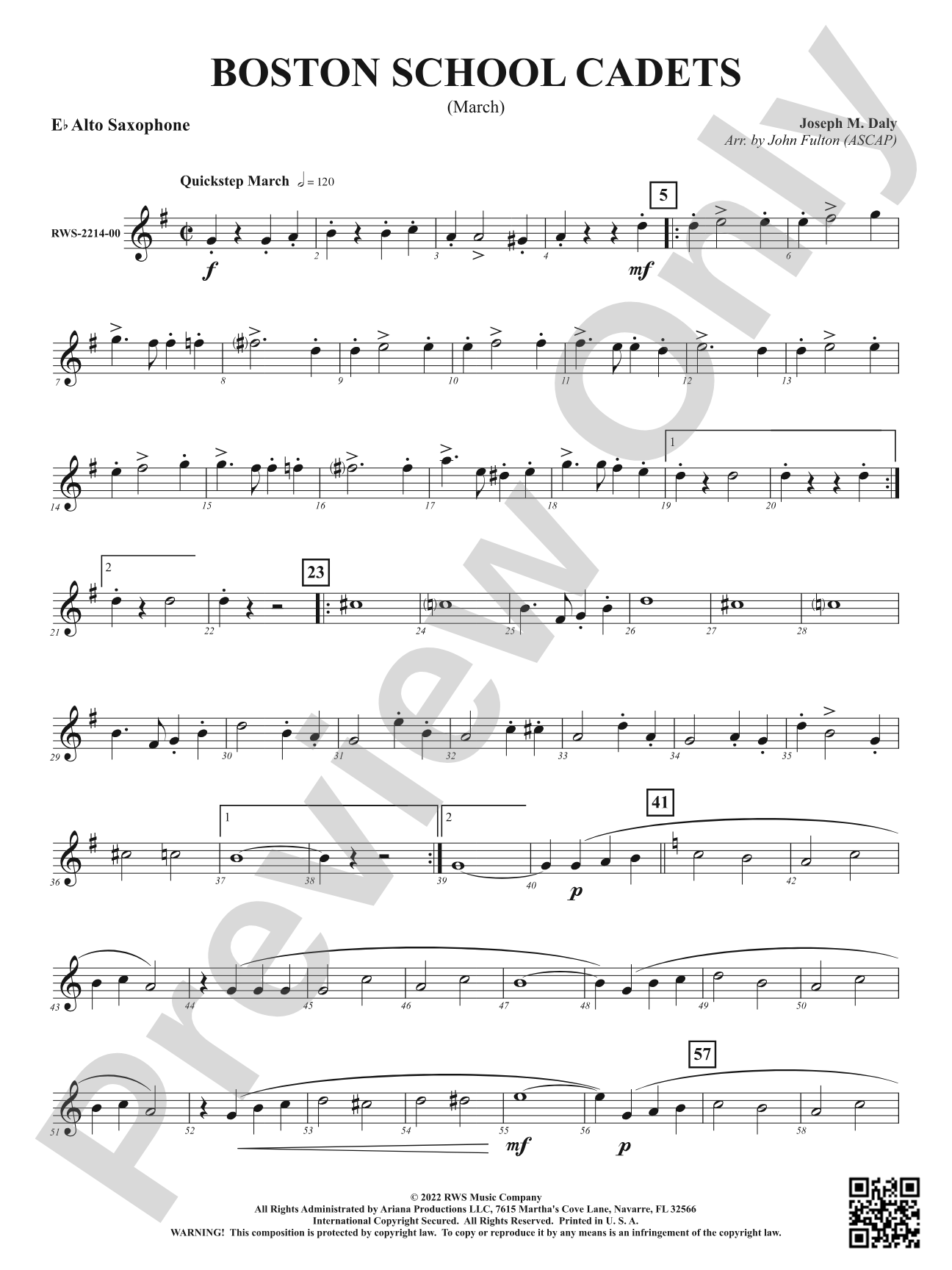
Boston School Cadets - March: 1st E-flat Alto Saxophone

March

By Joseph M. Daly / arr. John Fulton

Grade: 2

Item: 98-PC-RWS2214_AX1

Digital Download
$3.99
Description
The Boston Schools Cadet March is a lively cut time march that will bring you, your students and audiences back to the early 1900s, a time when marches were required repertoire for all bands. This march is approachable for young bands while being enjoyable for all levels to perform.

Original Item#: RWS-2214-00

Boston School Cadets - March: 1st E-flat Alto Saxophone isn't in MakeMusic Cloud just yet...but it could be. Let us know you'd like to see it, and you'll help shape what comes next. In the meantime, start a free trial and dive into thousands of interactive titles your students can play along with today.

Sample Audio
0:00
0:00
Sample Video
Additional Details
Series: RWS - Developing Band
Publisher: RWS Music Company
SKU: 98-PC-RWS2214_AX1

More about this title

About the Composer: Joseph M. Daly

Joseph M. Daly was a prolific composer and arranger working in the early 20th century, a period when the American band tradition was solidifying its place in concert halls, parades, and civic celebrations. His marches became staples of the band repertoire, combining accessibility with genuine compositional craft that rewarded both developing and experienced ensembles.

Why we love this

Daly captures the swagger and energy of early 20th-century band culture without overcomplicating the score. Young ensembles can deliver a genuinely satisfying performance while building fundamental marching band technique, and experienced groups find authentic character in the straightforward writing.

What to expect

Crisp and spirited, with the unmistakable bounce of an early 1900s band in full stride. The cut time signature and forward motion invite confident playing; this is music that makes both performers and audiences feel the energy of a bygone era of American band culture.

Who it's for

Grade 2 concert bands looking for accessible march repertoire that sounds polished without excessive technical demands. This works equally well for developing ensembles building foundational skills and established groups seeking authentic early-era march literature for a program.

How to get the most out of it

  • Keep the cut time pulse crisp and energetic. Young players often drag marches, so a metronome marking that feels quick enough for you is usually just right for the audience.
  • Balance the melody line across sections rather than letting any single voice dominate. The march's charm depends on transparent voicing.
  • Shape phrases naturally rather than playing every measure at the same dynamic. Small rises and falls in energy prevent the march from becoming monotonous.

How to use it

Open a concert with this to establish a lively tone, or pair it with other marches to create a themed set exploring American band traditions. It also works as a festival or contest opener where you want to showcase clean ensemble playing and musicality at the Grade 2 level.

Skills your students will build

  • Cut time reading and internal pulse
  • Ensemble balance and blend across woodwind and brass sections
  • Phrasing and dynamic shaping in marchtime
  • Intonation control at a steady, energetic tempo

You May Also Like