
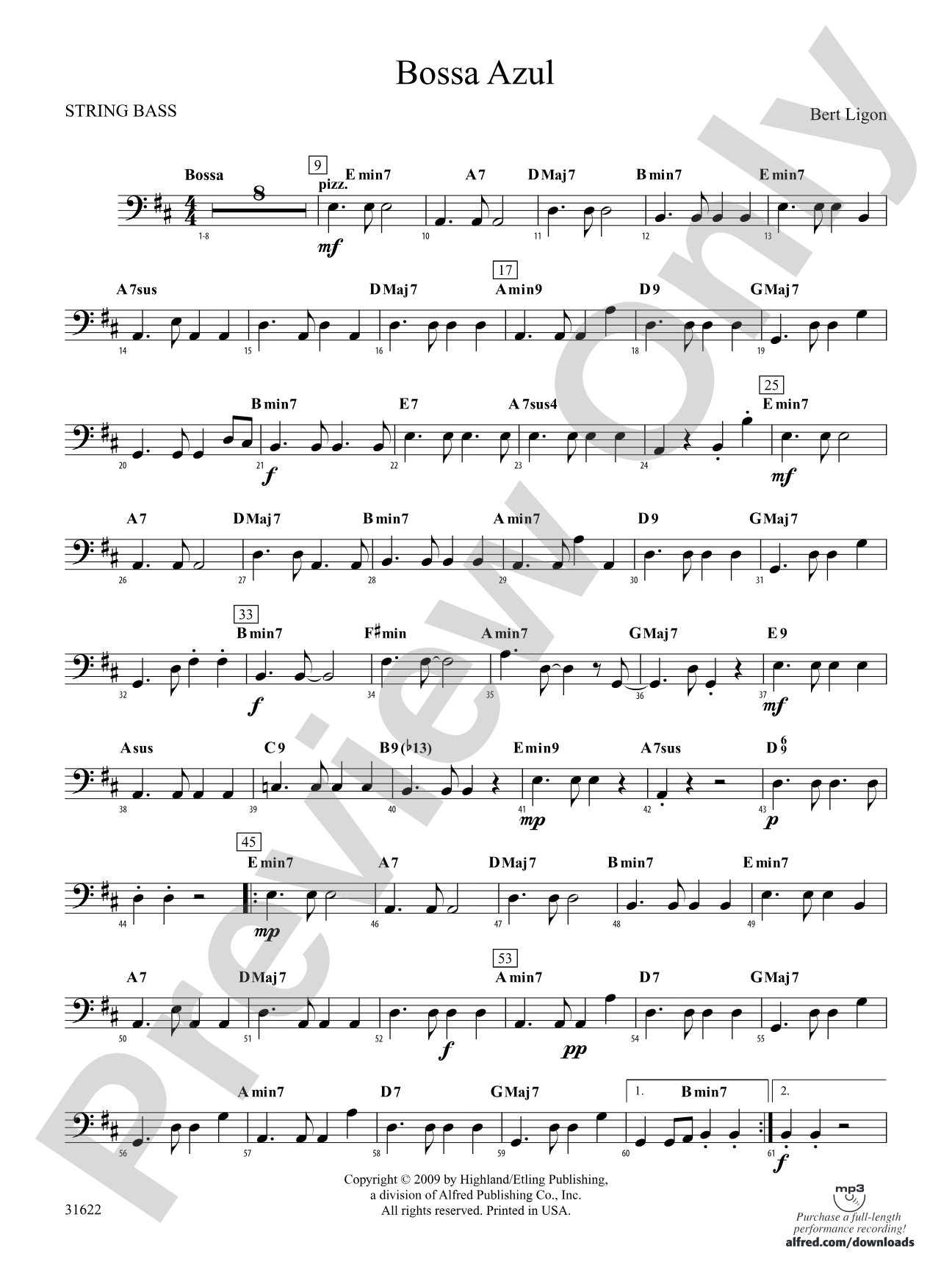

Bossa Azul: String Bass
By Bert Ligon
Grade: 3
Item: 00-PC-0001783_SB
$5.99
Pickup currently not available
Description
A great change of pace and the perfect level for your intermediate group! Bossa Azul sounds like sitting in the tropical shade with a cool Caribbean breeze. Melodic material appears in all parts and is designed for fun and successful performances. An improvisation section is included where soloists can improvise using D or G major scales, or play from the provided suggested solos. Fully notated piano, bass and drums are included. This title is available in MakeMusic Cloud.


Don't just read it, hear it, play along with it, and watch your students grow with it. In MakeMusic Cloud, Bossa Azul: String Bass comes alive with professional accompaniment, adjustable tempo, and built-in practice tools that turn solo practice into real progress.
Open in the Player
Jump straight in and assign it today.
Start Your Free Trial
Open this title and explore the full library in minutes.
Sample Audio
1
Audio File
--:--
0:00
0:00
Sample Video
No sample videos found.
Additional Details
Series:
Highland/Etling String Alternatives
Publisher:
Alfred Music
Page Count:
132
SKU:
00-PC-0001783_SB
More about this title
About the Composer: Bert Ligon

Bert Ligon directs the jazz studies program at the University of South Carolina, where he teaches improvisation, arranging, jazz theory, and applied lessons while coordinating the jazz combos and big bands. His compositional output spans big band, orchestra, jazz combo, steel band, and jazz strings, grounded in deep theoretical work. Ligon has authored three significant texts on jazz musicianship: Connecting Chords with Linear Harmony, Comprehensive Technique for the Jazz Musician, and Jazz Theory Resources Vol. 1 & 2. As a pianist and guitarist, he has recorded Jazz Trio 2006 with violinist Martin Norgaard and cellist Renata Bratt, bringing his pedagogical insights directly into performance.
Why we love this
Ligon writes for strings with real jazz sensibility without sacrificing accessibility; the melodic material lands in every part, so everyone gets a moment in the sun rather than watching from the sidelines. The improvisation section gives intermediate players genuine agency to explore D or G major scales while offering safety net suggestions, making it a low-stakes entry into jazz ensemble playing. The tropical setting and breezy orchestration create instant engagement, which means students practice because the music itself invites them in.
What to expect
Sitting under a canopy of palms with salt air and the sound of distant guitars; the music unfolds in unhurried phrases that make space for soloists to breathe and explore. The bossa nova rhythm grounds everything with gentle propulsion, while warm harmonies and accessible melodies let every player feel the tropical warmth they're creating together.
Who it's for
Intermediate string orchestras looking to expand beyond standard classical repertoire and build comfort with jazz idioms, improvisation, and ensemble groove. This works equally well for concert settings and festivals where a contemporary, accessible piece makes a strong impression without demanding virtuosity. It's ideal for students who thrive when repertoire feels relevant and fun.
How to get the most out of it
- Establish the groove with your rhythm section before full ensemble rehearsals. The notated piano, bass, and drums provide the pocket; lock those parts first so strings can sit comfortably in the feel.
- Let soloists know the suggested solos are jumping-off points, not ceiling. Encourage them to listen back to recordings of their own attempts to develop ears alongside improvisation skills.
- Balance the tropical mood by keeping vibrato intentional and forward motion steady. This isn't a classical lush texture; it's a breezy, conversational sound.
- Bring out the melodic material wherever it appears. Since all parts share the thematic burden, string players need permission to play their melodies with the same confidence as the first violins would.
How to use it
Program Bossa Azul as a refreshing concert centerpiece in the second half of a concert, where it pivots the evening toward contemporary sounds and lighter energy. It pairs beautifully with classical works earlier in the program, signaling to audiences that string orchestras thrive in many musical worlds. It's also a festival favorite, especially in rounds where a breezy, cleanly performed piece wins both judges and audience.
Skills your students will build
- Reading and internalizing jazz swing feel and bossa nova rhythms
- Improvisation using diatonic scales (D and G major) in an ensemble context
- Balancing rhythmic precision with conversational melodic phrasing
- Trading solos and listening to ensemble partners while soloing
- Interpreting written melody with stylistic awareness (jazz articulation, vibrato control)