Born in a Trunk: Piano/Vocal/Chords Digital Sheet Music

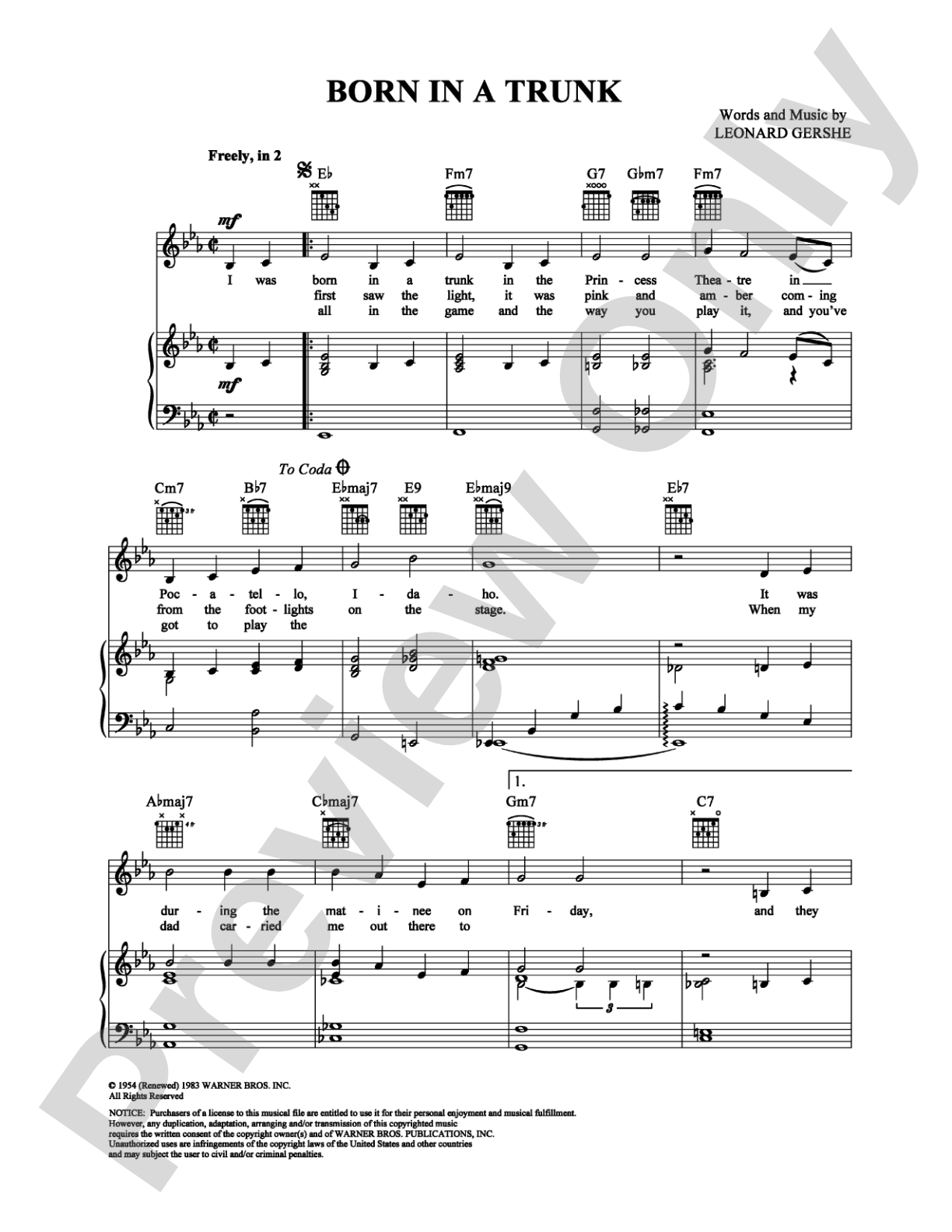
Born in a Trunk: Piano/Vocal/Chords Digital Sheet Music

Judy Garland, Leonard Gershe

Item: 00-PS-0002012

Digital Download
$3.99
Description

Born in a Trunk: Piano/Vocal/Chords Digital Sheet Music isn't in MakeMusic Cloud just yet...but it could be. Let us know you'd like to see it, and you'll help shape what comes next. In the meantime, start a free trial and dive into thousands of interactive titles your students can play along with today.

Sample Audio
No sample audio found.
Sample Video
Additional Details
SKU: 00-PS-0002012

More about this title

About the Artist: Judy Garland

Judy Garland (1922, 1969) was an American singer and actress whose vocal artistry defined the Golden Age of Hollywood. Her interpretation of popular songs combined technical precision with emotional directness, making her recordings essential listening for vocalists across genres. Her influence on American song interpretation extends far beyond film; she shaped how singers approach narrative storytelling and dynamic control in the popular repertoire.

Why we love this

This song captures the theatrical storytelling that made Garland an enduring model for musical theater singers. The piano/vocal/chords format gives students and directors a clear view of how the melody sits over jazz-inflected harmony, making it an excellent choice for exploring how to balance lyrical phrasing with harmonic sophistication in a popular song context.

What to expect

The song carries the intimacy and wry humor of a performer reflecting on their own life and work. The melody moves with theatrical expressiveness, supported by harmonies that feel sophisticated without overwhelming the vocalist's narrative.

Who it's for

This sheet music serves vocalists preparing for jazz standards, musical theater repertoire, or American songbook recitals. Pianists accompanying singers will find the chords and notation useful for both following a rehearsal partner and exploring interpretive choices in voicing and rhythm.

How to get the most out of it

  • Study the original Garland recording to understand how she shapes the melodic line; her phrasing choices reveal where to breathe and where to sustain tension across phrases.
  • Pay attention to the relationship between the vocal melody and the piano part; the accompaniment supports rather than doubles, so vocalists should feel independent ownership of the line.
  • Shape dynamics carefully through the arc of the song; Garland's performances build emotional intensity gradually rather than relying on sudden dynamic shifts.

How to use it

Include this in a concert exploring standards from Hollywood's golden era or a recital focused on American musical theater. It works equally well as a solo feature or as part of a larger set that traces the evolution of the popular song.

Skills your students will build

  • interpreting a lyric with emotional specificity and character
  • balancing vocal phrasing with jazz-influenced harmonic movement
  • managing breath placement across longer melodic lines
  • understanding how pianists voice and voice-lead through jazz-based chords

You May Also Like