
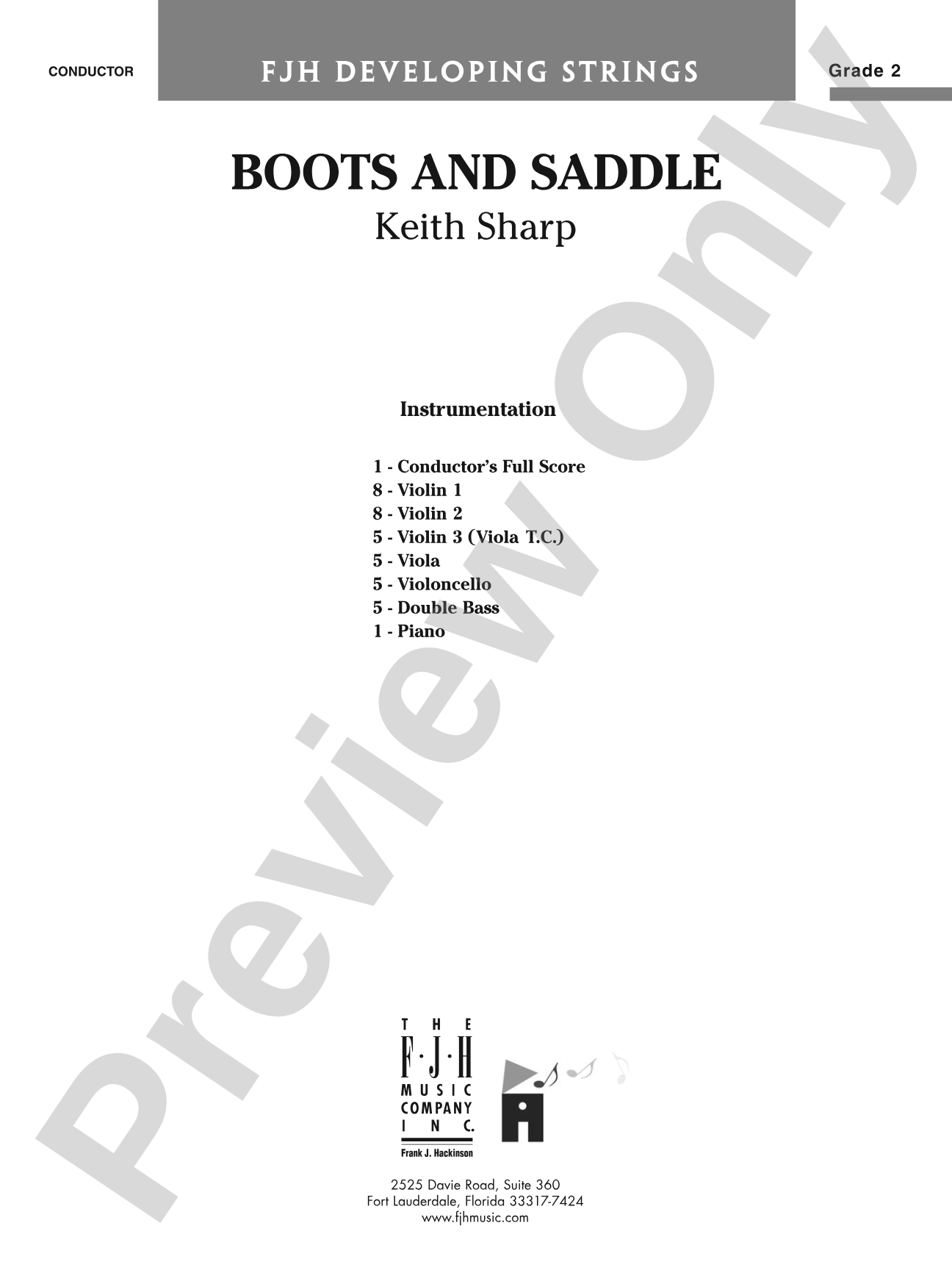

Boots and Saddle: String Orchestra Conductor Score & Parts
By Keith Sharp
Grade: 2
Item: 98-DST6167
$60.00
Pickup currently not available
Buy Extra Parts (Digital PDF Download)
| Product | Price | Quantity |
|---|---|---|
| Boots and Saddle: Score | $10.00 | |
| Boots and Saddle: Violin 1 | $7.00 | |
| Boots and Saddle: Violin 2 | $7.00 | |
| Boots and Saddle: Violin 3 (Viola T.C.) | $7.00 | |
| Boots and Saddle: Viola | $7.00 | |
| Boots and Saddle: Violoncello | $7.00 | |
| Boots and Saddle: Double Bass | $7.00 | |
| Boots and Saddle: Piano | $7.00 |
Parts Added to Cart!
Description
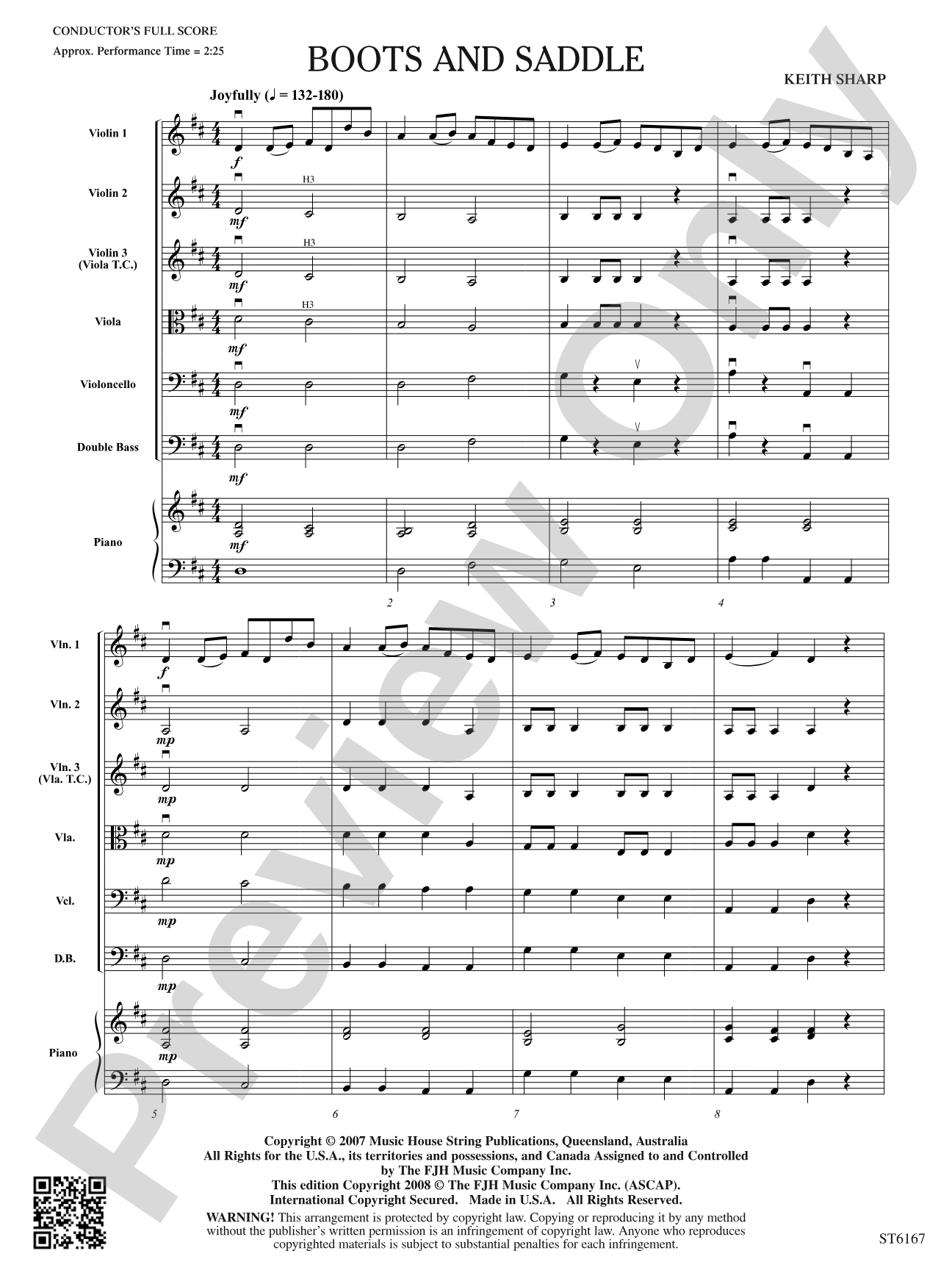
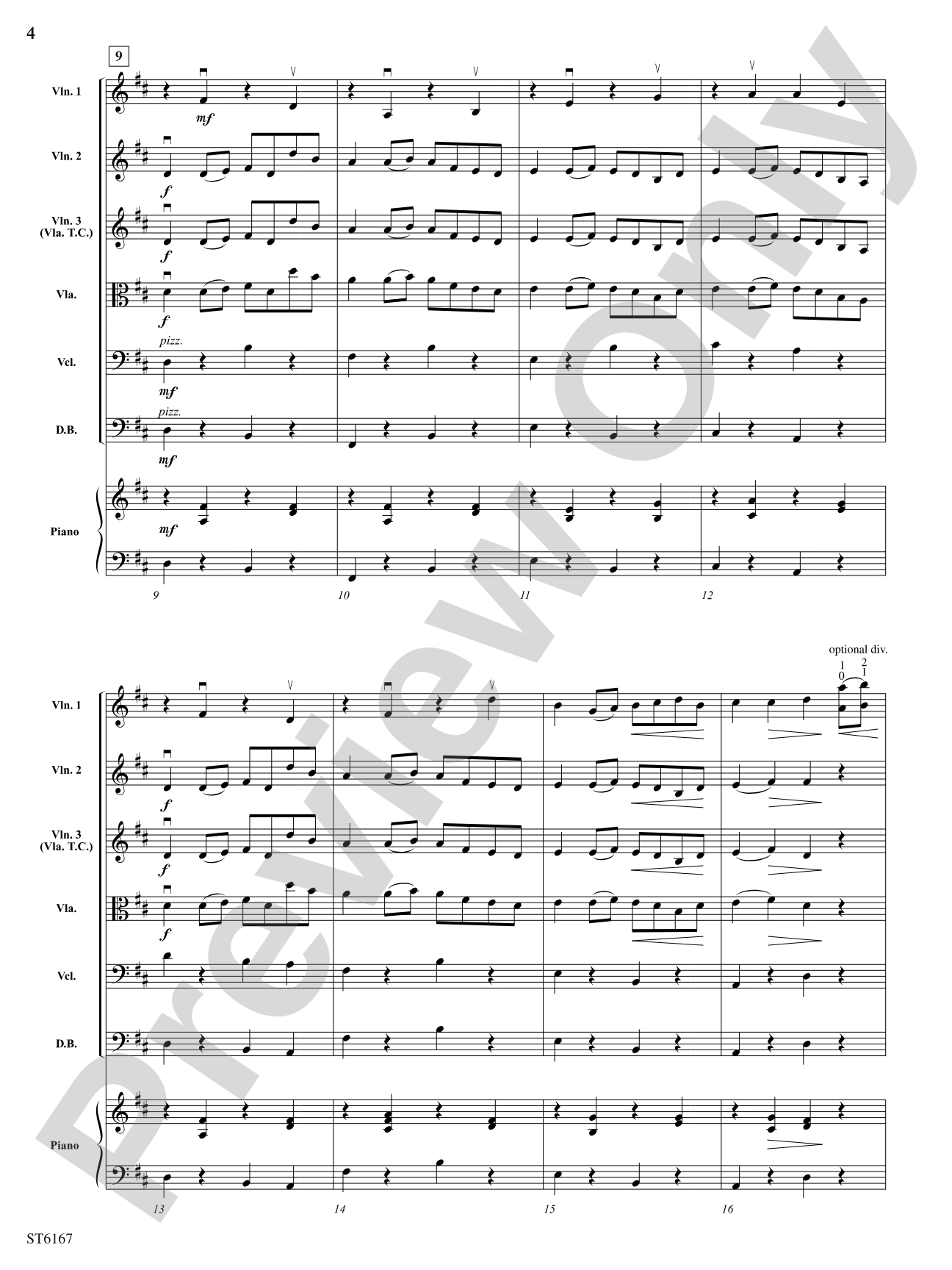
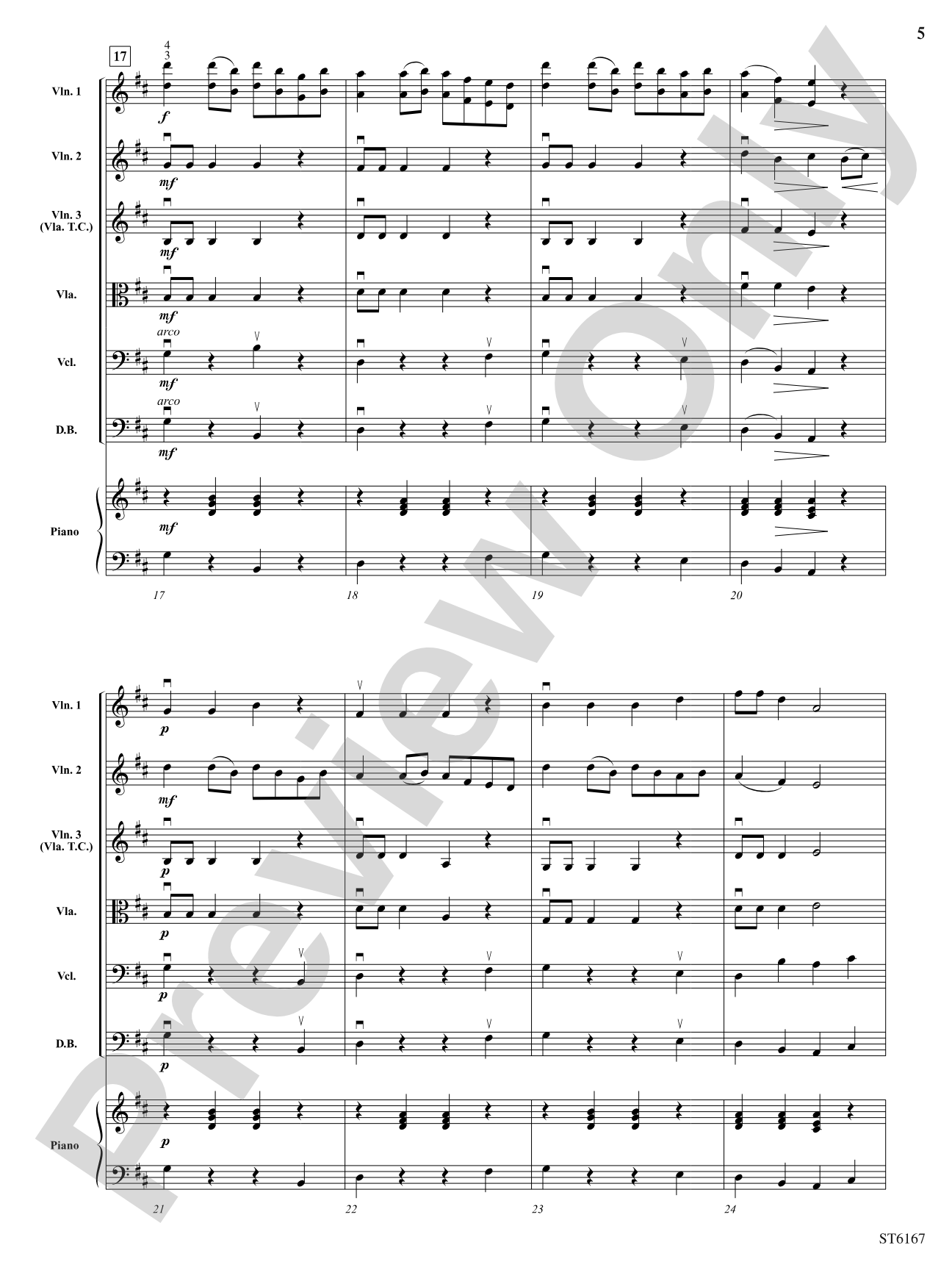
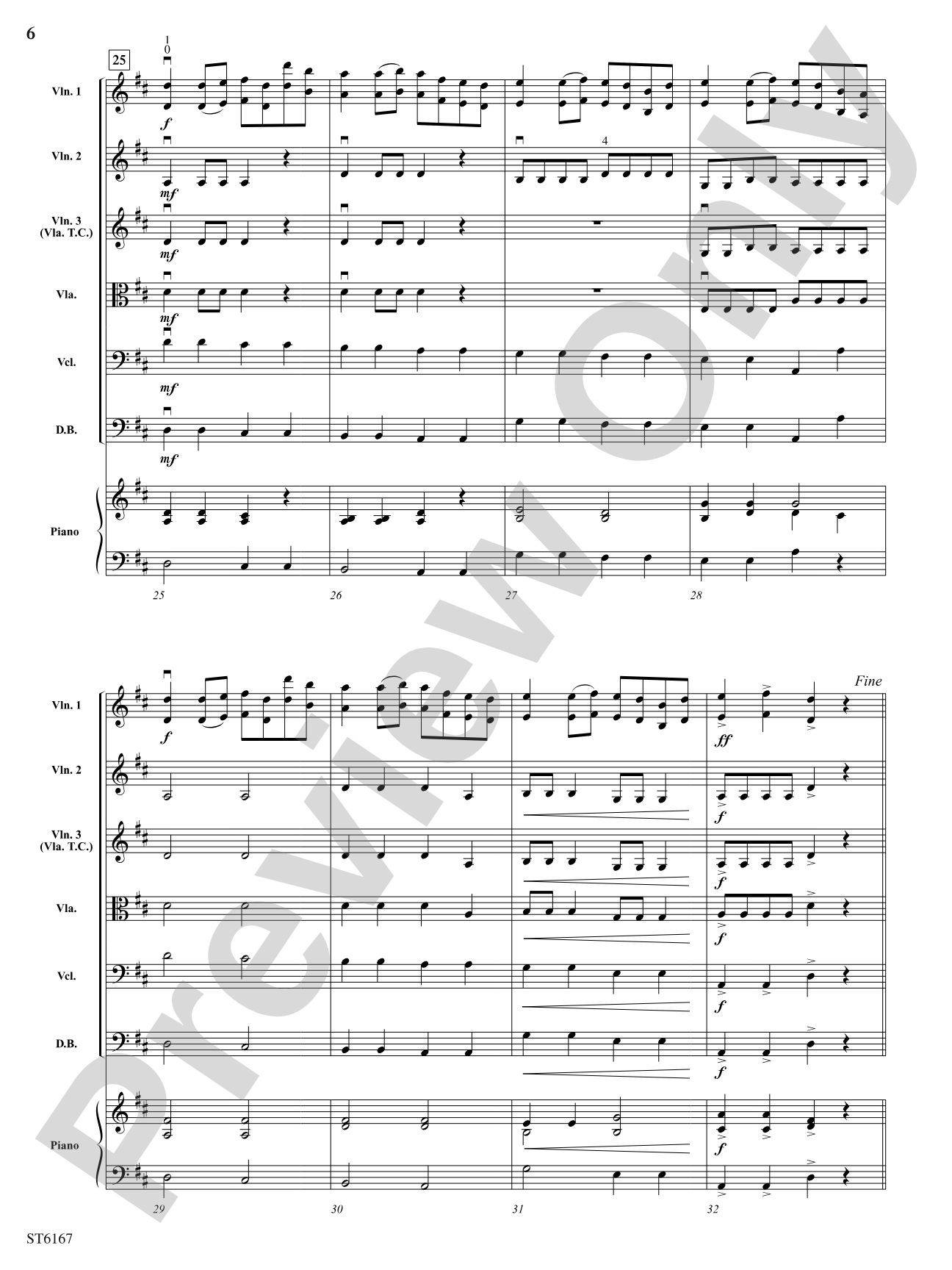
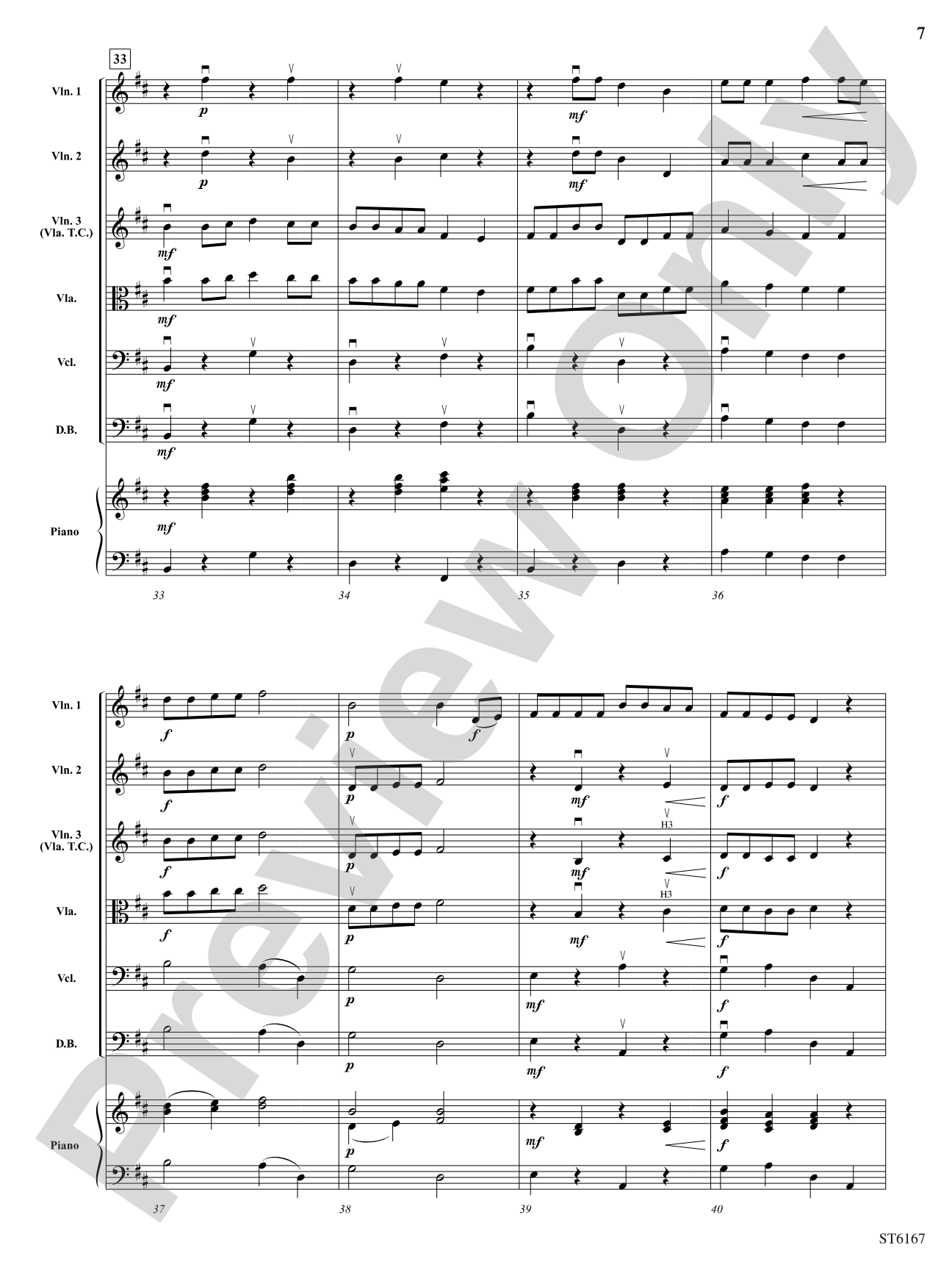
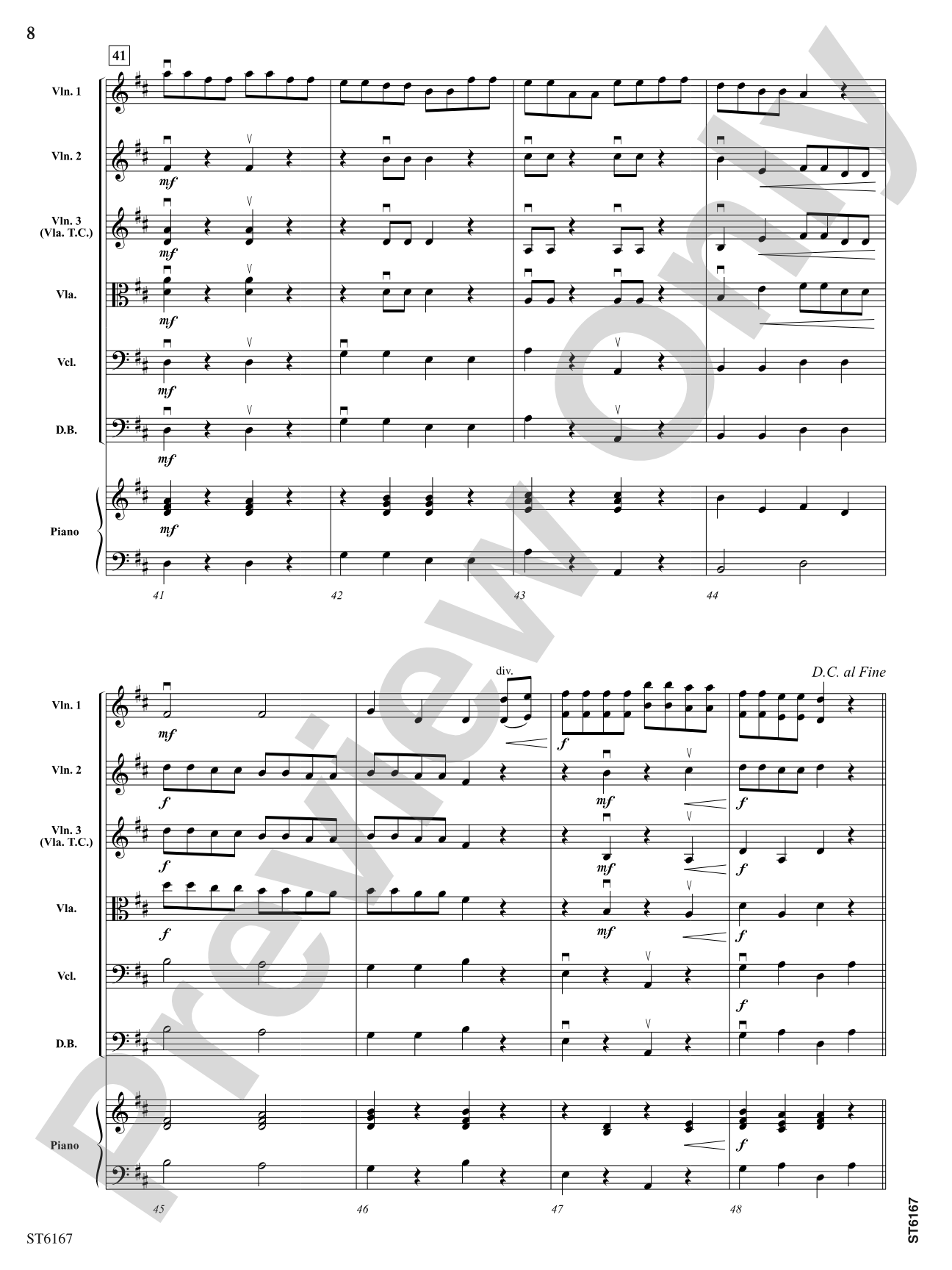
This joyful fiddle-style tune is sure to be a crowd pleaser with a fun melody and bright harmonies. An optional octave extension is included for more advanced violin players. The melody gets traded around the ensemble as this toe-tapping tune develops. Truly memorable and lots of fun!


Boots and Saddle: String Orchestra Conductor Score & Parts isn't in MakeMusic Cloud just yet...but it could be. Let us know you'd like to see it, and you'll help shape what comes next. In the meantime, start a free trial and dive into thousands of interactive titles your students can play along with today.
Request This Title
Tell us you want it.
Start Your Free Trial
Explore everything that's ready to play right now.
Sample Audio
1
Audio File
--:--
0:00
0:00
Sample Video
No sample videos found.
Additional Details
Series:
FJH Developing Strings
Publisher:
The FJH Music Company, Inc.
SKU:
98-DST6167
More about this title
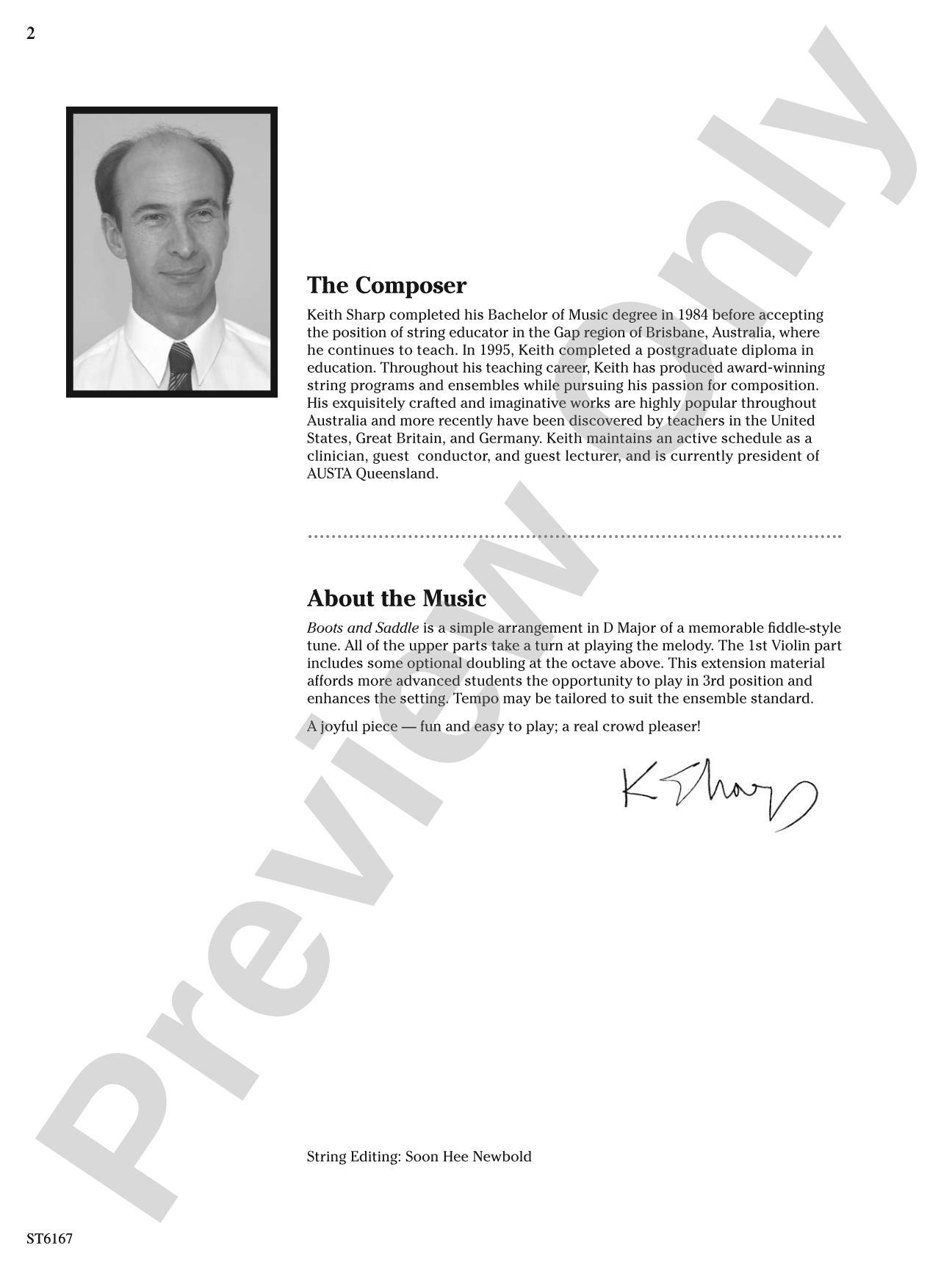
About the Composer: Keith Sharp

Keith Sharp has shaped string education in Brisbane since 1985, beginning in The Gap regional schools before moving to Brisbane State High School in 2012, where his teaching emphasizes ensemble and group playing. His gift for writing appealing, imaginative pieces for developing string players has earned international recognition; his works are published by Alfred Music and FJH Music Company and have been flagged as "Editor's Choice" in major catalogs. Sharp holds a Bachelor of Music and a Graduate Diploma of Further Education and serves as guest clinician, composer, and conductor at schools and music camps throughout Australia. He co-authored Encore on Strings: Music Maestros and is a past President of AUSTA Queensland, receiving multiple honors for his contributions to music education at both state and national levels.
Why we love this
This piece captures the spirit of American fiddle music without demanding advanced technique, making it ideal for Grade 2 orchestras ready to move beyond primary melodies into ensemble writing that feels energetic and genuine. Sharp trades the melody around the ensemble so every section gets a moment in the spotlight, building buy-in across the group. The optional octave extension gives advanced players a satisfying challenge while keeping less experienced players engaged at their own level.
What to expect
Bright, cheerful, and infectious. The melody bounces with the confidence of a traditional fiddle tune, supported by warm harmonic colors that feel contemporary without losing any of the character's folk roots. It's the kind of piece that makes audiences smile and students eager to perform.
Who it's for
Grade 2 string orchestras with solid rhythmic fundamentals and enough ensemble experience to track a melody moving from part to part. This works for student orchestras in schools, youth orchestras, and community music programs looking for accessible but rewarding contest or festival material.
How to get the most out of it
- Keep the bow strokes light and bouncy; this is fiddle music, so rhythmic clarity matters more than legato singing. A slight lift between phrases helps maintain the toe-tapping energy.
- Balance the melody line carefully as it passes between sections. The first violins, second violins, and violas each deserve equal voice when holding the tune.
- Use the harmonic support (especially from lower strings) to lock the rhythmic groove. If the cello and bass lines sit solidly underneath, the whole ensemble breathes together.
How to use it
This sits perfectly in a mixed-repertoire concert alongside more formal classical works, offering a stylistic contrast that holds audience attention. It's also an excellent choice for festival competition when you want a piece that showcases ensemble balance and rhythmic cohesion without programming something overly demanding.
Skills your students will build
- Trading melody lines between sections with clean entries and exits
- Maintaining rhythmic precision in a dance-like tempo
- Balancing a moving melody against harmonic accompaniment
- Playing fiddle-style phrasing with appropriate articulation
- Reading optional octave extensions to differentiate part difficulty within the same ensemble piece