

Boogie in the Wintertime: 2-Part Choral Octavo
Words and music by Lois Brownsey and Marti Lunn Lantz
Item: 00-PO-0007840
$2.50
Minimum order quantity: 20 copies
Pickup currently not available
Description
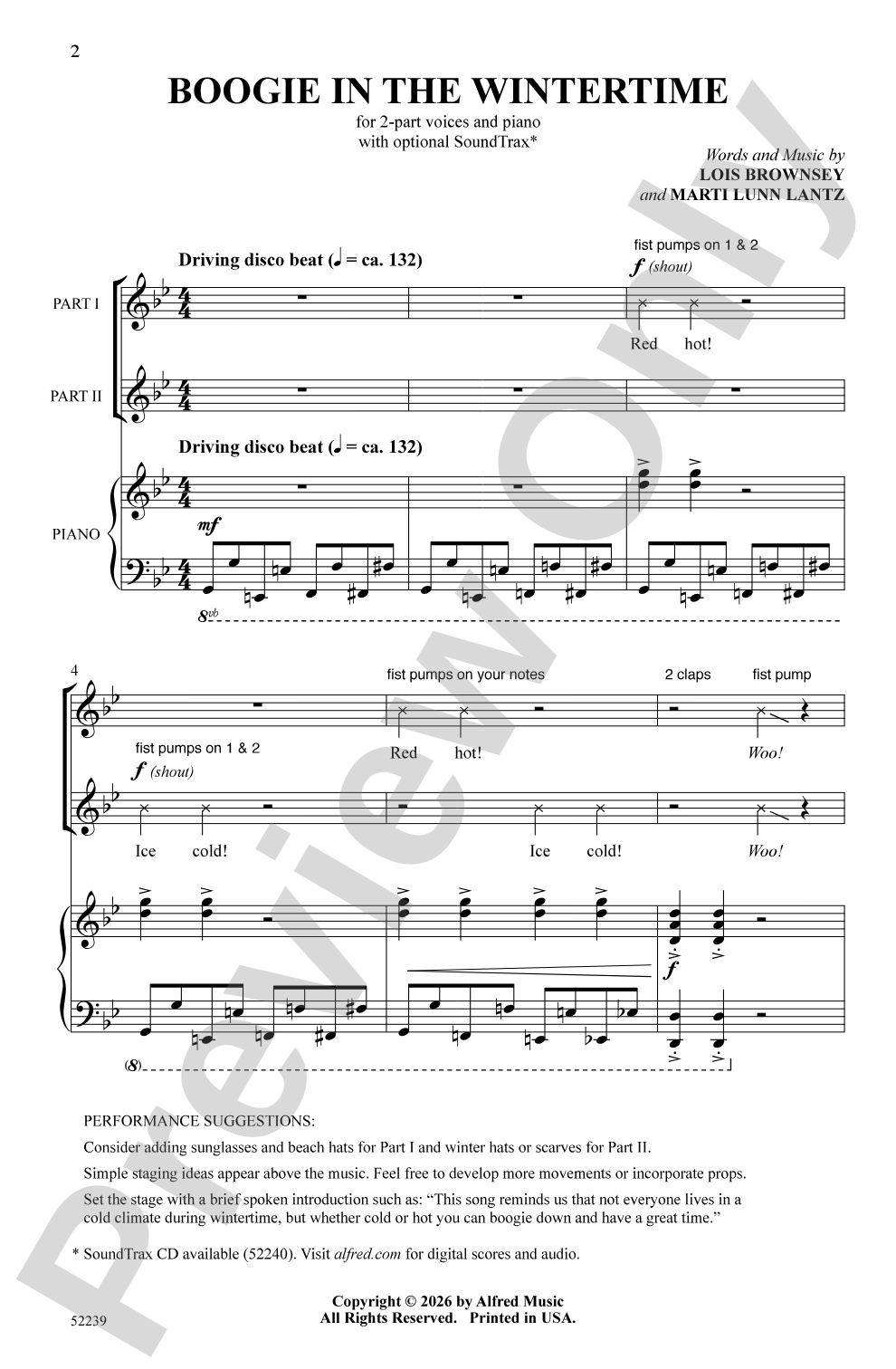
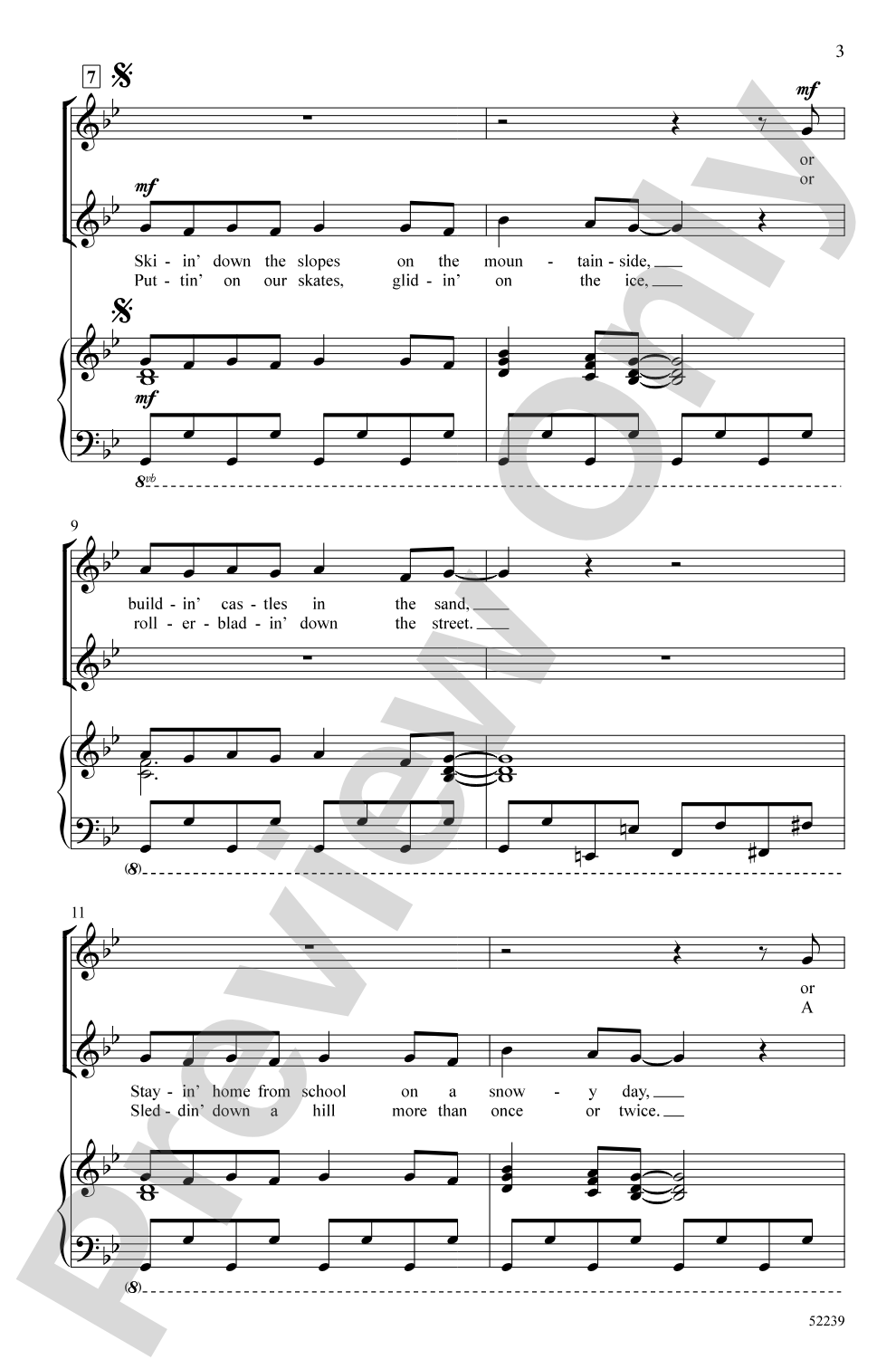
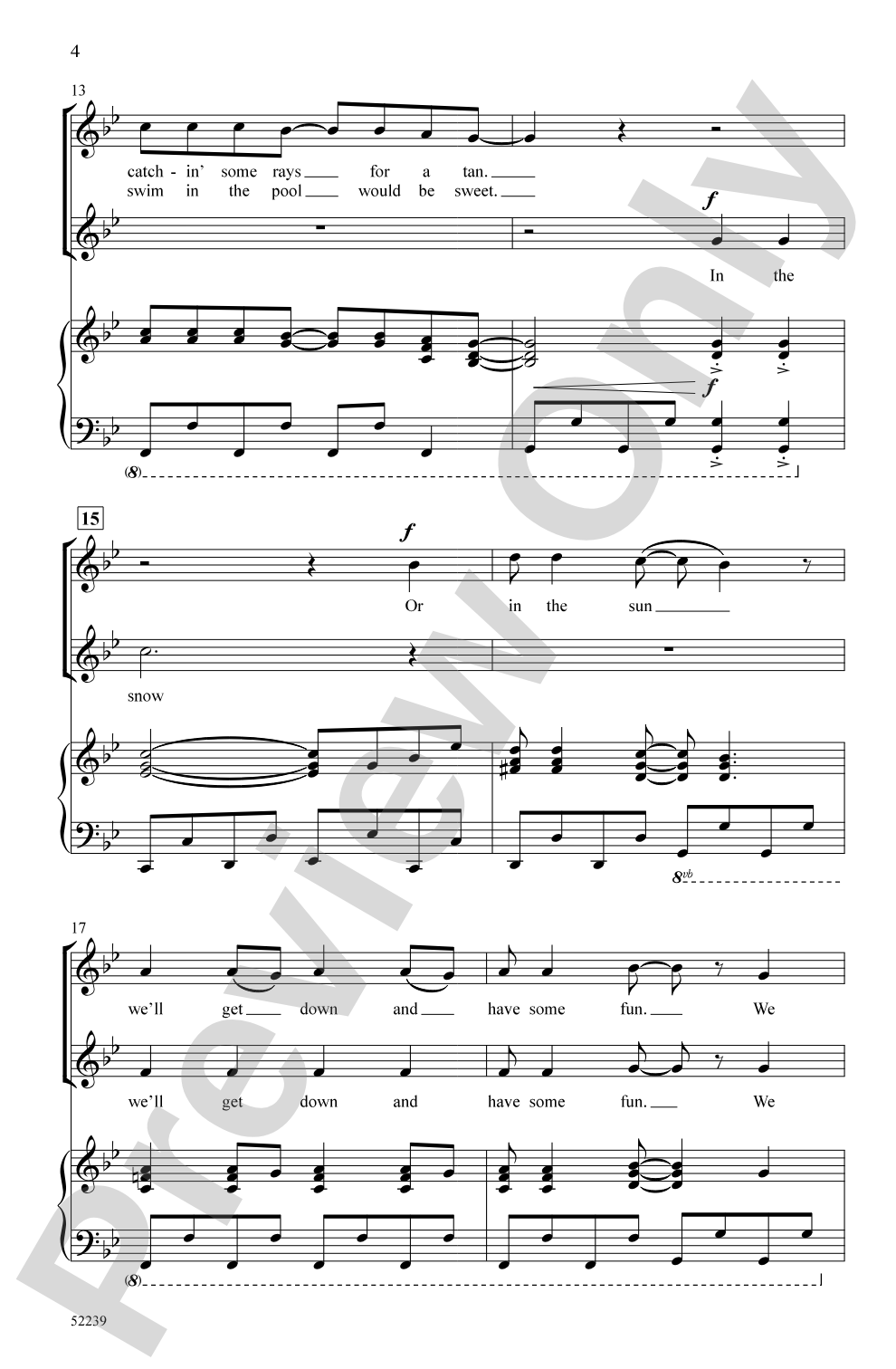
One part "red hot" and another part "ice cold," this groovy musical flashback is the ultimate wintertime hit! Part I sings about warm weather activities, while Part II chimes in with cold climate fun. The disco beat and competitive banter are guaranteed to kick your singers into high gear. Optional sunglasses and winter hats add to the fire, and some simple hand clap/fist bump choreo amps it up even more. This is the one they will be talking about long after the concert!


Boogie in the Wintertime: 2-Part Choral Octavo isn't in MakeMusic Cloud just yet...but it could be. Let us know you'd like to see it, and you'll help shape what comes next. In the meantime, start a free trial and dive into thousands of interactive titles your students can play along with today.
Request This Title
Tell us you want it.
Start Your Free Trial
Explore everything that's ready to play right now.
Sample Audio
1
Audio File
--:--
0:00
0:00
Sample Video
Additional Details
Series:
Alfred Choral Designs
Publisher:
Alfred Music
Page Count:
12
SKU:
00-PO-0007840
More about this title
About the Composer: Lois Brownsey

Lois Brownsey studied music at Temple University in Philadelphia and trained at the Guitar Workshop, immersing herself in musical theatre and live performance. Throughout the 1970s and 1990s, she performed widely as a bassist and vocalist in pop, rock, and blues ensembles across the United States and internationally before stepping back from live performance in 1997.
Working alongside her longtime collaborator Marti Lunn Lantz, Brownsey has become known for choral works that blend seasonal themes with multicultural perspectives. The pair has created numerous pieces for Alfred, ranging from novelty numbers to thoughtful seasonal compositions. Brownsey also brings advertising jingles and co-writing credits (including work with Sally K. Albrecht) to her portfolio. Today, she lives in Pennsylvania's Pocono Mountains, where she co-operates Red Rock Recording Studios with her husband, recording engineer Kent Heckman.
Why we love this
The competitive energy between the two parts keeps singers engaged and laughing, while the disco groove gives your choir a fun, high-energy moment that breaks up traditional concert programming. Directors consistently report that audiences remember this one, and singers will absolutely want to perform it again.
What to expect
A musical conversation with attitude: one part basking in imaginary sunshine while the other fires back about snowball fights and ice skating. The disco beat snaps everything into place, creating a rollicking energy that feels retro and current at the same time.
Who it's for
Choirs grades 4 and up looking for a winter concert showstopper that doesn't require elaborate staging or vocal gymnastics. Your singers need solid two-part blend and rhythmic confidence, but this is equally at home in a school concert or a community choir setting.
How to get the most out of it
- Lean into the contrasting personalities: Part I owns the "warm and confident" energy while Part II brings "cool and sassy." Rehearse them separately first so each group finds its character before blending.
- Treat the hand claps and fist bumps as rhythm section elements. Lock them in tightly so they become part of the groove rather than distractions.
- Use the recorded accompaniment to nail the disco pocket. Have singers listen to it several times before rehearsal so they internalize the beat.
- Simple staging pays off here. Even minimal movement (a shoulder shimmy, a head tilt) makes the banter between parts feel alive without overwhelming your singers.
How to use it
Position this as a midpoint energy spike in a winter concert, especially if the program otherwise skews toward carols or traditional seasonal music. It works beautifully as a palate cleanser between a quiet ballad and something lyrical, or as your finale if you want audiences leaving with smiles.
Skills your students will build
- Two-part blend and balance across sections
- Rhythmic precision in a syncopated disco groove
- Character interpretation and expressive contrast between vocal lines
- Coordination of singing with choreographed movement (hand claps, fist bumps)