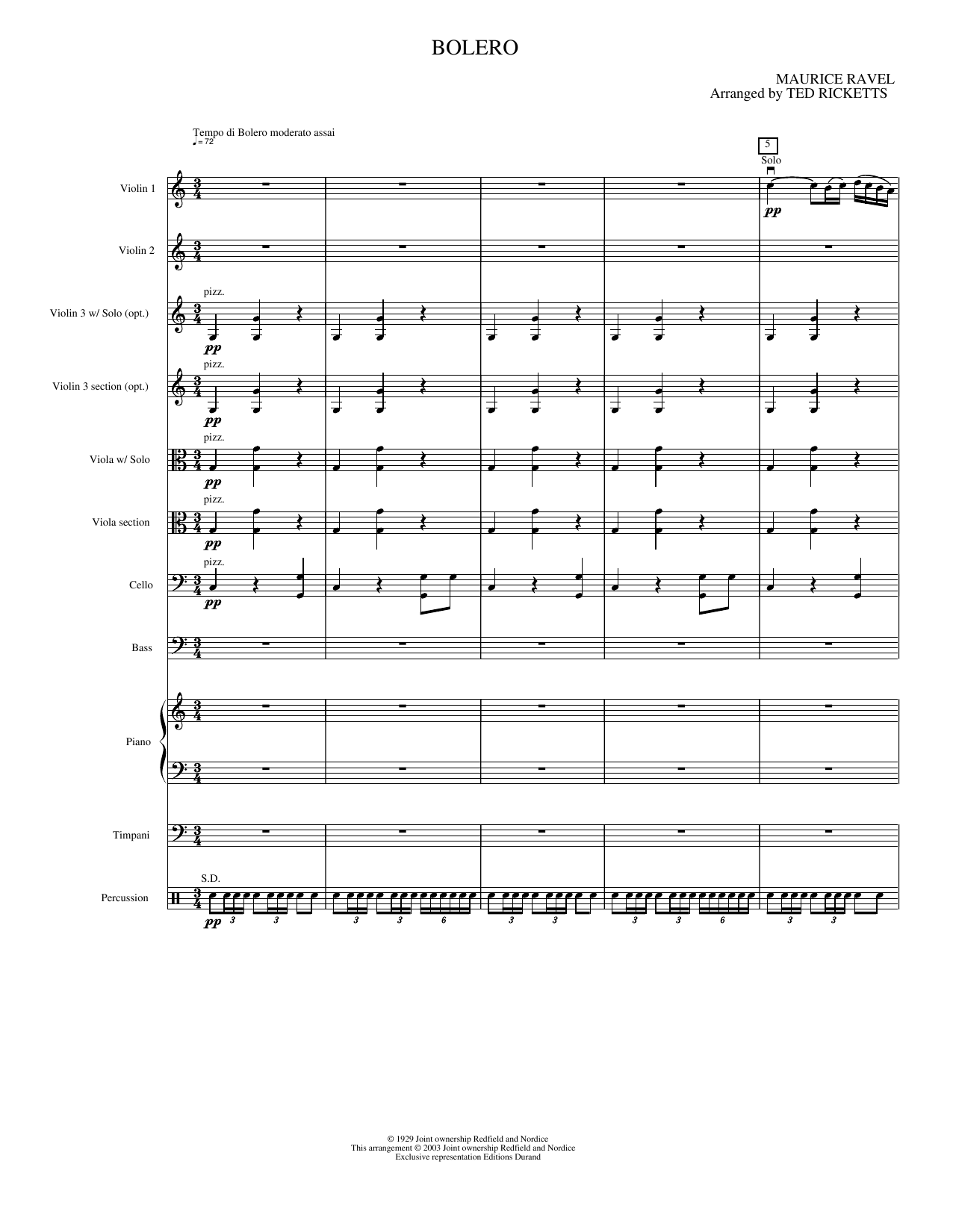
Bolero (arr. Ted Ricketts) Sheet Music Preview

Bolero (arr. Ted Ricketts): String Orchestra Conductor Score & Parts

By Maurice Ravel / Arranged by Ted Ricketts

Grade: 3-4

Item: 35-PK00444307

Digital Download
$45.00

One moment…

Description
Bolero (arr. Ted Ricketts)

Bolero (arr. Ted Ricketts): String Orchestra Conductor Score & Parts isn't in MakeMusic Cloud just yet...but it could be. Let us know you'd like to see it, and you'll help shape what comes next. In the meantime, start a free trial and dive into thousands of interactive titles your students can play along with today.

Sample Audio
No sample audio found.
Sample Video
Additional Details
Publisher: Hal Leonard
SKU: 35-PK00444307

More about this title

About the Composer: Maurice Ravel

Maurice Ravel (1875-1937) was a French composer obsessed with orchestral color and architectural precision. His music strips away Romantic excess to reveal intricate layers of timbre and rhythm, making him an essential study for any musician interested in how texture itself becomes melody.

Why we love this

Ricketts' arrangement preserves Bolero's hypnotic core while tailoring it for string players who aren't yet ready for advanced shifts or extreme technical demands. The gradual dynamic and textural build gives every section of your orchestra a moment to carry the piece, making this feel like a genuine ensemble challenge rather than a showcase for soloists.

What to expect

Hypnotic and ritualistic, like watching the same gesture repeated until it becomes almost meditative. The piece builds inexorably through orchestral layers, shifting between stillness and urgency until it arrives at something both inevitable and thrilling.

Who it's for

String orchestras working at the intermediate level who want to tackle a twentieth-century masterwork without needing advanced technique. This arrangement works equally well for honor orchestras, youth symphonies, or advanced high school ensembles seeking something beyond the standard repertoire.

How to get the most out of it

  • Nail the rhythmic ostinato in the lower strings from the start. This is the piece's foundation; any wavering in the accompaniment pattern will destabilize the entire arc.
  • Resist the urge to rush as dynamics increase. Ravel's genius lies in adding color without changing tempo. A metronomic pulse through all eight repetitions of the melody is what makes the climax land.
  • Balance the melody against the rhythm section carefully in early rehearsals. Once students hear the original orchestral recording, they'll understand why the snare drum pattern matters as much as the famous flute line.
  • Shape long phrases across multiple measures rather than pointing every entrance. String players need space to breathe and blend, especially in the lower register where much of the accompaniment sits.

How to use it

Program this as a centerpiece of a concert exploring twentieth-century approaches to classical forms, pairing it with Bartók or Stravinsky. Its length and distinctive character also make it an excellent closer for a concert that needs a definitive final statement.

Skills your students will build

  • Sustaining consistent tempo across repeated musical patterns
  • Layered listening and balance adjustments as accompaniment textures shift
  • Following conductor cues for dynamic changes unaccompanied by melodic shifts
  • Blend and intonation across divided string sections
  • Understanding how orchestration can create propulsion without changing tempo

You May Also Like