Boisdeffre: Suite Romantique, Op. 24 (Nos. 1-3) Sheet Music Preview

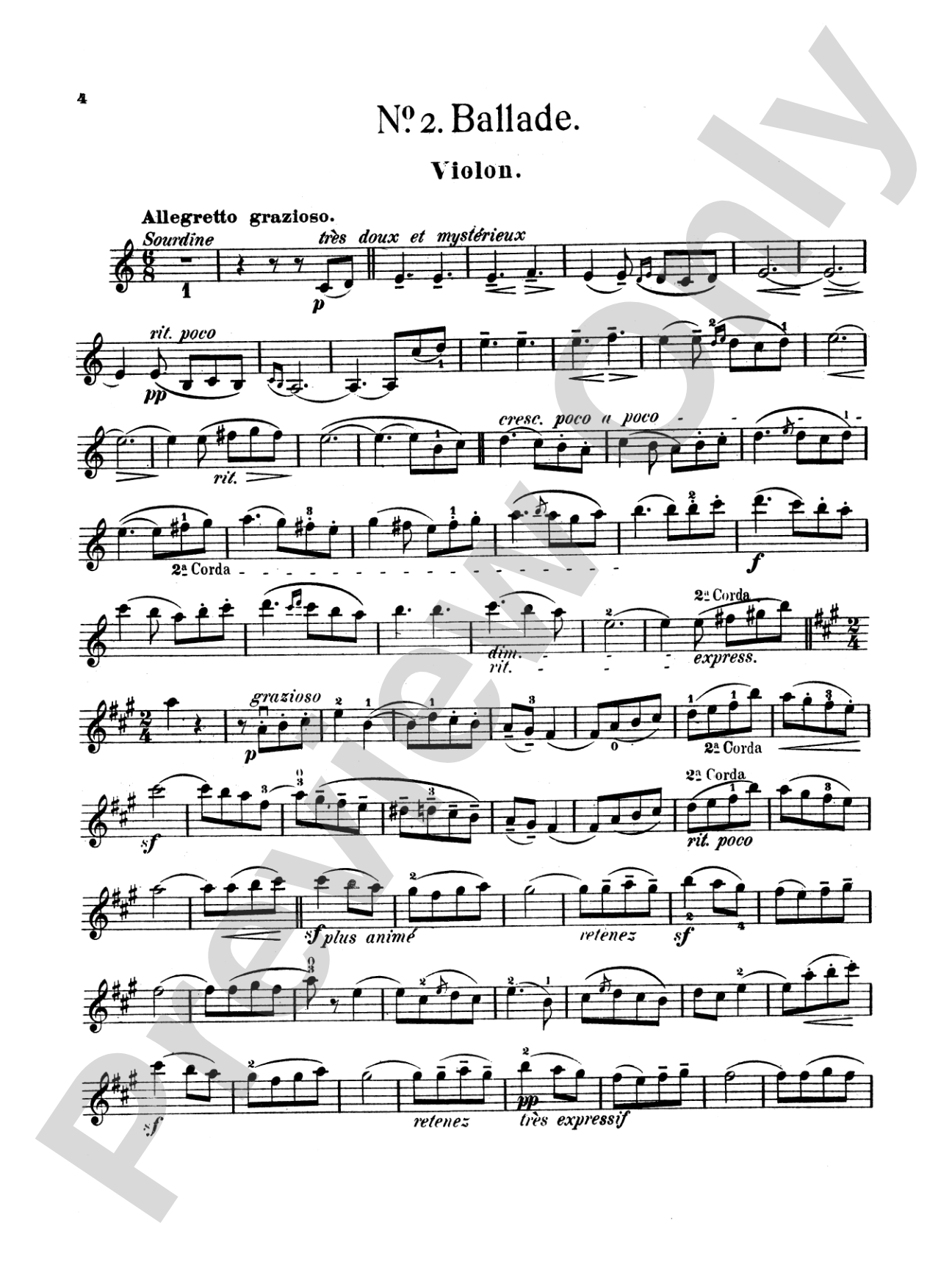
Boisdeffre: Suite Romantique, Op. 24 (Nos. 1-3)

By Rene de Boisdeffre

Item: 00-PC-0011864

Digital Download
$0.99
Description

Don't just read it, hear it, play along with it, and watch your students grow with it. In MakeMusic Cloud, Boisdeffre: Suite Romantique, Op. 24 (Nos. 1-3) comes alive with professional accompaniment, adjustable tempo, and built-in practice tools that turn solo practice into real progress.

Sample Audio
No sample audio found.
Sample Video
Additional Details
Series: Kalmus Edition
Publisher: Alfred Music
Page Count: 24
SKU: 00-PC-0011864

More about this title

About the Composer: René de Boisdeffre

René de Boisdeffre (1839-1906) was a French composer and pedagogue whose prolific output shaped violin repertoire throughout the late Romantic era. Though largely overshadowed by his more celebrated contemporaries, Boisdeffre earned respect for crafting idiomatic, musically substantive works that balanced technical brilliance with genuine lyricism. His compositions remain staples of the French violin tradition, valued for their elegant phrasing and clear harmonic language.

Boisdeffre's teaching at the Paris Conservatoire informed his compositional voice. He understood the instrument deeply and wrote music that challenged students while remaining performable by gifted amateurs. The Suite Romantique stands as a representative achievement, showcasing the refined taste and structural clarity that defined his best work.

Why we love this

These three movements sit perfectly between pedagogical utility and genuine concert material. The writing is genuinely Romantic without becoming overwrought, and Boisdeffre's sensitivity to the violin's lyrical voice means students never feel they're playing through finger exercises dressed up as music. For a recital that needs substance without excessive technical demands, this suite delivers real depth.

What to expect

The Suite Romantique embodies the refined sensibility of the Second Empire salon, all elegant gesture and introspective beauty. Each movement unfolds with the unhurried grace of a confident speaker sharing something personal rather than performing for applause. The violin voice itself feels naturally singable, as though Boisdeffre imagined a vocalist's breath and phrasing first, then transcribed the result for strings.

Who it's for

Advanced pre-conservatory and conservatory-level violinists preparing for recitals or competitions will find substantial repertoire that sits comfortably within their reach. Teachers seeking authentic Romantic repertoire that showcases growth without transcendent technical demands will appreciate the Suite Romantique's musicality and clarity. Performers building a solo program that balances virtuosity with lyrical expression benefit from Boisdeffre's gift for memorable melody.

How to get the most out of it

  • Shape phrases with long bow strokes in the lyrical passages; resist the temptation to subdivide and lose the line's continuity.
  • Balance the violin's melodic role against the piano accompaniment by listening for the harmonic support rather than dominating it.
  • Observe tempo flexibility at cadential moments to let the Romantic rhetoric breathe, but return to a steady pulse for the transitional passages.
  • Pay attention to dynamic nuance within individual phrases; Boisdeffre often layers expressive detail that disappears if you play entire sections at one level.

How to use it

These three movements work as a complete suite or as individual pieces depending on the program's arc. Programming the full Suite Romantique showcases sustained characterization and gives a violinist fifteen minutes of substantial repertoire without feeling padded. Alternatively, extract one movement to pair with a Baroque sonata and a contemporary work, letting Boisdeffre's lyricism anchor the middle of a mixed program.

Skills your students will build

  • Singing long melodic lines across register shifts and string crossings
  • Coordinating bow control with vibrato to shape dynamic contours within phrases
  • Balancing the violin voice against an active piano accompaniment
  • Interpreting Romantic-era expression marks and realizing harmonic context through tone color
  • Sustaining musical momentum across sectional forms while respecting moment-to-moment rubato

You May Also Like