
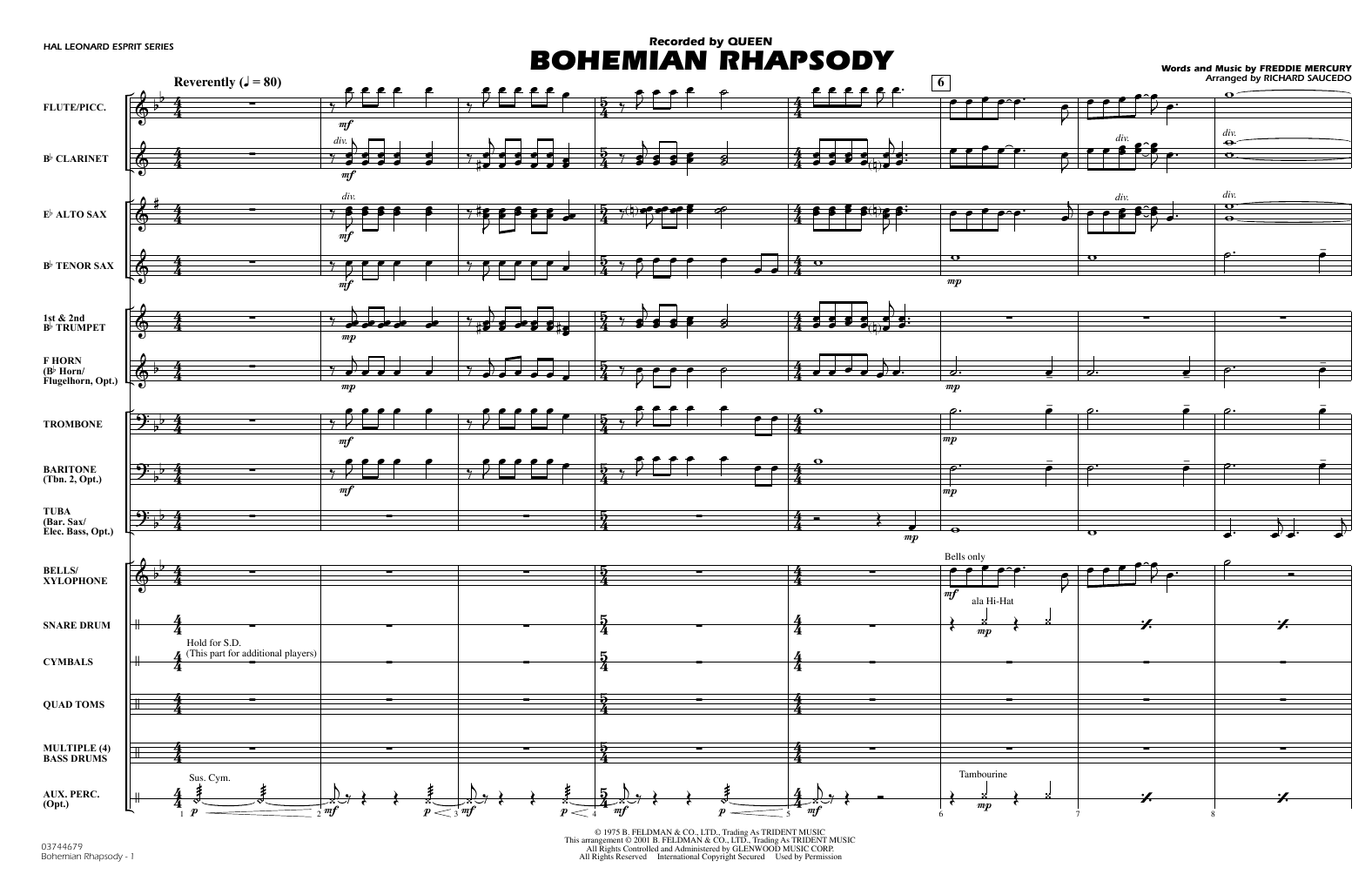

Bohemian Rhapsody (arr. Richard Saucedo): Marching Band Conductor Score & Parts
As performed by Queen / Arranged by Richard Saucedo
Grade: 3
Item: 35-PK01603442
$65.00
Pickup currently not available
Buy Extra Parts (Digital PDF Download)
Parts Added to Cart!
Description
Practically a show within itself, this production number from the group Queen includes a variety of tempos and styles from sensitive ballad to driving rock. A very dramatic statement for the field!


Bohemian Rhapsody (arr. Richard Saucedo): Marching Band Conductor Score & Parts isn't in MakeMusic Cloud just yet...but it could be. Let us know you'd like to see it, and you'll help shape what comes next. In the meantime, start a free trial and dive into thousands of interactive titles your students can play along with today.
Request This Title
Tell us you want it.
Start Your Free Trial
Explore everything that's ready to play right now.
Sample Audio
No sample audio found.
Sample Video
No sample videos found.
Additional Details
Publisher:
Hal Leonard
SKU:
35-PK01603442
More about this title
About the Artist: Queen
Queen emerged from the British rock scene in the 1970s as one of the most innovative and theatrical bands in popular music history. Led by the incomparable vocalist Freddie Mercury, the band synthesized opera, hard rock, and pop into a distinctive sound that demanded dramatic interpretation and technical precision from every performer.
For music educators, Queen's catalog presents a compelling case study in compositional ambition and arrangement possibilities. The band's willingness to shift between genres, dynamics, and moods within single pieces has made their music particularly rewarding for student musicians learning to navigate complex musical narratives.
Why we love this
Saucedo's arrangement captures the cinematic scope of the original without losing the driving energy that makes this song unforgettable. This isn't a track that competes with other selections on a concert program; it commands the field with genuine theatrical presence. Your students will feel the weight of delivering something genuinely ambitious.
What to expect
You're conducting something with real theatrical stakes. The arrangement opens with vulnerability and intimacy, then gradually builds into unrelenting rock energy before pulling back again. Your band will experience genuine dynamic range and the satisfaction of delivering a complete musical narrative from beginning to end.
Who it's for
Directors programming for groups that have developed competent sight-reading skills and aren't intimidated by stylistic genre shifts. The Grade 3 difficulty makes this accessible to high school bands at a solid level, though advanced middle school groups with strong ensemble cohesion may tackle it successfully.
How to get the most out of it
- Establish clear sectional cues with the brass and woodwind groups before attempting full tempo runs. The transitions between ballad and rock sections can feel awkward if players aren't anchored to the conductor's vision.
- Record a click track that reflects the tempo shifts built into the arrangement. Marching band students often benefit from hearing the pulse mapped out beforehand, especially when moving between the sensitive passages and heavier sections.
- Pay close attention to the dynamics during the softer ballad material. Pianissimo passages on the field require much more work from your performers than the same dynamics in a concert hall, and the payoff is worth the rehearsal investment.
- Balance the percussion section carefully so that mallets and battery serve the emotional content rather than simply driving volume. The piece shifts between intimate and explosive; your rhythm section should reflect that range.
How to use it
Consider placing this as a closer or second-to-last selection on your spring or championship concert. A production number of this caliber works best when your audience has already settled in and when your band has proven their fundamentals earlier in the program. It also serves as an excellent capstone for a unit on contemporary arranging or genre fusion.
Skills your students will build
- Shifting between multiple tempos and meter feels within a single piece
- Balancing volume and intensity across extended dynamic ranges
- Executing style transitions from ballad to rock idioms
- Maintaining ensemble cohesion through complex arrangement changes
- Reading and responding to detailed conductor cues indicating structural sections