Bohemian Rhapsody (arr. Frank de Vreeze) Sheet Music Preview

Bohemian Rhapsody (arr. Frank de Vreeze): SSAA Choral Octavo

As performed by Queen / Arranged by Frank de Vreeze

Item: 35-DS00497100

Digital Download
$2.99
Description

Bohemian Rhapsody (arr. Frank de Vreeze): SSAA Choral Octavo isn't in MakeMusic Cloud just yet...but it could be. Let us know you'd like to see it, and you'll help shape what comes next. In the meantime, start a free trial and dive into thousands of interactive titles your students can play along with today.

Sample Audio
No sample audio found.
Sample Video
Additional Details
Publisher: Hal Leonard
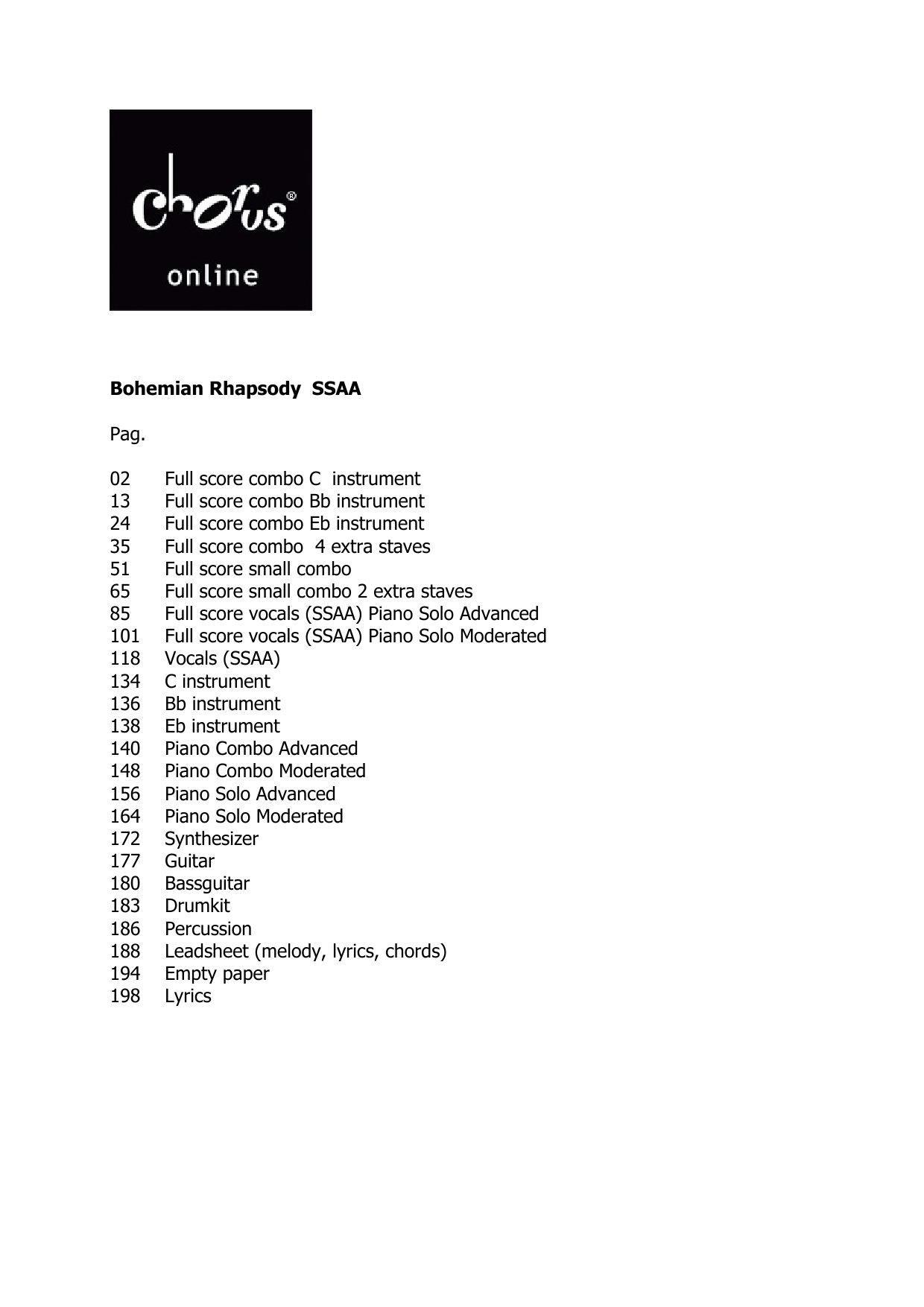
Page Count: 198
SKU: 35-DS00497100

More about this title

About the Artist: Queen

Queen emerged from the British rock scene in the 1970s as masters of theatrical, genre-bending composition. Led by Freddie Mercury's unparalleled vocal presence, the band synthesized rock, opera, music hall, and pop into a sound that rewarded both technical precision and fearless interpretive risk. Their work has become essential repertoire in music education, offering students access to sophisticated harmonic language, complex structural forms, and the emotional directness of genuinely great songwriting.

For choral directors, Queen's catalog presents a particular gift: songs built on strong melodic hooks and harmonic progressions that translate beautifully to ensemble writing. The band's influence spans generations of musicians, making their work immediately engaging for students while offering enough musical substance to sustain serious study and rehearsal.

Why we love this

Frank de Vreeze's arrangement captures the epic scope and emotional architecture of "Bohemian Rhapsody" while making it genuinely singable for women's voices. Rather than attempting a note-for-note recreation, the arranger preserves what makes the song structurally distinctive—the sectional shifts, the building intensity, the unexpected harmonic turns—while allowing each voice part to breathe and shine. Directors looking for a piece that commands attention and rewards rehearsal time will find this hits exactly right.

What to expect

Operatic grandeur gives way to driving rock energy in this arrangement, which spans from intimate and fragile to anthemic and soaring. The piece inhabits multiple emotional landscapes—melancholy, bombast, vulnerability, triumph—without ever losing the thread that connects them. Singing it feels like being given permission to be both theatrical and genuine at once.

Who it's for

Women's choirs seeking repertoire with genuine star power and structural sophistication. This arrangement works for advanced high school choirs, college ensembles, and community choirs comfortable with vocal ranges that span a full octave and harmonic writing that demands accurate intonation.

How to get the most out of it

  • Balance the operatic section carefully so the harmonic complexity reads clearly; this isn't the moment for blend to mean homogeneity. Each voice part's independence matters.
  • Shape the dynamic arc across the entire piece rather than treating each section in isolation. The journey from the opening piano section through the rock climax requires sustained pacing and intentional control.
  • Let the rock section find its groove. These measures benefit from a slight rhythmic swagger; precision matters, but so does the feeling that the ensemble is driving the song forward.
  • Pay close attention to vowel sounds during the quick runs and passagework to maintain clarity without sacrificing musicality.

How to use it

This works beautifully as a pops or contemporary concert centerpiece, particularly when you want to elevate the artistic ambition of a program without leaving your core audience behind. The song's theatrical DNA also makes it a strong choice for spring concerts focused on musical theater or contemporary repertoire, or as a closing number when you want to send the audience out energized.

Skills your students will build

  • Sustaining dramatic tension across sectional shifts and key changes
  • Balancing independent voice parts with harmonic accuracy in complex progressions
  • Transitioning between lyrical and rock-inflected musical styles within a single piece
  • Managing dynamic control and phrasing in a piece that spans a full octave
  • Interpreting style markers that call for both operatic technique and contemporary edge

You May Also Like