Bohemian Rhapsody (arr. Frank de Vreeze) Sheet Music Preview

Bohemian Rhapsody (arr. Frank de Vreeze): SSAATB Choral Octavo

As performed by Queen / Arranged by Frank de Vreeze

Item: 35-DS00497092

Digital Download
$2.99
Description

Bohemian Rhapsody (arr. Frank de Vreeze): SSAATB Choral Octavo isn't in MakeMusic Cloud just yet...but it could be. Let us know you'd like to see it, and you'll help shape what comes next. In the meantime, start a free trial and dive into thousands of interactive titles your students can play along with today.

Sample Audio
No sample audio found.
Sample Video
Additional Details
Publisher: Hal Leonard
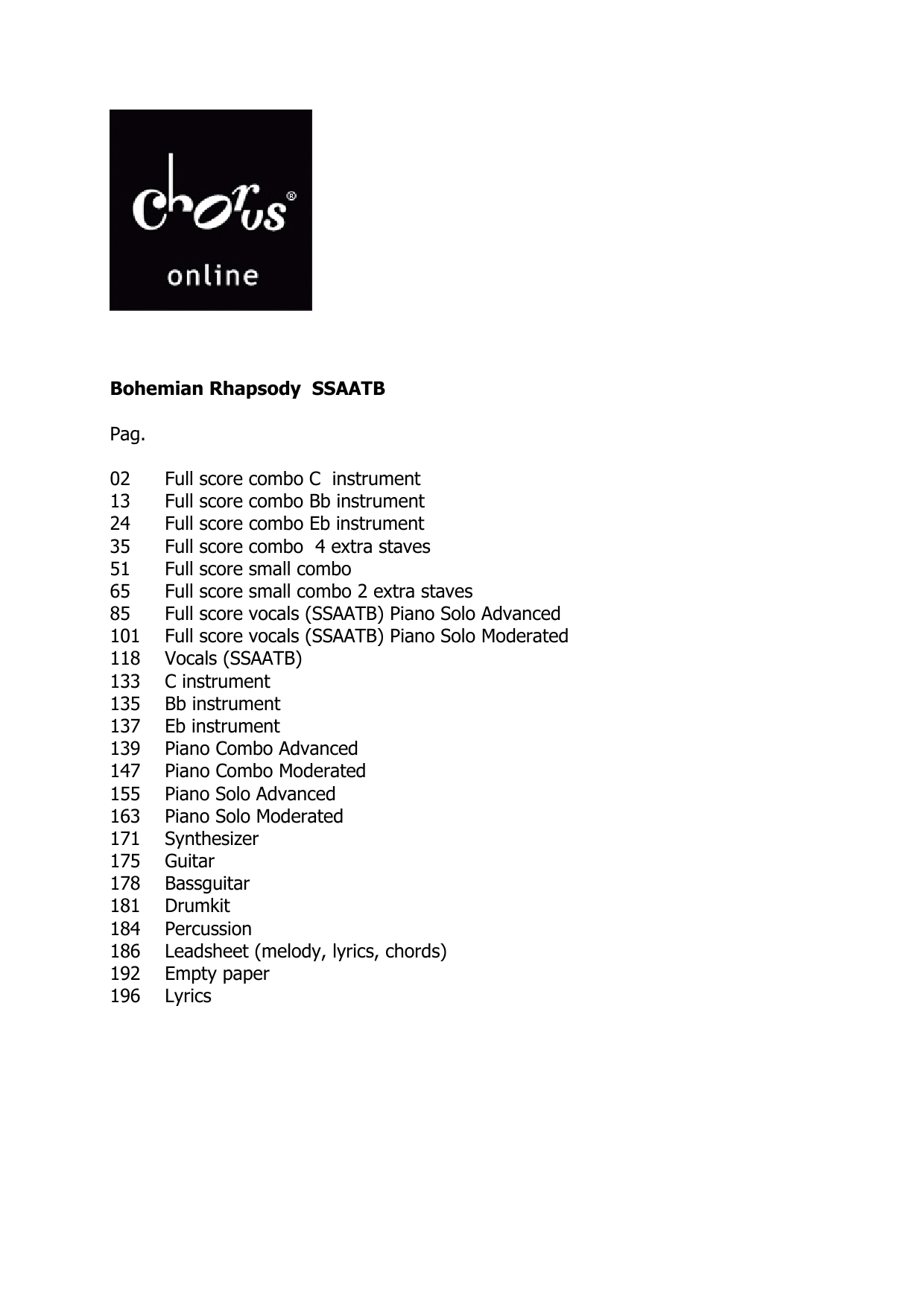
Page Count: 196
SKU: 35-DS00497092

More about this title

About the Artist: Queen

Queen emerged from the British rock scene in the 1970s as one of the era's most inventive and ambitious bands. Fronted by the incomparable Freddie Mercury, the group became known for their operatic ambitions, genre-defying compositions, and theatrical live performances that pushed the boundaries of what rock music could encompass.

Why we love this

Frank de Vreeze's arrangement captures the cinematic scope of the original while making it genuinely singable for mixed voices. The 196-page score allows directors to preserve the song's legendary drama and unexpected key changes without sacrificing the accessibility that keeps singers engaged and audiences captivated.

What to expect

Walking through this piece is like conducting a mini-opera with rock credentials. You'll move from intimate ballad moments through lush harmonic complexity into driving, rhythmically intense sections that demand precision and confidence from every singer.

Who it's for

This arrangement works for choirs comfortable with mixed voicing and ready to tackle ambitious pop repertoire with real artistic stakes. It appeals to directors seeking a showstopper that audiences recognize while offering singers genuine musical challenge.

How to get the most out of it

  • Balance the narrative flow across the opera, ballad, and rock sections by adjusting dynamics across rehearsals rather than trying to solve everything at once.
  • Work through the harmonic transitions carefully; these key shifts are less about tempo changes and more about clarity of voice leading.
  • Emphasize the rhythmic precision during the harder rock passages; looseness here will undercut the arrangement's theatrical impact.
  • Record yourself conducting a run-through early, then listen for blend issues in the upper voices during the operatic sections.

How to use it

Place this near the end of a concert as your closer or opening set piece; it's substantial enough to anchor either position. The recognizability makes it excellent for recruiting new singers while the arranging craft keeps serious musicians satisfied.

Skills your students will build

  • Maintaining clarity across rapid key modulations
  • Sustaining dramatic tension through extended formal sections
  • Balancing rock rhythm vocabulary with choral blend
  • Collaborative musicianship when different sections carry contrasting material

You May Also Like