

Boëllmann: Suite Gothique, Op. 25: Organ Sheet
By Léon Boëllmann
Item: 00-PK-0002954

$7.99
Pickup currently not available
Buy Extra Parts (Digital PDF Download)
| Product | Price | Quantity |
|---|---|---|
| Boëllmann: Suite Gothique, Op. 25 | $0.99 | |
| Boëllmann: Suite Gothique, Op. 25 | $0.99 | |
| Boëllmann: Suite Gothique, Op. 25 | $0.99 | |
| Boëllmann: Suite Gothique, Op. 25 | $0.99 |
Parts Added to Cart!
Related Items
Suite Gothique, Opus 25: Organ Sheet |
$7.99
|
View |
Description
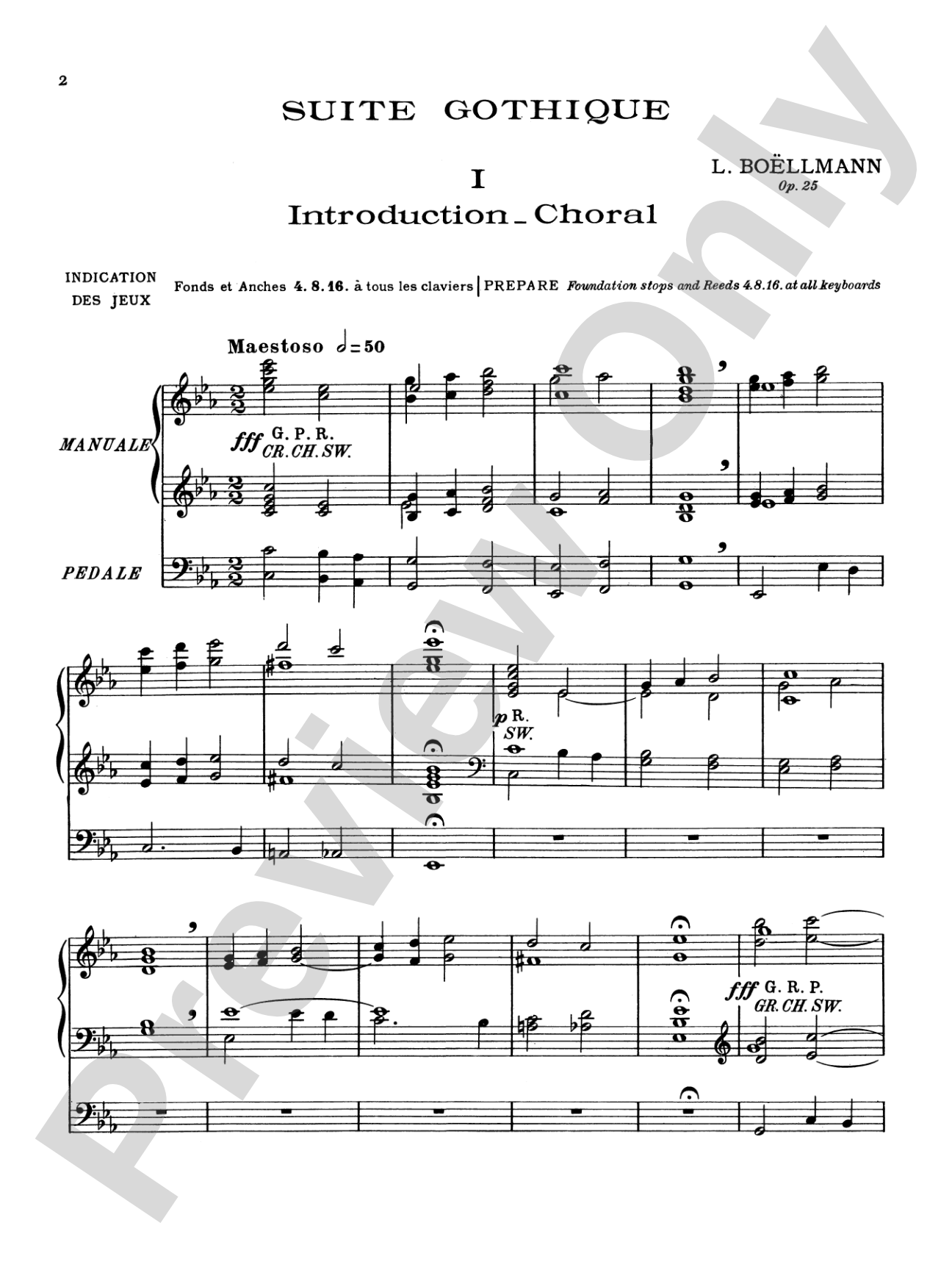
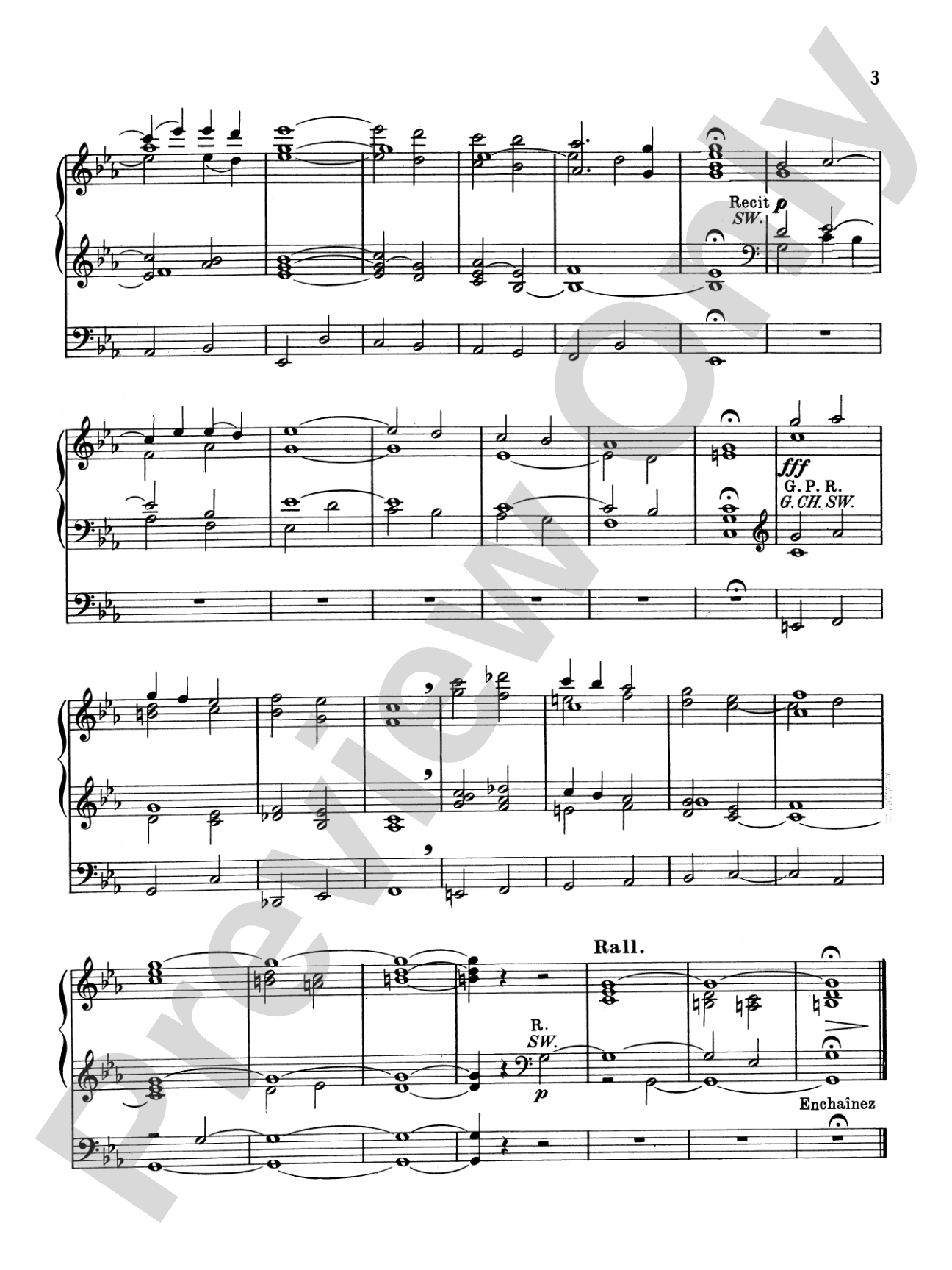
The Suite Gothique (Opus 25) for organ was written by Leon Boellmann in 1895, and consists of four movements: Introduction - Choral (C Minor), Menuet Gothique (C Major), Prière à Notre-Dame (A-flat Major), and Toccata (C Minor) which is the most famous part of this work. "Prière à Notre-Dame" and "Toccata" are Federation Festivals 2016-2020 selections.


Don't just read it, hear it, play along with it, and watch your students grow with it. In MakeMusic Cloud, Boëllmann: Suite Gothique, Op. 25: Organ Sheet comes alive with professional accompaniment, adjustable tempo, and built-in practice tools that turn solo practice into real progress.
Open in the Player
Jump straight in and assign it today.
Start Your Free Trial
Open this title and explore the full library in minutes.
Sample Audio
No sample audio found.
Sample Video
No sample videos found.
Additional Details
Series:
Kalmus Edition
Publisher:
Alfred Music
Page Count:
24
SKU:
00-PK-0002954
More about this title
About the Composer: Leon Boëllmann
Leon Boëllmann (1862, 1897) was a French organist and composer who spent most of his career at the Saint-Seurin Basilica in Bordeaux. Though he died at just 34, he left behind a significant body of organ work that combines the harmonic language of late Romanticism with the structural clarity of classical forms. His compositions remain staples of the organ repertoire, valued for their musicality and technical craft.
Why we love this
The Suite Gothique balances architectural grandeur with genuine lyricism across its four movements, giving organists a complete recital work that showcases both technical command and interpretive depth. The Toccata's durability in festival competitions speaks to its musical substance, it commands attention through rhythm and color rather than empty display. Programming this suite signals serious musicianship while remaining accessible to accomplished high school or college-level organists.
What to expect
The Suite Gothique unfolds with the solemnity and ornamentation of its namesake tradition, moving from austere chorale writing to courtly elegance, intimate devotion, and finally virtuosic exuberance. Its harmonic language, colored by chromatic voice-leading and unexpected modulations, gives the work a Romantic sensibility that feels both grand and deeply personal.
Who it's for
This suite is ideal for organists working at the intermediate-advanced level who are ready for sustained technical demands across multiple movements. Students preparing for festival competitions, recitals, or church performances will find both the individual movements and the complete work valuable additions to their repertoire.
How to get the most out of it
- Shape the Introduction and Choral with attention to phrase breathing; the opening material establishes a contemplative mood that requires space between sections rather than relentless forward motion.
- Approach the Menuet Gothique with a clear sense of harmonic color through registration changes. The shift from C Minor to C Major is architectural, not incidental.
- Bring out the cantabile line in "Prière à Notre-Dame" through careful balance of manual and pedal; the accompaniment should support without obscuring the melodic voice.
- In the Toccata, establish a rock-solid foundation with the pedal line before adding manual figuration. Lock the rhythm section early in rehearsal, then layer the faster passages once the pulse is secure.
How to use it
Program the complete suite as a concert centerpiece, or use individual movements as standalone recital pieces. The "Prière à Notre-Dame" and "Toccata" work particularly well as festival selections or as contrasting items within a longer organ program.
Skills your students will build
- Pedal independence and technical facility across multiple registers
- Large-scale form awareness across four connected movements
- Registration planning and tonal color control
- Harmonic language of late Romantic French organ music
- Balancing accompaniment textures with sustained melodic lines