Boehm: Organ Works Sheet Music Preview

Boehm: Organ Works

By Georg Boehm

Item: 00-PC-0002887

Digital Download
$0.99
Description
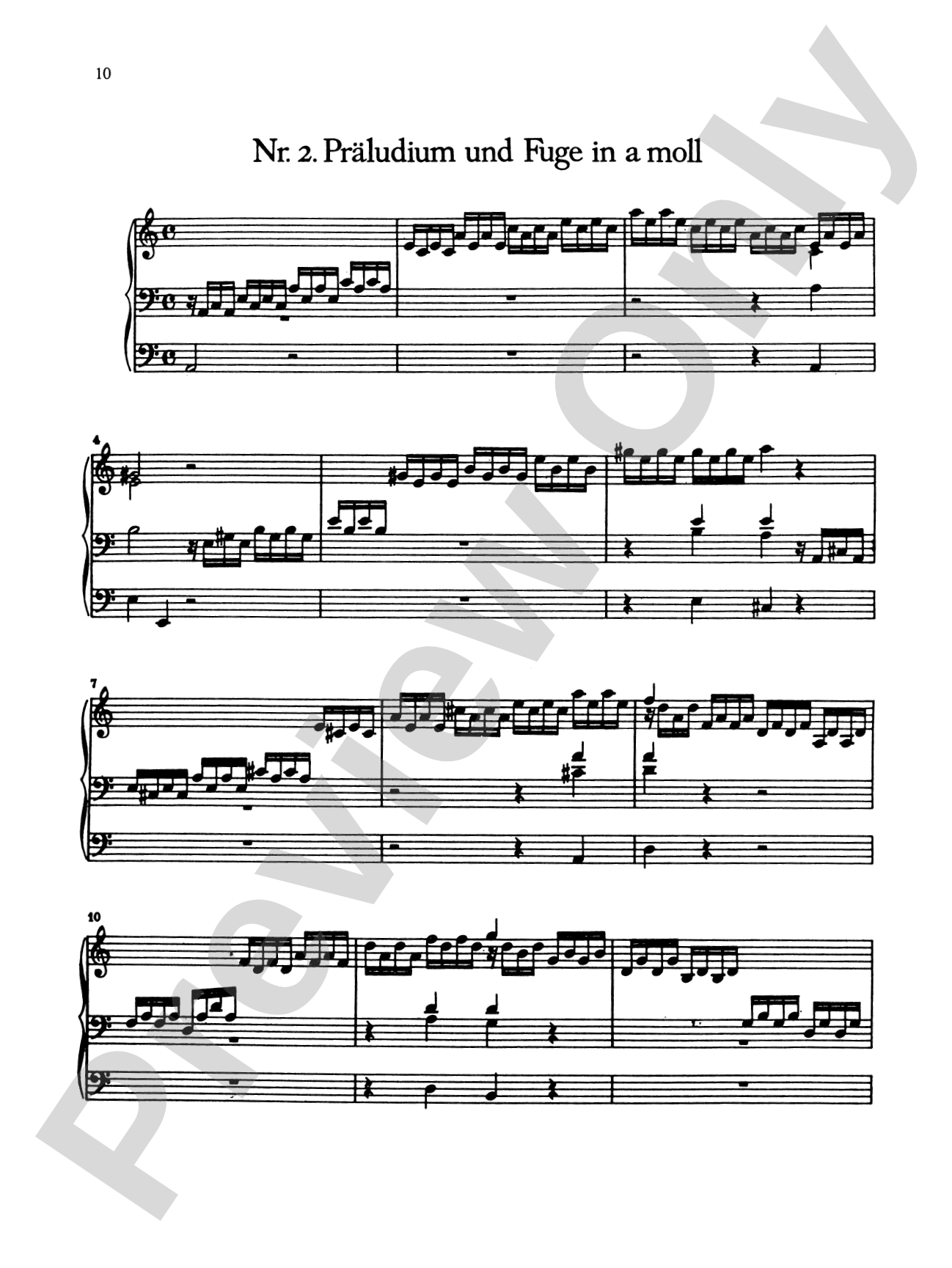
This Kalmus edition features 37 original organ compositions for organ. Some are for manuals only, and will work nicely on piano or harpsichord. Included are preludes and fugues, suites, and partitas on familiar hymn tunes. A most useful collection. 160 pages.

Don't just read it, hear it, play along with it, and watch your students grow with it. In MakeMusic Cloud, Boehm: Organ Works comes alive with professional accompaniment, adjustable tempo, and built-in practice tools that turn solo practice into real progress.

Sample Audio
No sample audio found.
Sample Video
Additional Details
Series: Kalmus Edition
Publisher: Alfred Music
Page Count: 160
SKU: 00-PC-0002887

More about this title

About the Composer: Georg Boehm

Georg Boehm (1661-1733) was a German Baroque organist and composer whose keyboard works bridged the north German organ tradition and the emerging galant style. Active primarily in Lüneburg, Boehm developed a reputation as a virtuoso performer and influential teacher, shaping the musical landscape of northern Germany during a formative period in keyboard music. His students included Wilhelm Friedemann Bach, the eldest son of J.S. Bach, cementing his role in the lineage of Baroque keyboard pedagogy.

Boehm's compositions demonstrate technical facility across multiple forms, from intricate fugal writing to approachable suite movements. His willingness to work with hymn tunes and familiar melodies made his music accessible to both professional musicians and serious amateurs, a philosophy that remains relevant to contemporary organ study and church music programming.

Why we love this

This collection gives organists a direct line to a less-performed corner of the Baroque repertoire without the harmonic density or extreme technical demands of some contemporaries. The inclusion of pieces for manuals only opens the collection to pianists and harpsichordists seeking Baroque material with idiomatically keyboard-friendly textures, making it genuinely versatile for studio or church programming.

What to expect

Buoyant and elegant, with the clarity of northern German Baroque style tempered by graceful melodic lines and accessible harmonic progressions. These works breathe steadily, never overwhelming the player with contrapuntal complexity, yet they reward careful attention to voice independence and phrase shape.

Who it's for

Organists seeking Baroque repertoire beyond the canonical Bach and Buxtehude, particularly those interested in hymn-tune variations and formal structures that bridge earlier and later Baroque aesthetics. Pianists and harpsichordists can draw on the manual-only pieces as authentic Baroque keyboard material that does not require pedalboard facility.

How to get the most out of it

  • Test manual-only pieces on piano or harpsichord first if you're unfamiliar with Boehm's voice-leading; the keyboard idiom translates cleanly when touch and phrasing honor Baroque speech patterns.
  • Approach the preludes and fugues as models of structural clarity rather than virtuosic display; Boehm favors functional harmony and balanced proportions over extreme technical display.
  • In hymn-tune-based movements, let the familiar melody anchor your interpretation and guide articulation choices; the variations and counterpoint serve the tune, not the reverse.
  • Pay attention to manual indications in organ works; they signal texture and registration intent, even when you're adapting the piece for harpsichord or piano.

How to use it

Boehm's hymn-tune partitas fit naturally into church services and recitals focused on chorale literature or congregational music; the preludes and fugues work well as recital openers or interludes that anchor a program thematically without demanding the full architectural weight of larger Baroque cycles. A single prelude and fugue or suite movement can serve as an accessible encore or as teaching material that introduces students to Baroque form without the steepest learning curve.

Skills your students will build

  • Reading baroque keyboard notation and manual indications
  • Interpreting single-line and multi-voice textures on keyboard
  • Understanding prelude and fugue form at the baroque level
  • Variation technique applied to familiar hymn melodies
  • Balance between functional harmony and voice independence
  • Adapting organ works for piano or harpsichord

You May Also Like