
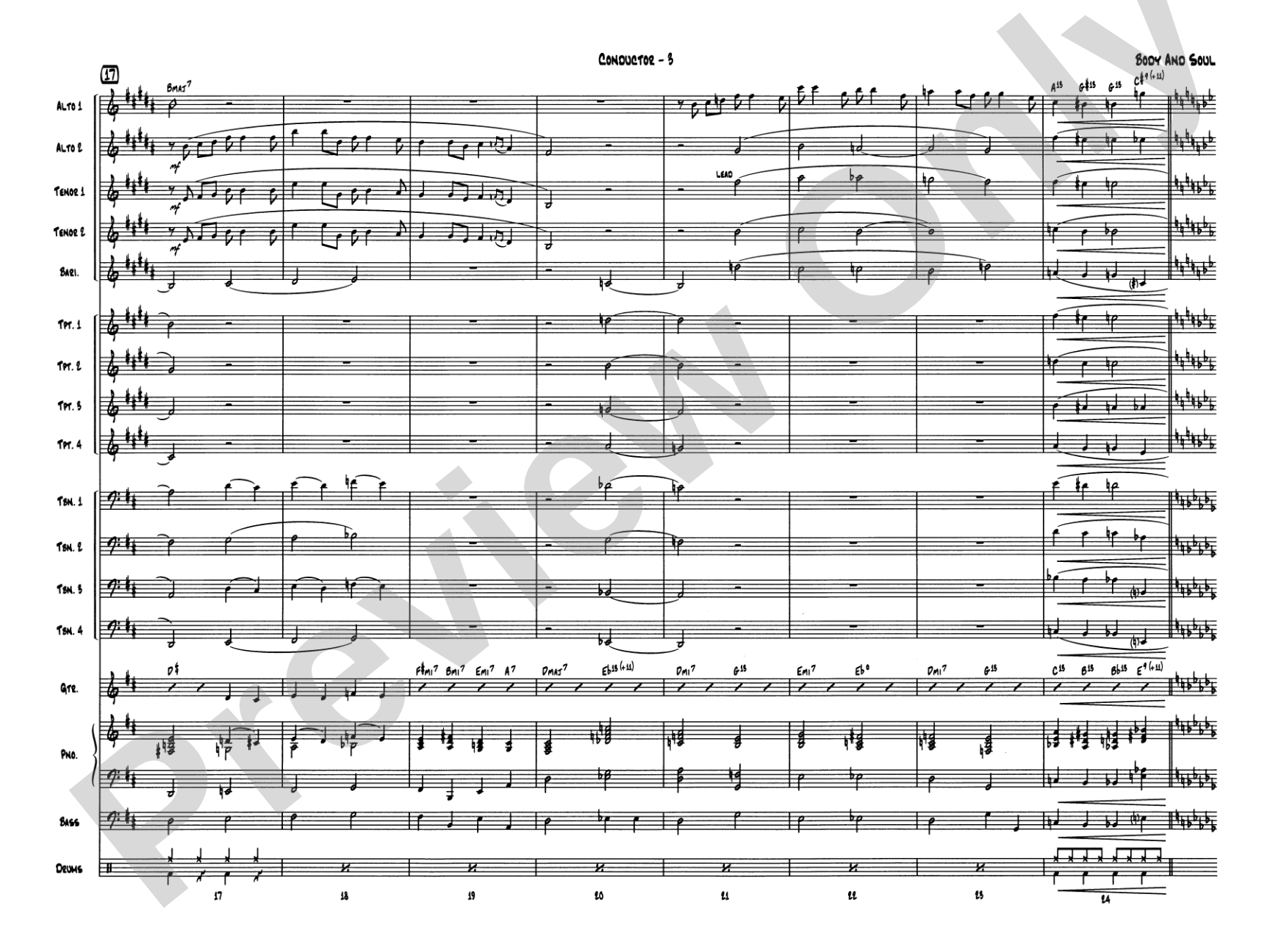
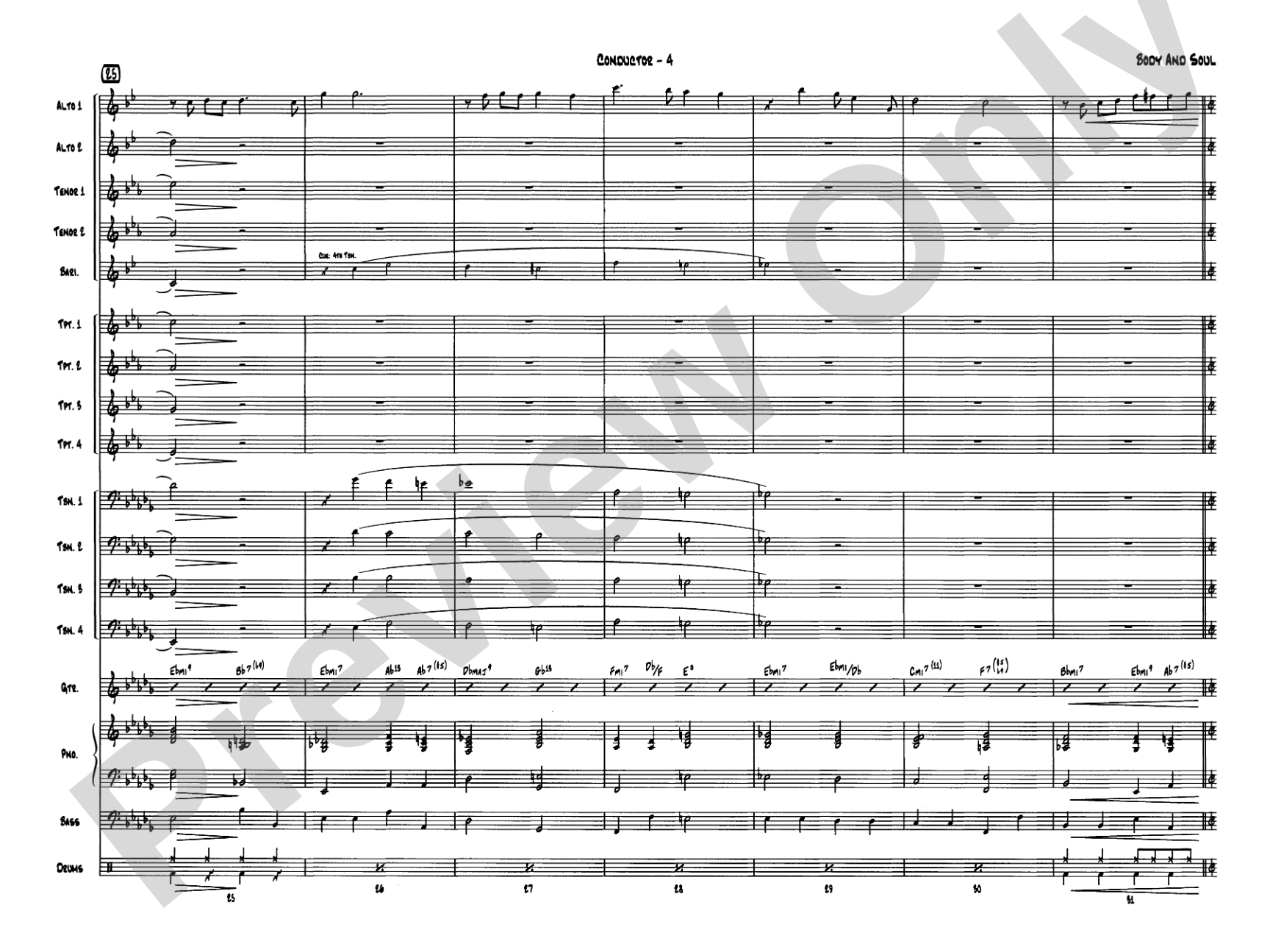
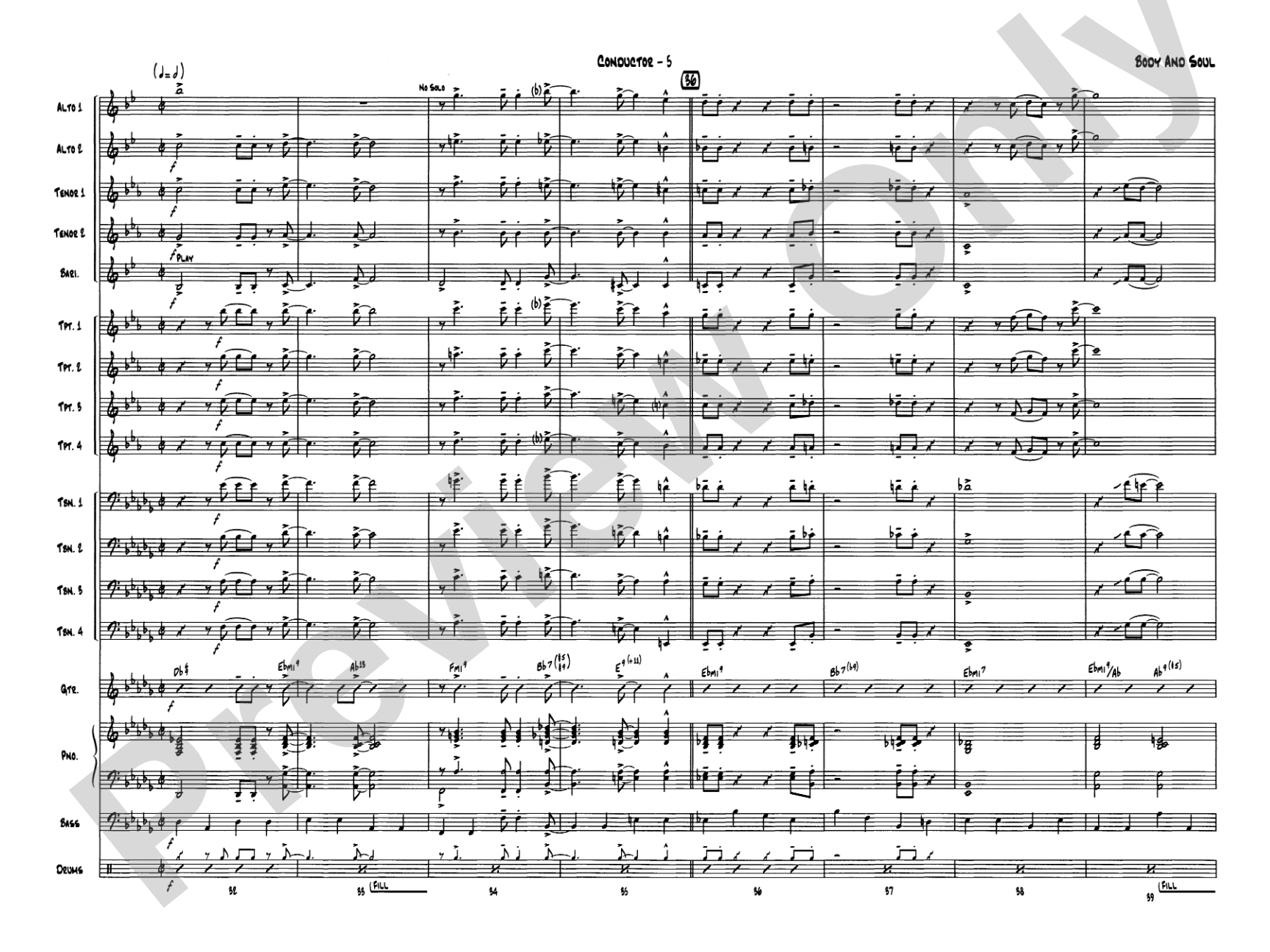
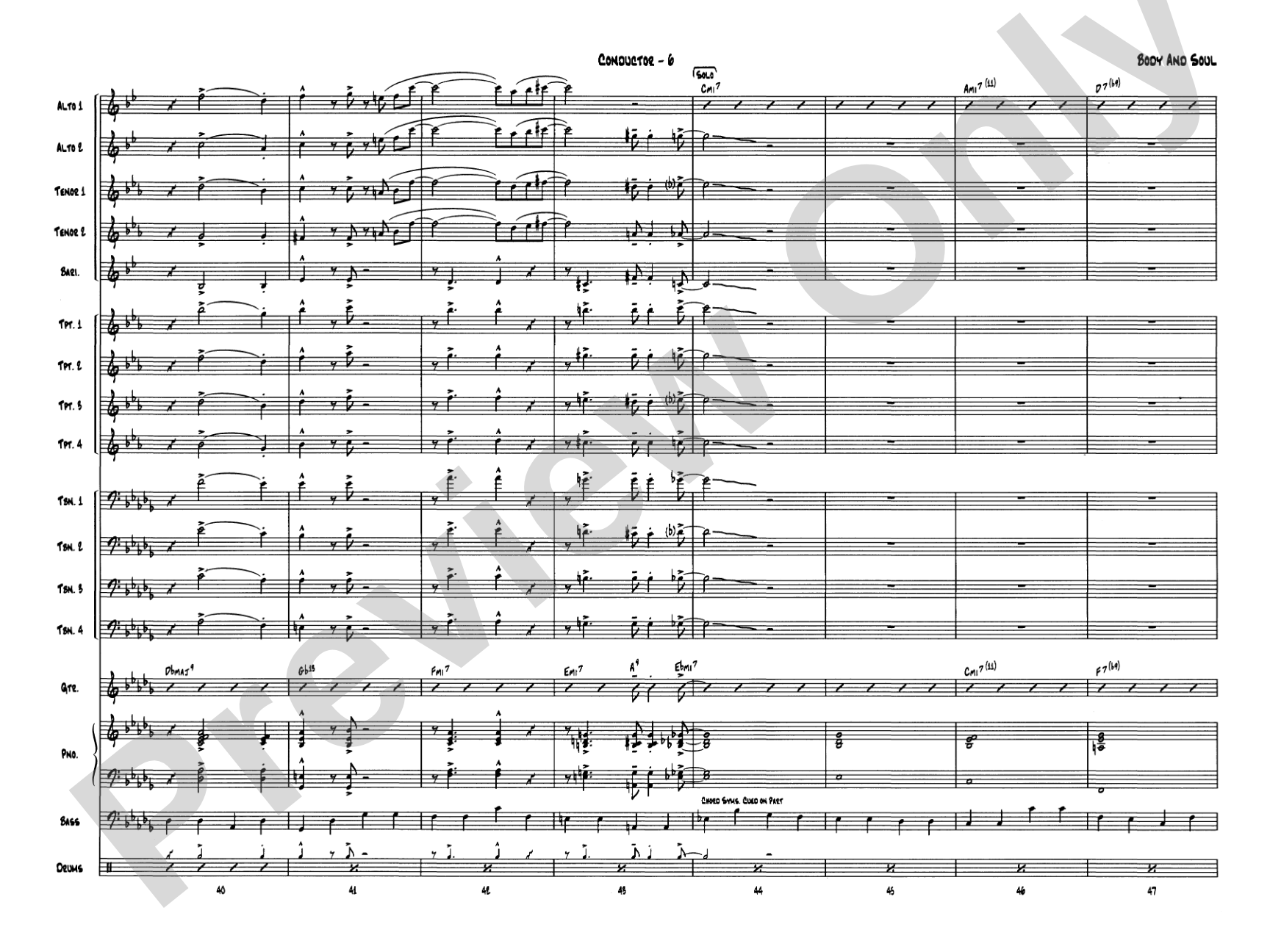
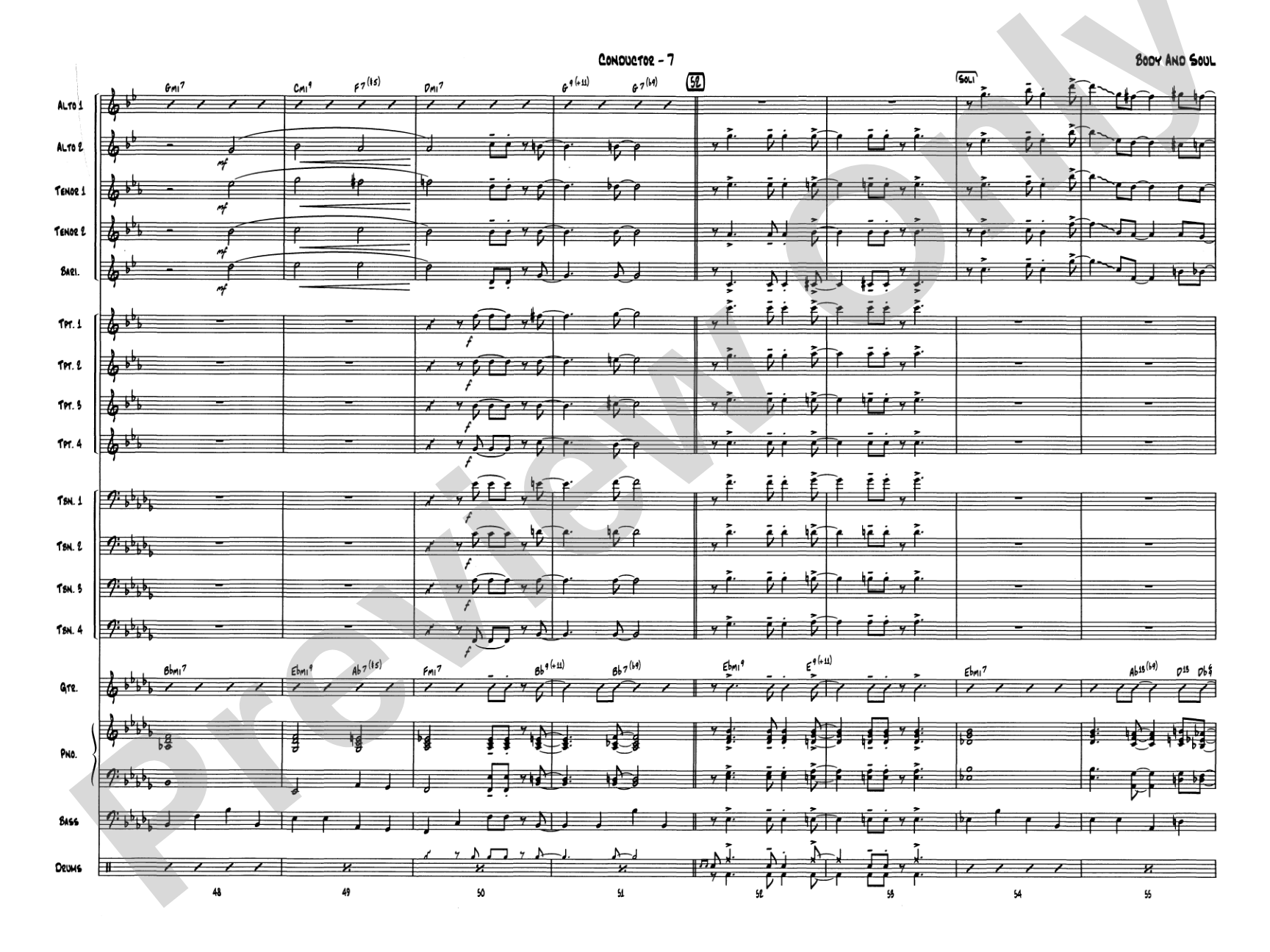
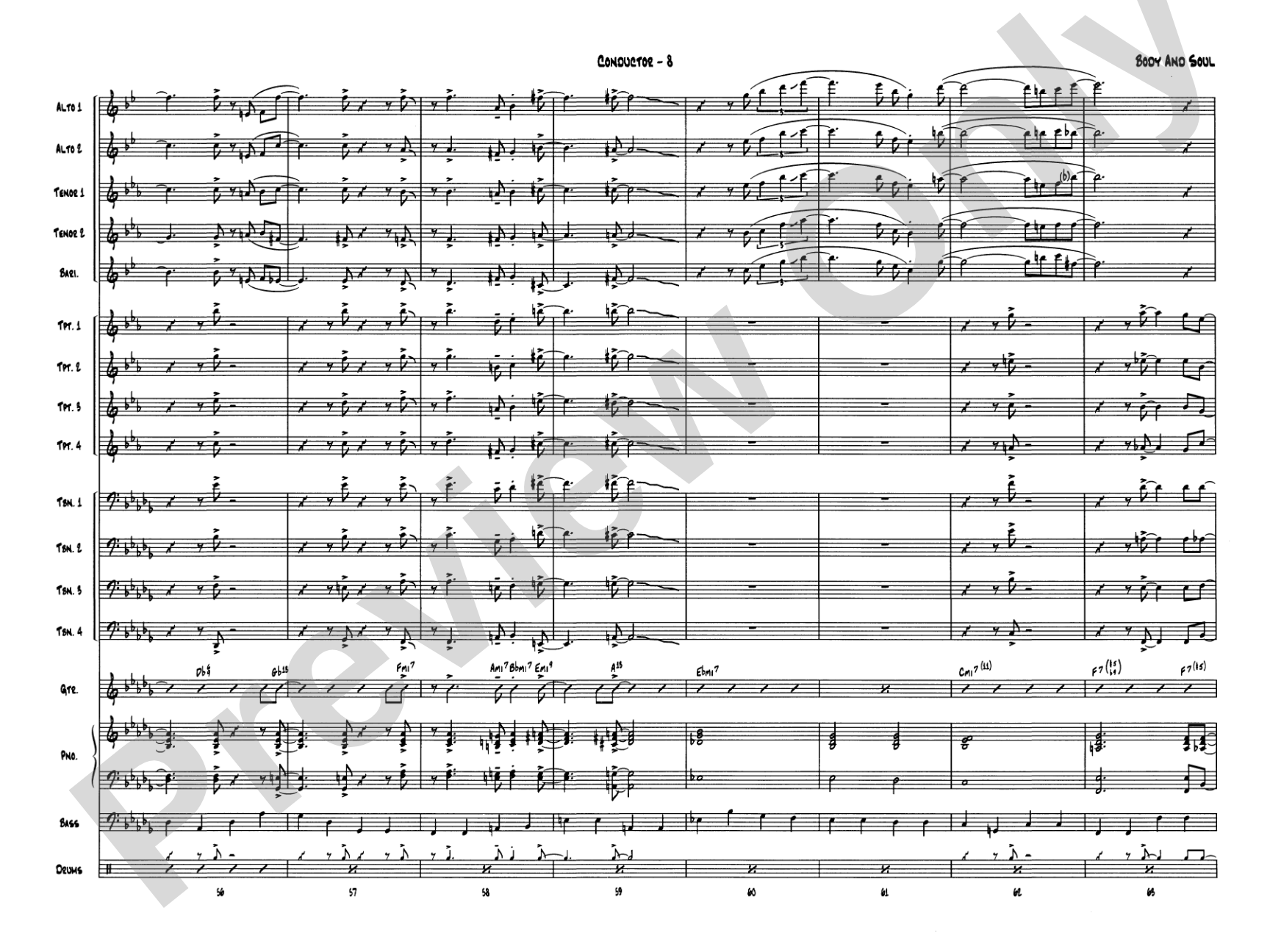
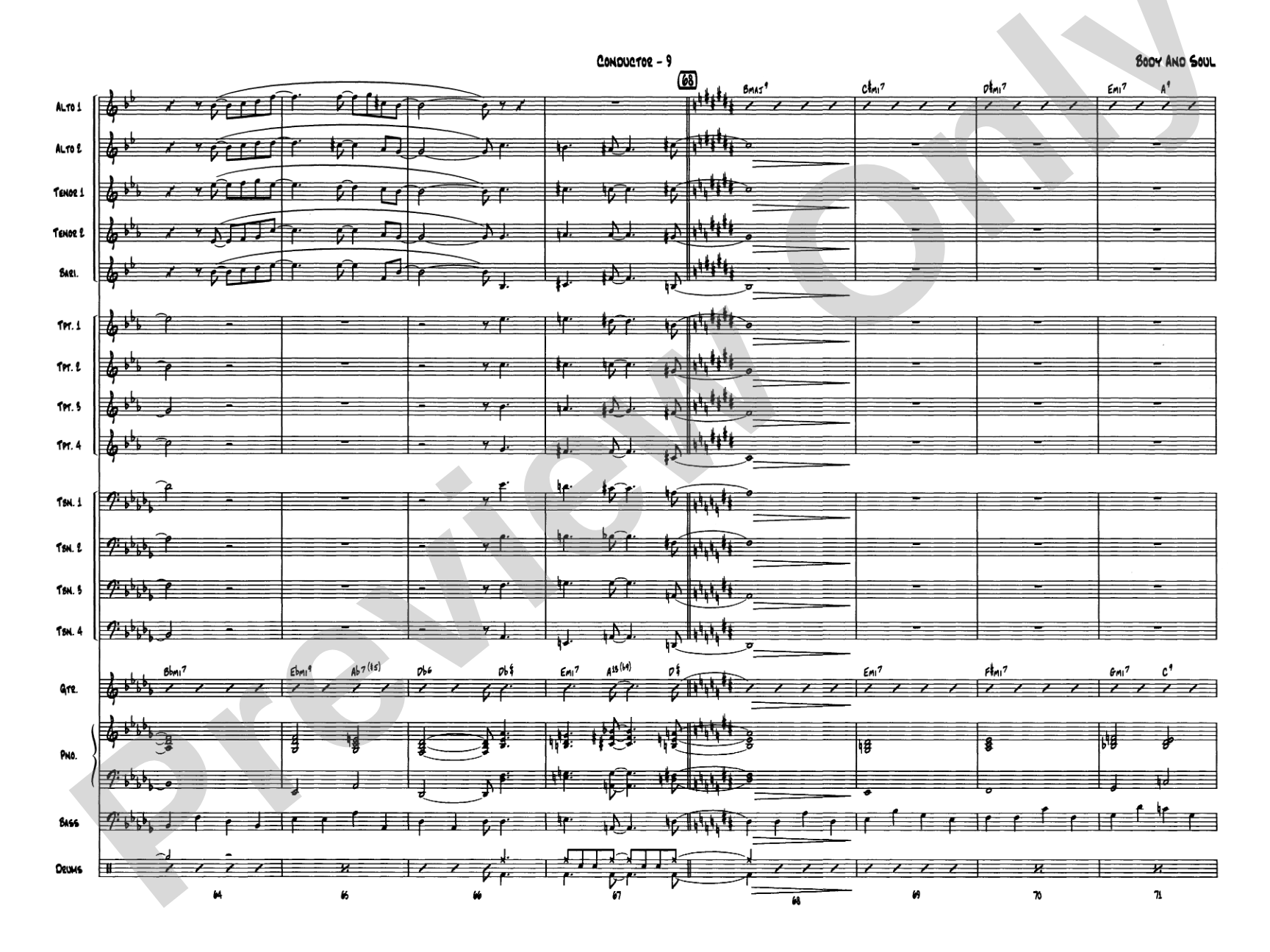
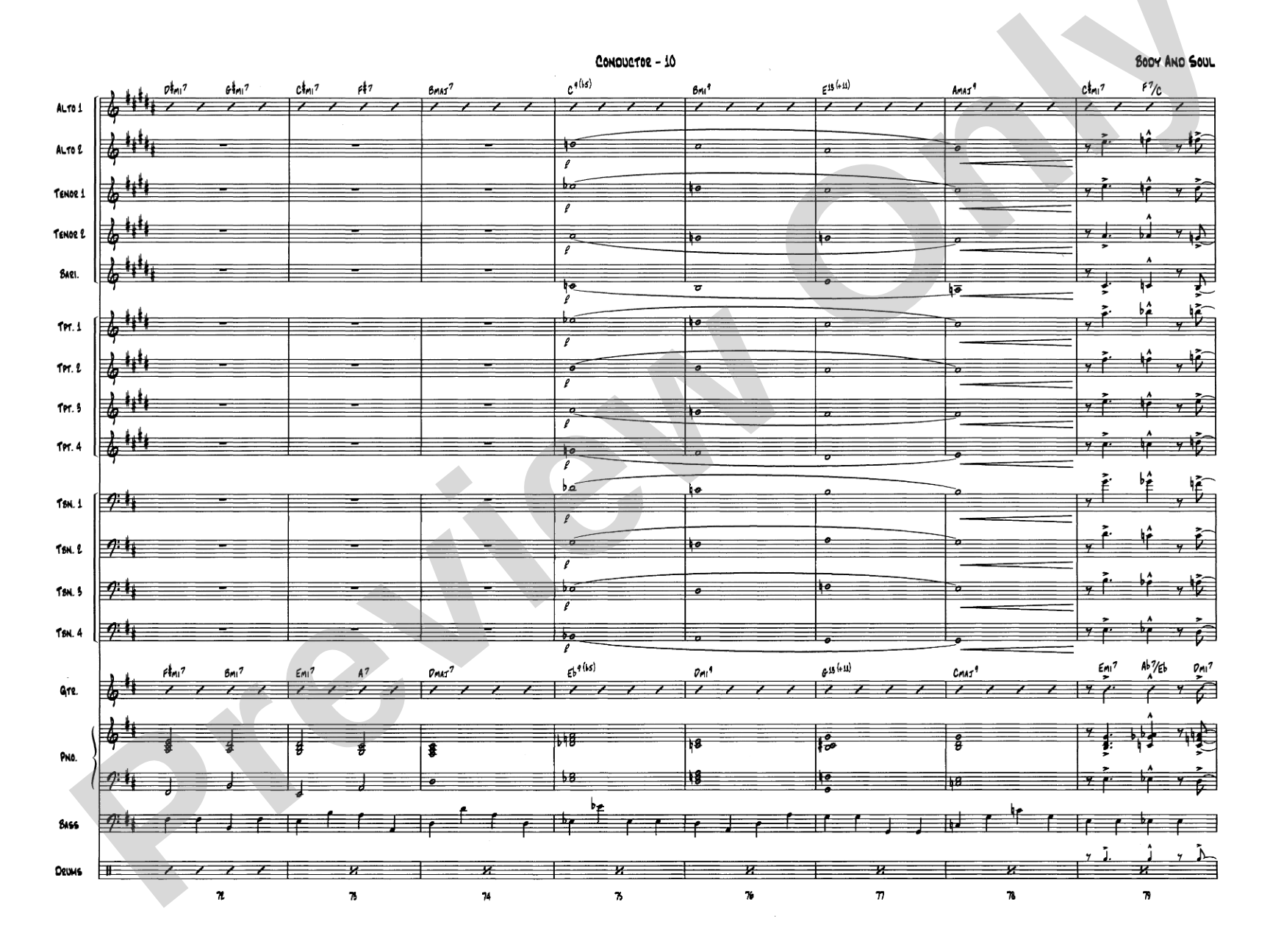
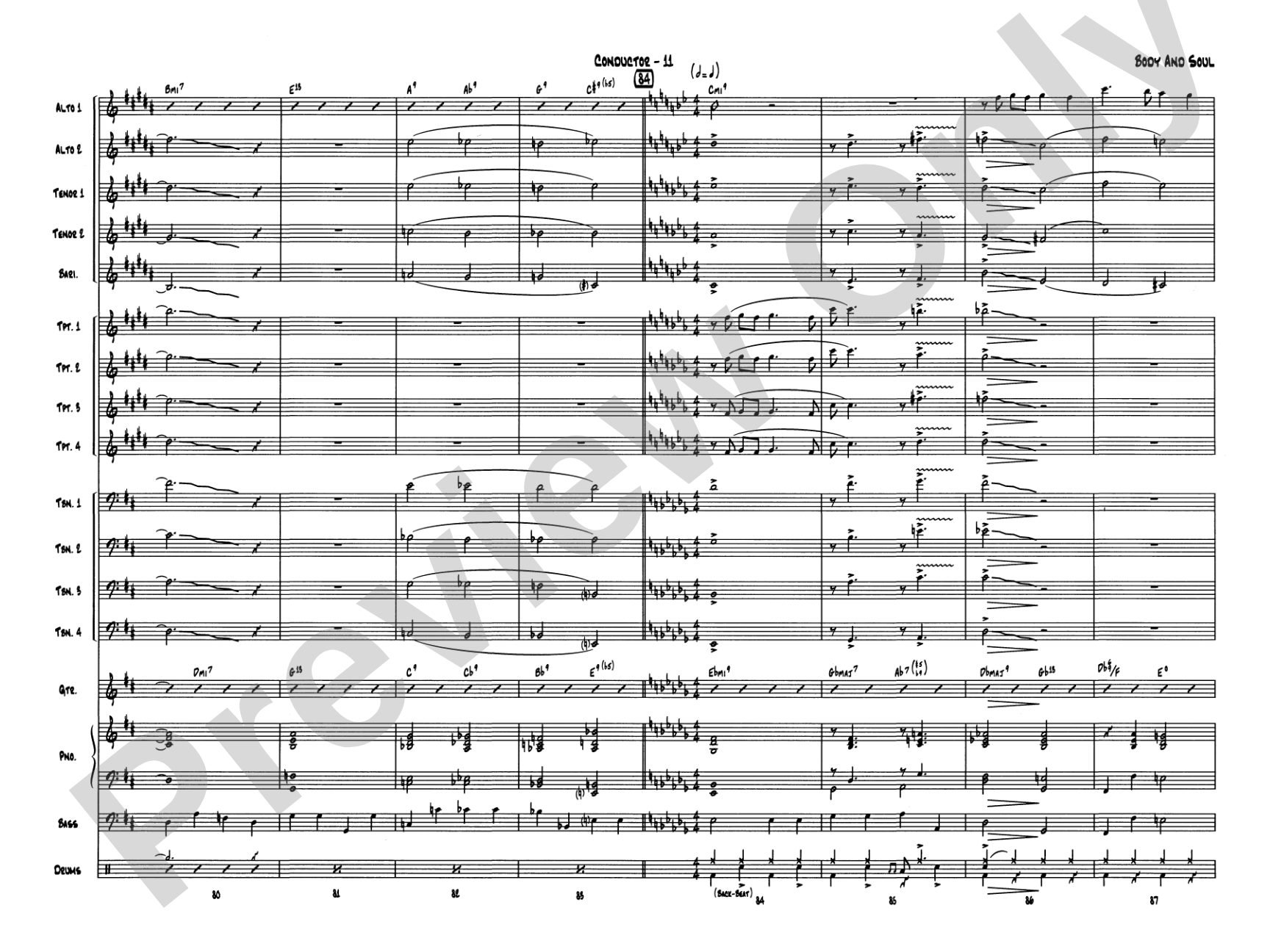
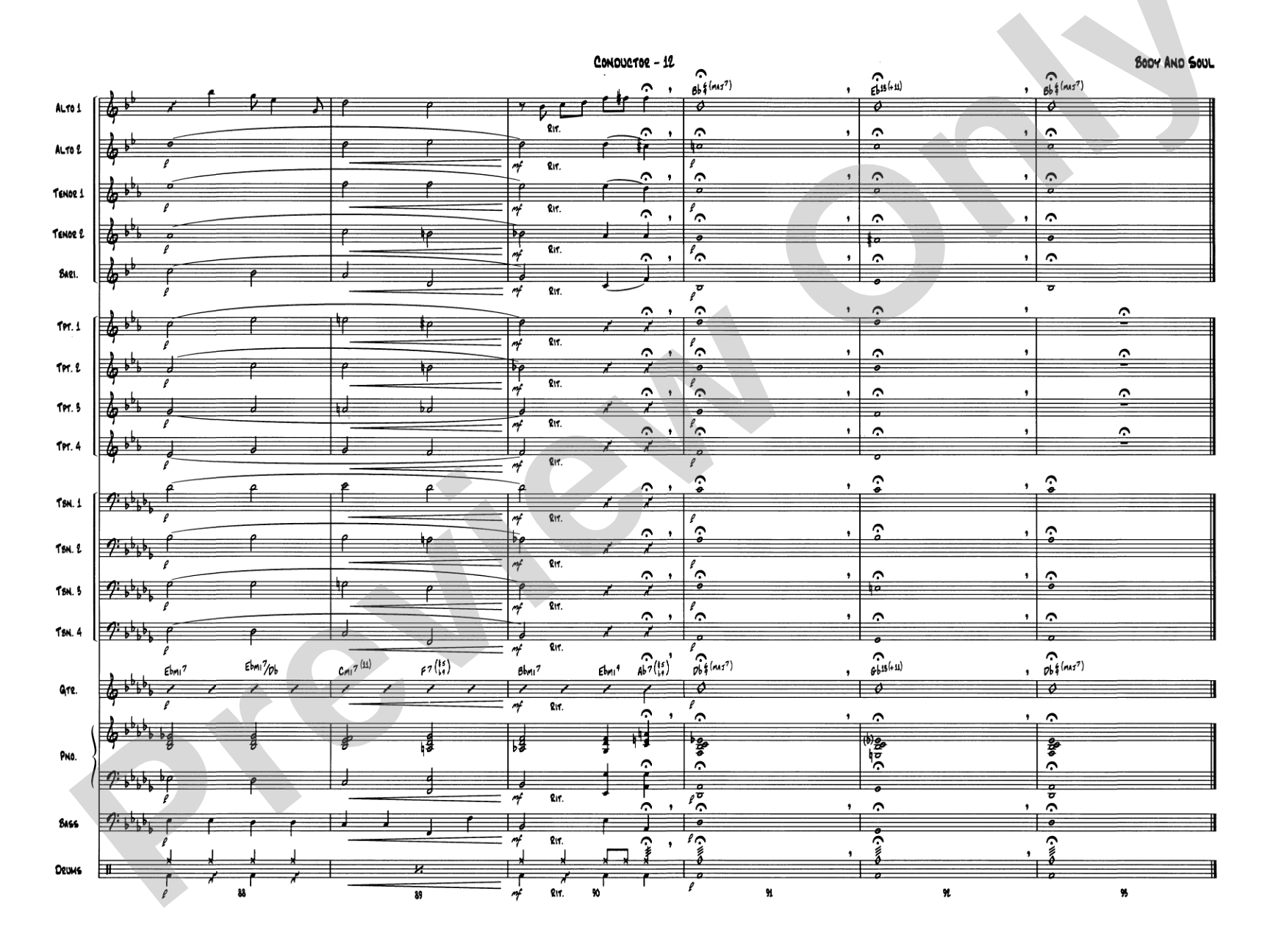



Body and Soul: Score
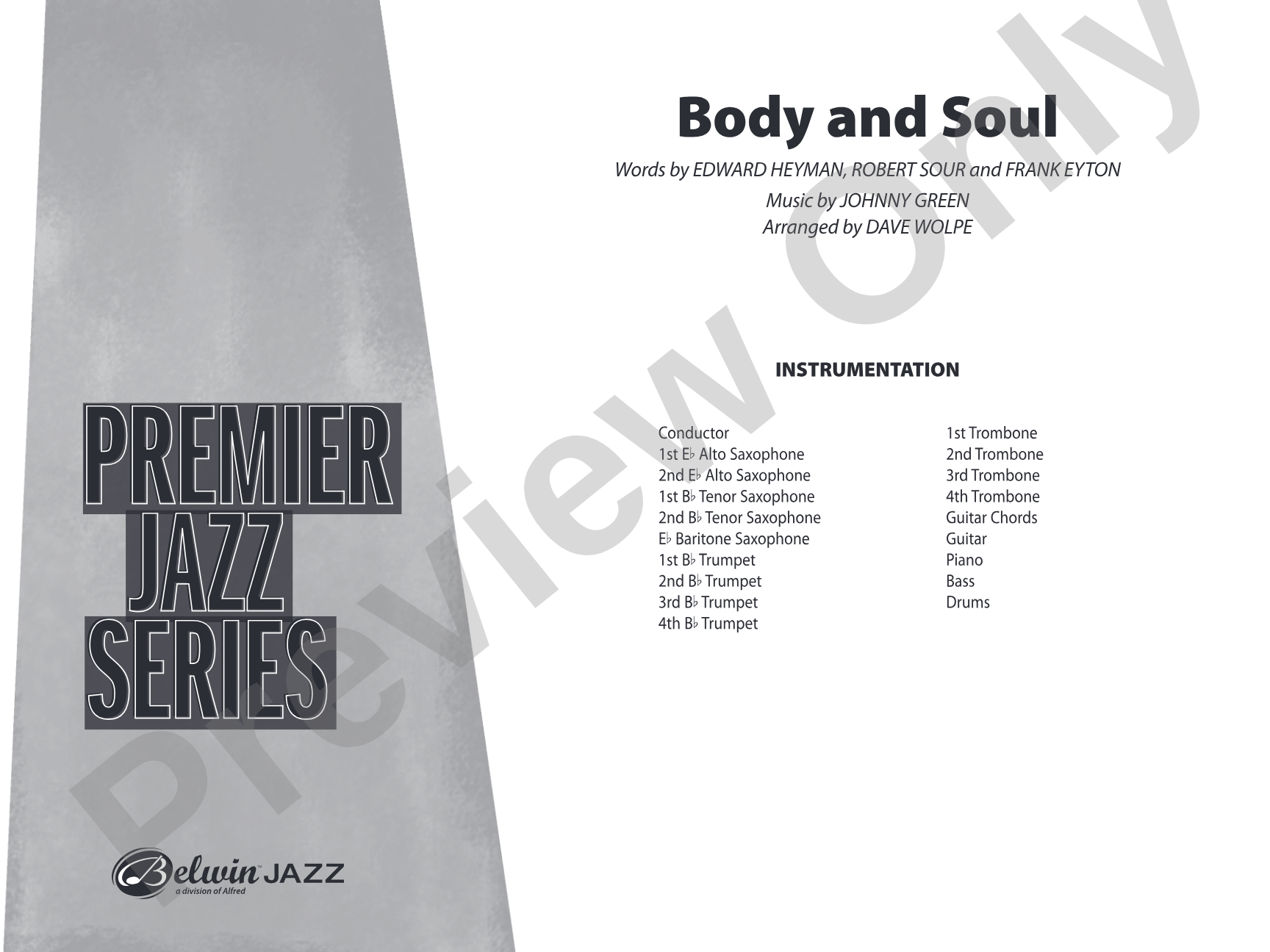
Words by Edward Heyman, Robert Sour, and Frank Eyton, music by Johnny Green / arr. Dave Wolpe
Grade: 4.5 (Medium Advanced / Difficult)
Item: 00-PR-0003033
$10.00
Pickup currently not available
Description
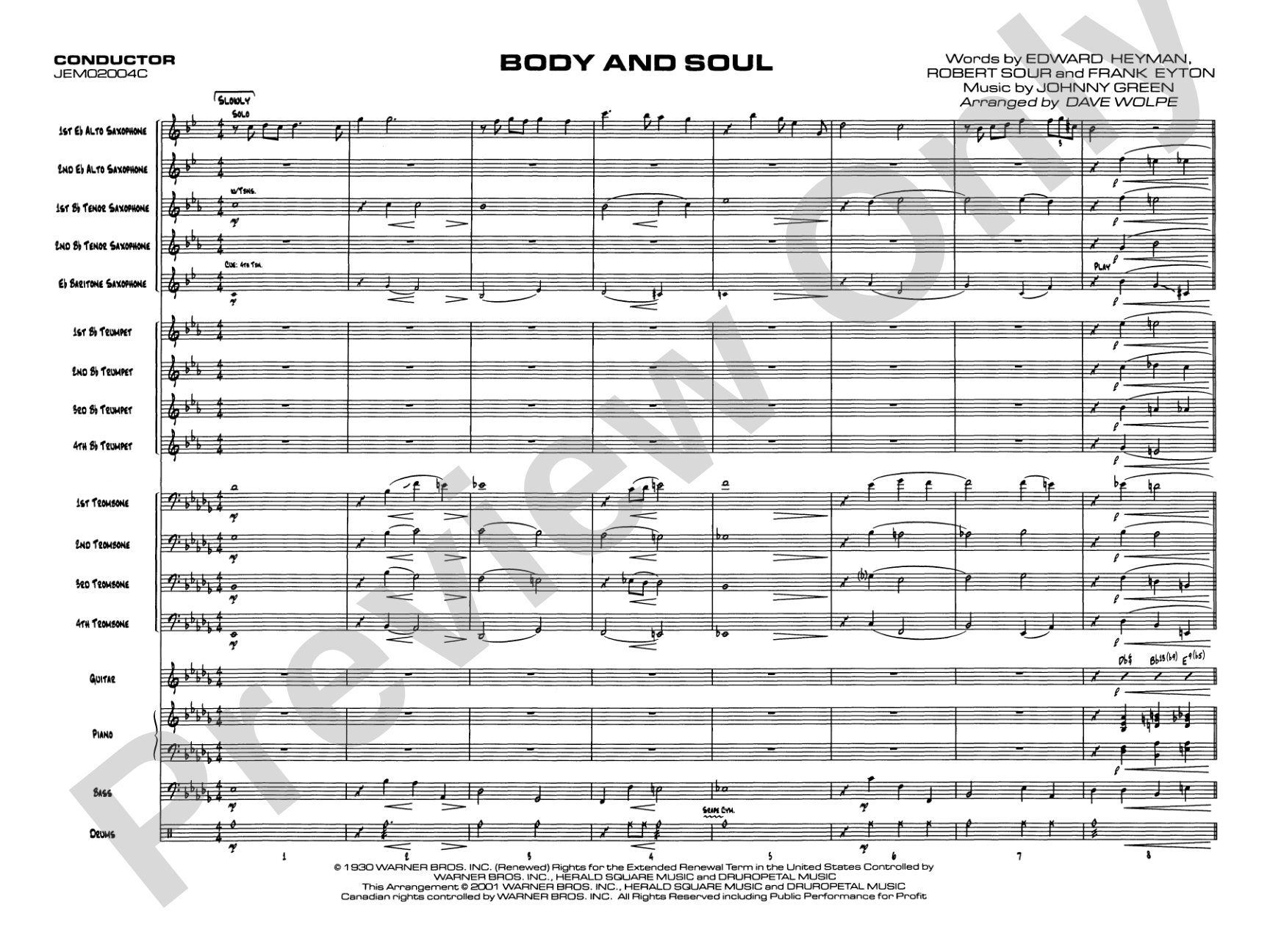
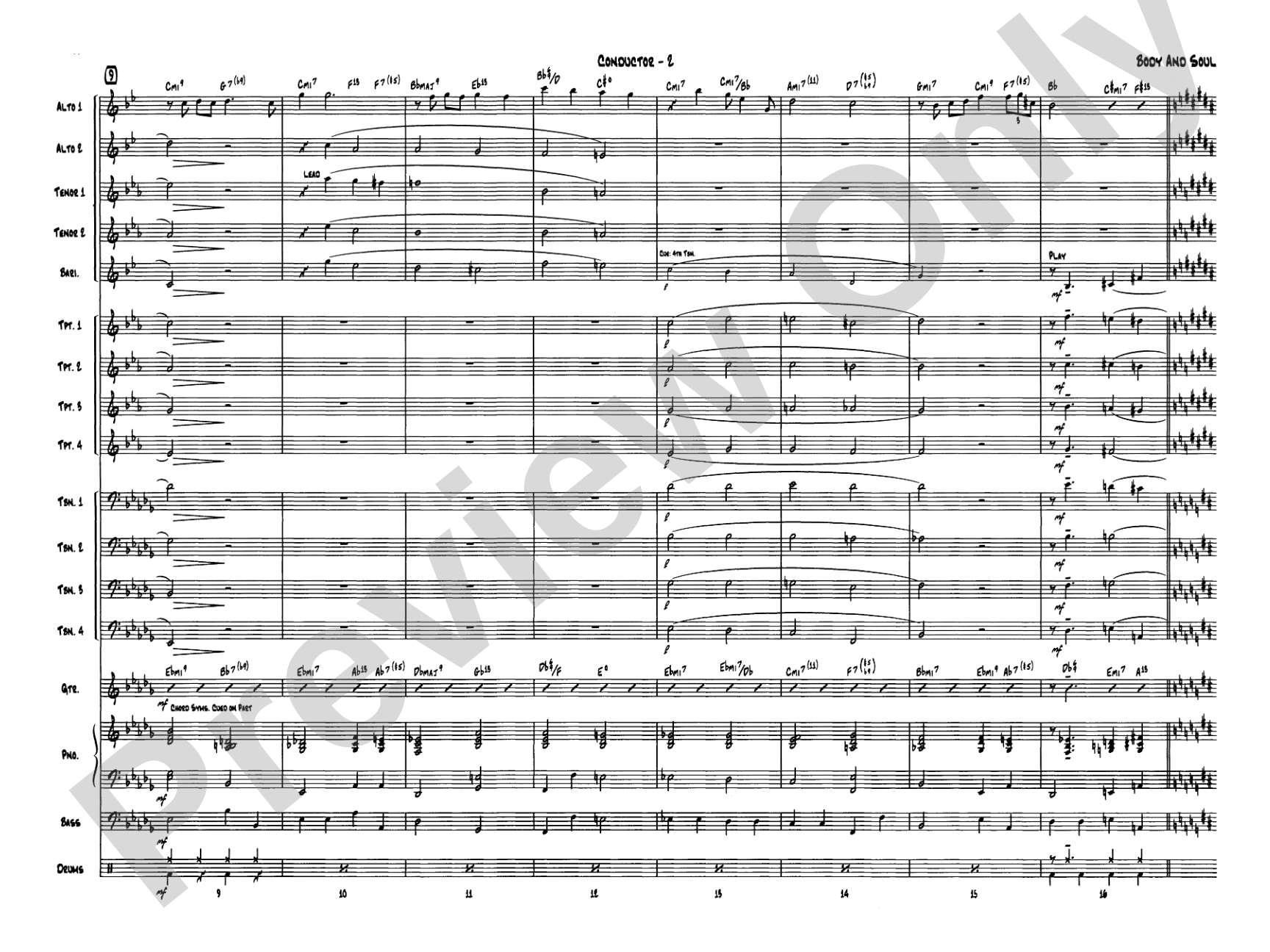
This is a must-have solo feature for alto saxophone! Dave Wolpe is one of the finest writers ever and this chart is one of his very best. With a Kenton-esque rubato introduction, Dave proceeds with a ballad style but hold on to your reeds, the double time tempo swings hard. With some great ensemble writing, Dave sends the alto soloist off in grand style. After some solo space the chart returns to the ballad tempo leading into two fermatas creating a dramatic ending. This is an outstanding chart! (4:07)


Don't just read it, hear it, play along with it, and watch your students grow with it. In MakeMusic Cloud, Body and Soul: Score comes alive with professional accompaniment, adjustable tempo, and built-in practice tools that turn solo practice into real progress.
Open in the Player
Jump straight in and assign it today.
Start Your Free Trial
Open this title and explore the full library in minutes.
Sample Audio
1
Audio File
--:--
0:00
0:00
Sample Video
No sample videos found.
Additional Details
Series:
Premier Jazz Series
Publisher:
Alfred Music
Page Count:
70
SKU:
00-PR-0003033
More about this title
About the Composer: Frank Eyton
Frank Eyton wrote lyrics and melodies during the Golden Age of American songwriting, collaborating with composers like Johnny Green to create standards that have endured for decades. "Body and Soul" stands as one of the most recorded and performed jazz standards in history, a testament to the melodic sophistication and emotional depth Eyton and Green achieved together.
Why we love this
Dave Wolpe's arrangement captures the standard's lyrical essence while building a complete ensemble journey around the alto solo. The contrast between the rubato introduction, the double-time swing section, and the return to ballad creates dynamic shape that keeps players and audiences engaged, making this far more than a simple feature.
What to expect
Sophisticated and urbane. The rubato opening feels introspective and piano-bar intimate, the double-time section ignites with contemporary swing energy, and the return to ballad tempo carries a wistful reflection before the sudden dramatic climax.
Who it's for
Jazz ensembles with a strong alto saxophonist ready for a featured role and the maturity to handle ballad phrasing and tempo transitions. The grade 4.5 difficulty demands solid ensemble musicianship across sections.
How to get the most out of it
- Shape the Kenton-esque rubato introduction with conductor freedom; the ensemble needs to breathe with the alto soloist rather than play metronomically.
- Lock the double-time section's groove early in rehearsal so the rhythm section can anchor the ensemble during the alto's high-energy solo space.
- Reserve the two fermatas at the ending for dramatic effect by bringing the band to complete stillness before the final punctuation.
How to use it
This works beautifully as a centerpiece ballad feature in a concert that pairs traditional standards with modern arrangements. The four-minute duration and dramatic arc make it an ideal closing piece for a set or a standalone spotlight within a longer program.
Skills your students will build
- Responding to conductor gesture in rubato and flexible tempo sections
- Balancing ensemble texture behind a solo feature
- Executing double-time swing with rhythmic precision and groove
- Phrasing ballad passages with emotional intention and breathing
- Managing dynamic contrast across extended form and multiple tempo regions