
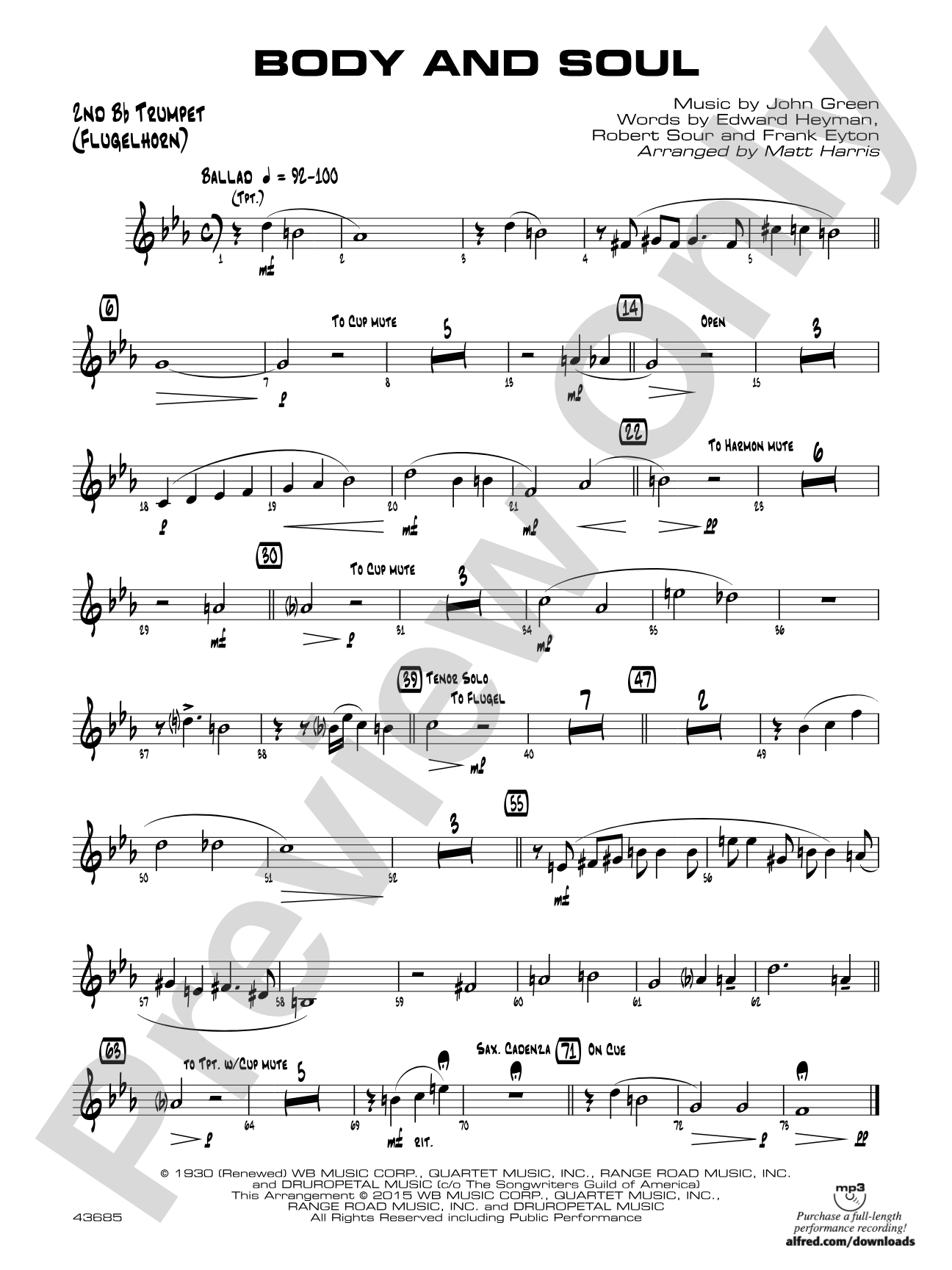

Body and Soul: 2nd B-flat Trumpet
Words by Edward Heyman, Robert Sour, and Frank Eyton, music by John Green / arr. Matt Harris
Grade: 3 (Medium)
Item: 00-PC-0016821_T2
$3.00
Pickup currently not available
Description
"Body and Soul" is a great jazz standard. An ideal tenor sax ballad feature, the tempo is 98 BPM, and the tenor has the melody and a written-out improv solo. It's lush, with a nice texture with flugelhorns, and the lead trumpet range is to written G on top of the staff. (3:33)


Don't just read it, hear it, play along with it, and watch your students grow with it. In MakeMusic Cloud, Body and Soul: 2nd B-flat Trumpet comes alive with professional accompaniment, adjustable tempo, and built-in practice tools that turn solo practice into real progress.
Open in the Player
Jump straight in and assign it today.
Start Your Free Trial
Open this title and explore the full library in minutes.
Sample Audio
1
Audio File
--:--
0:00
0:00
Sample Video
No sample videos found.
Additional Details
Series:
Jazz Band Series
Publisher:
Alfred Music
Page Count:
62
SKU:
00-PC-0016821_T2
More about this title
About the Composer: John Green
John Green (1908-1989) composed some of the most enduring jazz standards of the American songbook. "Body and Soul," written in 1930, became a defining vehicle for improvising musicians across genres, from jazz saxophonists to classical violinists. Green's gift for writing memorable melodies with harmonic sophistication made his compositions ideal for both commercial success and serious musical exploration.
Beyond his work as a composer, Green had a long career in Hollywood, scoring films and conducting orchestras. His understanding of orchestration and ensemble writing shaped how "Body and Soul" has been arranged countless times, always preserving the lyrical quality and emotional depth that made the original so compelling.
Why we love this
Matt Harris's arrangement balances lush harmonic texture with clear feature space for the tenor saxophone, making this a showcase piece that sounds fully arranged without overshadowing the soloist. The written-out improvisation solo gives students concrete language to study and perform, while the inclusion of flugelhorn parts adds sophistication to the ensemble voicing. At grade 3, this sits at an ideal difficulty level for groups that want to program a legitimate jazz standard without requiring advanced ensemble maturity.
What to expect
Sophisticated and introspective without being precious, this arrangement lets the jazz standard's original beauty shine through. The flugelhorn texture creates a warm, slightly smoky environment for the tenor's melody, while the 98 BPM pace encourages the ensemble to really inhabit the ballad's emotional weight. It's the sound of a group that understands how to play with space and intention.
Who it's for
Jazz ensembles at the intermediate level seeking a legitimate ballad feature that teaches both ensemble voicing and improvisation fundamentals. Directors programming festival or contest sets will find this gives the tenor saxophonist meaningful solo space while maintaining high musical standards. This works equally well for concert programming where you want to demonstrate the ensemble's ability to handle lyrical, swinging material.
How to get the most out of it
- Shape the opening ensemble statements with legit ballad rubato. Lock the rhythm section into the 98 BPM foundation, but allow the horn sections subtle breath and phrasing freedom to support the lyrical quality.
- Study the written solo as a complete improvisation, not just notes to play through. The solo reflects actual jazz language and phrasing; performers should hear how it breathes, where it lands on the beat, and where it sits behind or ahead.
- Balance the tenor sax melody so it sits slightly in front of the flugelhorn and trumpet harmonies without losing the ensemble texture. The arrangement only works if listeners hear all three elements in conversation.
- Let the ballad breathe at the slow tempo. Resist rushing the harmonic movement, especially in the ensemble passages. The 3:33 duration reflects the arrangement's proper shape.
How to use it
Program this as a concert centerpiece that shows range and maturity, especially alongside uptempo or funk-based selections. It serves contest contexts beautifully as a ballad feature that doesn't require exceptional soloists to make an impact, since the written solo is performance-ready. Consider placing it mid-set where it can provide dynamic contrast and demonstrate the ensemble's control at slower tempos.
Skills your students will build
- Ballad tempo control and harmonic cohesion at 98 BPM
- Jazz vocabulary and phrasing through studying a written-out improvisation solo
- Ensemble balance in lush voicings (flugelhorn, trumpet, tenor sax, rhythm section)
- Jazz articulation and legit swing feel on chord changes
- Dynamic listening and support for a featured soloist