Body And Soul Sheet Music Preview

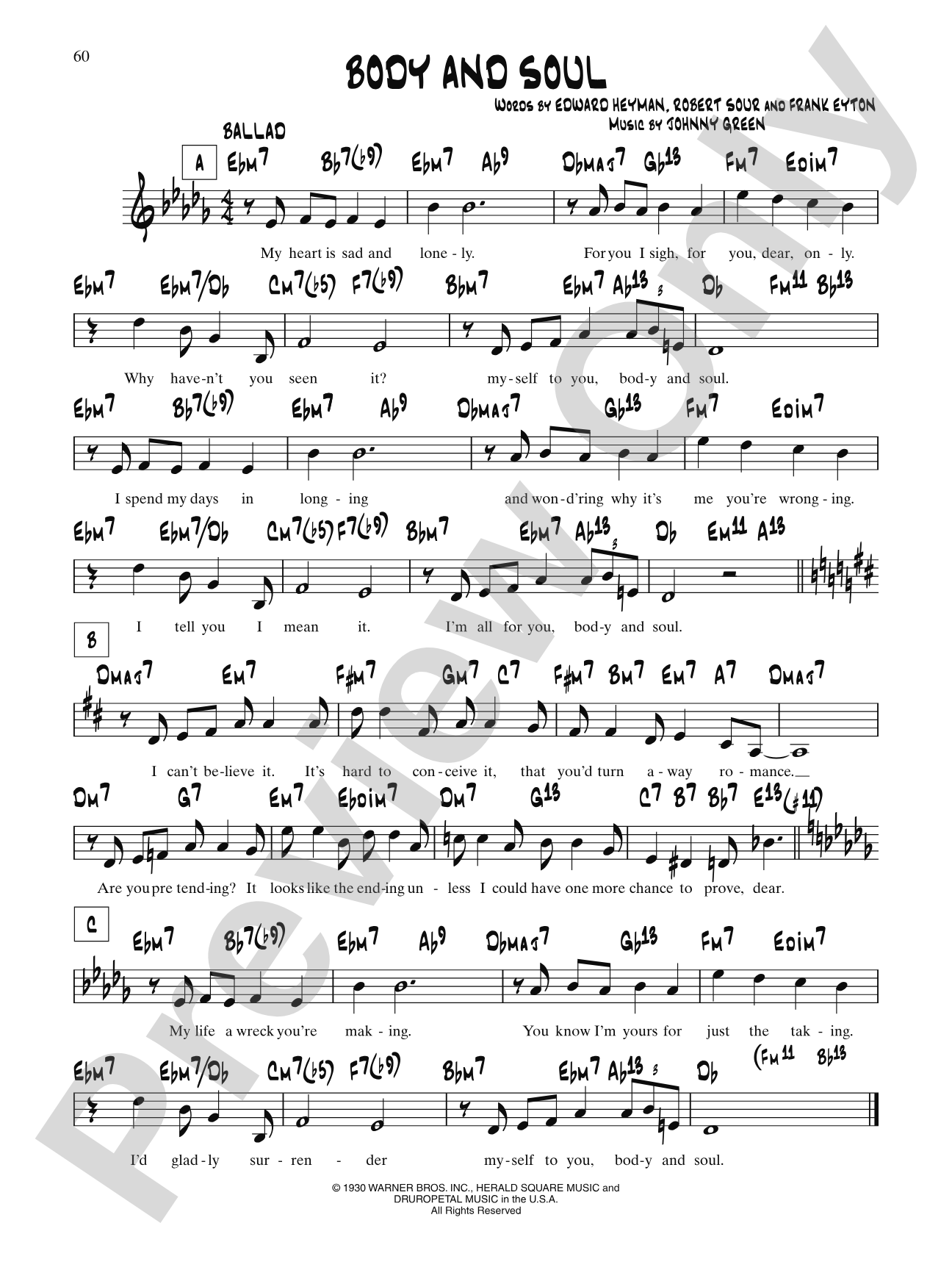
Body And Soul: Lead Sheet

Tony Bennett

Item: 00-PSL-000258

Digital Download
$1.99

One moment…

Description
An album-matching folio featuring the best-known Tony Bennett songs all in one classic collection. Titles include: I Left My Heart in San Francisco * Old Devil Moon * It Had to Be You * Fly Me to the Moon (In Other Words) * Autumn Leaves * They Can't Take That Away from Me and many more. With bio.

Body And Soul: Lead Sheet isn't in MakeMusic Cloud just yet...but it could be. Let us know you'd like to see it, and you'll help shape what comes next. In the meantime, start a free trial and dive into thousands of interactive titles your students can play along with today.

Sample Audio
No sample audio found.
Sample Video
Additional Details
Publisher: Alfred Music
Page Count: 80
SKU: 00-PSL-000258

More about this title

About the Artist: Tony Bennett

Tony Bennett (1926-2023) was an American jazz and popular music singer whose career spanned more than seven decades. Born Anthony Dominick Benedetto in Queens, New York, Bennett became one of the most respected vocalists in American music, known for his impeccable phrasing, emotional depth, and commitment to the Great American Songbook. His interpretations of standards set the bar for vocal artistry across generations of singers.

Bennett's influence on music education extends beyond his recordings. His insistence on proper vocal technique, musical storytelling, and respect for the composer's intent made him a model for singers serious about the craft. His collaborations with jazz musicians and his ability to bring new life to classic songs demonstrate the enduring power of great melodies and thoughtful interpretation.

Why we love this

This collection captures the heart of Bennett's legacy in one accessible resource. Singers and pianists can study how a master vocalist shapes these timeless songs, learning phrasing, interpretation, and the marriage of melody to lyric that defines his artistry. The lead sheet format invites genuine musical dialogue between voice and piano rather than prescriptive accompaniment.

What to expect

These melodies carry the warmth and sophistication of mid-20th-century American songwriting. The songs exude elegance and emotional clarity, inviting performers to slow down and listen to the lyrics as much as the tune. You'll find yourself in intimate, conversational territory where the story matters as much as the notes on the page.

Who it's for

This resource serves singers developing their jazz and standard repertoire, pianists accompanying vocalists, and music students studying the Great American Songbook. It's ideal for anyone exploring how to interpret classic songs with authenticity and musical intelligence.

How to get the most out of it

  • Study the original Tony Bennett recordings before performing. Listen for his approach to rubato, breath placement, and how he colors individual phrases to reveal the lyrics.
  • Treat the lead sheet as a conversation starter, not a final statement. Bennett's genius lay in making each standard feel freshly discovered; your interpretation should reflect your own musical voice while honoring the song's structure.
  • Pay attention to the natural speech rhythm of the lyrics. These songs are built on conversational phrasing, and rushing through words obscures the emotional content that Bennett prioritized.
  • Balance simplicity with intention. Bennett's arrangements are often elegant rather than elaborate; let the strength of the melody and lyric carry the performance instead of adding unnecessary flourishes.

How to use it

Feature these standards in a jazz vocal or cabaret program to provide historical context and showcase the artistry of the American songbook tradition. Pair them with more contemporary jazz interpretations to demonstrate how great melodies remain vital across decades. Use them as teaching tools in voice lessons to explore phrasing, interpretation, and the relationship between text and music.

Skills your students will build

  • Interpreting chord changes and creating harmonic movement from lead sheet notation
  • Shaping vocal phrasing around lyrical content and natural speech rhythm
  • Understanding jazz voicings and reharmonization possibilities
  • Communicating narrative and emotional intention in standard repertoire
  • Collaborating between voice and piano as equal partners in storytelling

You May Also Like