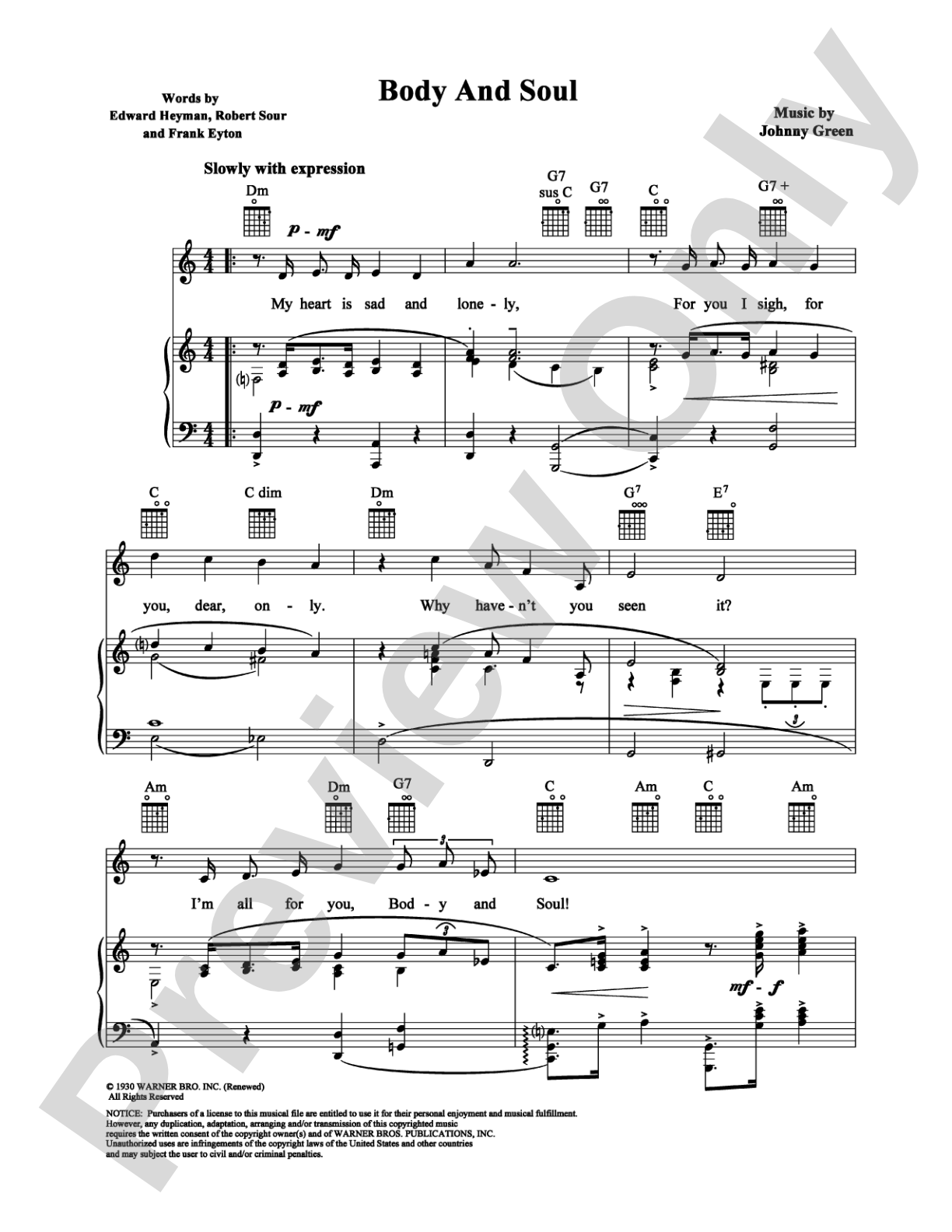
Body and Soul: Piano/Vocal/Chords Digital Sheet Music

Body and Soul: Piano/Vocal/Chords Digital Sheet Music

Benny Goodman, Johnny Green, Louis Armstrong, Paul Whiteman

Item: 00-PS-0005275

Digital Download
$3.99
Description

Body and Soul: Piano/Vocal/Chords Digital Sheet Music isn't in MakeMusic Cloud just yet...but it could be. Let us know you'd like to see it, and you'll help shape what comes next. In the meantime, start a free trial and dive into thousands of interactive titles your students can play along with today.

Sample Audio
No sample audio found.
Sample Video
Additional Details
SKU: 00-PS-0005275

More about this title

About the Artist: Louis Armstrong

Louis Armstrong revolutionized jazz trumpet and vocal performance in the early 20th century, establishing himself as one of the most influential musicians in American music history. His innovative approach to phrasing, improvisation, and rhythmic freedom transformed how musicians across all genres understood swing and expressive playing. Armstrong's recorded legacy spans decades and continues to serve as a foundational reference for understanding jazz interpretation and ensemble collaboration.

Why we love this

Body and Soul stands as one of the great American songbook standards, and this piano/vocal/chords arrangement gives singers and pianists direct access to the music that shaped jazz and popular vocal style. The combination of piano part, vocal line, and chord symbols creates flexibility for different performance contexts, whether students are learning the tune in a jazz ensemble, preparing for a cabaret setting, or exploring American songbook repertoire in a voice studio.

What to expect

Body and Soul carries a reflective, introspective quality that shifts between tender vulnerability and moments of deeper searching. The harmonic movement creates a sense of emotional depth and sophistication, inviting performers to slow down, listen inward, and discover nuance in the lyrical line.

Who it's for

Vocalists preparing jazz or American songbook standards in private lessons, ensemble settings, or recitals will find this arrangement essential. Pianists accompanying singers, whether in jazz combos, vocal studios, or cabaret-style performances, gain both the harmonic framework and melodic reference needed for collaborative interpretation.

How to get the most out of it

  • Shape the vocal line with attention to Armstrong's phrasing style rather than strictly metered delivery; the chords provide harmonic landmarks for interpretation while allowing space for rubato and lyrical flexibility.
  • Let the piano voicings guide harmonic depth without crowding the vocal melody; use the chord symbols to explore different comping approaches that support rather than duplicate the sung line.
  • Approach the bridge as a moment of harmonic and emotional shift; the chord changes become more active, and the piano can shift its textural role to reflect the music's turning point.
  • Build familiarity with the form by studying how the melody relates to the harmonic progression; this foundation makes improvisation and stylistic interpretation feel grounded rather than arbitrary.

How to use it

Pair this standard with other American songbook selections to build a jazz or vocal standards set that explores different eras and styles of popular music. It works equally well as a solo recital piece in a voice studio setting or as part of a larger jazz ensemble concert where featured singers rotate through repertoire.

Skills your students will build

  • Reading and interpreting chord symbols for accompaniment and improvisation
  • Phrasing and interpretation of jazz vocal standards
  • Harmonic analysis and understanding of ii-V-I progressions and jazz harmony
  • Collaboration between vocalist and pianist in managing rubato and ensemble flexibility
  • Swing feel and stylistic authenticity in American songbook performance

You May Also Like