
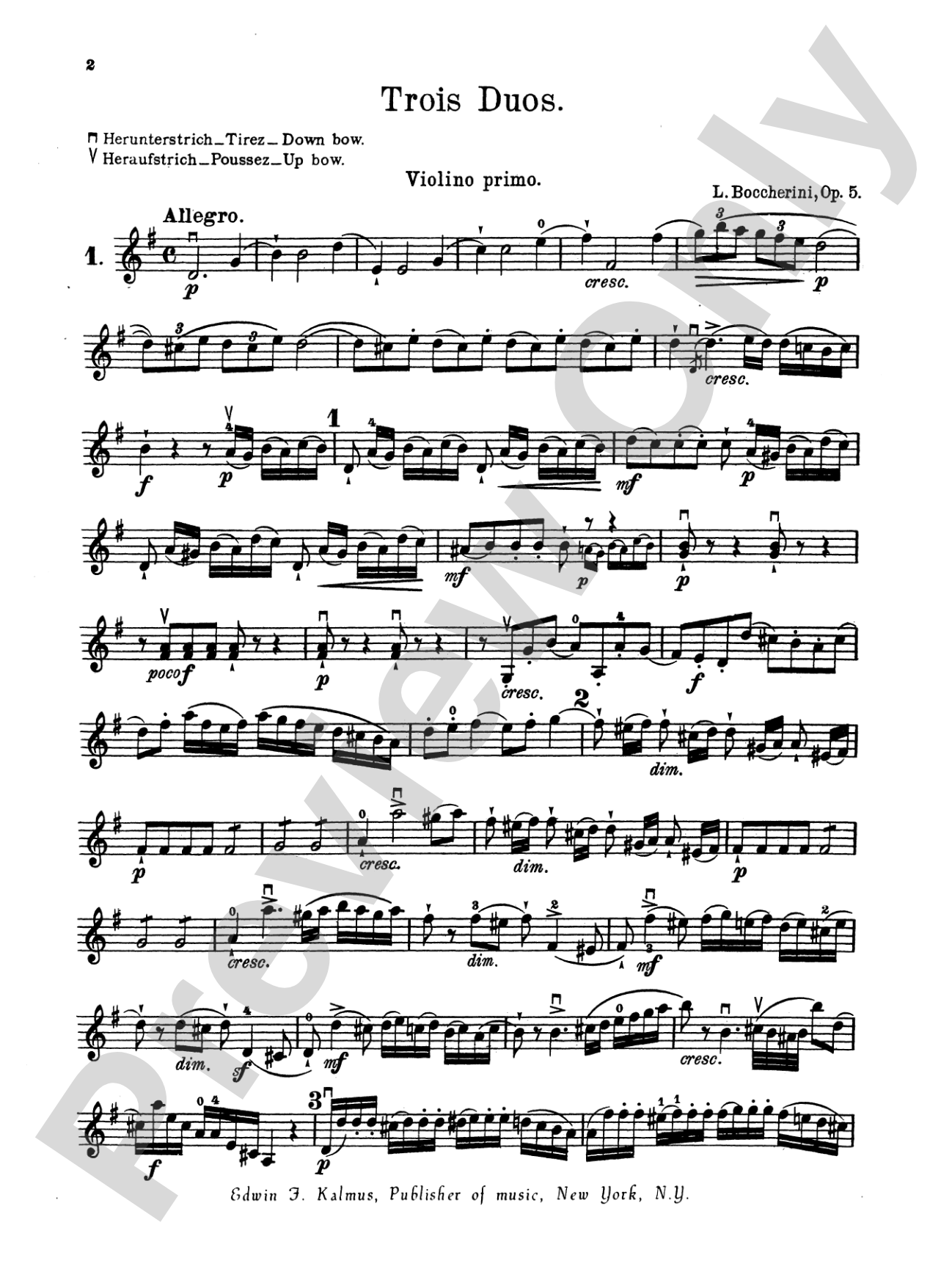
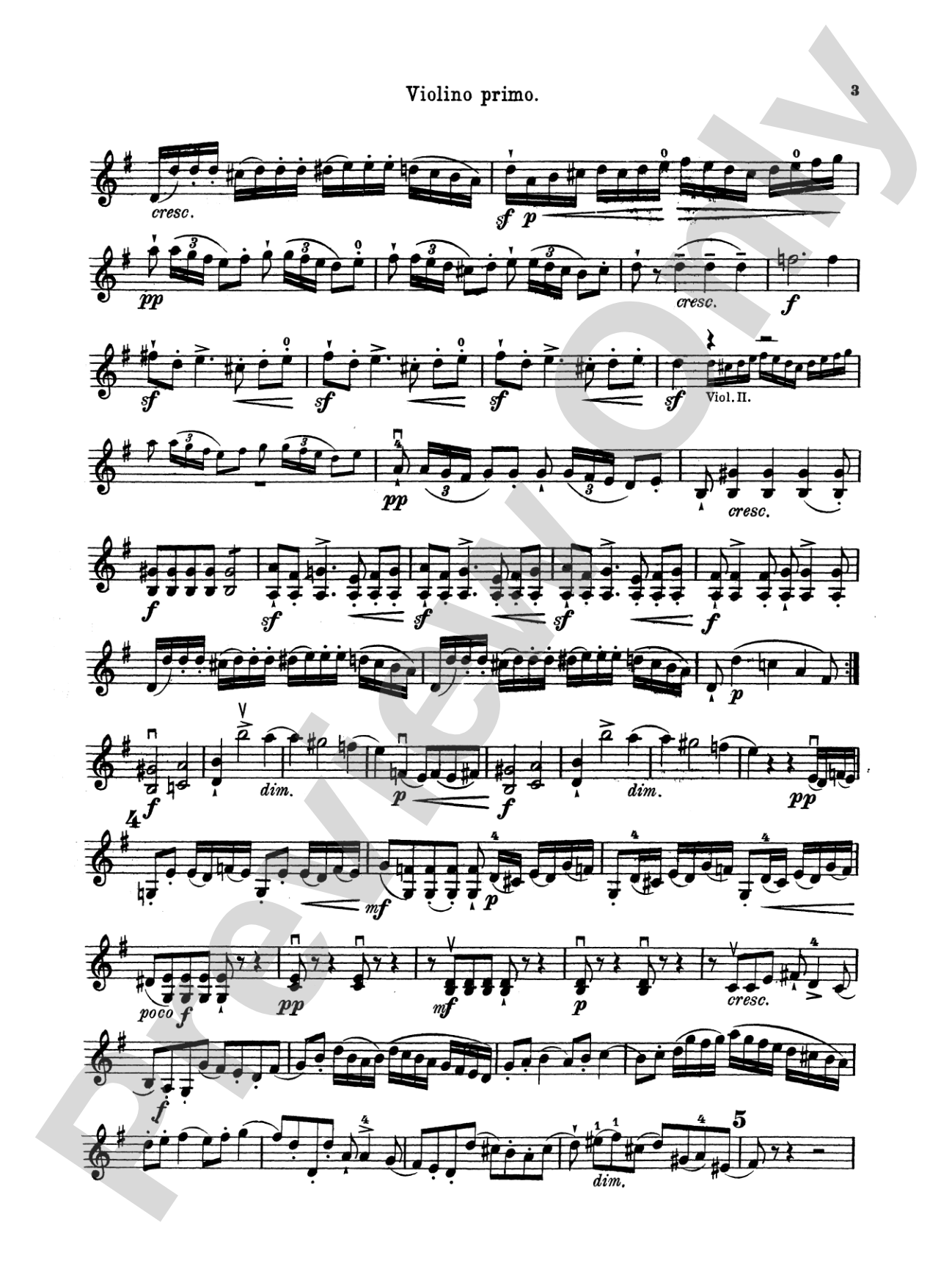
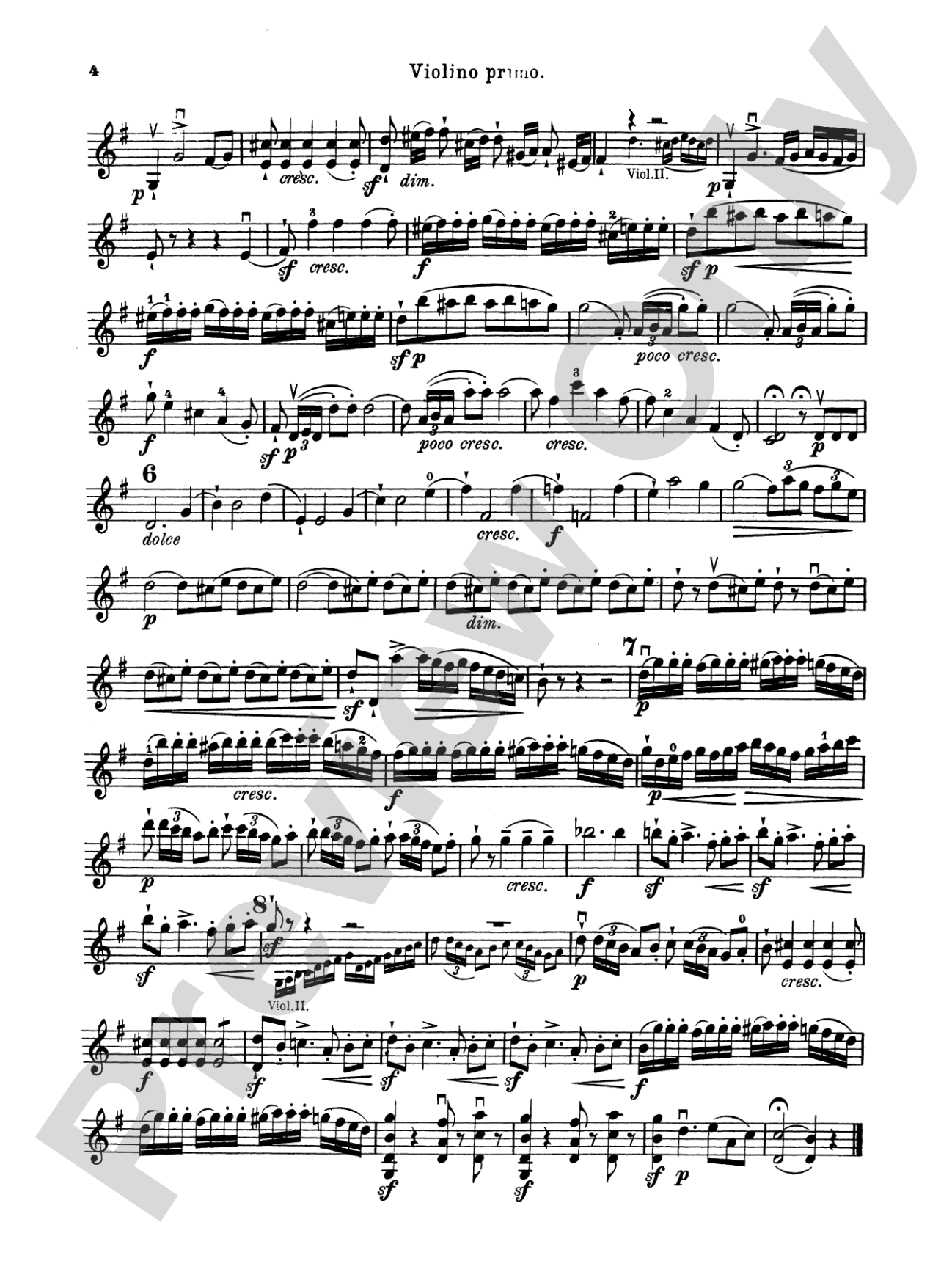
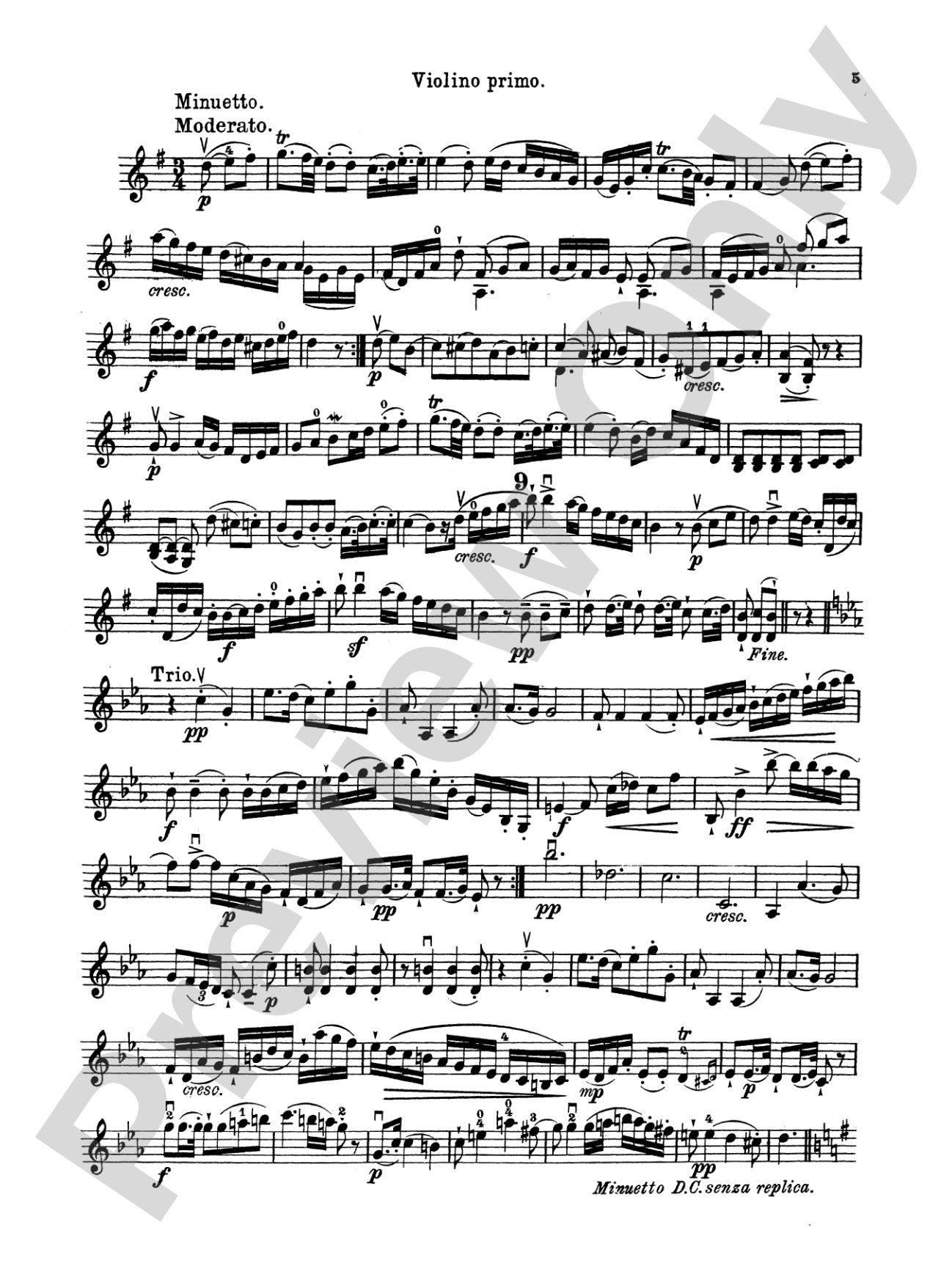
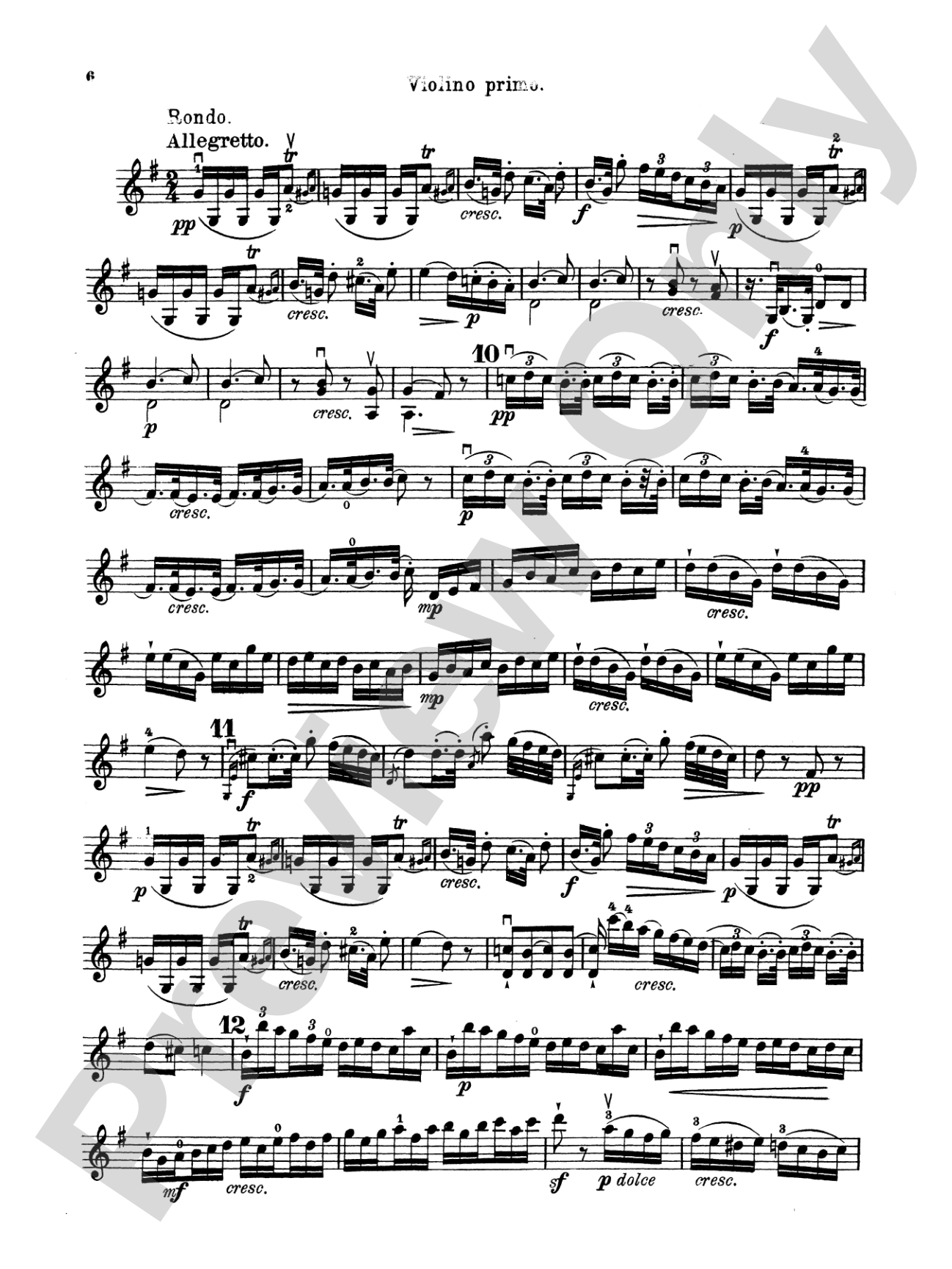
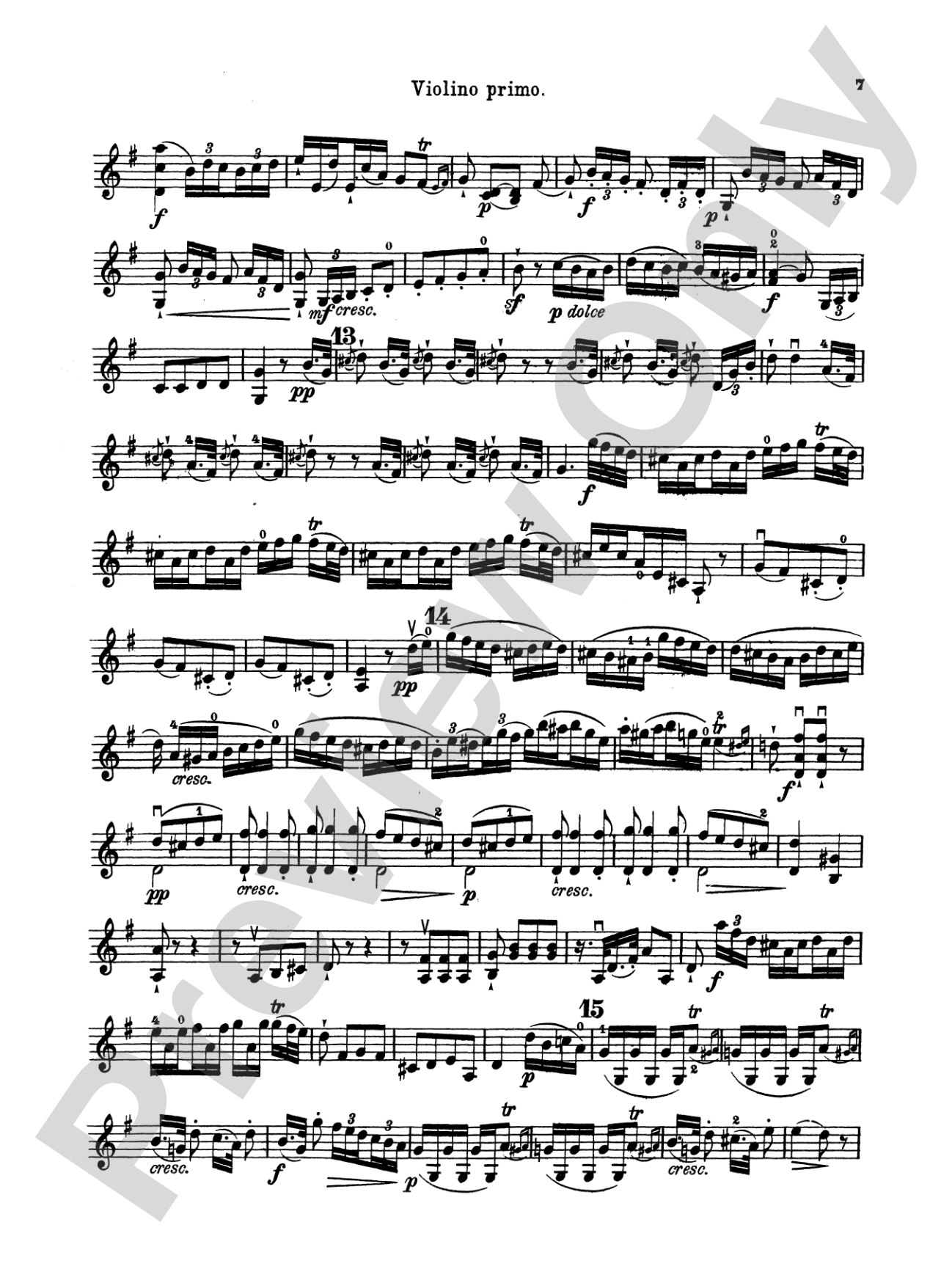
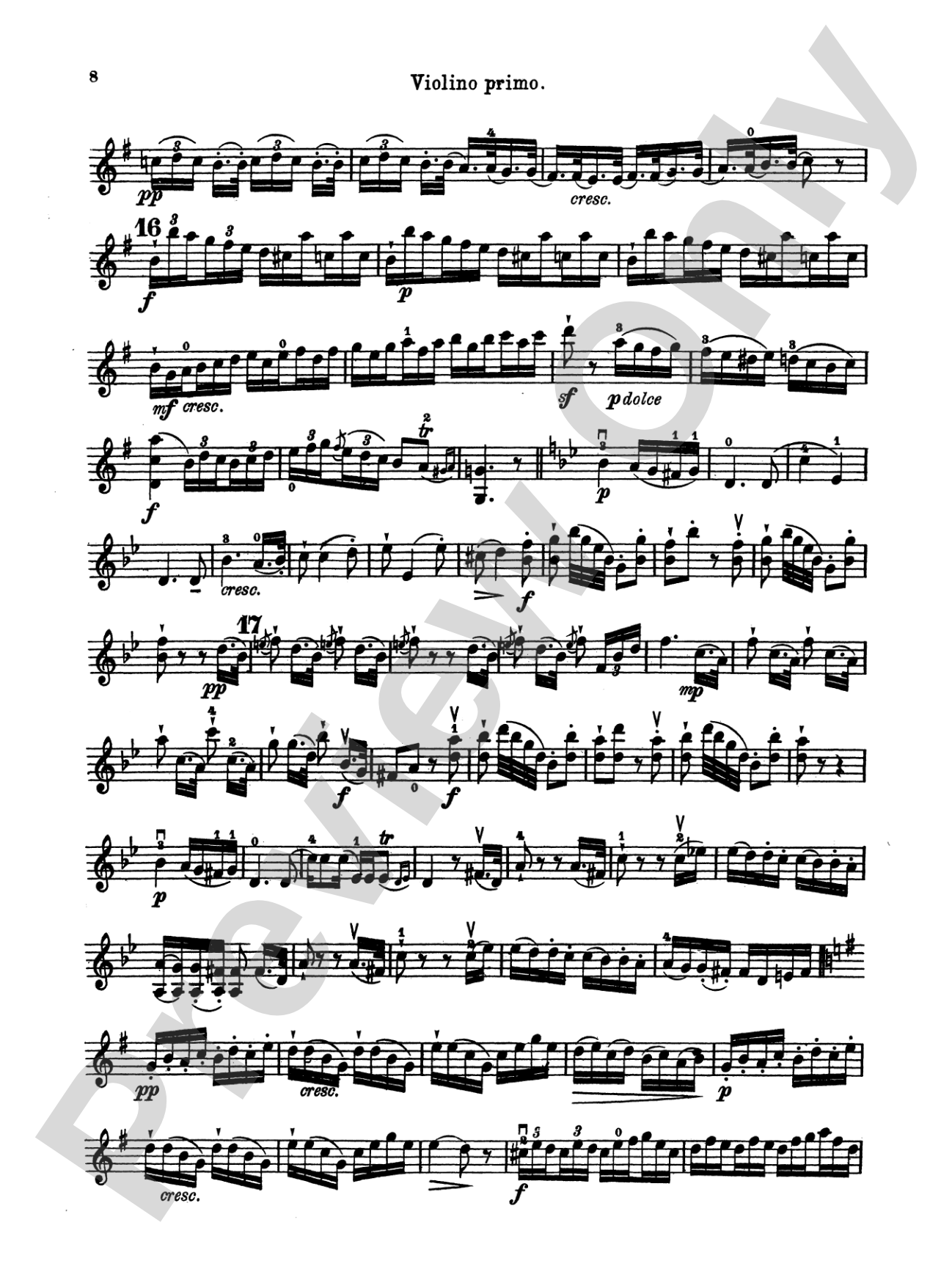
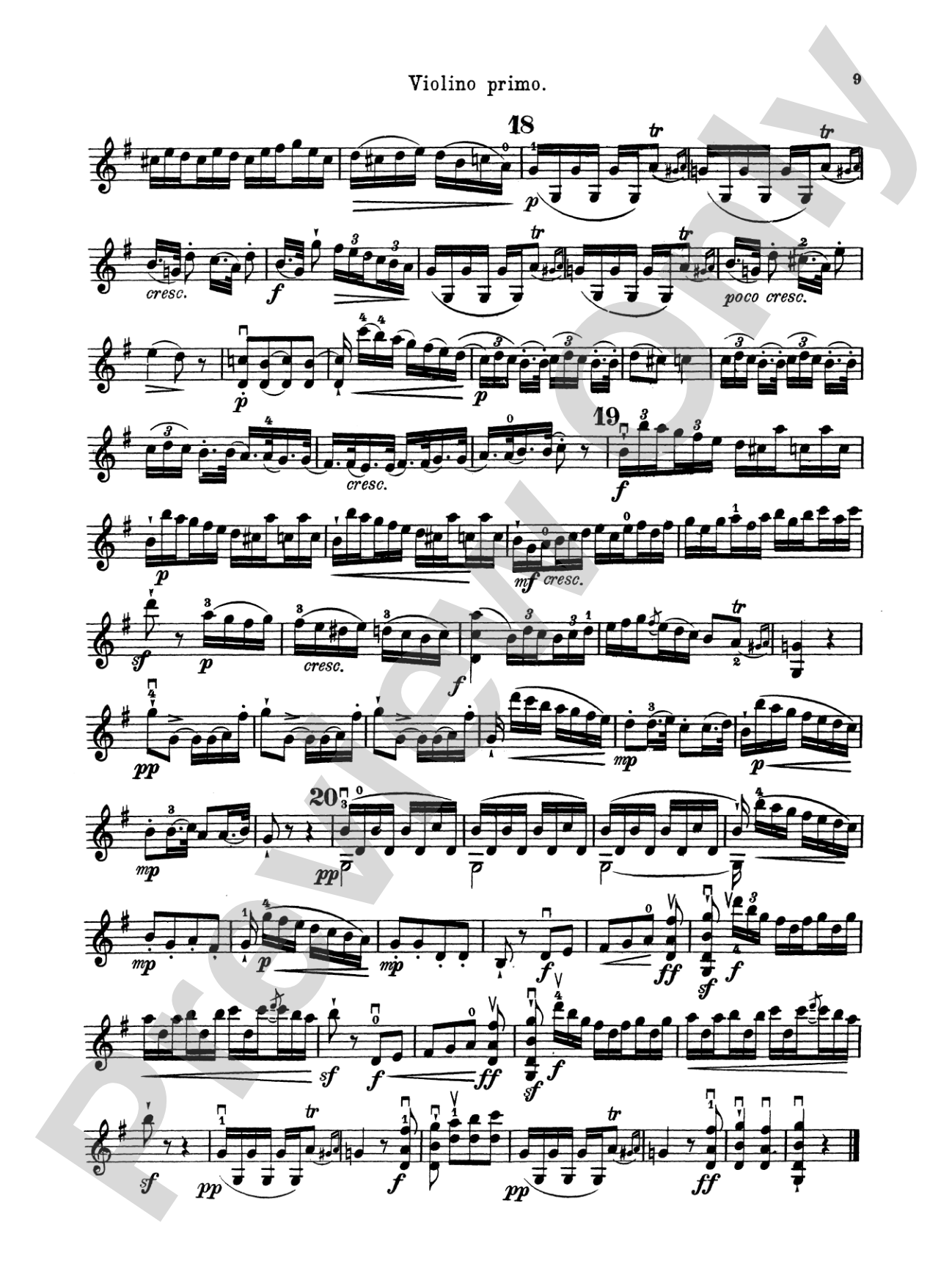

Boccherini: Three Duets, Op. 5: Violin Book
By Luigi Boccherini
Item: 00-PK-0003562

$11.99
Pickup currently not available
Buy Extra Parts (Digital PDF Download)
| Product | Price | Quantity |
|---|---|---|
| Boccherini: Three Duets, Op. 5 | $0.99 | |
| Boccherini: Three Duets, Op. 5 | $0.99 | |
| Boccherini: Three Duets, Op. 5 | $0.99 | |
| Boccherini: Three Duets, Op. 5 | $0.99 | |
| Boccherini: Three Duets, Op. 5 | $0.99 | |
| Boccherini: Three Duets, Op. 5 | $0.99 |
Parts Added to Cart!
Related Items
Three Duets, Opus 5: Violin Book |
$11.95
|
View |
Description
Expertly arranged Violin Duets by Luigi Boccherini from the Kalmus Edition series. This is from the Classical and Baroque eras.


Don't just read it, hear it, play along with it, and watch your students grow with it. In MakeMusic Cloud, Boccherini: Three Duets, Op. 5: Violin Book comes alive with professional accompaniment, adjustable tempo, and built-in practice tools that turn solo practice into real progress.
Open in the Player
Jump straight in and assign it today.
Start Your Free Trial
Open this title and explore the full library in minutes.
Sample Audio
No sample audio found.
Sample Video
No sample videos found.
Additional Details
Series:
Kalmus Edition
Publisher:
Alfred Music
Page Count:
40
SKU:
00-PK-0003562
More about this title
About the Composer: Luigi Boccherini
Luigi Boccherini (1743-1805) was an Italian composer and cellist whose prolific output spanned symphonies, concertos, chamber works, and quintets. Though often overshadowed by his contemporaries Haydn and Mozart, Boccherini earned respect across Europe for his refined orchestration and elegant melodic writing, serving patrons in Rome, Madrid, and Berlin throughout his career.
His string writing is particularly distinctive. Boccherini understood the violin's lyrical capacity and wrote duets that sit comfortably in the instrument's middle register while maintaining the clarity and rhythmic precision expected of Classical chamber music. These duets remain valuable repertoire for developing ensemble communication and intonation without the complexity of larger chamber forces.
Why we love this
Boccherini's duets offer genuine musical substance in a format that works for intermediate players. The writing is clean and idiomatic; both parts feel equally important, which means neither violinist is relegated to an accompaniment role. This book gives you accessible Classical repertoire with real pedagogical weight.
What to expect
Graceful and conversational. The two violin lines engage in a gentle musical dialogue without drama or bombast; the music breathes easily and maintains Classical restraint throughout. There is genuine elegance here, the kind that rewards careful listening and patient execution.
Who it's for
Intermediate to advanced high school violinists and adult students working to develop ensemble skills and intonation awareness. These duets are also suitable for lesson duets between teacher and student or for violinists preparing for chamber music competitions and festivals.
How to get the most out of it
- Shape the phrases with gentle dynamic contours rather than playing at a single volume level; Boccherini's melodies benefit from subtle breathing and direction.
- Match vibrato speed and intensity between the two players to create unified tone color, especially in unison passages or parallel thirds.
- Establish a steady internal pulse before the piece begins; these duets rely on rhythmic precision, and ensemble lock happens through shared time, not rushed entrances.
- Listen carefully to intonation in the harmonic intervals (thirds, sixths, octaves) that occur throughout; small adjustments here make the difference between polished and pedestrian sound.
How to use it
Program these duets on a chamber music recital or in a young artist concert where you want to highlight ensemble work at the intermediate level. They sit well between a solo feature and a larger group piece, and the three-movement structure gives you flexibility for a single pairing or multiple duet pairings across a program.
Skills your students will build
- Listening and responding to an equal partner in ensemble
- Matching intonation across harmonic intervals (thirds, sixths, octaves)
- Shaping Classical phrases with dynamic nuance
- Managing rhythmic precision and ensemble timing without a conductor
- Navigating multiple key signatures and harmonic movement within the Classical idiom