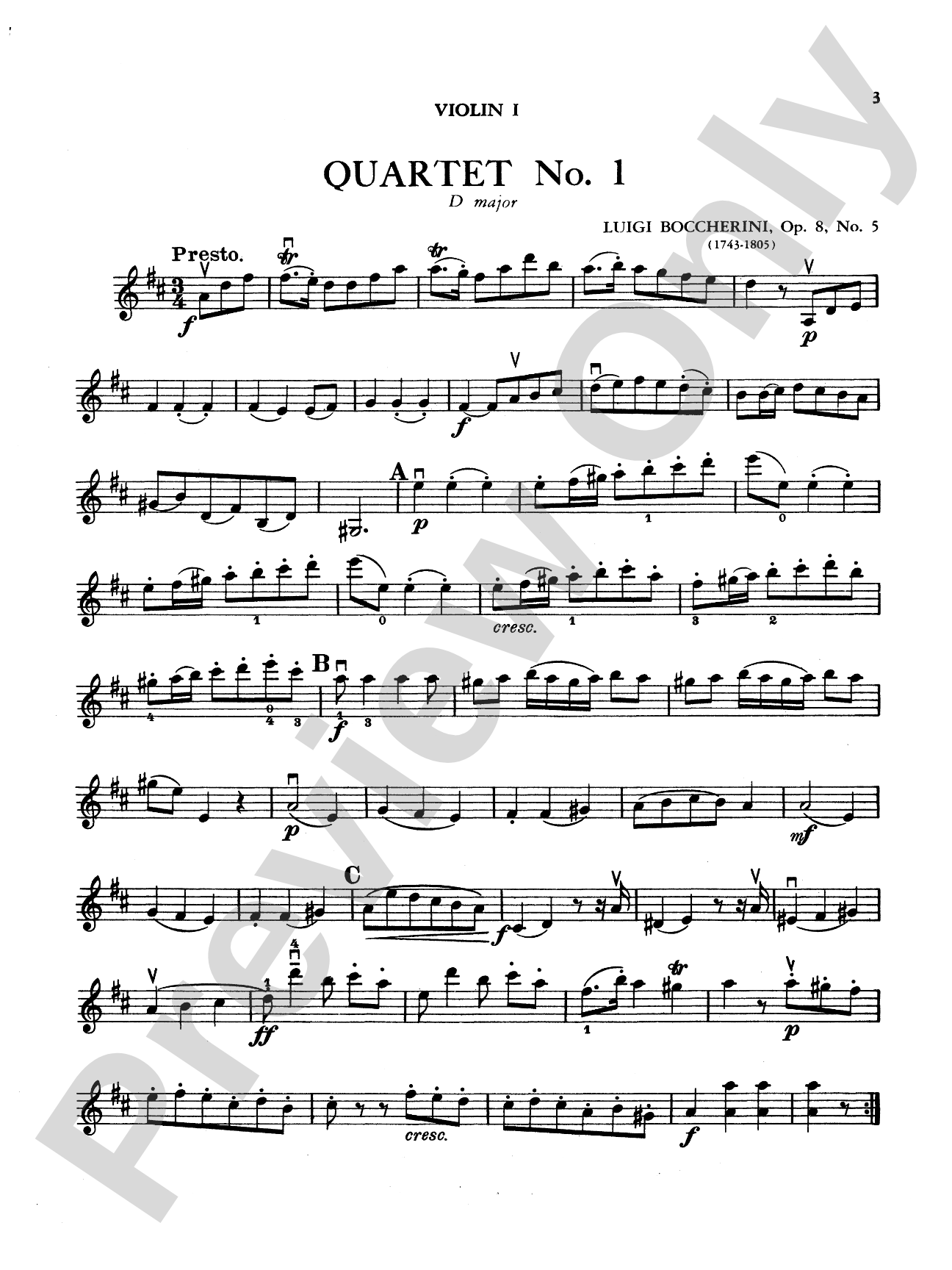
Luigi Boccherini (1743-1805) was an Italian composer and cellist who brought refinement and elegance to the string quartet at a time when Haydn and Mozart were defining the form. Working primarily in Madrid and Rome, he composed over 100 string quartets alongside symphonies, concertos, and chamber works that earned him respect across Europe. His writing for strings balances technical brilliance with lyrical grace, making his quartets valuable repertoire for ensembles seeking classical mastery without the density of his more famous contemporaries.
Boccherini's quartets showcase his gift for memorable melody and inventive inner-voice writing. Teachers and ensemble directors return to his works because they reward careful listening, require genuine ensemble coordination, and remain deeply musical without excessive virtuosity. His legacy in string quartet literature remains strong among musicians seeking works that combine structural clarity with emotional warmth.