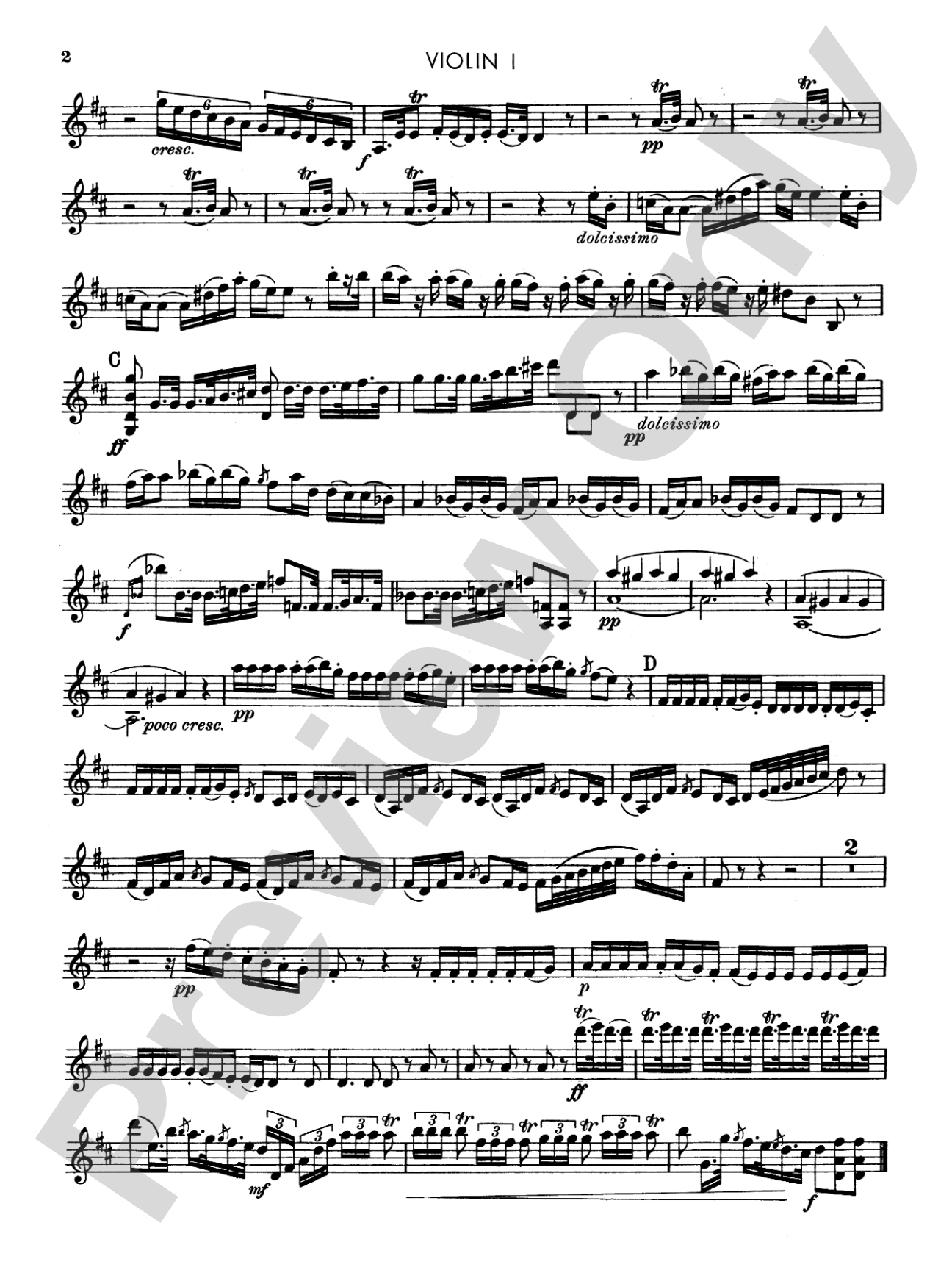
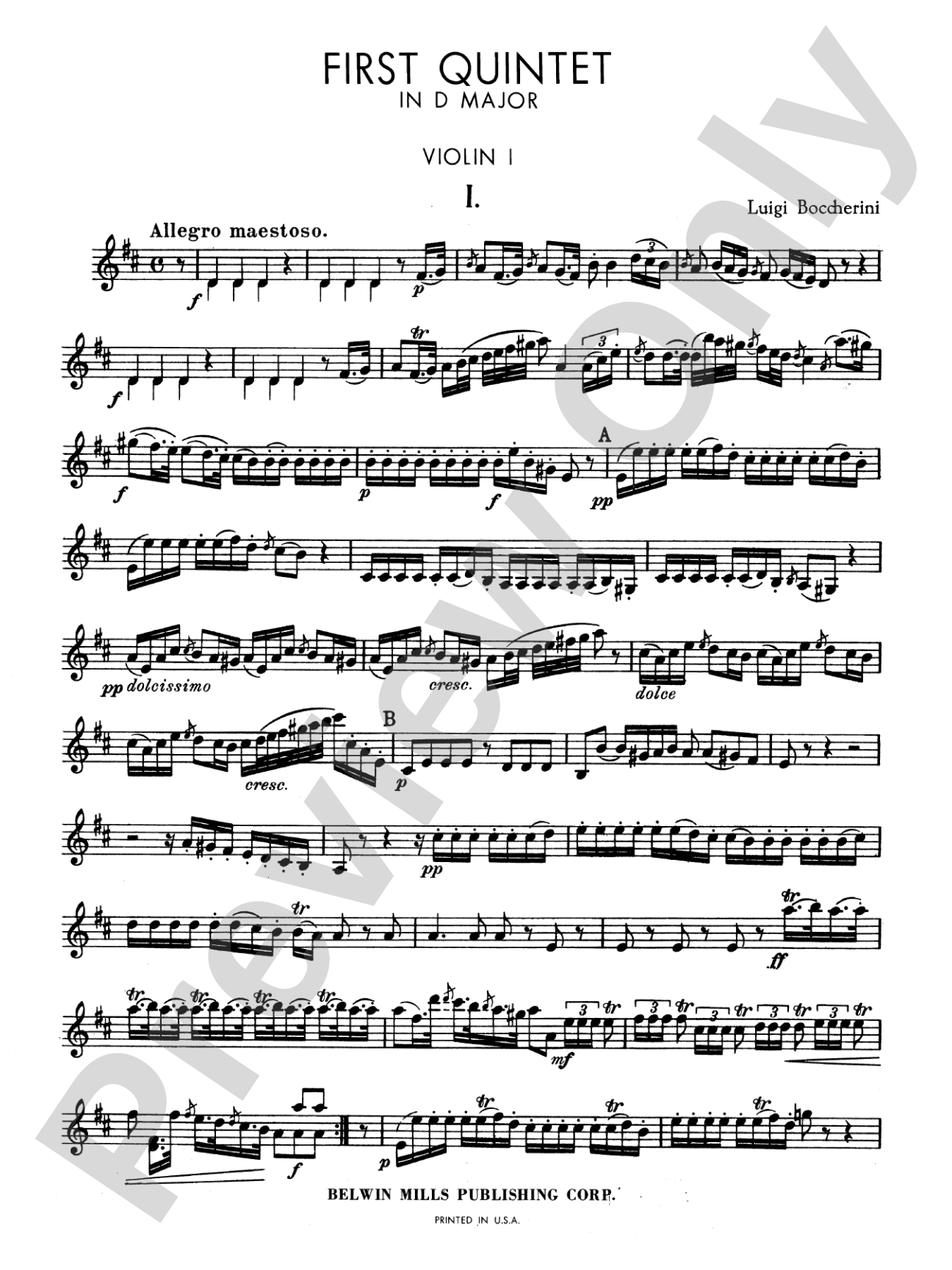
Boccherini: First Quintet in D Major, for Two Violins, Viola, Cello and Guitar Sheet Music Preview

Boccherini: First Quintet in D Major, for Two Violins, Viola, Cello and Guitar

For Guitar, Two Violins, Viola, and Cello

By Luigi Boccherini

Item: 00-PC-0012059

Digital Download
$1.99
Description
A quintet composed by Luigi Boccherini for two violins, viola, cello, and guitar.

Don't just read it, hear it, play along with it, and watch your students grow with it. In MakeMusic Cloud, Boccherini: First Quintet in D Major, for Two Violins, Viola, Cello and Guitar comes alive with professional accompaniment, adjustable tempo, and built-in practice tools that turn solo practice into real progress.

Sample Audio
No sample audio found.
Sample Video
Additional Details
Series: Kalmus Edition
Publisher: Alfred Music
Page Count: 44
SKU: 00-PC-0012059

More about this title

About the Composer: Luigi Boccherini

Luigi Boccherini (1743-1805) was an Italian composer and cellist whose chamber music shaped the Classical era's approach to ensemble writing. Working across Europe, particularly in Spain and Italy, he produced over 90 string quintets and numerous other chamber works that balanced technical brilliance with lyrical elegance. His understanding of the guitar reflected both his Spanish connections and his broader commitment to writing idiomatically for each instrument in the ensemble.

Boccherini's quintets remain central to the chamber music repertoire because they demonstrate how a five-voice texture can achieve both clarity and richness. His melodic gift and structural sophistication make these works accessible to accomplished amateurs while offering genuine artistic substance to professional performers.

Why we love this

This quintet sits at the intersection of intimate chamber music and genuine compositional craftsmanship. The guitar voice integrates fully into the ensemble fabric rather than serving as mere accompaniment, which means your guitar player has real musical responsibility and voice-leading to track. Programming a Boccherini quintet signals that you're engaging serious classical literature while remaining accessible to intermediate ensemble players.

What to expect

Boccherini's D Major quintet radiates graceful poise and lightness. The violin lines float over the guitar's gently rolled harmonies while the inner strings weave supporting counterpoint, creating an intimate yet refined soundworld that feels both courtly and conversational. There's an unhurried elegance here, a sense of musicians enjoying their craft together rather than displaying virtuosity.

Who it's for

This quintet works for advanced community ensemble groups, college chamber ensembles, and serious home-music circles where the guitar player has sufficient technical foundation to manage passagework and rhythmic precision. The piece demands musicianship from all five players, not just the violins, making it ideal for groups focused on collaborative, equal-voiced chamber music.

How to get the most out of it

  • Balance the first violin melody with the guitar's harmonic foundation. The guitar often anchors chord changes while the violin sings, so rehearse the rhythm section (viola, cello, guitar) as a unit first.
  • Shape phrases across the full ensemble rather than letting each part exist in isolation. Boccherini's lines breathe as a whole; coordinate your cadences and rubato across all five players.
  • Give the guitar's plucked notes clarity without overpowering the strings. Classical guitar technique here demands precise articulation to compete with bow tone.
  • Honor the Classical style's light, transparent texture. Resist the urge to add vibrato or romanticism; let the elegance of the writing speak.

How to use it

This works beautifully as a solo chamber piece on a mixed classical program, or as part of a themed evening exploring Baroque and Classical guitar repertoire. If you're programming Boccherini's other quintets or string quintets by his contemporaries, this D Major quintet makes a natural anchor piece; it's representative of his style without requiring specialized ensemble experience.

Skills your students will build

  • Balance between plucked and bowed instruments
  • Reading and maintaining independent lines in five-part texture
  • Classical-era phrasing and harmonic awareness
  • Ensemble rhythm and vertical alignment across different timbres
  • Guitar voice-leading and harmonic function beyond strumming accompaniment

You May Also Like