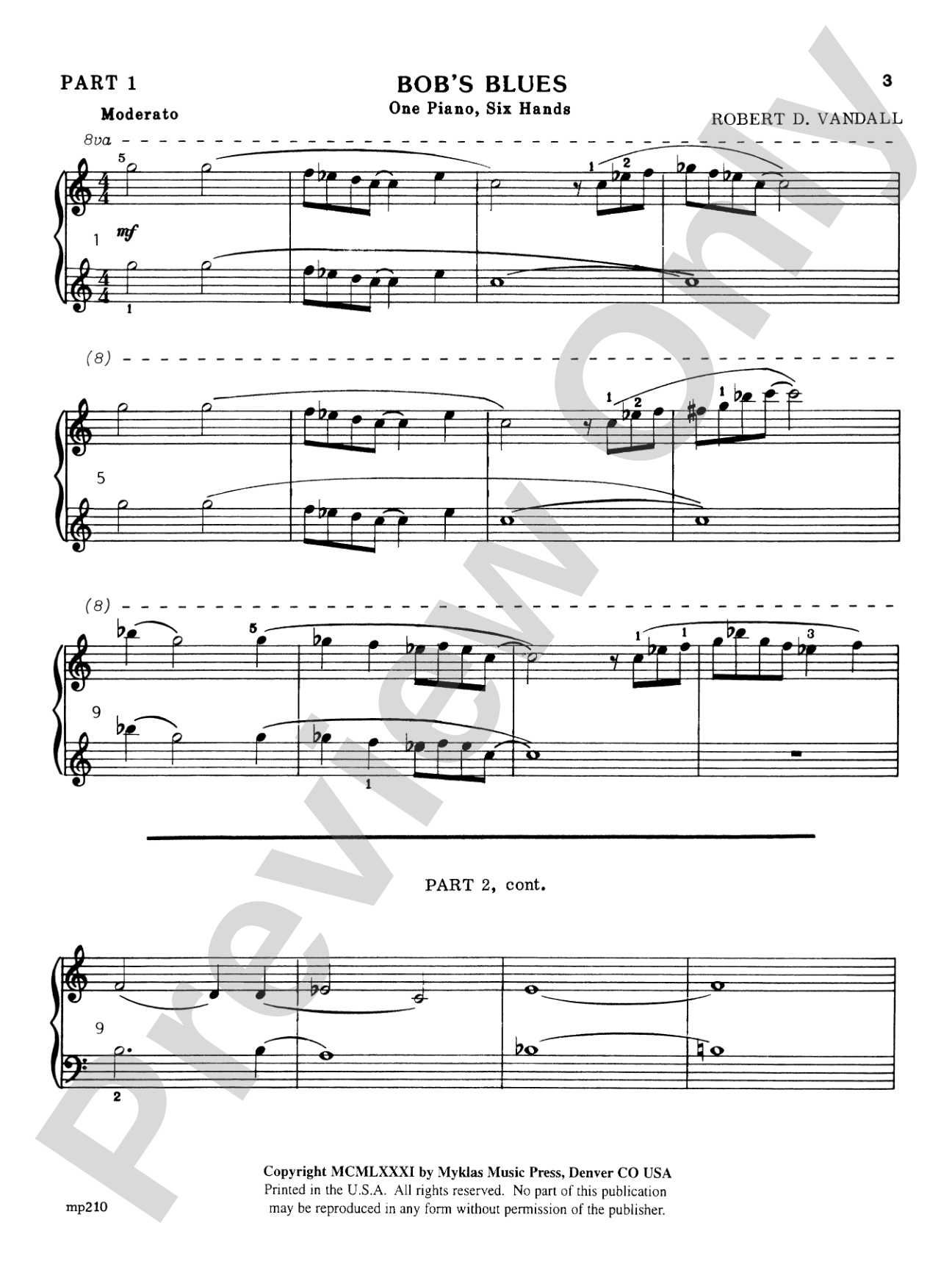
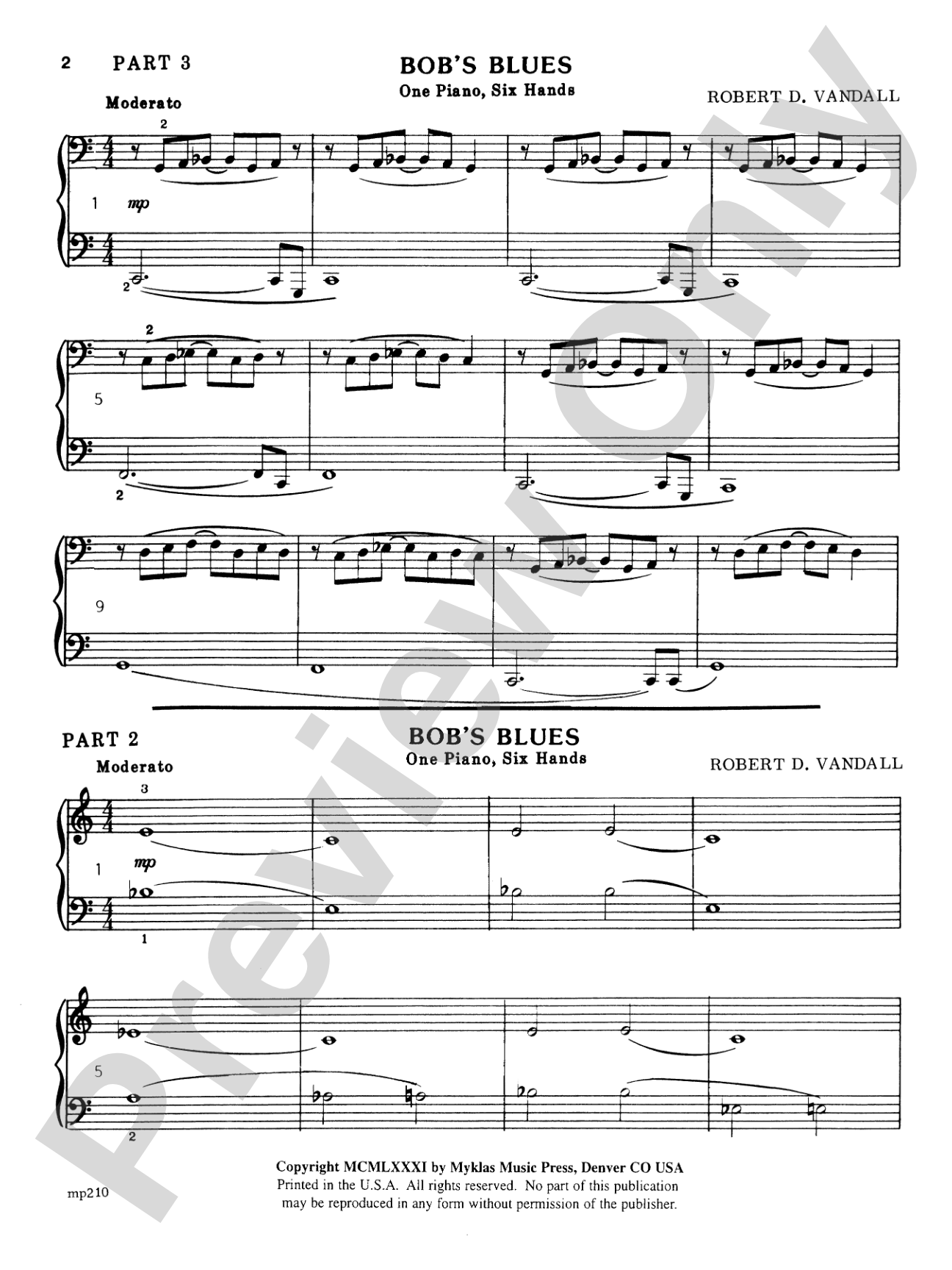
Bob's Blues - Piano Trio (1 Piano, 6 Hands) Sheet Music Preview

Bob's Blues - Piano Trio (1 Piano, 6 Hands): Piano Trio (1 Piano, 6 Hands)

By Robert D. Vandall

Level: Early Intermediate

Item: 00-PS-0017386

Digital Download
$5.99
Description
Twelve bar blues form is explained along with suggestions for improvisation. 'Blues' notes are also described. All performers read from the same score. A Federation Festivals 2024-2028 selection.

Bob's Blues - Piano Trio (1 Piano, 6 Hands): Piano Trio (1 Piano, 6 Hands) isn't in MakeMusic Cloud just yet...but it could be. Let us know you'd like to see it, and you'll help shape what comes next. In the meantime, start a free trial and dive into thousands of interactive titles your students can play along with today.

Sample Audio
No sample audio found.
Sample Video
Additional Details
Series: The Myklas Trio Series
Publisher: Alfred Music
Page Count: 12
SKU: 00-PS-0017386

More about this title

About the Composer: Robert D. Vandall

Robert D. Vandall has spent decades writing accessible yet musically substantive works for young musicians. His arrangements and original compositions prioritize clear instruction alongside genuine musical experience, making him a trusted name in school and festival programming.

Why we love this

Vandall builds blues literacy directly into the piece rather than treating it as background knowledge. The embedded pedagogy around twelve-bar form and blues notes means students aren't just playing a blues; they're learning to understand and eventually create one.

What to expect

Relaxed and conversational, with the playful feel of friends jamming in a basement. The blues chord changes sit comfortably under the fingers while the improvisation sections invite personality and risk-taking without demanding virtuosity.

Who it's for

Piano teachers working with late elementary or early middle school students who are ready to explore jazz and blues idioms. It works equally well for recital preparation, festival entry, or a unit on American musical forms within a broader curriculum.

How to get the most out of it

  • Spend rehearsal time on the written-out improvisation suggestions before asking students to invent their own passages. This scaffolds their confidence and clarifies what "blues soloing" actually means at this level.
  • Use the shared score as an opportunity for ensemble listening. When one player improvises, the others track the harmonic movement on their parts, which sharpens their harmonic ear faster than isolated practice.
  • Emphasize the blue notes in ensemble passages to establish the sound in everyone's ear. Consistency on these bent or lowered scale degrees becomes the glue that holds the texture together.
  • Record a quick rehearsal run and listen back with the group. Hearing themselves negotiate the form builds ownership and reveals balance or timing adjustments without needing to diagnose problems verbally.

How to use it

This lands naturally in a spring concert exploring American roots music, or as a Festival Festivals 2024-2028 selection for competitive play. It also works as a bridge piece in a recital where you want to shift tone from classical to contemporary, showing students that musicianship spans genres.

Skills your students will build

  • Understanding twelve-bar blues harmonic structure and how it repeats
  • Recognizing and playing blue notes (flat third, flat fifth, flat seventh) within a major key context
  • Improvising melodically over a fixed harmonic progression
  • Reading and coordinating six hands on a single score
  • Listening and responding to ensemble partners in real time

You May Also Like